‘Dire Consequences’: Honolulu Races To Save Flood Zone Funds
The plan is a long time coming but gained momentum in the aftermath of this spring’s devastating Kona low storms.
Oʻahu’s flood zone construction requirements are due for an update, affecting the island’s roughly 42,000 flood insurance policies that have a combined value of about $10 billion — and the clock is ticking to do so if the city wants to preserve millions of dollars in federal grants and loans.
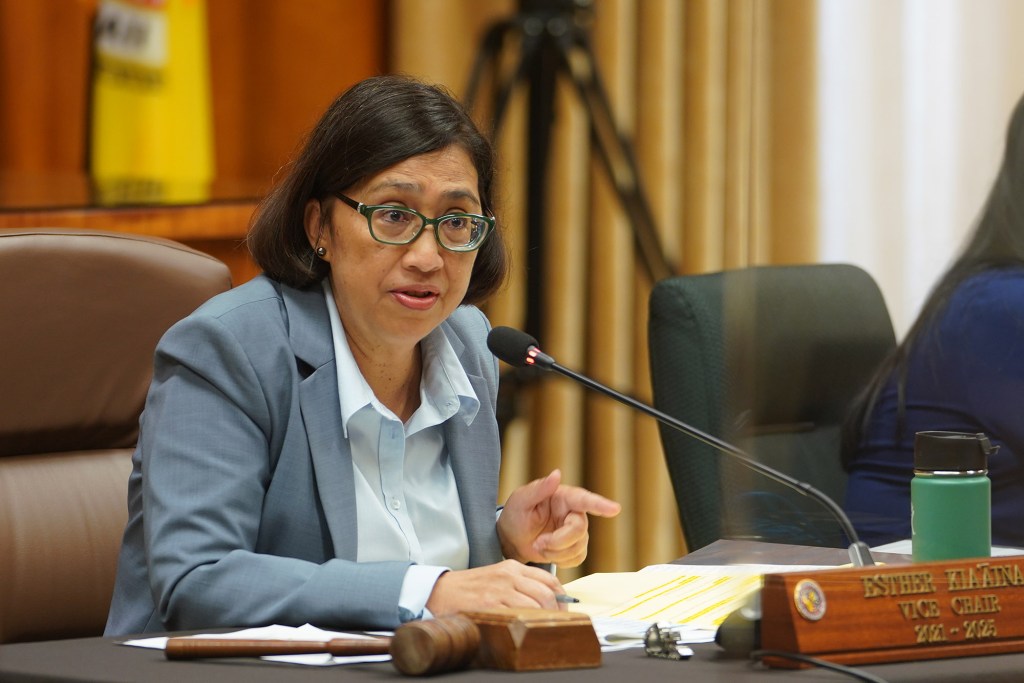
The city needs to implement its changes by the time FEMA’s new flood maps take effect on June 10. If any county doesn’t do so, Honolulu City Council member Esther Kiaʻāina said, “then they’re sleeping and they’re not looking at the interest of the general public, because there’s so much harm that could be done.”
Last month, Kiaʻāina introduced Bill 34 on behalf of the administration to require that structures be built another foot above the depth specified on federal maps and add new certification requirements, among other changes. The goal is to stay eligible for the National Flood Insurance Program.
The council is set to take up the bill again Wednesday. From there, it will need to be heard one more time in a committee meeting before a final vote by the full council, which Kiaʻāina anticipates will happen in early June. She said she has made it clear to the administration that passing the bill and quickly signing it into law is a priority.
“We’re against the gun,” she said Tuesday.
Losing eligibility would mean losing federal grants or loans for flood mitigation, she said, as well as the ability to renew existing flood insurance policies, federal disaster assistance and federal mortgage guarantees in flood zones.
Building construction costs likely will be higher upfront as a result of the changes, Department of Planning and Permitting Deputy Director Brian Gallagher told council members at an April 30 hearing, but those upgrades will result in insurance savings.
Honolulu residents also receive a 10% discount on their flood insurance policies through a federal Community Rating System, which discounts insurance policies in communities that implement flood mitigation measures.
Honolulu entered this system in 2022 and since has received the second smallest discount level available, out of nine possible levels. Hawaiʻi County and Maui County, which each joined the program years earlier, receive 15% discounts. Kauaʻi County, which entered the system in 2023, also receives a 10% discount.
Honolulu’s participation in the system is done through the city’s Office of Climate Change, Sustainability and Resiliency. Participating in it “is critical to maintaining affordability in the face of increasing climate impacts,” the office’s executive director and chief resilience officer Kealoha Fox said in written testimony on the bill. She also referenced the bill’s requirement that an extra foot of wiggle room be added when building in flood zones.
“Because existing flood models do not account for sea-level rise,” she said, “this additional margin of safety is a necessary adaptation measure.”
Roxanne Bolden, executive director of Aloha Independent Living Hawaii, said in written testimony her organization supports the bill but wants the council to be mindful that new height regulations don’t overly burden disabled residents from getting into their homes.
Roseann Freitas, CEO of the Building Industry Association of Hawaiʻi, submitted written testimony saying her organization is concerned the new regulations could add to the city permitting department’s notorious backlog. Gallagher said at a hearing that he’s confident his department can handle it.

While the updated flood plans were already in motion by the time a string of Kona low storms hit Oʻahu in March and inundated the North Shore, the damage done is a wakeup call for city officials.
“Everybody wishes this event didn’t happen,” Gallagher said at the April 30 hearing, referencing the storms, “but it is the event that we can use as the example to truly get us to a better place.”
“It just so happens the storm came along and then we got distracted for awhile trying to help that out.”
Department of Planning and Permitting Deputy Director Brian Gallagher
Gallagher told Civil Beat on Tuesday that his department had already been working on updating Honolulu’s flood zone requirements to align with federal standards when the Kona low storms hit and delayed progress.
“It just so happens the storm came along,” he said, “and then we got distracted for awhile trying to help that out.”
Gallagher said part of the reason for delay was due to DPP deliberating on how high of a discount to aim for, keeping in mind that more stringent standards could also mean more complicated construction and higher housing costs.
At a recent council meeting, Kiaʻāina laid out the stakes concisely: “Suspension from the program may result in dire consequences,” she said.
Civil Beat’s coverage of climate change and the environment is supported by The Healy Foundation, the Marisla Fund of the Hawai‘i Community Foundation and the Frost Family Foundation.