EPA Just Walked Back Hawaiʻi’s Plan To Retire Its Dinosaur Power Plants
By throwing a wrench in the state’s Regional Haze State Implementation Plan, advocates say HECO can sidestep rules years in the making.
Hawaiʻi has some of the freshest air in the nation, but in some parts of the state hazy skies can impact tourism and public health.
Now, the U.S. Environmental Protection Agency has pumped the brakes on a multi-decade effort to improve visibility and reduce fine particulates and other man-made pollutants.
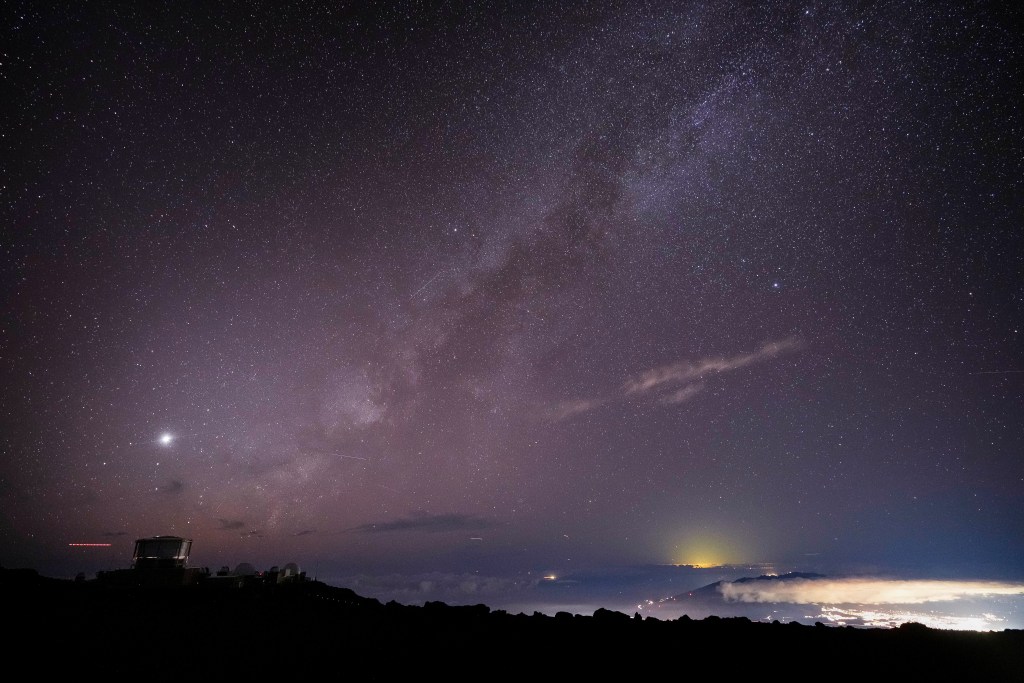
On Friday, the agency announced it had partially denied Hawaiʻi’s 2024 Regional Haze State Implementation Plan, a detailed proposal that lays out the state’s intention to comply with the federal Clean Air Act. The plan was designed specifically to reduce haze in two iconic places: Hawaiʻi Volcanoes National Park on the Big Island and Haleakalā National Park on Maui.

Because the two parks are designated as “Class I” under the Clean Air Act, their air quality is legally entitled to the highest level of protection.
Although the EPA is leaving some aspects of the haze plan intact, it is jettisoning its main thrust: the state’s long-term strategy, which included shutting down at least two of Hawaiian Electric Co.’s oil-fired electricity generating units in the Kanoelehua-Hill and Kahului power plants by 2028. The units are the dinosaurs of the industry; the Kahului unit was commissioned in 1948.
The agency referred to the closures as “unconsented” and said in a press release that they could make Hawaiʻi’s grid less reliable and “violate the Takings Clause of the U.S. Constitution for the taking of private property without just compensation.”
The decision isn’t the first of its kind for the agency; in Colorado, it rejected a similar plan that involved closing a coal plant. But it is one of the first from the current EPA to impact Hawaiʻi, and part of a larger plan by EPA Administrator Lee Zeldin’s to execute on President Donald Trump’s executive orders to promote what he calls “energy dominance.”
“This is one of the biggest bombs to drop in Hawaiʻi so far from the EPA,” Isaac Moriwake, managing attorney of Earthjustice’s Mid-Pacific office, told Civil Beat.

Earthjustice is part of a group of 10 national environmental advocacy groups, including The National Parks Conservation Association, Earthjustice, Natural Resources Defense Council and Center for Biological Diversity, to respond to the decision, saying it will harm Hawaiʻi communities and result in dirtier air in the parks.
Mike DeCaprio, vice president of power supply at HECO, describes the situation as a trade-off. He said the company still plans to retire the aging plants. But to do so by the end of 2028, DiCaprio said more biofuel plants and more solar farms and battery storage have to first come online.
“We felt that having a contingency to run these units longer if needed was in our interest, and in our customers’ interest, so that we don’t end up in a grid reliability issue,” he said.
“Reliability on an island grid is a really tough issue, right? They’re very small grids. With size comes stability, and they don’t have size,” DeCaprio said. “Making sure that the lights stay on is the most important part.”
Regulation Or ‘Total Regulatory Taking’?
In a detailed 67-page comment on an earlier draft of the EPA’s decision, the environmental advocates accused HECO of exploiting the Trump administration’s fossil fuel agenda.
The advocates asserted that the Clean Air Act was written in such a way that it already allowed for contingency plans if renewable energy wasn’t available. They also said that HECO had previously agreed to retire three of its oldest oil-fired generating units in the Hill, Kahului, and Māʻalaea plants after it was asked by the health department to submit a plan to upgrade the technology to improve air quality.
“HECO was the one coming to Department of Health and saying, ‘Hey, we will commit to shutting down these plants in lieu of having to spend all kinds of money, which the ratepayers are going to pay for at the end of the day, to upgrade these plants to try to clean them up. It’s cheaper, it’s more reliable, it’s more affordable for our ratepayers to just shut them down,’” Moriwake said.
Then, last August, Karin Kimura, director of the environmental division at HECO, sent a letter to the EPA’s regional administrator saying the company had been “forced under the SIP to accept enforceable retirement deadlines.”
Kimura said the retirement deadlines were no longer viable because of “actual or potential cancellations and delays” in renewable energy sources coming online to replace the power plants. Those projects had slowed down due to permitting challenges, changes in tax incentives and supply chain changes, she added.
“Following this notification, Hawaii …. needed to provide assurances that EPA’s approval of the unconsented source closure would not amount to a taking without just compensation under the Takings Clause of the U.S. Constitution,” the EPA press office told Civil Beat in an emailed statement. “Hawaii did not provide such assurances, and EPA was therefore required to partially disapprove the state’s long-term strategy.”
The haze plan process had been overseen by the Department of Health, but HECO sent the letter without the Department of Health’s involvement.
The health department did not respond to a request for comment from Civil Beat but it noted this omission in its own letter to the EPA in April — once it was clear that EPA was responding to HECOs request by shutting down the plan. In it, the state’s director of health, Kenneth Fink, said EPA’s response was “not consistent with the purpose of Clean Air Act Section 169A which was enacted to protect visibility in national parks and wilderness areas” and “directly conflicts with EPA’s previous guidance” for developing such plans.
The company also has already signaled it is raising its customers’ rates, in part to compensate for the plant closures, Moriwake noted.
“HECO has a pending request right now,” he said. “It’s sitting in front of the PUC to increase customer rates by $45 million a year for this purpose.”
Jeff Mikulina, executive director of Climate Hawai‘i, acknowledged that renewable energy in Hawaiʻi is facing headwinds, thanks in large part to the Trump administration’s tariffs and choice to cut tax credits and other federal support. But he believes Hawaiʻi will continue to lead on renewables. And he’s particularly optimistic about what’s happening on Kauaʻi, where local lawmakers just approved two new solar+storage projects that could get them to 90% renewable energy by 2030.
“It’s important to look at the long-term signal as opposed to the near-term noise, and that long-term signal tells us that this technology is getting cheaper by the day, particularly energy storage, which is really that secret sauce that’s going to allow us to achieve our 100% renewable energy future.”
In its email, the EPA press office said it is, “committed to working with the state of Hawaii to revise the SIP, in order to both follow the law and achieve clean air for all in the state.”
And yet the legal argument that the agency is using to justify its move away from a haze rule with teeth concerns the environmental advocates as much, if not more, than this one decision. In its legal rationale, the federal agency argued that the haze plan would unfairly restrict HECO’s use of its private property, in what it called “a total regulatory taking.”
“By asserting that the retirement deadlines in the 2024 SIP are now ‘forced,’ EPA opens a massive loophole in the Act’s requirements, allowing facilities to entirely evade compliance with the Regional Haze Program,” they wrote in their comments in April. They say they are concerned that the agency could dismantle other parts of the Clean Air Act, such as the National Ambient Air Quality Standards Program.
“They are signaling that they want to overhaul this entire regulatory scheme,” Moriwake said.
Not To Be Confused With Vog
When the Kīlauea volcano is erupting, vog — volcanic smog — adds sulfur dioxide and fine particulate matter to the air, particularly on the southern side of Hawaiʻi island. The Hawaiʻi Department of Health warns that even brief exposure can cause shortness of breath, chest tightness and other respiratory problems.
Power plants and other industrial facilities — such as the Mauna Loa processing facility named in the state’s 2024 SIP — also emit sulfur dioxide as well as nitrogen oxides, which has been shown to aggravate lung and heart conditions.
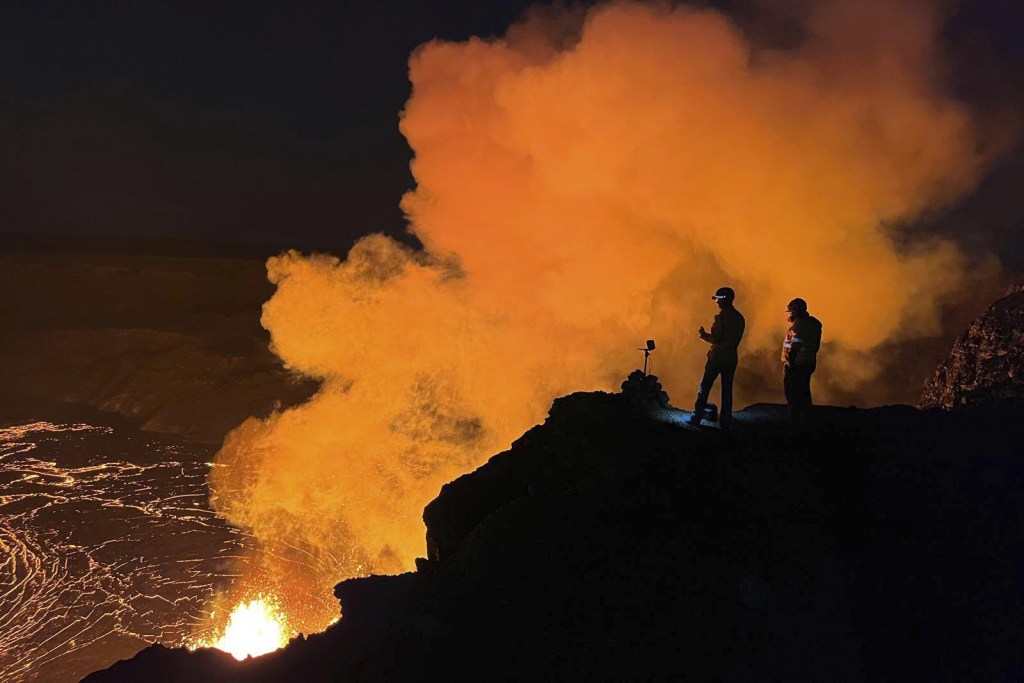
Determining to what degree these natural and man-made emissions contribute to the overall air quality in the region requires a series of complex, evolving math equations. EPAs under previous administrations have used specific tools to calculate the region’s “natural visibility conditions” while accounting for episodic volcanic events.
But when the current EPA proposed its disapproval of the haze rule in February, it asserted that no methodology “has been developed that is able to fully screen out the volcanic impacts and thus isolate the visibility impairment caused by anthropogenic air pollution.”
The environmental groups disagree. In their comments they called the agency’s assertions “arbitrary and capricious.”
Civil Beat’s coverage of climate change and the environment is supported by The Healy Foundation, the Marisla Fund of the Hawai‘i Community Foundation and the Frost Family Foundation.