Experts See A Near-Term Boost In Hawaiʻi Tax Collections
Members of the state Council on Revenues are surprised the state has not felt greater economic impacts from the war.
It may sound counterintuitive, but the war in the Middle East seems to be boosting state tax collections, at least in the very short term. As for the longer term outlook: Not so much.
A state panel of economists and other experts known as the Council on Revenues on Thursday adjusted their estimate of general fund tax collections upward by about $200 million to a total of about $9.72 billion for the fiscal year that ends June 30.
The council then trimmed its projection for tax collections for the fiscal year that begins July 1 by about $100 million in a nod to the uncertainty created by the war, and its potential impact on Hawaiʻi’s all-important tourism industry. The new projection for tax collections next fiscal year is about $9.82 billion.
Those estimates do not include the impact from Gov. Josh Green’s signing of Senate Bill 3125, which makes adjustments in state income tax cuts approved by lawmakers and Green in 2024. News of that bill signing was released by the governor’s office during the Council on Revenues meeting Thursday.

That new tax measure is expected to increase annual state tax collections by about $100 million by 2030 by adding a new 13% tax bracket on the state’s highest-earning residents. It also reduces the state income tax burden on the state’s lowest-income taxpayers.
Green said in a written statement the tax bill, now Act 24, “preserves meaningful tax relief for working families while ensuring we have the resources to protect essential services that our residents depend on every day.”
The Council on Revenues members expressed surprise Thursday that the war with Iran that began Feb. 28 with attacks launched by the U.S. and Israel has not done more damage to the state’s tourism industry or tax collections. The council’s tax projections are closely watched because they form the foundation of the state budget.
Higher Prices, More Tax Collections
Carl Bonham, executive director of the University of Hawaiʻi Economic Research Organization and a member of the council, noted that increases in the cost of oil caused by the war and the closure of the Strait of Hormuz have fueled inflation.
“The effects of the war and the price surges that we’re seeing in the very immediate term, those are going to add to our tax revenues because people are paying more for gasoline,” he said. “Basically higher prices that everybody’s paying is resulting in more tax revenue in the very short run, before you start seeing demand destruction.”
As for tourism, Bonham said, “the start to this year was — not withstanding the Kona low and the impact on spending in March — the start to the year has been kind of ridiculously strong. Real visitor spending has been up 6% in the first quarter (of the calendar year).”
That is “still a little hard to believe but that’s what the data says,” Bonham said, adding airline bookings are strong all the way through July.
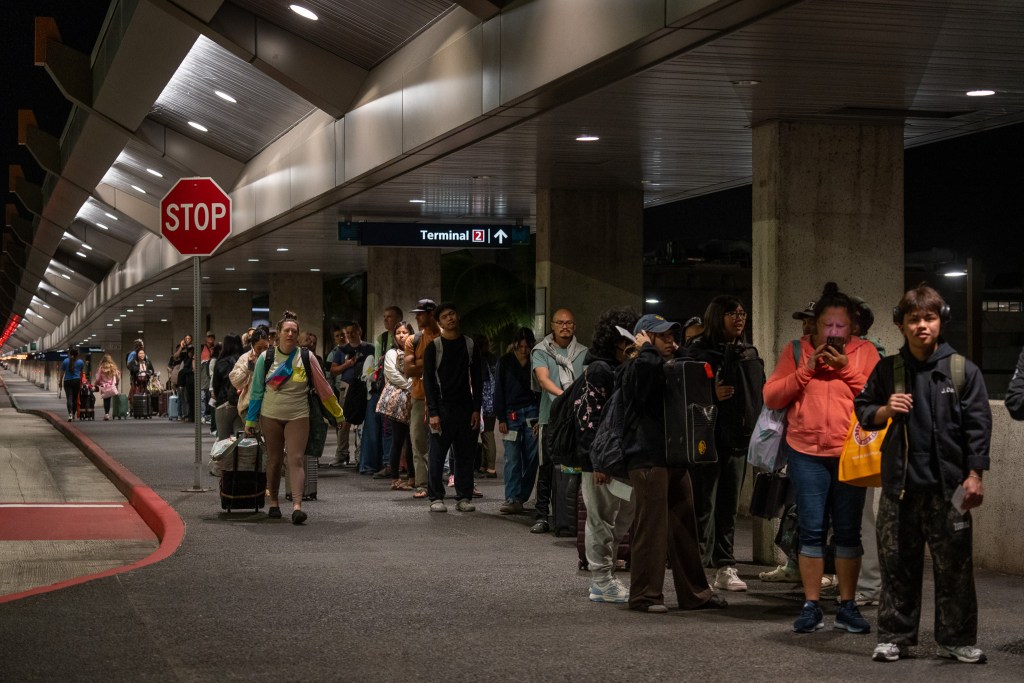
Council member Kristi Maynard suggested there is a “wealth effect” that is encouraging travel. “The stock market is up so strongly that I think that may be affecting people and whether or not they want to travel, and are still OK traveling. It’s really remarkable what’s going on there.”
Bonham also suggested many U.S. citizens received larger-than-normal federal tax refunds this spring, and haven’t really felt the impact of gas price increases yet. “They’re going to,” he said, “but it’s just now coming home to roost.”
Projecting the economic outlook and tax collections for the next fiscal year is a lot harder, Bonham said.
If the Strait of Hormuz reopens in June or early July, UHERO is projecting Hawaiʻi would see a jump in inflation and a slowdown in tourism and visitor spending, he said, with a recovery next calendar year. But he also expects a year of elevated gasoline prices.
“There’s good reasons for the (Trump) administration to get this thing settled as quickly as possible,” Bonham said. “Obviously the closer we get to the midterms the pressure grows.”
In the end, the council reduced the projected increase in tax collections for next fiscal year from 2% down to 1%, and made no changes in its projections for the following five years.
“The bottom line is that if we don’t get the strait open soon, it’s going to get really ugly,” Bonham said. “If we do get the strait open soon, it’s still going to have impacts.”