

With Immigrant Protection Bills, Hawaiʻi Joins States Resisting ICE Crackdown
While fears of retaliation blocked similar bills last year, reaction to national events and realities of local enforcement eased passage of immigrant legislation in 2026.
Since the start of President Donald Trump’s second term, Lisa Gibson has worked behind the scenes to turn out volunteers to urge their political representatives to support immigrant protection measures.
Progress was slow. The Legislature didn’t move a single such bill in 2025.
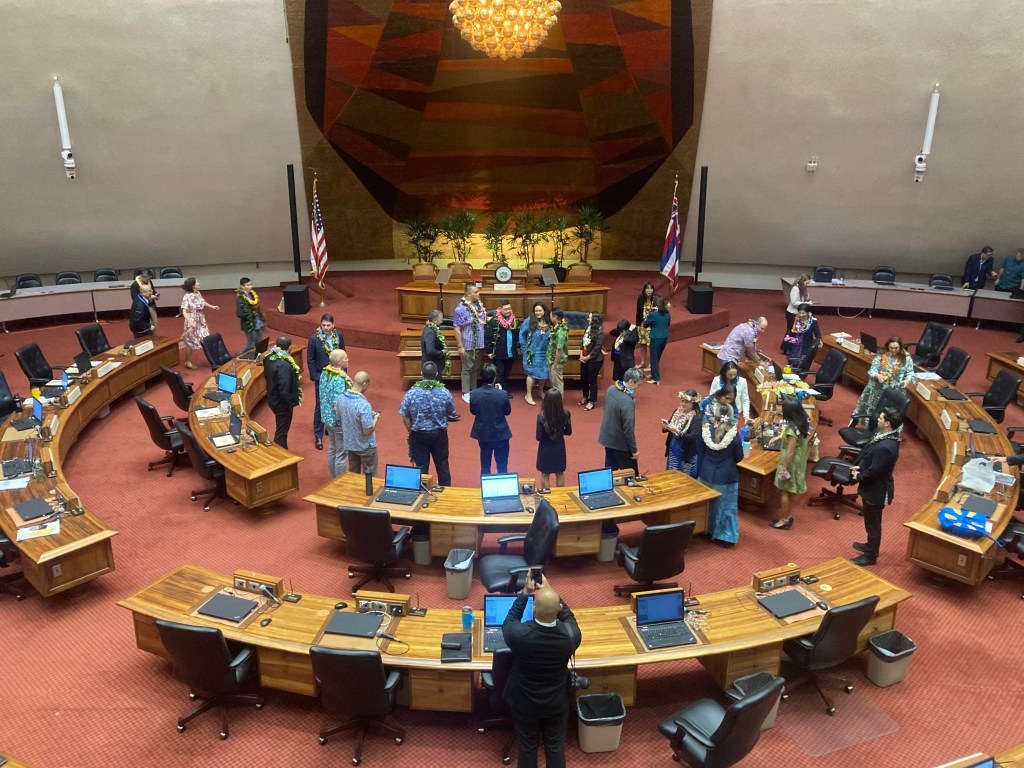
Then last week, Gibson watched as lawmakers positioned Hawaiʻi with states that have refused to cooperate with the federal government’s immigrant enforcement crackdown.
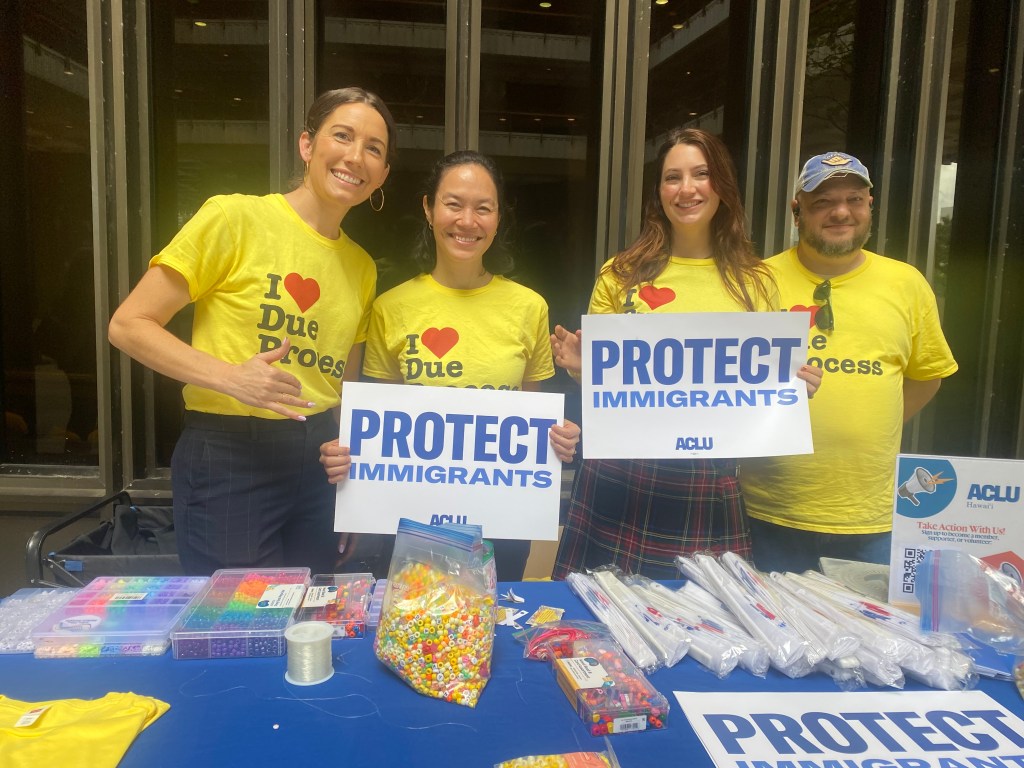
“It’s very gratifying,” said Gibson, founder of Indivisible Hawaiʻi, a statewide network of activists. In targeting immigrants, she said, “they’re targeting all of us. We have to protect Hawaiʻi. And in the process, we protect the country.”
If signed by the governor, the new laws will limit how both the state and local law enforcement agencies work with immigration authorities by:
- Prohibiting them from signing agreements with the federal government that allow officers to participate in civil immigration enforcement;
- Barring them from honoring requests by immigration authorities to detain people suspected of immigration violations;
- Requiring them to inform people in their chosen language of their rights to an attorney before they are interviewed by immigration agents and their right to decline an interview altogether.
The legislation also will prohibit the use of public resources such as databases, money and vehicles to assist immigration enforcement operations, bar state and local officers from sharing information with federal agents for immigration enforcement purposes, and require state and county institutions such as health care facilities and schools to adopt policies for dealing with ICE agents on site, including how to review warrants.
One bill, House Bill 1548, would also limit jail terms for non-violent crimes to 364 days, avoiding by one day the one-year sentence that can trigger mandatory detention or deportation for many immigrants.
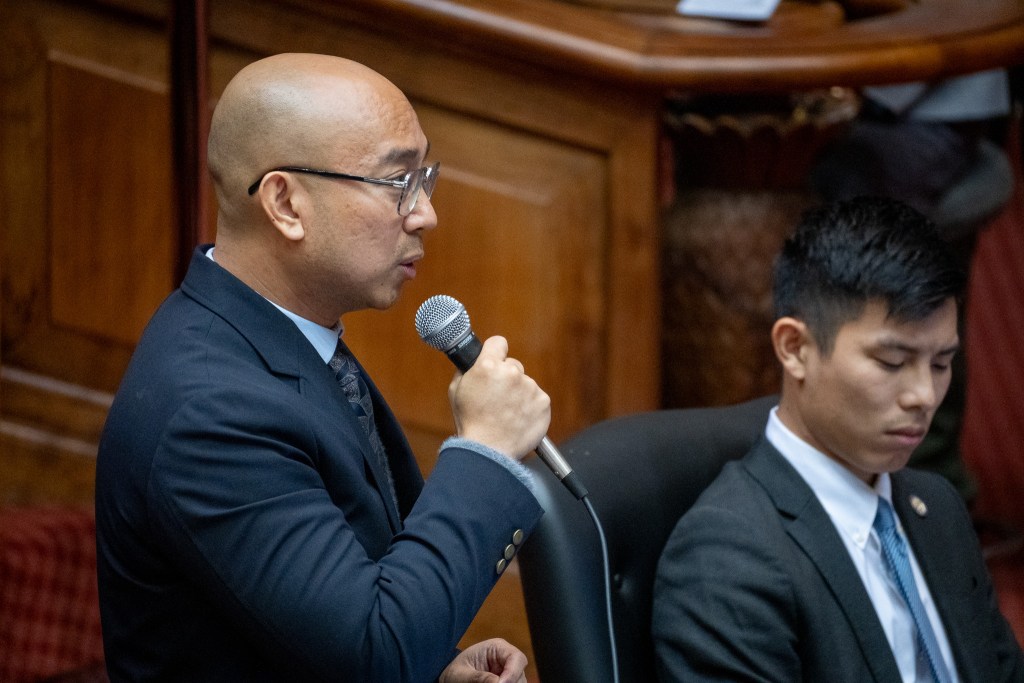
“It’s a big deal for the immigrant rights community and for everyone in Hawaiʻi,” said state Sen. Jarrett Keohokalole, who introduced State Bill 2057, which contains sweeping prohibitions on cooperating with ICE.
“We have such a long history of immigrant communities fighting for a fair shake and this continues that long legacy,” he said.
The bills now go to the desk of Gov. Josh Green, who in late January said he would welcome immigrant protection bills this session. If he signs them into law, Hawaiʻi would stand alongside more than a dozen other states that have taken similar steps since — some even before — President Donald Trump retook office in January 2025.
Some have enacted stronger protections than Hawaiʻi. Oregon law makes it possible to sue immigration agents who conduct enforcement without judicial warrants in places including hospitals, churches and schools. A Maine law prevents landlords from providing anyone, including federal agents, with tenant information without a court order. And a just-passed New York law prohibits federal agents from wearing masks — a proposal that failed this session in Hawaiʻi.
Nevertheless, the bills that emerged from the Legislature this year place Hawaiʻi toward the forefront of state-level efforts to confront the crackdown on immigrants, said Matthew Lopas, Director of State Advocacy and Technical Assistance at the National Immigration Law Center.
“They are really a bold way of making a statement during incredibly difficult times that the state stands with its residents,” Lopas said.
If they become law, they would also make it indisputable where the Aloha State sees itself in a way not previously articulated in official terms.

Hawaiʻi will have “put itself squarely in the camp of states that are choosing to resist the Trump administration,” said Muzaffar Chisti, director of the Migration Policy Institute office at New York University.
None of the Hawaiʻi bills mentions the term sanctuary, but, Chisti said, “in the Trump administration’s mind, any state or local jurisdiction that does not fully cooperate with ICE is a sanctuary jurisdiction” of the sort the White House has condemned.
That could prompt administration responses ranging from legal challenges to funding cuts. Regardless, Chisti said, the laws would offer meaningful protections to immigrants in Hawaiʻi by limiting the potential reach of the federal crackdown.
“The federal government wants states and localities to be force multipliers in the immigration enforcement enterprise. That’s what’s at stake here,” Chisti said. “At most, immigration officers are about one-tenth of the forces of local and state cops. So if you multiply your reach by 90%, you can imagine why that will just produce more results.”
In The Governor’s Hands
With the legislation’s fate now in his hands, Green could be in a delicate political spot. He has often said he prefers a non-adversarial approach to working with the Trump administration to further Hawaii’s interests, although he has been quick to criticize policies he objects to, such as anti-vaccine stances.
However, the strategic trade-off in this case is clear, said Colin Moore, a University of Hawaiʻi Mānoa political scientist.

“In terms of the political calculation here, for the governor, not signing would be far more damaging to him locally than any risk that this would attract the intense ire of the Trump administration,” Moore said.
To Green’s benefit, he said, is that he has not gone after Trump personally in the way California Gov. Gavin Newsom frequently does.
“I don’t think Green would use this as an opportunity to rhetorically frame them as anti-Trump measures,” Moore said. “They will be framed as pro-immigrant protection, civil rights protections. A different governor could frame them in an anti-Trump way. I don’t think you’ll see that from Green.”
Asked for comment on whether he still sees a need in Hawaiʻi for such legislation and what type he would support, Green’s office sent a statement: “The governor welcomes the opportunity to review immigrant protection bills and will carefully review all legislation sent to his desk.”
“A different governor could frame them in an anti-Trump way. I don’t think you’ll see that from Green.”
Colin Moore, political scientist, University of Hawaiʻi Mānoa
He has until June 30 to announce any potential vetoes and then until July 15 to issue a final veto list or legislative bills become law without his signature.
The Trump administration has a number of potential responses at hand if the bills become Hawaiʻi law, experts said.
It could argue the state laws treat the federal government worse than other entities the state interacts with. That was the basis of a 9th U.S. Circuit Court of Appeals’ ruling in April that found a California law banning immigration agents from wearing masks was unconstitutional because it didn’t apply to state police troopers.
That ruling, followed by another that California could also not require immigration agents to wear identification, was what ultimately doomed several high-profile anti-masking bills in Hawaiʻi’s legislature this session.
Other attempts to overturn immigrant protection laws by arguing that federal laws take precedence have not so far succeeded.
“A lot of the challenges based on preemption grounds that the federal government has brought against the state and local governments and state and local laws have failed in court,” said Hiroshi Motomura, a UCLA law professor who specializes in immigration and citizenship issues.
Those challenges have failed largely, Motomura said, because the U.S. Constitution’s 10th Amendment prohibits the federal government from “commandeering” state and local resources.
As for the Hawaiʻi bills, Motomura said, “The first line of defense is all they do is prohibit state and local governments from helping the federal government. And those have typically been upheld in court on the theory that it’s totally up to state and local governments whether they help the federal government.”
A lot of what is being proposed in the Hawaiʻi legislation is very similar to what already is on the books in California, where immigrant protections have been put in place incrementally since the mid 2000s, Motomura said.
Those laws — except for the recent anti-masking laws — have largely survived legal attack, he said, although some challenges are still ongoing.
Fear Of Retaliation
If it wanted to punish Hawaiʻi, the administration could also try to withhold federal funds — especially those related to law enforcement.
That approach is still being challenged in court.
In 2025, in a case Hawaiʻi joined, a federal court blocked attempts to tie federal transportation and disaster relief funding to support for the administration’s immigration enforcement strategy.
Now, Congressional Republicans are pushing legislation to restrict federal law enforcement funding to jurisdictions that assist in immigration enforcement, Smart Cities Dive reported.

“Hawaiʻi has to be prepared, that it could be subject of some funds being restricted or stopped,” Chisti said. “You don’t have to be a political genius to know that that could happen.”
Fear of federal retaliation was a deciding factor in the Legislature’s reluctance to support some of the immigrant protection bills last year, said Rep. Greggor Ilagan. He introduced a number of the bills that went nowhere in 2025 and three this year that passed, House Bill 1870, House Bill 1838 and House Bill 1839.
Even this year, Ilagan said, worries about how Trump would receive Green’s application for federal disaster aid in the wake of the March Kona low storms threatened to upend support for immigrant bills that followed the incidents in which ICE agents in Minneapolis killed two U.S. citizens protesting enforcement operations.
In the end, he said, critical factors were arguments about the place immigrants have in Hawaiʻi society and the fact that enforcement was already having an impact in the state, particularly in places such as the Big Island, where children and coffee farm workers were early ICE targets.
“The immigrant population is part of our workforce, our entrepreneurs and a big part of our community. And that really opened up legislators’ willingness,” said Ilagan, who heads the Legislature’s Filipino Caucus, which backed the bills. “The ICE raids on Kona just really cemented it.”
Immigrant advocates said they will keep pressing Green to sign the bills into law — and do it in a way that will resonate beyond the state’s borders.
“We will be asking for the governor to give us a public ceremony,” said longtime civil rights activist Amy Agbayani. “It’s important that Hawaii is seen as a player, because we are.”
Civil Beat’s reporting on economic inequality is supported by the Hawaiʻi Community Foundation as part of its work to build equity for all through the CHANGE Framework; and by the Cooke Foundation.

