It Takes A Village To Help Big Island Residents Drive Less
If Hawaiʻi County’s general plan finally passes this week it could set in motion an effort to improve public transit, make urban areas denser, and add paths for pedestrians and bicycles.
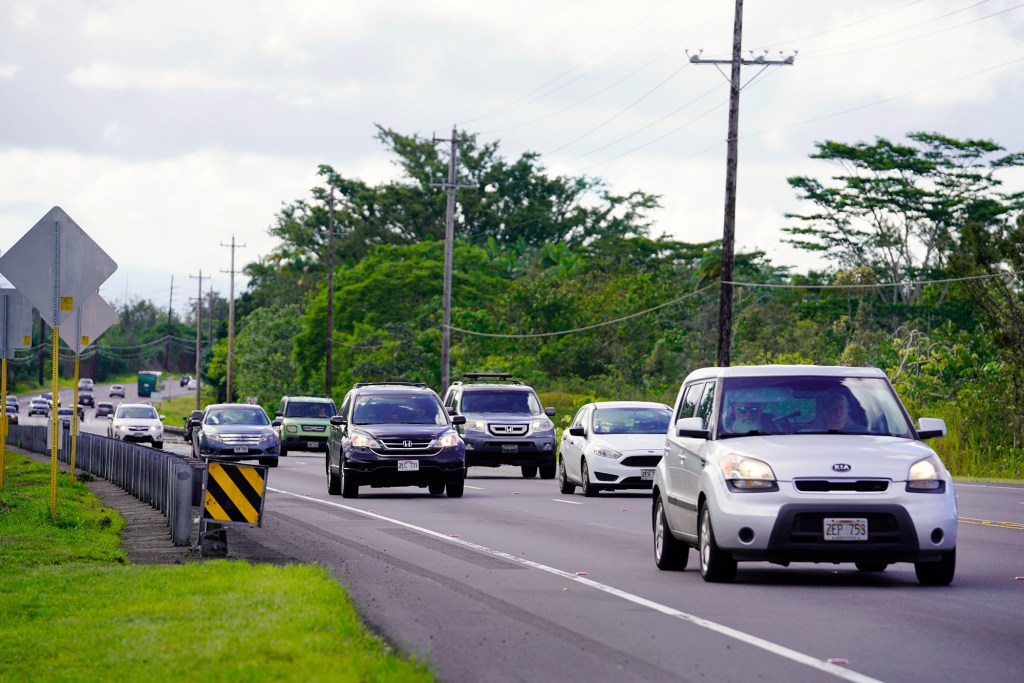
Unlike on some of the smaller islands, where people still live in 150-year-old plantation villages or compact company towns, many of the residents on Hawaiʻi island live in sprawling subdivisions connected by a single, two-lane belt road.
That’s what makes the Big Island synonymous with long-distance driving. And distances have only increased in recent years due to a shortage of worker housing near the island’s resorts, with people commuting hours weekly to work, school, grocery stores and doctors.
Now, the county’s proposed general plan, which is nearing the finish line after more than a decade-long process, calls for cutting down on that drive time by reinvigorating what remains of the Big Island’s villages and bringing more density and amenities to its subdivisions.
Michelle Galimba, a county council member who was part of the planning process that fed into the general plan, points to the towns of Pāhala and Nāʻālehu — company towns of Hawaiian Agricultural Co. and Hutchinson Sugar Plantation Co. — as examples of what could be brought back to life.
“Company towns have their downsides, but from a planning perspective, they’re pretty cool,” Galimba said.
General Plan 2045 passed through the first reading on May 20 with a veto-proof 6-3 vote by the council, and it’s headed for a final reading on Wednesday. Whether council members will advance bills to enact the plan — and whether those bills make it beyond the mayor’s desk — is yet to be seen. But a majority of council members support the overall plan.
Ambitious and vast, it includes land use maps and a detailed set of recommendations designed to guide policy over the next two decades. It integrates multiple components of the county’s climate action plan and — on paper at least — it puts adapting to and mitigating climate change and “biocultural stewardship” at the center of its recommendations. The plan recommends committing to cutting the island’s own emissions in line with the state’s ambitious zero-emission commitment.
“While Hawaiʻi County’s contribution to global emissions may be small by proportion, it’s essential that we take responsibility … and reduce our sources of emissions alongside the rest of the world,” the document’s authors wrote.
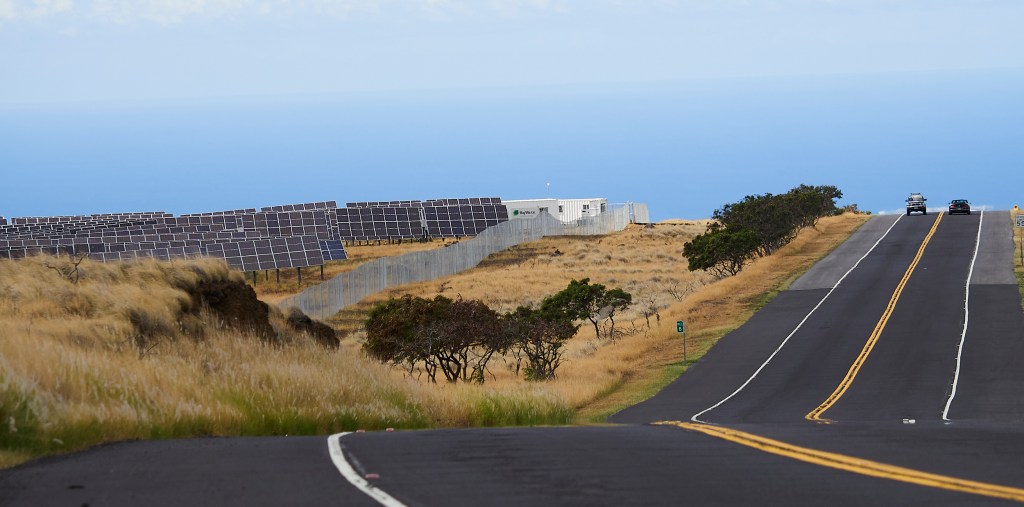
Because transportation is the leading cause of emissions on the island, and a broader shift to electric vehicles will take time, reducing the time residents spend in cars, or “vehicle miles traveled,” is a recurring theme in the plan. This means improving bus service and adding other transit options, as well as many more safe paths for biking and walking. But it also means thinking differently about all new development on the island so that people live closer to where they work and shop.
The maps highlight a handful of designated urban growth areas in places like downtown Hilo, Kailua Village, Waimea and Waikōloa that are designed to recreate compact, walkable villages. The plan also explicitly recommends prioritizing development within, or close to, areas that are already served by basic infrastructure — rather than creating more sprawl. And it calls for redeveloping aging, nearly empty shopping centers into housing and public recreation facilities.
Council member Heather Kimball says that while cutting climate-warming emissions isn’t a motivator for most island residents, there are many other reasons to help people drive less. The most essential, she says, is reducing the county’s dependence on expensive imported gasoline.
“We are just so dependent on fuel coming in, and that is always my biggest concern, being out here in the middle of the Pacific,” she said. “Then, of course, the cost. Since the start of the war in Iran, you’ve seen prices go up by $1 at a minimum.”
Getting More Reliable Buses On The Road
The general plan advises increasing transit ridership 50% by 2045, but Hawaiʻi island’s bus service, Hele-On, is ripe for improvement today. As the general plan points out, ridership dropped by one-third between 2012 and 2018 due to a lack of reliability. When it did, funding dropped with it — and it hasn’t recovered.
County planners want to see new investment in upgrading the buses, expanding the services and making real-time schedule information available to riders.
Most people opt to take cars because they just don’t live close enough to a bus stop. One solution, Kimball said, is paratransit or smaller vehicles that can connect riders to major routes.
“We need to seriously evaluate the routes, and maybe we need fewer of the larger buses on some of these routes and more smaller mass transit vehicles to get people from points A to B,” she said.
In Kimball’s district, which includes Hāmākua and North Hilo, it’s common for buses heading to the West side of the island to be standing room-only. The same phenomenon occurs in Galimba’s district. She represents Ka‘ū, Volcano, and most of South Kona — including Ocean View Estates — in a massive district with very long drive times, and a high percentage of people who work in the Kohala resort district. Students also rely on the Hele-On to get to and from school.
“The irony is that when I see a bus in my rural area, it’s full,” Galimba said. “And when I see the buses going around in town, they’re empty.”
Filling In Places With Existing Infrastructure
While the word density might conjure images of the kinds of big city life many people move to Hawaiʻi island to escape, advocates and planners argue there are ways to fill in existing towns without losing their historical integrity and character.
Kimball said allowing for more in-law apartments and accessory dwelling units, or ADUs, is one step in that direction, and the council passed Bill 123 last year, which will allow homeowners to build up to three ADUs on their properties.
Hawaiʻi County isn’t the only one to consider this approach to added density. Maui lawmakers considered allowing new zoning for ADUs in response to the housing shortage on the island, but that bill has yet to move forward.
On Kauaʻi, where planners are also prioritizing density and more walkable communities, the County Council has made a number of zoning changes in recent years.
“They basically all tweak our zoning code in different ways to allow development to be more dense — whether it’s an additional rental unit, or allowing a kitchen to be put in a guest house … or changing our setbacks, so people can build structures closer to each other to facilitate that additional unit,” said Marie Williams, the Kauaʻi County Planning Department’s long-range division chief.
However, Williams added that those efforts have been limited by the lack of wastewater infrastructure. Building an ADU comes with a price, but transitioning your property from a cesspool to a septic system makes the endeavor much more expensive — and tends to put it out of reach of most property owners.
The same is true on the Big Island — and that may prevent the new ordinance from resulting in much housing in the short term.
More Paths For Walking And Biking
Depending on where you live on the island, getting around without a car can be nearly impossible.
According to General Plan 2045, as of 2017 only 2.3% of residents said they can walk to where they need to go, while less than 1% traveled by bicycle. The general plan advises creating more trails and opening up more space to change this pattern.
The Hawaiʻi County Council commissioned the planning department to create a Mass Transit & Multi-Modal Transportation Master Plan in 2018. And while Kimball called it “robust,” she added, “there has been a big challenge in terms of getting the resources to create shoulders, bike lanes and sidewalks to really implement that plan.” She hopes the inclusion of the transportation plan in the general plan might help move the recommendations forward.
At the state level, the Department of Transportation plans to invest approximately $360 million in projects designed to make walking and biking easier by 2035. On Hawaiʻi island the list includes bike lanes, shared use paths and new bus stops.
Some of that funding is being put to use alongside federal funding in downtown Hilo, where the nonprofit group Friends of Hilo Bayfront Trails has been advocating and writing grants for expanding public trails for years. Ron Terry, the organization’s president, said the group has overseen the development of about half of the six-mile looping trail it has planned.
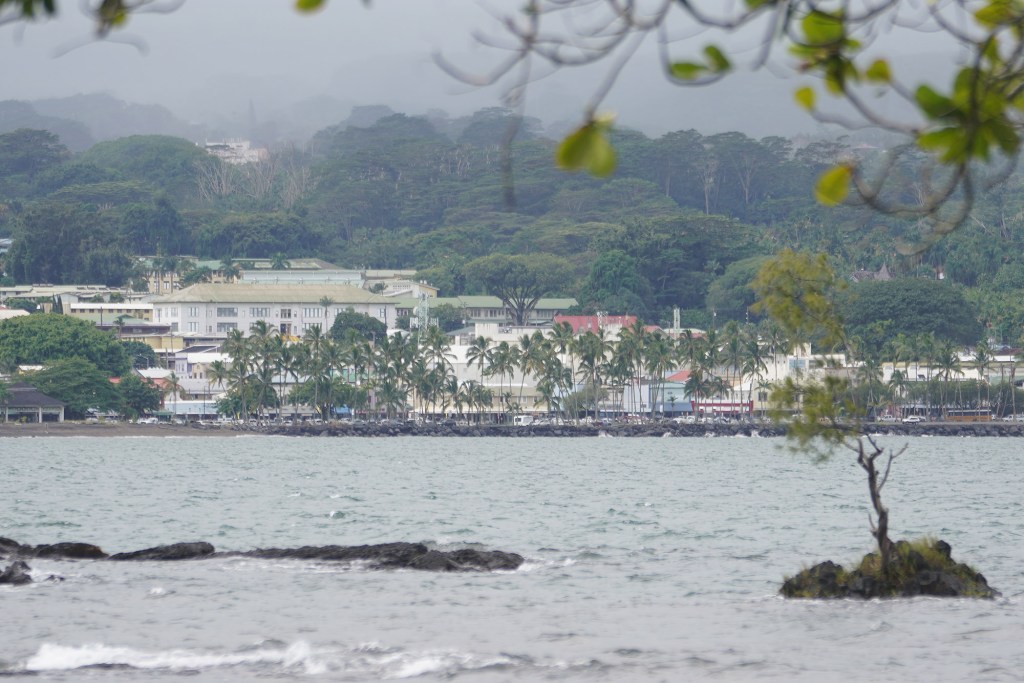
When that’s complete, the group plans to create another trail connecting the university to the downtown area, and a third trail that will run just north of the Wailuku River.
“What we see as the primary thing holding pedestrian and bicycle use up is safety,” Terry said. “When you get safe, connected infrastructure, you get people biking and walking.”
‘We’re Still Playing Catch Up’
Outside Hilo, however, the lack of true downtown areas plagues much of Hawaiʻi island. And even where villages do exist, the accompanying local amenities are often missing.
In Ka‘ū, Galimba said, “Our plan definitely was very interested in preserving the existing plantation towns, because they are so walkable. They’re not sprawling subdivisions.”
On Kauaʻi, former plantation towns are also proving easier to transform, Williams said. There the county is in the middle of a two-mile, $70 million multimodal project that promises to safely connect pedestrians and cyclists between the town of Kōloa and the resort area of Poʻipū.
The project was conceived over a decade ago and Williams hopes it helps more people travel between the two places actively, and cuts down on traffic.
“I try to communicate to people, because there are some people that feel when you’re planning for bike and pedestrian, it means you’re not planning for cars,” She said. “But sometimes you have to remind people that if you see someone on a bike … you’re taking a car off the road.”
Former Hawaiʻi County planning director Chris Yuen, who authored the general plan currently in use, said that while more walkable developments are a worthwhile goal, it’s just as important to grapple with the reality at hand.
Over the last two decades, people have moved to places like Ocean View and Hawaiian Paradise Park, a quasi-rural community near Puna that was home to nearly 15,000 people in the last census, because it is what they can afford.
“Ultimately, a big part of what people have been trying to do in planning for the last 20 to 25 years has been to encourage more services where the people are,” Yuen said. Drug stores, parks, schools, medical facilities, he added, have to “follow the people to where they’ve gone. Unfortunately, we’re still playing catch-up.”
Civil Beat’s coverage of climate change and the environment is supported by The Healy Foundation, the Marisla Fund of the Hawai‘i Community Foundation and the Frost Family Foundation.