

Ranching Could Soon Come To An End On Moloka‘i. Paniolo Blame TB Testing
Quarantine rules to prevent bovine tuberculosis are crippling the industry — and a way of life — on rural Hawai‘i island.
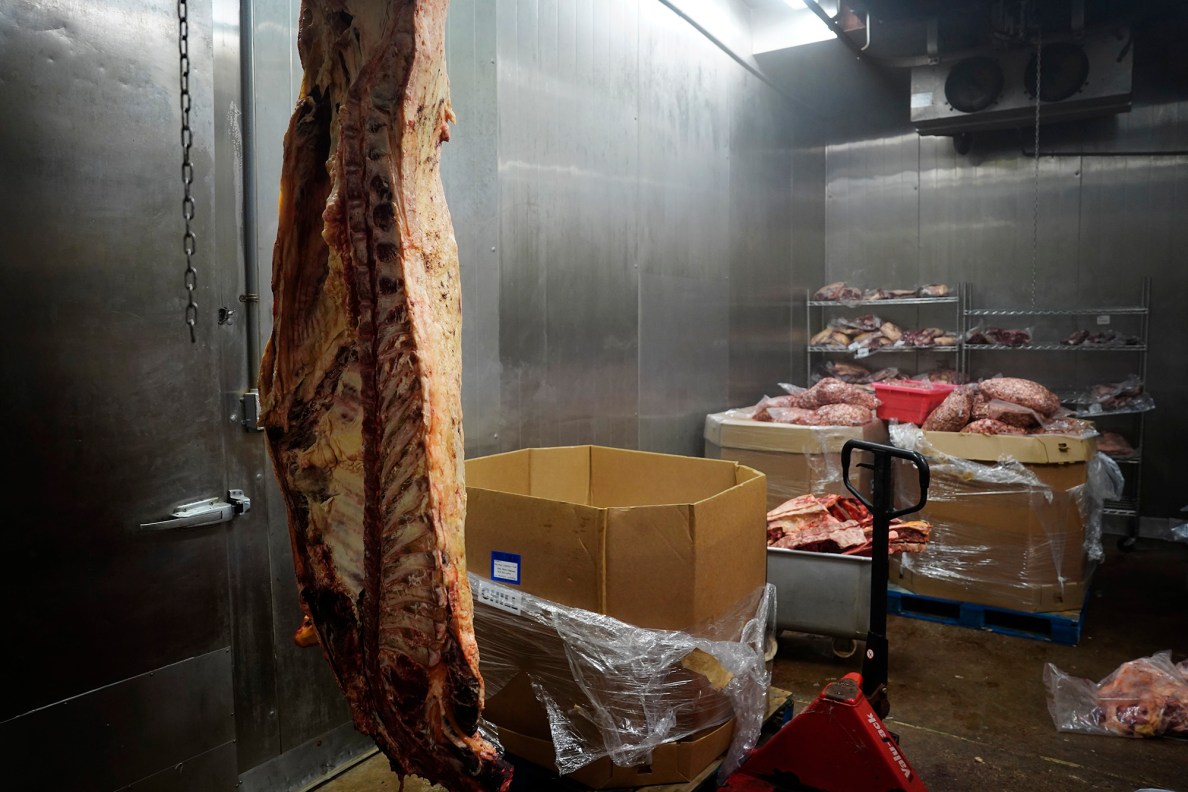
The sight of a carcass hanging in the cutting room is increasingly uncommon at Molokaʻi’s only slaughterhouse.
The paniolo, gathered in the facility’s break room on a recent Wednesday, would typically process 15 to 20 locally raised cattle per month to help feed the community on this rural island of roughly 7,000 residents.
Now, these Hawaiian cowboys are only handling one or two, mostly coming in from other islands, due to Molokaʻi’s storied history with bovine tuberculosis.
Moloka‘i hasn’t had a single confirmed case of cattle with the respiratory disease since 2021 but state and federal agriculture authorities have continued to enforce a quarantine on the island’s cattle operations. Livelihoods, legacies and lifestyles are on the line, ranchers say, with broad economic, cultural and environmental implications.
Without a plan of how to get out from under the quarantine, the cattlemen say, Molokaʻi’s almost 200-year-old ranching tradition will die.
“We’re kind of at a breaking point,” said MP Kamakana, vice president of the Molokaʻi Homestead Livestock Association.
Nine livestock operations have shared their demands of the government in an open letter, listing eight requirements needed to help keep the industry alive. These include: better communication and planning; testing wildlife for tuberculosis, which many have blamed for transmitting the disease; and an end to culling entire herds when cases are found.
They intend to stop testing their cattle for tuberculosis after years of negative tests, a move that could be catastrophic for the entire state’s more than $75 million cattle industry because it would compromise its tuberculosis-free status. Without that status, shipping cattle to the mainland — key to the industry’s profitability — would become virtually impossible.
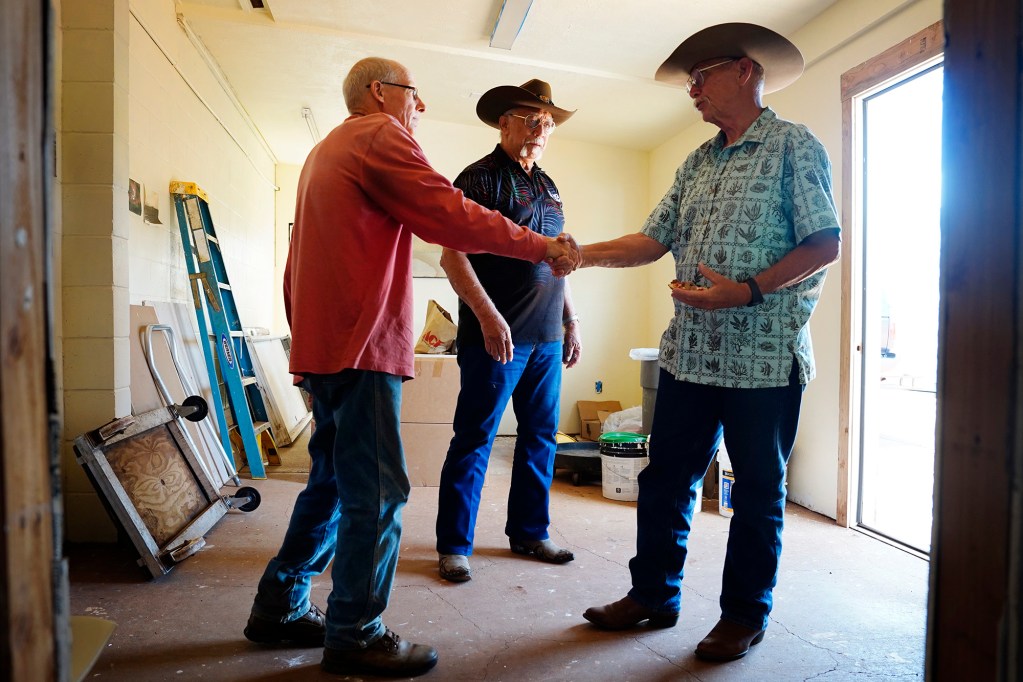
Several Molokaʻi ranchers are already shuttering their operations and all of the ranches are effectively dormant. The island’s bovine population, over 10,000 in the 1980s, currently stands at about 220.
“Within months, that number will effectively be zero if the bTB quarantine and annual testing mandate remain in place,” their letter reads.
The testing is grueling and the quarantine has cut key sources of income, including making shipping animals to mainland feed lots unaffordable even at a moment when beef prices are at an all-time high. Most of all, especially for the older paniolo, the loss of ranching means stealing future opportunities from the proudly rural island’s future generations.
State agriculture officials say they’re in a bind, trying to find a solution to Molokaʻi’s predicament while also satisfying national regulations, still at the whim of the federal government’s demands four years after the quarantines were imposed on the island.
“At the end of the day, we’ve got to make money, get paid. We cannot continue to keep dishing out money,” Kamakana said. “There’s no end game to it. So there’s no way of planning.”
‘I Wear Slippers Now’
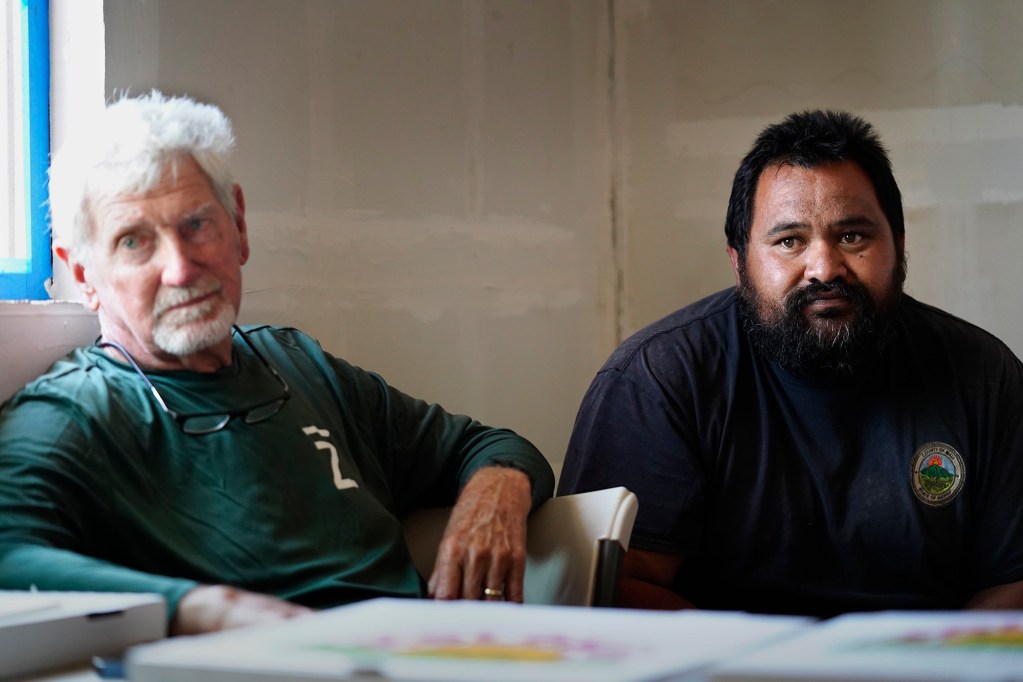
At least three generations of paniolo sat on old office chairs, coolers and upturned buckets in the slaughterhouse, taking turns to vent. Between them, they share centuries of experience.
All carry lessons from their livestock-working forebears, coming from the island’s long lineage of paniolo, some as fifth-generation ranchers. Some wear aloha shirts, cowboy hats and hardy footwear of some kind, cowboy boots included.
They’ve all dealt with this disease before – just not under the current regulatory strictures.


Molokaʻi cattle ranchers have been abiding by the state and federal regulations for decades. But without a plan to help them revive their operations, they’re at a loss about how to recover. The slaughterhouse, among myriad other facets of life on Molokaʻi, will likely also suffer if they shutter. (Kevin Fujii/Civil Beat/2026)
Bovine tuberculosis has killed, or been the reason for killing, tens of thousands of cattle across Hawai‘i for more than 100 years. None of the islands have had such a turbulent history with the disease as Molokaʻi.
James “Uncle Jimmy” Duvauchelle worked for the 55,000-acre Moloka‘i Ranch for more than 60 years and witnessed how tuberculosis changed the landscape. Sitting in the slaughterhouse, he recalled how it led to the 1985 government-ordered eradication of almost 10,000 cattle on the island, when the disease was found in 2% of the population. The islandwide cull started to change the landscape, he said, and not for the better.
The paniolo community had mixed feelings, many balking at the depopulation order. But it was “a favor to the island of Molokaʻi,” then-U.S. Department of Agricutlure veterinarian Euclid “Buck” Sharman said at the time, when the island was also recovering from three years of extreme drought.
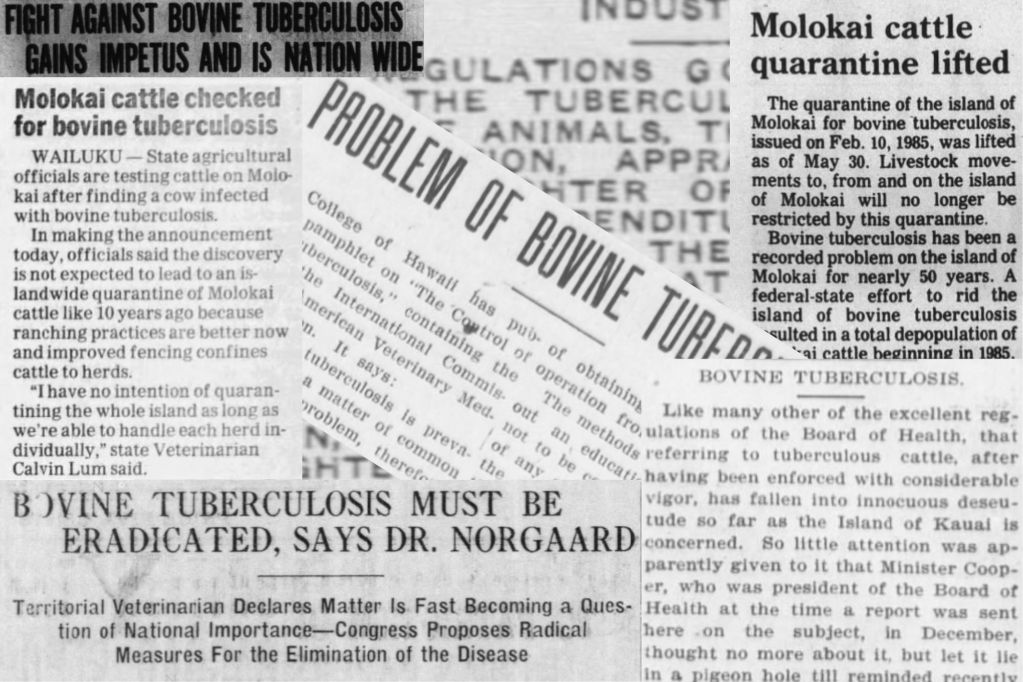
State veterinarian Calvin Lum told the Honolulu Star-Bulletin it was a “boon” but “not a program to bail out Molokaʻi Ranch.” The slaughter went ahead and ranchers were compensated a total of about $2.2 million, with the lion’s share going to Molokaʻi Ranch. The community started to rebuild its cattle population one year later.
Molokaʻi Ranch’s cattle operations never fully recovered though, dying out in 2008, and the remnants of the property — including a rundown lodge, golf course and restaurant — have been up for sale, for years. In fact, the entire industry started to decline.
“After all that we did to try to survive that stand down, it seems we’re still coming up with more problems,” the 82-year-old Paniolo Hall of Famer told Civil Beat.
The ranchers attribute many of the island’s ills to the slow death of ranching.
By the time the 2021 tuberculosis cases were detected, there were about a dozen ranches still operating — down from 40 in the 1980s.
“Molokaʻi guys was the only ones that took care of the ʻāina before they took care of the cattle. They did what true paniolo do,” lifetime paniolo Philip “Uncle Mango” Stephens said. “You don’t take care of the dirt, you’re going to get bad grass; you get bad grass, the cattle eats bad grass and people get bad meat. You eat bad meat, you’re going to have bad health. It was that simple.”

No matter people’s feelings about the mass slaughter back then, third-generation rancher Russell DeCoite said they were at least provided clear instructions on how to recover: One year without cattle on the island, then rebuild.
He and his 26-year-old son Dylan DeCoite started winnowing his V8 Ranch herd of 50 in 2024, sending their bulls to slaughter. Then the cows. His family now has just five, on 500 acres, which Russell Decoite laments as a loss of income and tradition.
“What they’re doing to us this time – we’re not surviving. The restrictions they’re putting on us are unbelievable… Killing us,” the father said. “I wear slippers now.”

‘Not Where They Want To Be’
Molokaʻi cattle have been subject to annual testing since 2021, some for decades long. The tests are a grueling, labor intensive, expensive and risky process. It’s also not definitive.
It takes 72 hours for the cattle to be tested. Ranchers must corral the animals, often driving several acres across their land, before corralling them. They separate the cows from the calves, push them through a chute and inject them with shots. After three days, the animals must run through the chute again for the results to be read. The process is extremely stressful for cattle.
“I had to put down one animal. She was just down in the chute. Overheated,” Kamakana said.
For the livestock association, every animal is incredibly important – it feeds the association members and their communities. There’s just 120 cattle left now, on 3,800 acres, after restrictions on export cut them down from their typically 350-strong herd.
If an animal is deemed to be “a reactor” to the first shot, then they face another 72 hours in the pen, going through the tight chute up to four times throughout the annual process.
Even when reactors have been found and confirmed, during autopsies there have proven to be false positives, according to Jack Spruance of Papohaku Farm, who is also the Molokaʻi slaughterhouse co-manager.

Ranches on the island’s east side have been subject to these tests for even longer, since 1999. Other ranchers have lost far more. Kainalu Ranch lost four, including a bull, in 2019. Charles Miguel Jr. of Pu’u O Hōkū Ranch lost four cows in his last test period.
“A lot of our cows are starting to catch on,” Kamakana said. “They don’t want to be in the pen no more. You stress an animal long enough, they’ll learn that’s not where they want to be.”
Kamakana and other ranchers want this testing process to stop as part of their list of requests to the state. The testing method is already dated, so many believe Molokaʻi should be subject to post-mortem testing, like the rest of the islands. They also find it hard to believe there’s not a better way.
Indeed, there have been prototypes for vaccinations. One is currently in trials in in Michigan, England and Wales, with encouraging results.
Sen. Tim Richards of the Big Island, a rancher and veterinarian, said he was trying to find a vaccine with the USDA a few years ago. Everything fell apart when the Trump administration took over and staff were slashed.
Something needs to be done to improve testing, Richards said, especially given the possibility of false negatives. Still, he said, “Has the (state) Department of Agriculture done all that it could have done? I would say no.”
‘The Sacrificial Cow’
When the most recent response to bovine tuberculosis occurred in 2021 it followed a year in which six herds on Molokaʻi were found infected – the most since the late 1970s. The state implemented a quarantine the next year that remains in effect today.
Some ranchers understood the need because authorities did not know the scope of the outbreak; others were skeptical about the new requirements. All are now struggling.
The quarantine mandates that livestock – not including horses – must not move on or off the island, live or dead, without permits. Nor can they move among ranches, which is especially difficult on an island where drought conditions often mean ranchers need to move their animals to greener pastures.
The state later signed an 11-page memorandum with the U.S Department of Agriculture further formalizing the quarantine in 2024, which helped the state maintain its tuberculosis-free status. Molokaʻi’s paniolo were not consulted in that process, which allowed non-Moloka’i ranchers to send their cattle to any ranches or feed lots on the mainland.
“It’s almost as if Molokaʻi has become the sacrificial cow” for the state’s industry, Congresswoman Jill Tokuda said, adding that it was unfair that Molokaʻi ranchers weren’t party to the inter-agency agreement.
The USDA agreement requires the state Department of Agriculture and Biosecurity to ensure compliance on annual live herd testing. Among other stipulations is surveying the island’s wild axis deer population, feral swine and mongoose — all known carriers and transmitters of the virus. Wildlife, however, has not been tested.
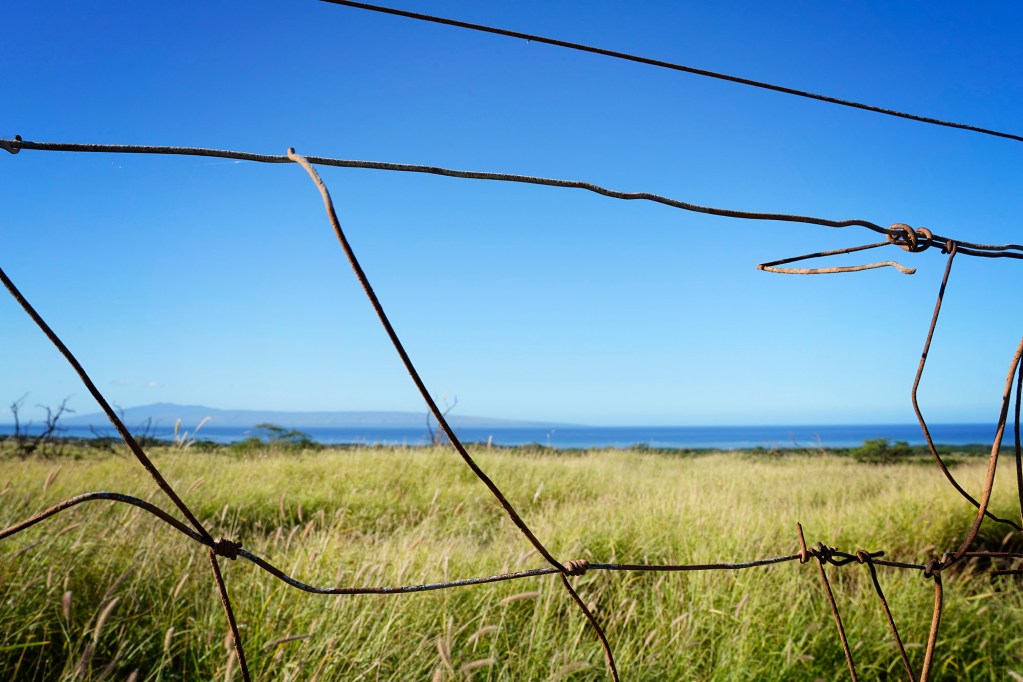
The agreement requires the state to explore wildlife exclusion fences for pastures too. A deer fence costs about $35 a foot, an already unaffordable expense, said Kainalu Ranch’s Stephanie Dunbar-Co. Her family ranch has tested for 25 years and has never had a positive case of tuberculosis.

The nine paniolo and livestock operations that signed the open letter to the state and federal governments met with state and federal officials in early May, for the first time in three years. It then became clear, the ranchers say, that neither had a plan for how the cattlemen could pull themselves out of their quarantine status.
Molokaʻi Livestock Cooperative, the island’s slaughterhouse, has pivoted its operations during the bTB crisis. About 90% of the operation’s product has come from other islands, depending on small batch butchery and one-off processing jobs to keep operations afloat.
The slaughterhouse will struggle to survive without local cattle to process — the reason it was built. In the meantime, some ranchers have been trying to figure out how grass-fed operations might work on the island, though that model could reduce profits substantially. Ultimately, at least for rancher and cooperative co-manager Spruance, the slaughterhouse should support food security — which the state has said it wants to boost for years.
Some Molokaʻi ranchers say if any other island’s ranching industry faced this issue, the Hawaiʻi Cattlemen’s Council and the state would have pushed far harder to solve it.
The cattlemen’s council, which represents the industry at the Legislature, supported a 2022 bill that allocated $500,000 to Molokaʻi for a veterinarian to help with the issue. No one has taken the job despite being advertised, and ranchers haven’t seen a difference.
“They haven’t reevaluated how widespread this outbreak was yet. There’s multiple examples of this, but to me that so clearly shows that we’re not a priority to these guys. We don’t matter,” Dunbar-Co said. “Nobody from Moloka’i wants to be sitting here, you know, ruffling feathers, getting in the newspaper. But we’re backed into a corner.”
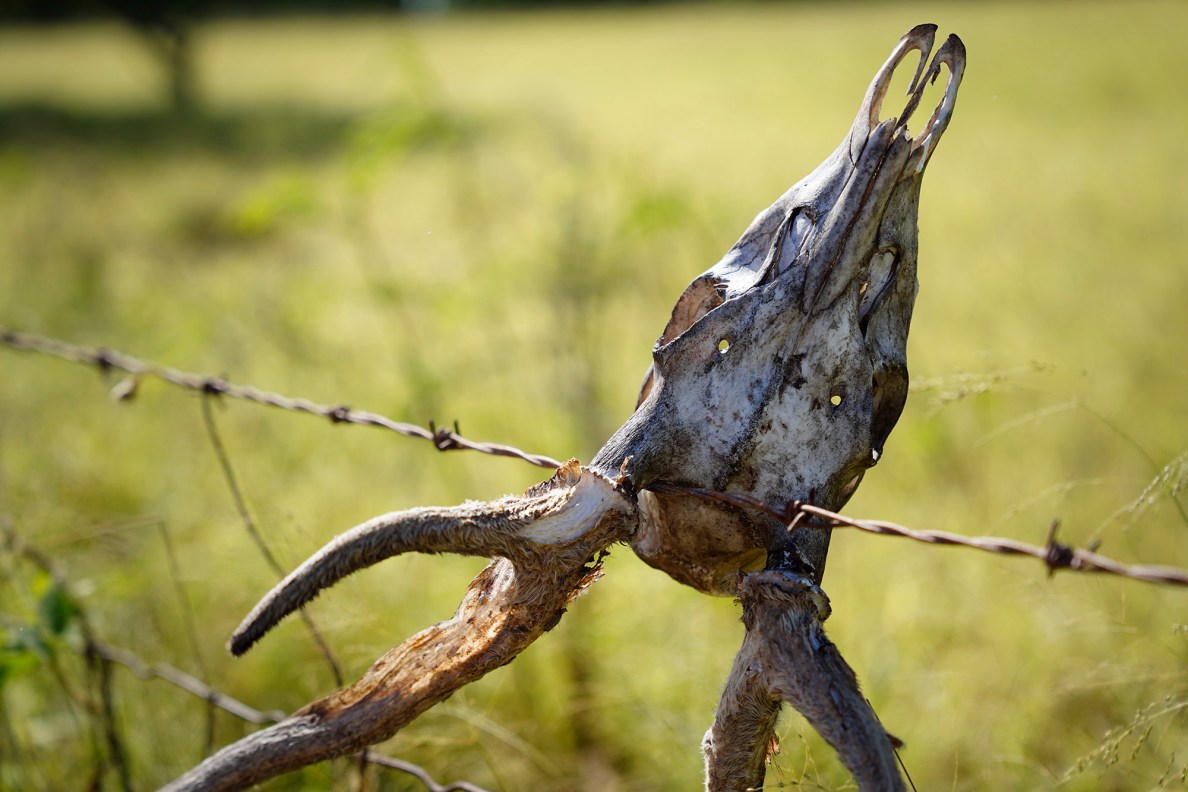
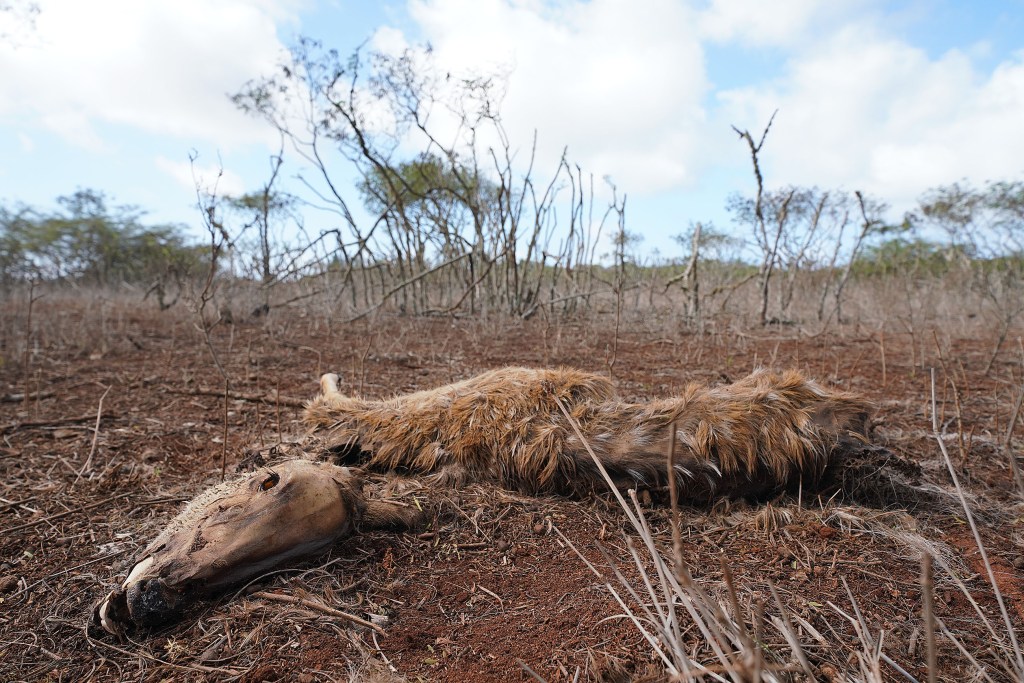
Molokaʻi’s population of axis deer provide a crucial source of protein for many on the island but also act as a reservoir for bovine tuberculosis. The local hunting club provides thousands of pounds of meat to the community for free, every year. (Kevin Fujii//Civil Beat/2026, Cory Lum/Civil Beat/2023)
The Last Ace
The state agriculture department is limited by the science, logistics and USDA’s bovine tuberculosis regulations, State Veterinarian Isaac Maeda said, which has left them largely unable to make a finite plan with a certain timeline.
Essentially, the state has to work within the federal framework to find a solution to the island-specific problem. That is complicated further by the federal government’s desire to revise their own regulatory framework for bovine tuberculosis to become more nuanced than state-level bans.
The state and federal government are already effectively putting more nuance districts in place, by granting bTB-free status to the rest of Hawaiʻi, which is cold comfort for the Molokaʻi paniolo. They are calling on authorities for something more specific: rather than whole-island quarantine when cases arise, quarantine districts within the 260-square-mile island. And they don’t want entire herds slaughtered but individual, infected animals instead.
Maeda said the state has to continue working on a trial-and-error basis within the federal system to maintain the state’s tuberculosis-free status. Maeda said the agriculture department attempted to have post-mortem testing done in combination with whole herd testing, to effectively reduce the annual burden of live testing.
That idea fell flat, he said, because the USDA was not convinced the island slaughtered enough animals to get a decent sample size.
“We come up with methods and ideas,” Maeda said, “present it to the USDA and see if it’s something that can fly.”
The USDA did not respond to Civil Beat’s requests for comment. But, according to a 2025 report, the state is satisfying its end of the agreement. The August report recommended the state make a plan to monitor swine and wildlife, as well as to enroll non-commercial herds of cattle in annual testing.
Tokuda, the congresswoman, says it’s still unclear who’s actually in charge in this situation, as neither the federal or state governments are taking responsibility. She’s trying to find out.
The fastest resolution, in Maeda’s opinion, is to pursue relationships with specific states that are beginning to open up to the idea of taking cattle from Molokaʻi due to an increase in another disease, New World screwworm, which is starting to devastate herds on the mainland.
So long as the state agency can prove that wildlife-livestock mingling is mitigated sufficiently and the Molokaʻi ranchers are being as diligent as possible, he believes Texas and Oklahoma might take the island’s cattle. That would mean Molokaʻi calves could be barged to Honolulu, then flown directly to the southern cowboy states, he said, where they would be absorbed into the mainland’s cattle industry like the rest of Hawaiʻi’s mainland-bound calves.
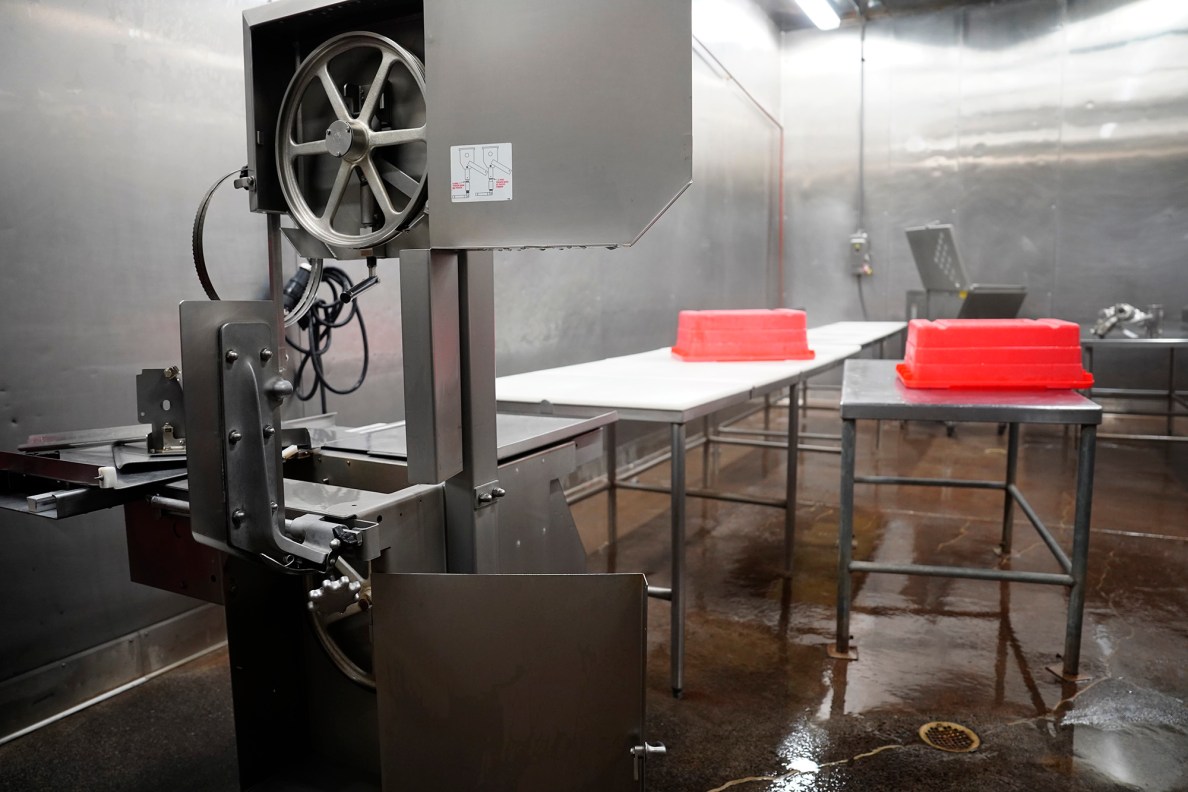

Molokaʻi Livestock Cooperative has been a lifeline for many small meat businesses statewide, though it has not been processing nearly as much beef as it intended to when started in 2009. (Kevin Fujii/Civil Beat/2026)
Local ranchers are not satisfied with the proposed Texas and Oklahoma programs, because commercial complexities increase risk to Molokaʻi ranchers and don’t yield a fair market price. So, they’re still in what some of them term “a death spiral.”
With no timeline, exit strategy or a way to remove their association with tuberculosis, they cannot indemnify their animals under state or federal programs.
Sen. Lynn DeCoite of Moloka‘i has regularly shown her disapproval of the state agency as the island’s ranchers’ sole voice at the State Capitol. She is one of them, running the now-dormant V8 Ranch with Russell DeCoite, her husband.
The paniolo have one final card they can play: They could stop testing their animals entirely.
If they do, it would put the entire state’s ranching industry at peril, though Kainalu Ranch’s Kip Dunbar believes “it’s the last ace we have.”
It’s an idea that strikes a chord with the entire cattle industry. That’s because Hawaiʻi produces about 9% of the beef its residents eat, and the lion’s share of the approximately 45,000 calves produced each year that are destined for the mainland.
The cattlemen’s council is now in talks with the island’s ranchers to better understand the complexities of their situation, managing director Nicole Galase said. The council has offered to support the cost of shipping animals to the mainland under the state-suggested model, as well as helping advocate for the ranchers in Washington, D.C. and Honolulu.
27 Years Of Testing With Few Results
What remained of the Kainalu Ranch’s herd was huddled at the top of the pasture in the midday sun earlier this month: 60 calves and cows finding shade in a stand of trees. The rest of its sloped pastures were empty, a sign of the times.
“Unless there is a real change of heart by the state in really helping us move forward,” 82-year-old Dunbar said, as he drove his ATV across the pasture. “I’m not sure I’m going to continue. It’s really make or break for us.”
He doesn’t like the idea of doing it, none of the ranchers do, but halting animal testing feels like it might be the only way to make the state, feds and rest of the industry listen. If they abide by the ranchers’ demands, his children – including daughter Stephanie Dunbar-Co – and his grandchildren could continue the legacy his great-uncle and great-aunt started 116 years ago.

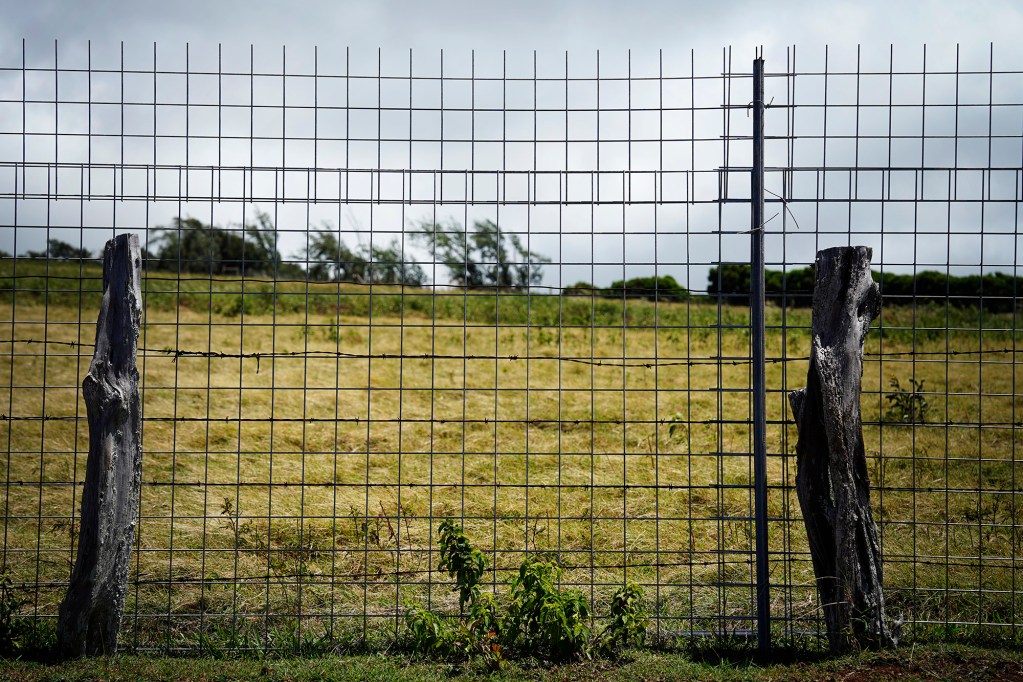

Dunbar has been testing his cattle annually since 1999, when East Molokaʻi was first told it would need annual proof of disease-free status before the rest of the island joined in 2021. They’ve never tested positive for tuberculosis.
Dunbar, a former banker and third-generation rancher, has since planted experimental grasses to prevent runoff, invested more than $100,000 into deer-proofing parts of the ranch to preserve pasture, diversified with rental properties and secured a conservation easement.
But even with those investments, not being able to sell his calves off island, or even move them around the island to greener pastures, will kill the ranch.
Within a few hours, sitting in the slaughterhouse, Dunbar told his peers the state needs to stop keeping them in the dark.
“They can continue to treat us like mushrooms,” he said. “Or they can step up to the plate and be accountable.”
But it’s urgent, a matter of months before ranches start following dormant V8 Ranch’s lead.
At 26, fourth-generation rancher Dylan DeCoite just wants to raise cattle on his family’s ranch, in the way he was taught by his father and grandfather.
But this year, as the Molokaʻi faces yet another year of quarantine, he feels like he’s part of a dying breed of aspiring ranchers. He said he’s called agricultural officials only to receive platitudes, part of a war of attrition he believes is being waged against the small ranching community.
The community’s letter to the state and feds may spur some action, at least to include them into considerations for the memorandum between agencies when it is renewed in November.
If any of their demands are satisfied, and even if it takes the decade he predicts it would take to rebuild V8 Ranch, Dylan DeCoite and his father may one day replace their new slippers and don their cowboy boots again.
“Hawai‘i Grown” is funded in part by grants from the Stupski Foundation, Ulupono Fund at the Hawai‘i Community Foundation and the Frost Family Foundation.
About the Author
Thomas Heaton is a reporter for Civil Beat. You can reach him by email at theaton@civilbeat.org.
Help power essential news and information