

Beach Cleanup Activist Challenges Longtime Incumbent In East Oʻahu
Kahi Pacarro has mounted an aggressive campaign against the low key Rep. Mark Hashem in the District 19 Democratic primary.
When one visits the campaign website for Kahi Pacarro, the first words encountered are these: “This candidate is not for sale.”
That’s the kind of bold statement, of course, that sends reporters to the Hawaiʻi Campaign Spending Commission’s website.
But it turns out that Pacarro, a first-time candidate running for House District 19 (Wai‘alae-Kāhala, ‘Āina Haina, Niu Valley, Kuli‘ou‘ou), has not accepted donations from any corporations or PACs.
There are a few familiar names in his spending report, all local — an attorney, an environmentalist, a nonprofit advocate, a community activist, a philanthropist. But there is also the name of his mother, Gwen Pacarro, who was one of his first contributors. It’s a grassroots campaign.
The financial angle is important because Kahi Pacarro has connections in the nonprofit and corporate world. His first corporate job was as a financial analyst for development firm Intracorp in San Diego. In 2011 he cofounded Sustainable Coastlines Hawaiʻi.
But the influence of money in politics greatly concerns him. That’s why he is making campaign finance reform a focus of his race against Rep. Mark Hashem in the Democratic primary.
And it’s why he loves Senate Bill 2471, now law, which seeks to work around the Citizens United U.S. Supreme Court case that allows unlimited corporate spending in local elections.
(Hashem voted for the bill.)
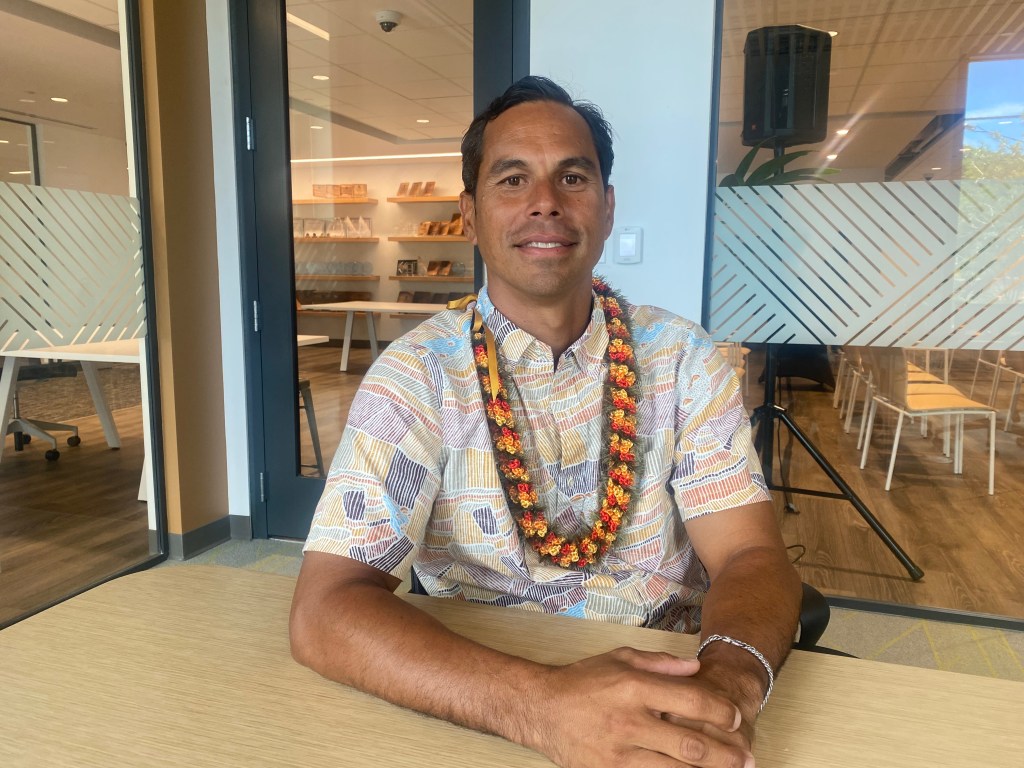
Pacarro also says he will only serve a few terms, as compared to Hashem, who has been in the House for 16 years. He even emailed Hashem to tell him his views on term limits and later told him directly that he was running for his seat.
Hashem didn’t respond to requests to be interviewed for this story. But his office did confirm that Pacarro emailed the representative and later met with him.
Asked about Hashem’s record, Pacarro said he has done “a decent job.” But he also argues that Hashem is “more responsive” to the needs of his donors.
Hashem’s contributors include, according to his most recent filing, Sports Betting Alliance, Ironworkers for Better Government, MK Advocacy Group, the Hawaii Medical Service Association Employee PAC, lobbyists Blake Oshiro and Bruce Coppa, the Hawaii Realtors PAC, executive Lance Inouye of Ralph Inouye Construction and the Hawaiʻi Operating Engineers Industry Stabilization fund.
In an era when pay-to-play is in the news almost every day, Pacarro has a campaign theme that could resonate against incumbents.
“What I’ve decided to do is to break any of that connection that our voters could have with my campaign,” Pacarro said. “So I’ve taken zero corporate donations, and I’ve even returned money from luxury developers.”
A Low-Profile Incumbent
Hashem is a graduate of McKinley High School and of Pacific University in Forest Grove, Oregon. According to his official bio, he is fluent in Japanese and ran an elementary English school and a billiard supply network in Sapporo.
Despite his long stretch in the Legislature, Hashem is not well known outside his district and is not part of the current House leadership. But he has his supporters.
Last month, he was named the 2026 National Children’s Alliance Champion for Children State Advocacy Award recipient “in recognition of his leadership and advocacy on behalf of Hawaiʻi’s children and Children’s Justice Centers,” according to a press release from Hawaiʻi House Democrats.

He also does not have a lot of campaign money. His contributions for the first half of this year totaled $33,275, which is just below the average for a House incumbent. (Pacarro has received $26,029 and spent most of it.)
Hashem chairs the House Water and Land Committee, which, while important, is not one of the top-tier committees. He authored four bills that passed in the past two sessions, including ones to support local business on using colored sea salt, to revise state small boat harbor fees and permits and to continue funding the state’s Green Jobs Youth Corps Program.
Those bills were not terribly controversial. But another Hashem bill from last session, House Bill 1823, was opposed by 18 of his colleagues, including from both parties. The bill, now law, weakens critical coastal protection laws, according to the Sierra Club of Hawaiʻi.
Pacarro singled out two bills that Hashem’s committee declined to hear, both from 2022. House Bill 1530 would have set up a half-mile buffer zone for pesticides around schools and state and county public parks, while House Bill 831 would have increased penalties for violating pesticides law.
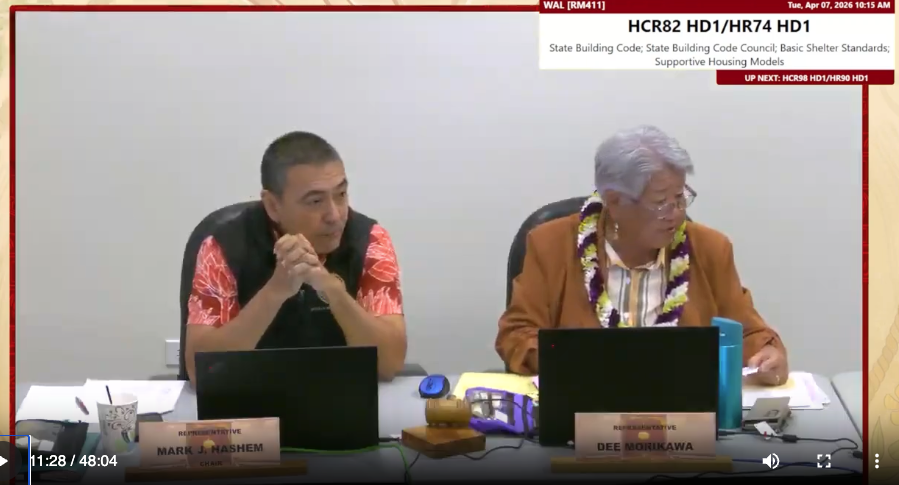
This past session, Senate Bill 2613 was passed, allowing ownership of Kīlauea District Park to transfer from the city to the Department of Education. A lot of House reps also opposed that bill, which passed Hashem’s committee.
Hashem told Civil Beat earlier this year he amended the bill because he thought giving the DOE ownership of park facilities would make it easier for Kaimukī Middle School to receive funding to repair aging facilities.
The DOE opposed the transfer, however, and Gov. Josh Green indicated that his administration will introduce legislation next year to ensure the park remains in the city’s possession.
In his Civil Beat Candidate Q&A, Pacarro said, “My opponent misled our community and put vital services at risk — especially programs serving youth and kūpuna at Kīlauea Park. This would never happen under my leadership. Our community deserves honest representation and leaders who protect, not endanger, the services families depend on.”
Cleaning Up Beaches
Pacarro is a 1997 graduate of Punahou School. He earned a degree in business administration with a minor in philosophy at the University of San Diego in 2001.
An influential period in his life includes a 2008 trip to 26 countries that Pacarro took with his then-girlfriend, Louise, who is now his wife.
“Everywhere we went we saw pollution. We saw colonization,” he said. “We saw a huge disparity between the poor and the rich, and I felt as though the background that I was coming from was very much part of the problem of why these people were faced with what they’re being faced with.”

“We’d try to give back, to try to maybe feel less guilt for this lifestyle that we’re living, and that giving back started really being the difference between us just being tourists to actually being engaged visitors and wanting to learn more about the culture, learn the language, etc.” he said. “And we really enjoyed it.”
That led to Pacarro doing volunteer work and eventually setting up Sustainable Coastlines Hawaii, which conducts regular beach cleanups.
Pacarro today works for another nonprofit, Parley for the Oceans, where he works to replace plastic through a program called Parley Materials. He also chairs the City and County’s Clean Water and Natural Lands Commission.
Josh Stanbro, the former chief resilience officer for the city and county, first met Pacarro over a decade ago when he was working to support ocean protection programs.
“The way he organized and inspired people as the executive director of Sustainable Coastlines just blew me away,” said Stanbro, who is supporting Pacarro’s candidacy. “Sometimes environmentalists can be a bit serious or glum, but Kahi was the exact opposite. He had a way of making beach cleanups not only fun and inspiring but also a way to connect deeply with other people and build community.”
Stanbro said Hawaiʻi politics these days “needs the same kind of positive, joyous energy instead of the cynicism and corruption we have to read about on the front page everyday.”
Pacarro’s other priorities include addressing street safety and traffic throughout the district, unsheltered neighbors and coordinated emergency responses, and HECO reliability and rising electricity costs.
Interestingly, it was one of Hashem’s colleagues who inadvertently inspired Pacarro to run against Hashem: Democrat Kim Coco Iwamoto.
In December she called Pacarro and suggested he run for the seat that was vacated when Rep. Gene Ward, a Republican, died in April 2025. But in turned out that reapportionment in 2022 meant that Pacarro did not live in District 18 (Hawaiʻi Kai, Kalama Valley and Portlock) but rather District 19.
(Republican Joe Gedeon, who was appointed to replace Ward, faces a Democratic challenger in the general election in District 18.)
“My intention originally was to get him activated,” said Iwamoto. “We need more community activists who represent community voices and not just developers to be present in the House.”
Iwamoto had also supported Hashem’s first run for office. But she also has pushed, unsuccessfully, legislation to cap a House representative to 16 years in office.
“As far as I am concerned, anyone who has been there for 16 years, the question really is, ‘What more do you hope to do for another two years years?’” she said. “I like Mark. He has been open to hearing my bills. But that is not the issue. It’s about giving other people the opportunity to serve.”
Hashem was unopposed in 2024 and easily defeated his Democratic primary opponent and Republican challenger in the general in 2022.
Whoever wins the primary wins the seat, as there is no one else running in District 19. If he loses, Pacarro said he will likely run again two years from now.

