Betting On Hawaiʻi Politics Is Legal Despite State’s Gambling Ban
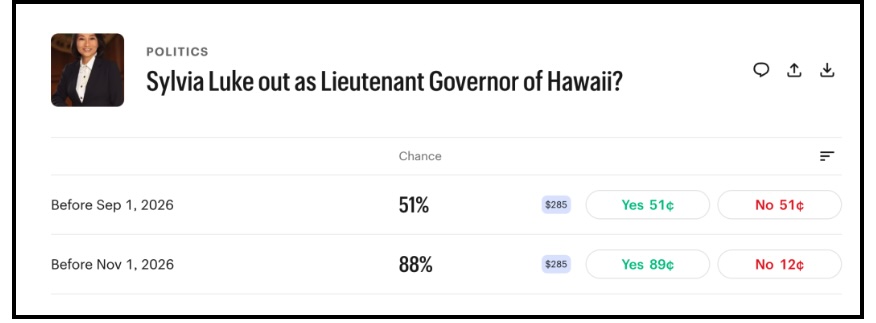
Users can now wager on when indicted Lt. Gov. Sylvia Luke may resign on the prediction market app Kalshi, which is not covered by Hawaiʻi’s gambling law.
Think of a current event, and you can bet on it.
When Gov. Josh Green used words like “homeless,” “mainland” and “tourism” during his state of the state speech in January, online bettors raked in about $450,000.
Users on the app Kalshi are currently wagering on whether state Sen. Jarrett Keohokalole will unseat U.S. Rep. Ed Case in this year’s primary election (it’s basically a toss-up). You can even bet on whether indicted Lt. Gov. Sylvia Luke will step down before Sept. 1.
In Hawaiʻi, a state that bans all forms of gambling — both in person and online — prediction markets like Kalshi and Polymarket are operating through a legal loophole that allows users to bet away their money with risks similar to what they’d face at a casino. On prediction market platforms, users who bet on a future event, and guess its outcome correctly, can win a payout from those who guessed wrong, and the platforms collect a fee.
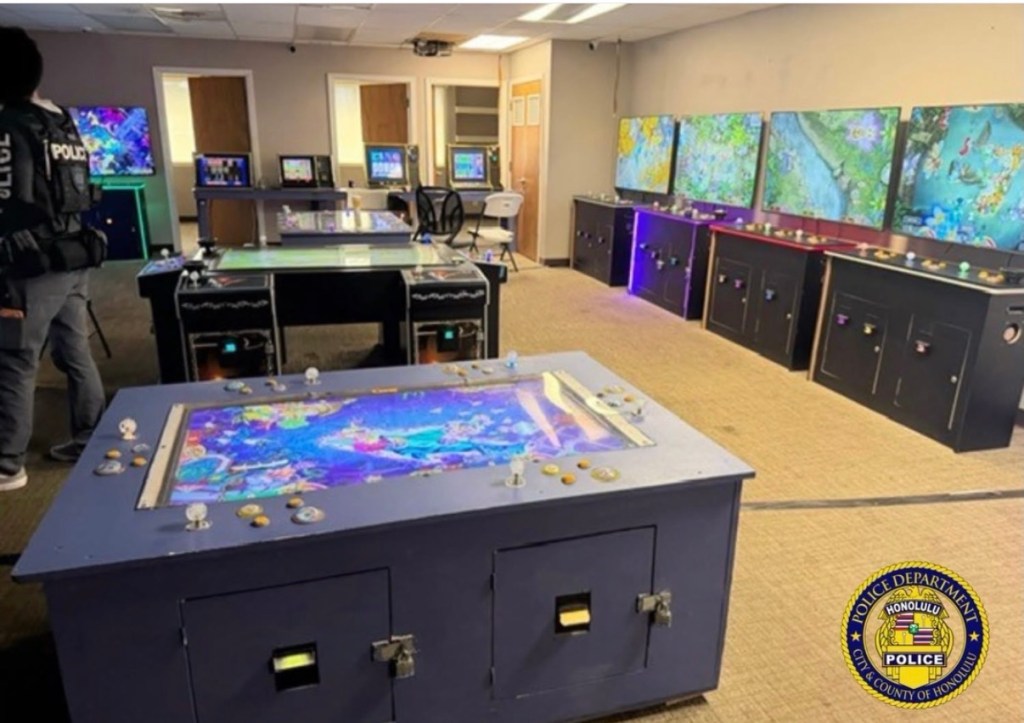
While data show people interested in betting are increasingly doing so on their phones, Hawaiʻi law enforcement agencies continue to focus on brick-and-mortar gambling operations, like game rooms, and state legislators haven’t stepped in to address the growing popularity of prediction markets.
Hawaiʻi lawmakers this year did consider banning them but failed to move the bill through the Senate.
The platforms themselves say they don’t offer gambling. Unlike traditional bets, which are placed against the “house” or bookmaker, prediction markets allow users to essentially bet against each other, buying and selling contracts based on the outcomes of certain events.
But lawmakers and advocates who want to see more regulation of prediction markets say the platforms pose a host of potential issues, such as a heightened risk for insider trading. Earlier this month, one of President Donald Trump’s teleprompter operators made more than $100,000 betting on what Trump would say during his speeches on Kalshi.
Ultimately for users, the risk of developing an addiction to prediction markets and losing substantial amounts of money is the same as it would be with traditional gambling, said Ben Schiffrin, director of securities policy for Better Markets, a national financial policy advocacy group.
“If it looks like a duck and it quacks like a duck,” he said, “it’s a duck, right?”
The increasing popularity of online gambling and prediction market wagering creates a challenge for local law enforcement, which already has a limited ability to crack down on illegal internet gambling.
The Honolulu Police Department has ramped up its crackdown on illegal game rooms but doesn’t dedicate many resources to figuring out if people are accessing illegal gambling sites on their phones or computers, said Honolulu police Capt. Clinton Corpuz.
Instead, the department has prioritized the game rooms, which he said can be hotspots for other types of criminal activity and violence, including drug and weapons trafficking. The department shut down 47 game rooms around Oʻahu last year and 23 so far this year.
“That is something we want to put our priority into enforcing,” Corpuz said, “and all our resources into enforcing.”
Some lawmakers fear the easy access to apps like Kalshi and Polymarket could get more people hooked on gambling who wouldn’t normally be the types to visit illicit game rooms or jump through hoops to use an illegal gambling website or sports betting app, many of which are blocked in Hawaiʻi.
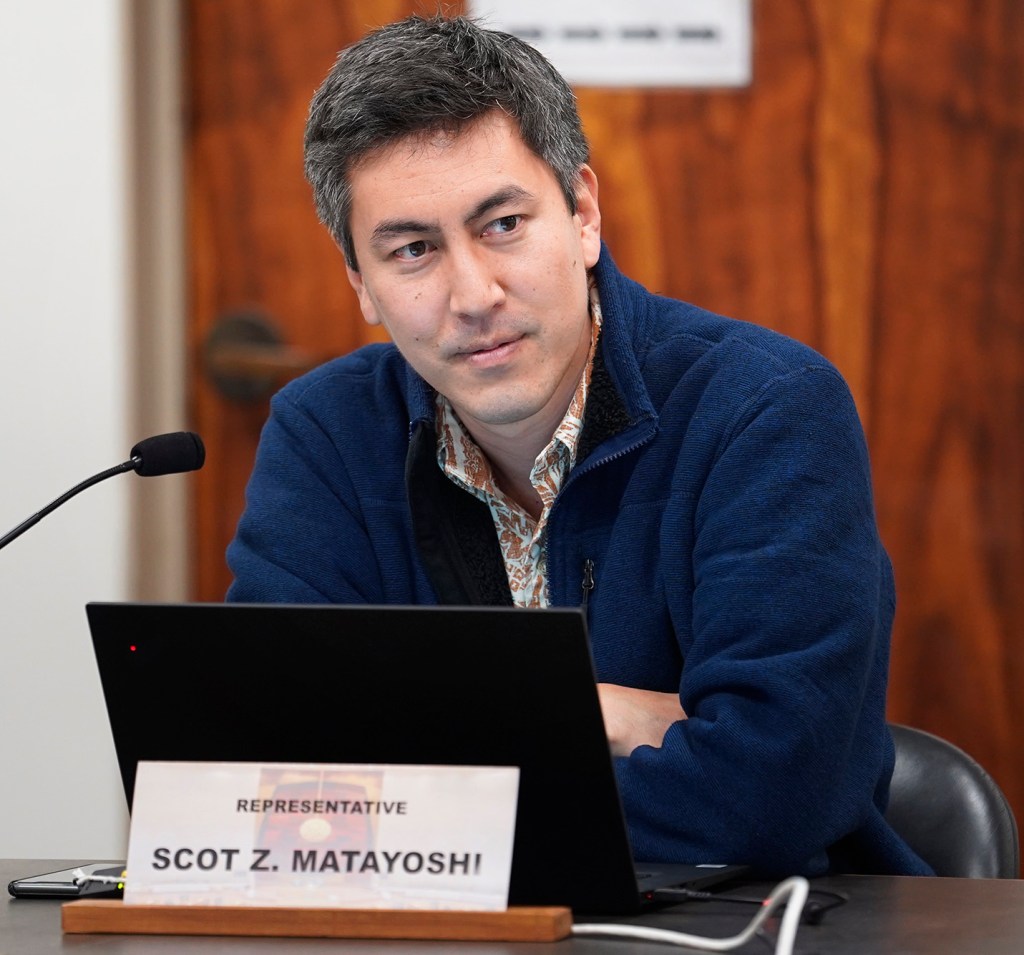
“This is just making it much more accessible to more people,” said state Rep. Scot Matayoshi, who introduced the bill this year to outlaw prediction markets in the state. “People who don’t have the addiction level to go seek out an illegal shady gambling house will now be able to be addicted to gambling on their phone, and also lose a lot of money that way.”
‘Unregulated, Untaxed Gambling’
Kalshi and Polymarket are regulated by the Commodity Futures Trading Commission. That federal agency is charged with overseeing the derivatives market, which deals in contracts traded based on the future value of commodities.
Because they fall under federal commodities law, the platforms are allowed to operate — and facilitate wagers on politics or sports — even in states that ban gambling or online sports betting. That includes Utah, the only state other than Hawaiʻi with an outright ban on gambling, and nine other states that outlaw all forms of sports betting.
Minnesota this year became the first state to pass a bill banning prediction markets. Other states are taking different approaches to regulating prediction markets. California Gov. Gavin Newsom earlier this year issued an executive order barring state officials from using insider knowledge to make bets on prediction markets.
Tom Shell of Haleʻiwa uses Polymarket to wager on sports games. Most recently, he bet $10 that the World Cup final would end in a draw between Spain and Argentina during regular time. He ended up winning $20. (Spain scored a goal in extra time.)
“I’m not very interested in soccer,” he said. “But once I put $10 on it, now, suddenly, I don’t mind spending 20 minutes watching the end of the game.”
He also engages in traditional sports betting online through a website based offshore. This is illegal in Hawaiʻi. Shell said he’s aware of the law but finds it absurd.
“I’m a 63-year-old man,” he said. “You don’t have to regulate whether or not I’m placing a bet on a basketball game.”
While he enjoys using Polymarket, he said he avoids wagering on certain events, such as outcomes where someone might have privileged knowledge of what’s going to happen, like how long the national anthem at the Superbowl will last. He also avoids wagering on events such as whether natural disasters will strike or whether certain countries will go to war.
“I personally have ethical problems with betting, for example, on war,” he said. “But if you wanted to do it I wouldn’t say you shouldn’t. It’s every person’s individual decision.”
Traders on Kalshi and Polymarket wagered more than $1 billion on outcomes related to the Iran war. Wagers were also placed on whether the U.S. military would capture former Venezuelan President Nicolas Maduro. A U.S. soldier was later charged with using classified information about the timing of the raid to profit from prediction markets.

Explore detailed legislator profiles, voting records and what happens in hearings on Digital Democracy.
Former New York congressman George Santos is under investigation by the Department of Justice for wagering on Kalshi about whether or not he would appear at Trump’s State of the Union address and posting messages to social media, allegedly to influence the public and throw off other people’s trades. Santos, who wagered that he would be absent from the speech, announced on X the day before that he planned to be there. Then, he didn’t show up.
Matayoshi said the potential for people with insider knowledge about events to take advantage of other users on these platforms is among his major concerns. He also fears wagers on certain events could spur people to commit crimes to influence outcomes. For example, some experts have expressed fears that wagers placed on wildfires could incentivize arson.
Matayoshi’s bill would have outlawed prediction market platforms in Hawaiʻi by classifying them as gambling and therefore making them subject to the state’s existing gambling laws. The bill passed the House and was referred to two Senate joint committees. It was not given a hearing.
State Sen. Jarrett Keohokalole, who chairs the Commerce and Consumer Protection Committee, said he tried to push the bill through, but there wasn’t enough interest from other senators, and he couldn’t get a joint committee hearing scheduled. Sen. Lynn DeCoite, who chairs the Economic Development and Tourism Committee — the other committee the bill was referred to — did not respond to calls and emails seeking comment.
The bill received strong support in the House, as well as from the vast majority of testifiers, including Honolulu Prosecuting Attorney Steve Alm.
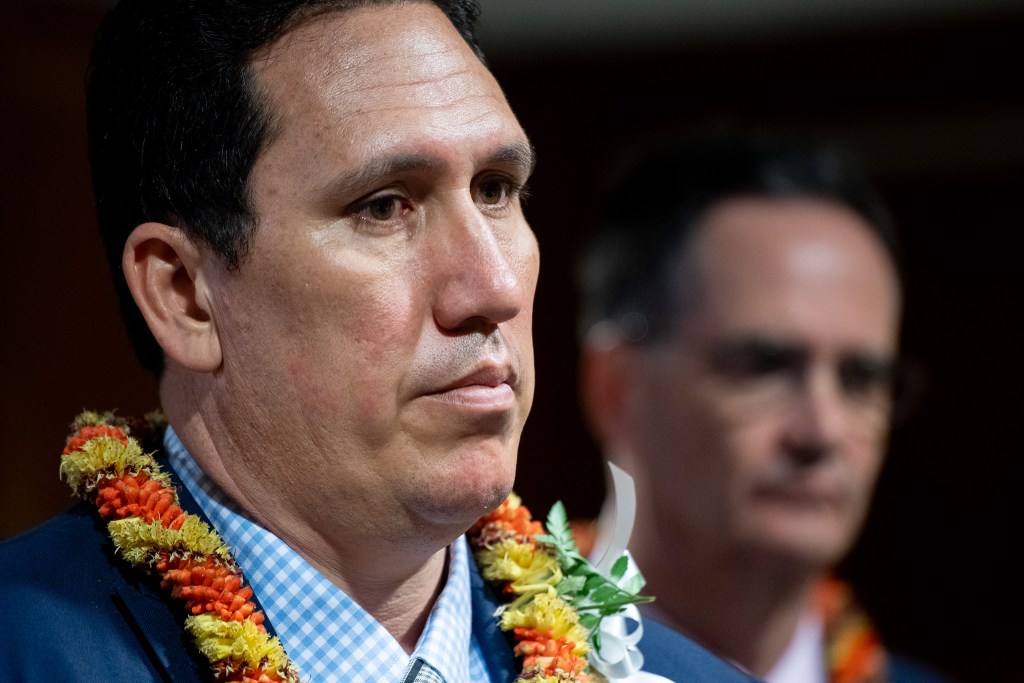
In testimony before the House Consumer Protection and Commerce Committee in February, Alm referenced concerns about Kalshi users wagering on Gov. Green’s word choice during his state of the state speech.
“Things like this could really influence public policy and national events in a really scary way,” he told committee members.
Matayoshi said he plans to reintroduce the bill next year.
Although he wants to see prediction markets banned, Keohokalole has referenced Kalshi in his run for Congress against Rep. Ed Case. In a mass campaign text, Keohokalole shared early wager data showing a majority of traders bet he would defeat his opponent.
“We were just highlighting the fact that we were huge underdogs,” he said, “and then after the New York Times reported on us, the lines flipped vertically.”
The results have since reversed, with more people betting on Case to win.
Keohokalole sees a lot of issues with Kalshi and Polymarket, particularly the potential they create for insider trading. He said the bet just opened on the timing of Luke’s potential resignation from her post at lieutenant governor is another example of a problematic wager, especially because she has not been tried or convicted for her alleged participation in a bribery conspiracy.
The potential for apps like these to influence judicial outcomes is also concerning, Keohokalole said.
“During jury selection, do you have to ask these people whether they’ve bet on the outcome of the trial before they sit as a juror?” he said. “Do we have to change the law to make sure that that’s illegal?”
Attempts To Regulate
Minnesota’s law, which was set to take effect in August, would have forced apps like Polymarket and Kalshi to place geographic restrictions on themselves that block users in the state from accessing them.
The law is already being challenged in court by the Commodity Futures Trading Commission which argues the prediction market industry should be solely regulated by the federal government. The commission was set up as an independent government agency established by Congress, but Trump has sought to exert control over such bodies.
Polymarket and Kalshi also joined the lawsuit. Trump’s son, Donald Trump Jr., holds advisory positions and is invested in both companies.
A federal judge Monday temporarily blocked Minnesota from enforcing the law.
“The opportunities for really bad things, including corruption and addiction, are huge.”
Minnesota Rep. Emma Greenman
The bill would have banned platforms from hosting prediction market wagers on certain categories of events, including sports, elections, popular culture, emergencies and natural disasters, deaths and political or legal outcomes.
Minnesota Rep. Emma Greenman, who introduced the measure, said the use of Polymarket and Kalshi has exploded in her state in the past year, and she’s particularly concerned about the companies’ targeting of young users. Users must be 18 to create accounts on Polymarket and Kalshi.
When asked about states’ attempts to ban prediction markets, Polymarket spokesperson Connor Brandi said in a statement that these bills contradict the Commodity Futures Trading Commission’s framework for regulating prediction markets.
“We look forward to addressing these claims through the appropriate legal process,” he said.
Spokespeople for Kalshi did not respond to requests for comment.
In some instances, Kalshi has filed preemptive lawsuits to prevent states from trying to regulate prediction markets. In Iowa, for example, Kalshi sued to block the attorney general from taking enforcement action against the company.
The lawsuit came after representatives from Kalshi had a tense meeting with Iowa Attorney General Brenna Bird, and other officials grilled the company representatives about whether Kalshi was violating state law. Iowa allows gambling and online sports betting, but Bird has said Kalshi and Polymarket are bypassing the state’s consumer protections and tax requirements.
Multiple state and federal judges have ruled in favor of states trying to regulate prediction markets. A Michigan state judge issued a temporary restraining order against Kalshi last month blocking the platform from offering sports wagers in the state. Michigan allows sports betting from licensed operators, but the state’s attorney general has said Kalshi amounts to “unlicensed gambling activity.”
Greenman called the Commodity Futures Trading Commission assertion that it alone has the ability to regulate these markets “insane.”
“From a state perspective, we’re the ones left holding the bag when people lose faith in the decisions of their lawmakers because it turns out somebody is betting on the outcome of their policy or their lawsuit,” she said. “The opportunities for really bad things, including corruption and addiction, are huge.”