Ex-Social Worker Gets 10 Years In Prison For Daughter’s Death
The public may never know key details about how Sina Pili was able to keep working with children as police investigated her for her daughter’s death.
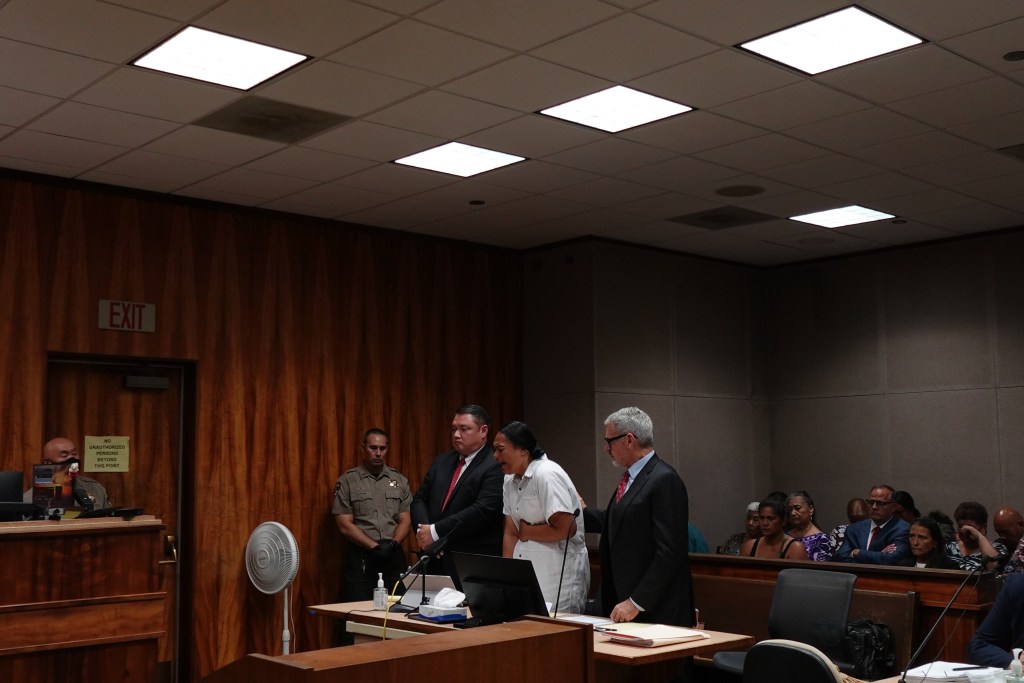
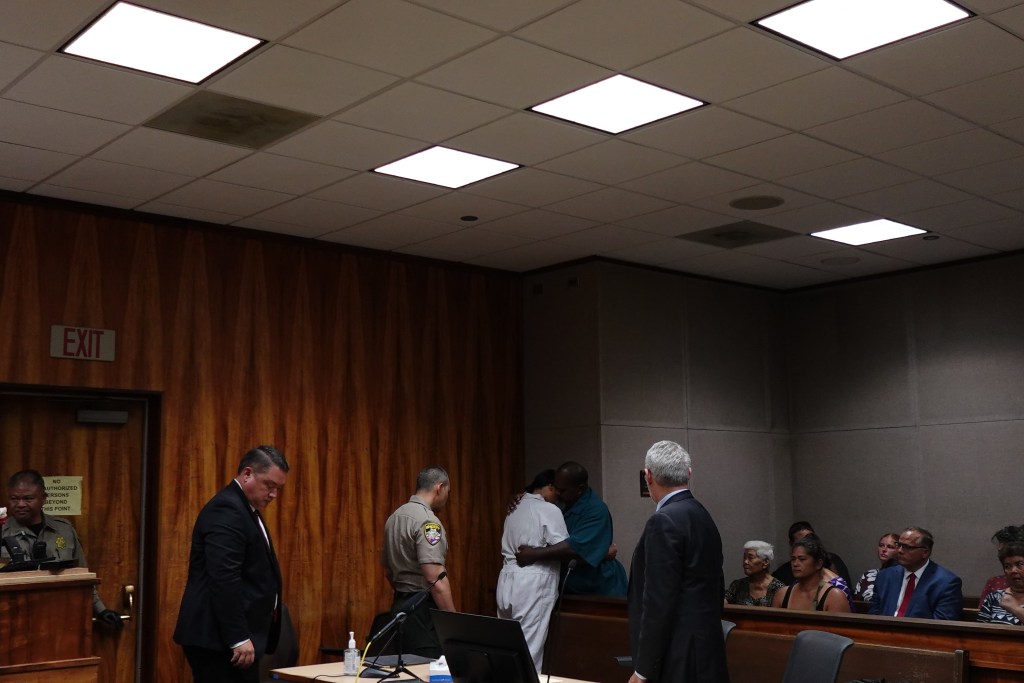
Sina Pili’s sobs echoed through the courtroom Wednesday as the Lāʻie woman addressed the judge who was about to sentence her in the death of her 11-year-old adopted daughter, Azaeliyah Pili-Ah You, days before Christmas in 2023.
“I am so sorry. I love my children, your honor, with all of my heart,” Pili said through tears. “I am sorry for what I’ve done to my family. I’m trying to do what’s right, not just because I know it’s what’s right, but because I love my family. I love Azaeliyah.”
Her cries did not persuade the judge to give Pili probation, as her attorneys had asked. The injuries she caused “ultimately resulted” in the child’s death — something for which there is no excuse, the judge said.
“I’ve never had to sentence a mother who caused serious bodily injury to her child,” Judge Rowena Somerville said.
Pili was sentenced Wednesday to 10 years for assault, and an additional year each for two misdemeanor charges related to child endangerment and persistent nonsupport — to be served concurrently, along with credit for time served.
The former social worker, originally charged with manslaughter, had pleaded guilty to assault in April — a crime that carries a much lower maximum sentence. Experts say that although prosecutors and the public often prefer cases involving the death of a child to go to trial, there are often strategic reasons prosecutors strike a deal.
“The death of children is, of course, always traumatic. The public wants to see people punished for these kinds of offenses,” said Guy Rubinstein, a professor at the law school at the University of Hawaiʻi Mānoa. “But sometimes it’s very difficult to prove guilt in these cases.”
The plea deal all but ensured the public will not get more answers to questions about whether more should have been done to ensure the family had sufficient support and why Pili was able to keep working with children as a school-based behavioral health specialist, even after her child’s death.
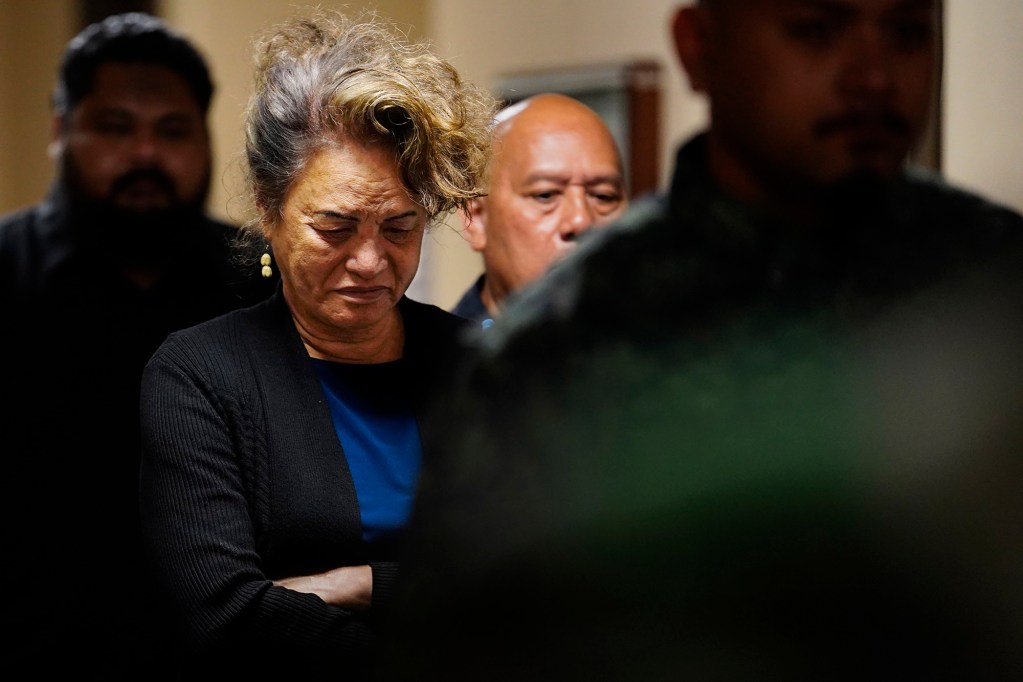
To Azaeliyah’s family, Pili’s tears only served to rub salt in the wounds. The plea deal and the resulting sentence feel like a far cry from justice.
“It’s bullshit,” the girl’s aunt, Hailau Acevedo, said as she left the courtroom. “Somebody is dead.”
A Long Road To Arrest
Azaeliyah had been living with Sina and Davis Pili and their four other adopted children for about a year before she died. Davis Pili was the cousin of the 11-year-old’s biological mother, according to court records. The Pilis formally adopted the girl in October 2023, about three months before she died.
At first, police didn’t treat Azaeliyah’s death as suspicious. Her cause of death was unknown, but the medical examiner’s unofficial findings indicated it might have been related to a respiratory illness. She had been sent home from school a few days earlier with a 101-degree fever, and her adopted father had recently been diagnosed with pneumonia.
The lead officer on the case wrote in a report that without a reason to suspect the girl’s death was related to child abuse, the initial task was to determine whether the other children in the house were at risk of abuse or neglect.
About two weeks after Azaeliyah’s death, Pili admitted in an interview with police that she had given her adopted daughter “lickings” in the hours before the girl died, according to police reports.
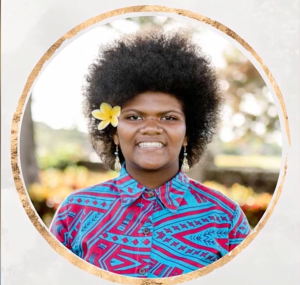
On the morning of Dec. 22, 2023. Pili had promised to take her children Christmas shopping, but Azaeliyah was dragging her feet. As punishment, Pili told police that she made the girl run to the chapel across the street, even though the child had been sick enough to stay home from school a few days earlier.
The other children in the house later told police that this was one of the ways Pili would discipline Azaeliyah, by making her run laps. At least one child also said Pili would hit Azaeliyah with a spoon, according to police records.
Pili told police that when Azaeliyah returned without finishing the run, she began to slap and hit the girl with her fists, on and off for about 30 minutes. The girl lay on the floor, mumbling and refusing to move, according to police reports.
After Pili’s husband returned with their other children, Azaeliyah got up and went to take a shower. That’s when Pili and her husband said they heard a thud and found the girl lying unresponsive on the shower floor. At first, they told police they weren’t sure if she was just being stubborn. When they realized the severity of her condition, Davis Pili called 911 and started CPR, according to court documents. First responders noted visible bruises that the girl’s mother said were possibly from rugby. The girl was pronounced dead at the hospital in Kahuku.
After Pili admitted to hitting Azaeliyah shortly before her death, the four other children were removed from the Pilis’ custody and sent to live with relatives. The Honolulu Police Department’s child abuse unit handed the investigation over to the homicide unit.
In June 2024, more than six months after Azaeliyah died, officials determined her death was caused by injuries related to child abuse. An analysis of the autopsy by a forensic pathologist concluded the girl had suffered bruising so deep that it reached her diaphragm, as well as fractured ribs, a hemorrhage on the top of her head and indications of strangulation. The forensic pathologist also noted the girl had a bite mark on her nose and had tested positive for Covid-19, influenza A and pneumonia.
It would be another roughly nine months before Pili was arrested and charged with manslaughter, a crime punishable by up to 20 years in prison and a $50,000 fine. She was also charged with endangering the welfare of a minor and persistent nonsupport – each carrying a maximum sentence of a year in prison and a $2,000 fine. She pleaded not guilty.
Pili has been in custody since her arrest. This April, she pleaded guilty to the lesser charge of assault, along with both misdemeanors. Her plea deal shocked and angered Azaeliyah’s aunt, Hailau Acevedo.
“I don’t think it’s justice. I don’t think it’s fair. I don’t think it’s right,” Acevedo told KHON in April.
At her sentencing, Pili’s attorney, Myles Breiner, told the court that Pili was under enormous pressure but still welcomed Azaeliyah, who had special needs, into her home.
“Yes, she administered corporal punishment to her. And it’s terrible,” Breiner said.
But, he added, Pili didn’t know how sick the child was that day. There isn’t a day that she doesn’t regret what happened to Azaeliyah, he said.
“As a result of this case, she no longer has a family,” Breiner said. “Those are the consequences. Terrible consequences.”
Plea Deal Leaves Unanswered Questions
Without a trial, more information about the circumstances surrounding a child’s death and the investigation into it may never come to light.
The public won’t know, for example, why it took so long for Pili to be arrested — even after her other children were removed from her care. Although she admitted the “lickings” to police two weeks after her daughter’s passing, she wasn’t arrested until more than a year after her daughter’s death was being investigated by Honolulu police from the child abuse and homicide units.
A jury won’t hear evidence that could answer questions about whether there were any warning signs that should have been caught before a little girl died. There may not be more explanation of why it took about six months to even rule her death a homicide. And there may never be clarity on why Sina Pili’s husband was not arrested.
Davis Pili was still under investigation when his wife was arrested, but he has never been charged. Police records indicate that Davis Pili and the other children were not home when Sina Pili gave the couple’s adopted daughter those “lickings” on the morning of her death, but returned shortly after. At least one of the children later told police that Davis Pili had previously punched Azaeliyah and hit her with a spoon, according to police records. Honolulu police did not provide an update on the status of any investigation into Davis Pili and he could not be reached for comment.
Another factor that might have been discussed in the courtroom was Sina Pili’s work history and what her employer knew about the homicide investigation. She was a behavioral health specialist working with students with disabilities at Kahuku High and Intermediate School right up until her arrest. Yet she continued her employment with the Department of Education for two more months. The department has not answered questions about whether Pili was fired or whether she was ever investigated by the department.
“Nobody wanted to hear her ‘I’m sorry, I’m sorry’ over and over again. Nobody wants to hear that.”
Hailau Acevedo, Azaeliyah Pili-Ah You’s aunt
But the public shouldn’t consider a guilty plea to be a defendant getting off the hook, Rubinstein said.
“When someone pleads guilty, even if it’s to a lesser offense, at least they take responsibility for what they did,” he said.
In Sina Pili’s case though, prosecutors weren’t convinced she had taken accountability for the role she played in a child’s death. Pili’s letter to the court prior to her sentencing contained “a lot of reasons why this wasn’t her fault,” the prosecutor, Tiffany Kāʻeo said. “But her explanation for what happened on Dec. 22, 2023: ‘I misread the whole situation. I reacted wrongly.’”
“If she cannot have insight into her behavior and how those actions were wrong,” Kāʻeo added, “how can the state ever be assured that she will not repeat this behavior?”
Pili’s tearful apologies in court also rang hollow to Azaeliyah’s family.
“Nobody wanted to hear her ‘I’m sorry, I’m sorry’ over and over again,” Acevedo said. “Nobody wants to hear that.”
Why Prosecutors Pursue Plea Deals
The vast majority – around 95% – of all criminal convictions across the country are the result of plea agreements, a trend echoed in child abuse cases. Research shows that it’s rare for these cases to go to trial, and the rate of child abuse cases that end in a guilty plea is high.
There are reasons for that, according to Rubinstein, who did not address Pili’s case specifically but spoke broadly about child fatality and child abuse cases. A plea deal might not be the prosecutor’s first choice, but it can be the best way to secure a conviction, even if it’s to a lesser charge.
Cases involving the death of a child come with a host of challenges that make them hard to bring to trial. Prosecutors often have to rely on forensic evidence like autopsy reports that may not be conclusive. Victims can’t testify. It’s difficult to find witnesses who saw what happened firsthand. And what if the only first-person witnesses are other children?
Even if the defendant’s actions resulted in a child’s death, a guilty verdict on a manslaughter charge isn’t a sure thing. Prosecutors have to convince a jury that the defendant acted recklessly. Under Hawaiʻi law, Rubinstein said, that means the defendant “consciously disregarded the substantial and unjustifiable risk that their conduct will cause the death of the child.”
It can be hard to prove beyond a reasonable doubt that the defendant knew their actions could kill the child and chose to ignore that risk, according to Rubinstein.
“Many times, there is a gap between what prosecutors really think happened and what they think that a jury will ultimately decide,” he said.
Cases like Azaeliyah’s pose another challenge. The girl’s siblings are all under the age of 15. They have already been through at least two rounds of interviews with police and months of separation from their adopted parents, on top of the death of their sibling. Pili’s four other children now are scattered in different foster homes and have gone in and out of facilities, according to her attorney.
Prosecutors in these types of cases think long and hard about whether to put grieving loved ones through a drawn-out trial.
“If they do take this case to trial, some of these surviving family members will have to testify. That can be very, very, very traumatic, especially for young children,” Rubinstein said. “So a lot of times you see prosecutors who really want to spare them trauma.”
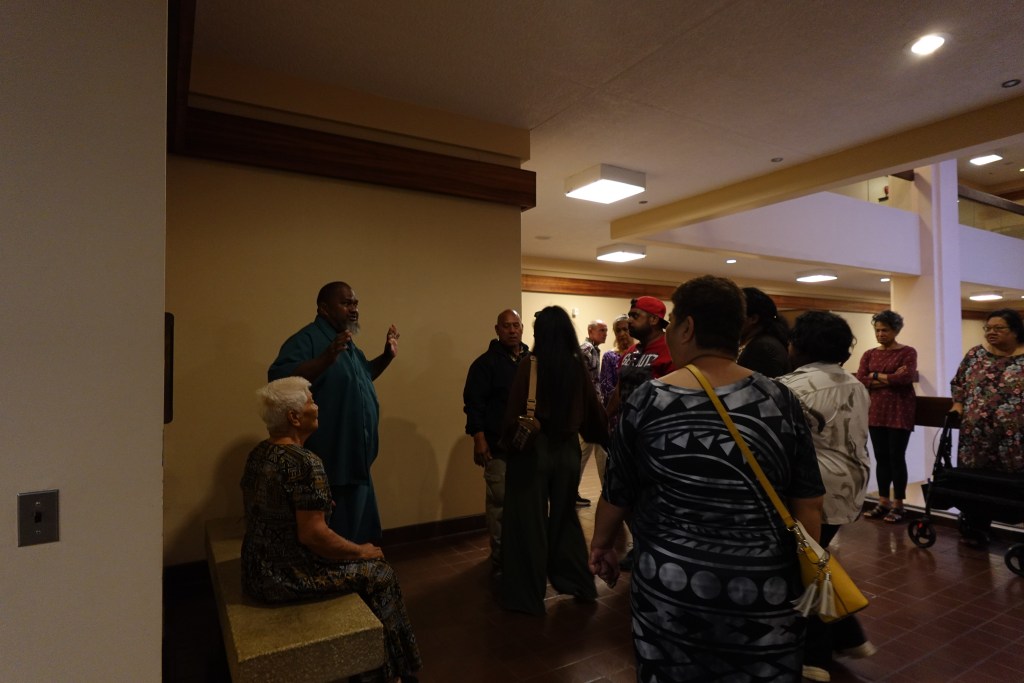
Still, the trauma was raw at the sentencing. The woman’s family and friends wiped tears as she sobbed her apologies. Tension between Pili’s family and Azaeliyah’s biological relatives boiled over in the hallway after the proceedings when the little girl’s uncle confronted Pili’s husband, shoving him against a wall.
Reporter Megan Tagami contributed to this story.