Honolulu Councilman Can’t Seek Third Term In Heated Primary, Judge Says
It’s unclear what this means for voters who have already voted for Tommy Waters in the primary election.
Honolulu City Council Chair Tommy Waters is ineligible to run for reelection, a state court judge ruled Monday, even though his name is already on the primary election ballot and thousands of voters have already voted in the race.
The Honolulu City Charter limits council members to two consecutive four-year terms. Waters had sought a third consecutive term this year, arguing his first term began late and therefore wasn’t a full four years. Waters began that term in May 2019, months after the usual start date, because a legal dispute over ballots triggered a do-over election.
Waters’ longtime political opponent Trevor Ozawa challenged Waters’ argument in court last month, and Circuit Court Judge James Ashford on Monday agreed that Waters is ineligible.
The Honolulu City Charter describes regular terms and vacancy terms, which are partial terms to which Waters had compared his situation. A vacancy can occur if a council member resigns or dies in office.
Because Waters’ first term was not a vacancy term, Ashford said, it was therefore a regular term that counted toward Waters’ term limits.
“It was always a regular four-year term,” Ashford said Monday morning.
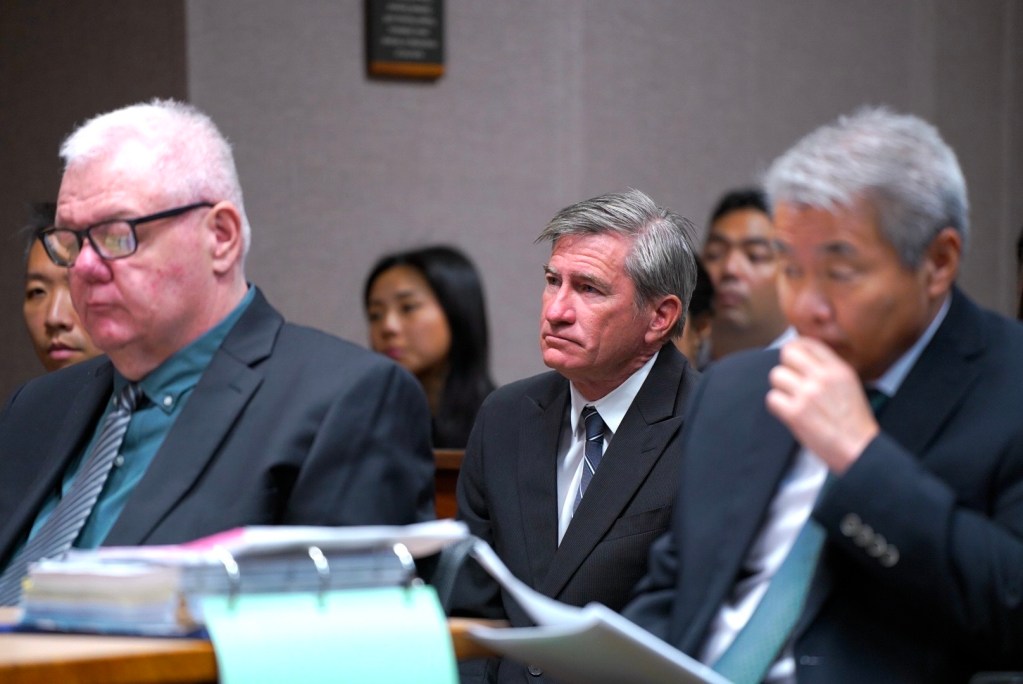
The court decision threatens to upend a Honolulu council race in which voters are actively filling out ballots ahead of the Aug. 8 primary election. Waters’ name was already printed on the ballot, alongside Ozawa and political newcomers Tara Malia Gregory and Jason Liang. Roughly 8,000 ballots have been returned so far in District 4, which covers Waikīkī and East Honolulu, out of 65,000 issued.
Waters plans to appeal the decision, he said in a statement.
“We respect the court’s decision and appreciate its consideration of this matter,” Waters said. “We plan to file an appeal because, given the broader implications this case has for Honolulu’s governance, we believe review by the Court of Appeals is appropriate. I believe that the voters should have the ultimate decision come election day. My focus, however, remains unchanged, and I remain committed to serving the people of Honolulu and fulfilling the responsibilities the voters entrusted me with for the remainder of this term.”
What will happen to Waters’ votes, or whether a special election will need to occur, is unclear. The matter appears to be without direct precedent in Hawaiʻi history, particularly in an era of mail-in voting that extends the voting period. Hundreds, if not thousands, of District 4 voters have already made their selections thinking Waters was eligible. Those who haven’t yet made their choice will fill out their ballots under a cloud of uncertainty.
“It’s going to be complete chaos,” University of Hawaiʻi Mānoa political scientist Colin Moore said after Monday’s decision.
Longtime Rivalry
Ozawa and Waters have been political rivals for years. Their current disagreement is a direct outgrowth of their matchup eight years ago during the 2018 general election, when they ran against each other for the City Council seat.
Back then, the two men finished within fewer than 50 votes of one another. Waters, who initially lost, challenged the result in court, and the Hawaiʻi Supreme Court invalidated the results. That set up a special election rematch between Ozawa and Waters in April 2019, which Waters won.
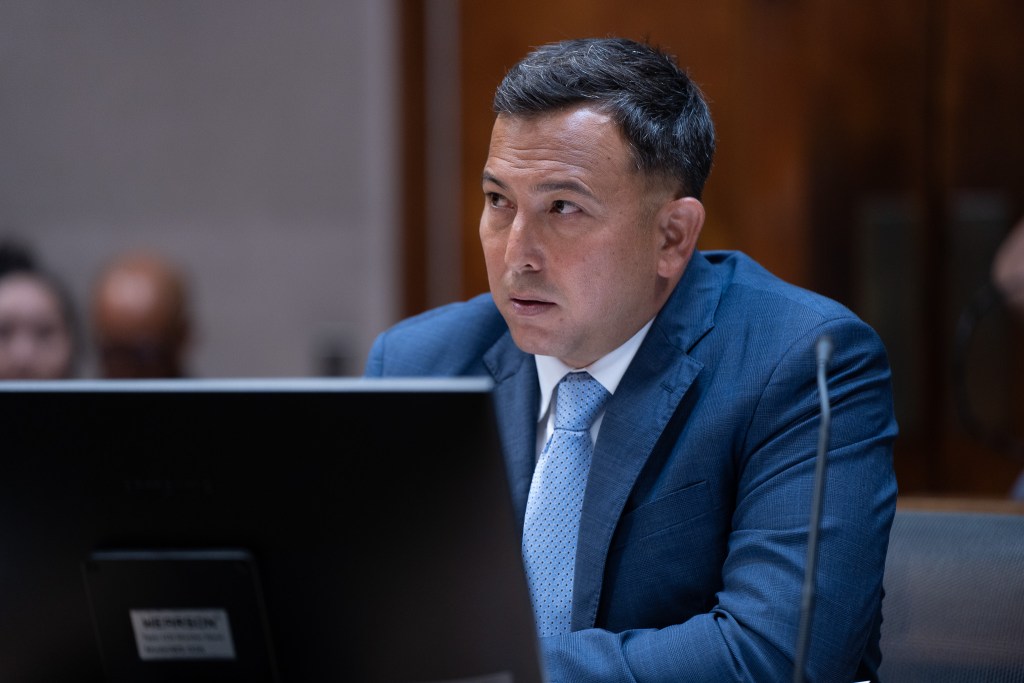
Waters took office in May, five months after council members usually take office. Because of that, Waters says, he did not receive a full four-year term. He said that entitled him to run for a new term that would begin in 2027 and end in 2031.
“It is undisputed factually that Mr. Waters has not yet been elected to serve two ‘four-year terms,’” Waters’ attorneys said in a written filing last month, “as he has served one four-year term and one partial term that lasted three years, seven months, and twenty-five days.”
Each side argued that the plain text of the Honolulu City Charter supported their case.
Ashford agreed that Waters took office after council members typically do so, “but that fact does not alter the term he ran for,” Ashford said.
Assuming Waters won this election and served through 2031, that would give him more than 11 years in office despite the City Charter aiming to limit council members to eight years of service.
“That’s clearly and undeniably contrary to the obvious intent (of the charter),” Ashford said.
Election law experts from around the country told Civil Beat that term limit language in the Honolulu City Charter is ambiguous. Other jurisdictions, they said, clarify the threshold for when part of a term counts toward term limits.
Waters told Civil Beat in May that even he wasn’t sure whether he was eligible to run.
“I’m going to give it a shot,” he said at the time.
Now What?
It’s unlikely the courts will make a final ruling before the Aug. 8 primary election day or even before the general election in November, attorney Lance Collins said in an interview.
Collins said there are several possible outcomes. One is that votes for Waters will not be not counted. But if Waters requests and obtains a stay of Ashford’s decision, Collins said, the city clerk could count the votes Waters receives.
“It depends on what the clerk does,” Collins said, “because the clerk is the one that counts the ballots.”
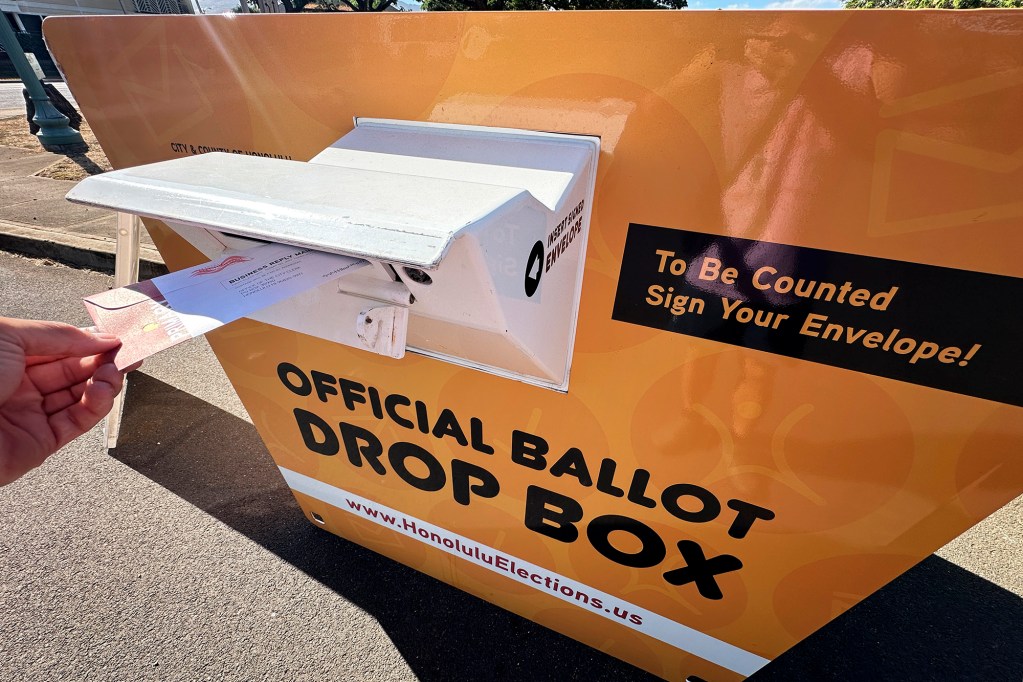
The acting city clerk is Chadd Kadota, who reports to the City Council where Waters is chair. In April, Kadota issued a preliminary decision saying Waters was eligible to run again.
If Kadota were to decide to count votes for Waters, and Waters were to beat his opponents, Collins said, the opponents could challenge that. In that case, perhaps the next highest vote-getter would be declared the winner.
Roughly 65,000 ballots were distributed to people in District 4 and roughly 8,000 have been sent back as of Monday morning, according to the state Office of Elections website.
Asked how votes for Waters will be handled, Hawaiʻi Chief Elections officer Scott Nago deferred to Kadota.
Kadota did not respond to an emailed interview request Monday afternoon. Late in the afternoon, his office issued a short press release acknowledging Ashford’s ruling.
“We are carefully reviewing the ruling and consulting with legal counsel to determine its impact on the administration of the election,” he said.
Opponents Celebrate
Contacted after Monday’s hearing, Waters’ opponents said they were happy with the decision.
“People wanted a two-term limit,” Gregory said, “and the judge saw that, and the letter of the law and the spirit of the law show that.”
Liang said one fewer candidate improves the chances of those who remain. Still, he criticized Ozawa for waiting to file the lawsuit long enough that ballots were already mailed to people with Waters’ name on them.
“This has a risk of invalidating a lot of people’s votes,” Liang said.
“This has a risk of invalidating a lot of people’s votes.”
District 4 candidate Jason Liang
Ozawa has said in court filings that he filed the lawsuit in a timely manner after filing for his own candidacy and after submitting an objection to Waters’ candidacy to the city clerk.
After Ashford’s ruling, Ozawa said he was grateful for the decision, and that the City Charter has rules to ensure fair elections.
“Nobody should be able to bend those rules for themselves for personal benefits,” he said.
CORRECTION: A previous version of this story mischaracterized how the 2018 District 4 race was overturned. It was a decision by the Hawaiʻi Supreme Court.