

Honolulu Cut Speed Limits By Schools But Didn’t Change The Signs
The speed limit on Oʻahu school zones is 20 miles per hour. You wouldn’t know it by driving by.
For Kris Ohara, the most stressful part of walking her fourth-grade daughter to Alvah Scott Elementary in ʻAiea is crossing the street, where she said drivers often failed to slow down or pay attention.
“Many times we almost got run over because a lot of drivers are not heeding the precautions or just signs in general,” she said.
Honolulu lowered speed limits in school zones in November 2024 from 25 to 20 miles per hour to promote public safety, which Ohara said was a good move. Pedestrian deaths have fluctuated over the years, but last year was an 18-year high with 125 traffic-related fatalities.
A year and a half after Bill 44 became law though, drivers would have no way of knowing they are supposed to slow down. Only one school zone — St. Anthony School in Kailua — has been updated with new 20 mph signs.
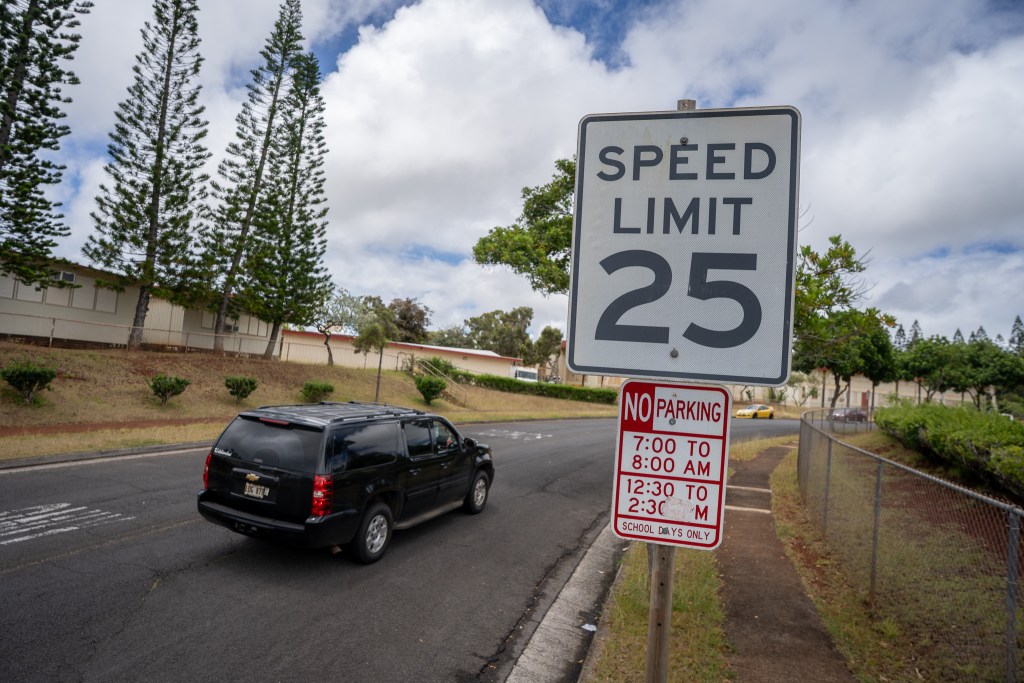
“I wasn’t aware that it already took effect in 2024, so that’s very concerning,” Ohara said. “I would hope that they would do it sooner instead of proposing something, but not going through with it.”
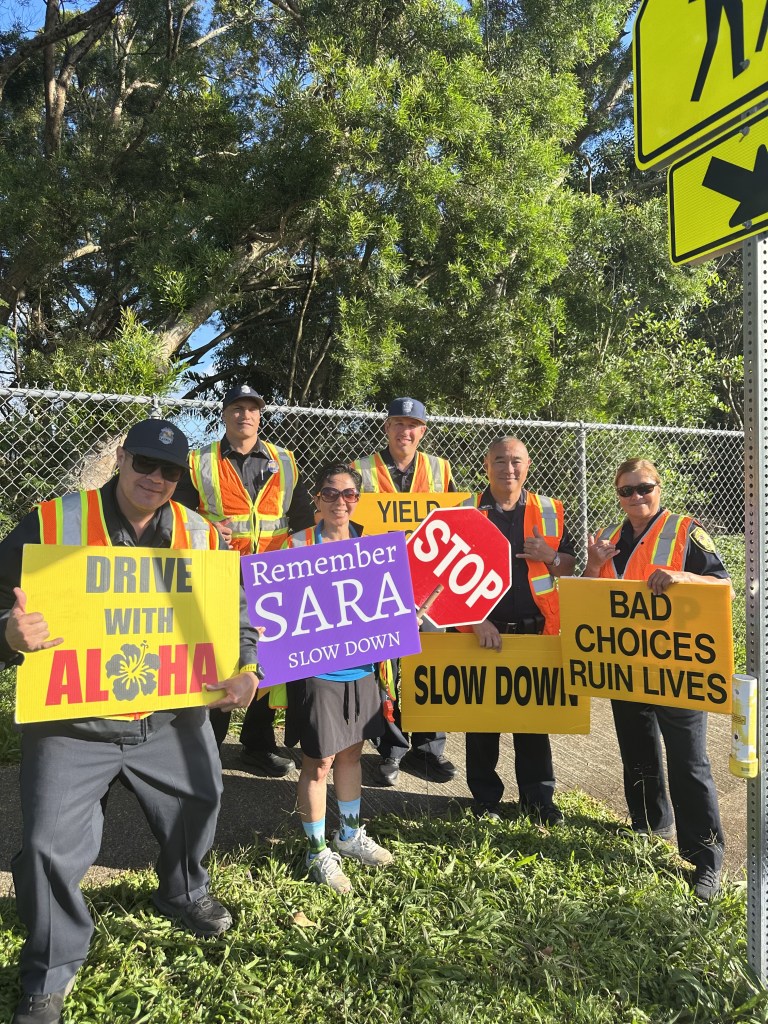
The delay is emblematic of a city bureaucracy that lacks a sense of urgency, said Joni Kamiya, a volunteer crossing guard at Kāneʻohe Elementary. Kamiya said she bought her own speed gun to detect violators and bring them to the attention of police. She once logged someone driving 48 mph through the school zone.
To Kamiya, it feels like Honolulu is waiting for someone to get hurt.
“It’s so frustrating,” she said. “Why are we waiting for something to happen, and then we have to react?”
The impact of the law hasn’t been felt due to implementation challenges, according to Renee Espiau, the city’s Complete Streets program administrator.
“Why are we waiting for something to happen, and then we have to react?”
Joni Kamiya, Kāneʻohe Elementary School volunteer crossing guard
“It’s very easy to say, ‘Just change the signs,’” Espiau said, “but nothing is ever simple and cookie cutter when it comes to street design.”
According to Espiau, 14 school zones are under contract, with installation expected to begin rolling out early next month.
“We know that speed kills,” Honolulu City Council member Tyler Dos Santos-Tam said. “I wish we could move a whole lot faster, but I’m glad to hear that they’re at least getting it going, and hopefully that momentum sticks.”
Without the new signs, the new law isn’t being enforced.
Assistant Police Chief Ryan Nishibun told Civil Beat in a statement that the Honolulu Police Department only enforces posted speed limits. Drivers need to be informed of the change for cases to hold up in court.
A car traveling at 30 miles per hour in a residential neighborhood is seven times more likely to hospitalize a child than a car driving at 20 miles per hour, according to the American Academy of Pediatrics.
What’s Taking So Long?
The city’s Complete Streets Program collaborates with other agencies like the Department of Transportation to deliver safety improvements for the city’s streets.
Updating signage can be more complex than it seems, according to Espiau.
“We really have to look at the entire school zone signage around the school and update the entire sequence,” she said.
In Espiau’s estimate, the first batch of roughly 14 schools alone requires removing 131 outdated signs and installing 387 new ones, along with making sure signposts meet the current federal standards such as placement distance and sign sizing.
Each school zone needs around 50 sign “adjustments” — removals, new signs and post changes — which pencils out to roughly 10,000 individual sign changes across about 200 school zones islandwide, she said.
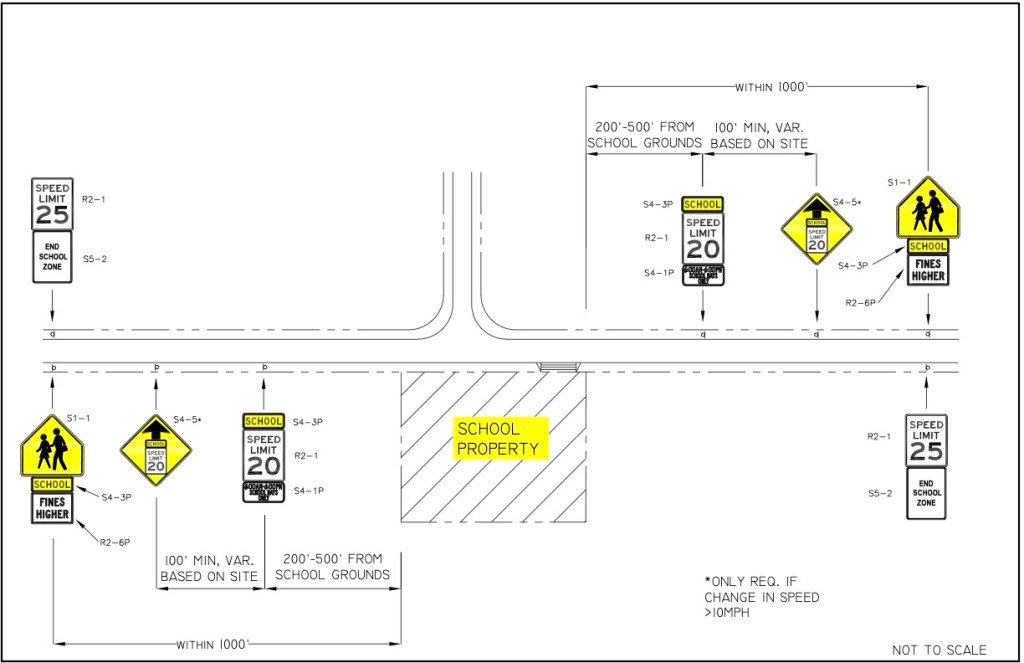
The multi-step process begins with the city examining the school zone and its bordering city streets, Espiau said. Engineers and staff will then go into the field to verify which signs shown on their plans actually exist, since some signs may be missing, knocked down, or predate current federal standards.
Using design software, they create a new signage plan that follows today’s current required progression of signs in both directions — such as “School Zone Ahead,” “School Zone Speed Limit Ahead,” the posted speed limit, and “End School Zone.”
Each individual signpost location must be measured, checked for visibility, and brought up to code, which could often require new breakaway posts placed where they won’t be blocked by utility poles, fire hydrants, trees, or other street factors.
Once the city’s plans are finalized, it will be sent to contractors, who must construct the signs, obtain street usage permits, and develop traffic control plans to protect workers while keeping traffic flowing during installation.
For the 25 mph signs, why not just slap a “0” sticker over the “5”?
“For maintenance and safety reasons, simply placing a ‘0’ sticker over the existing signs is not a practical temporary solution,” Department of Transportation Services spokesman Travis Ota said in a statement. “Stickers tend to fade, peel, and deteriorate over time, requiring maintenance crews to return for replacement.”
Plus, he said, traffic signs have to be reflective so they can be visible to driver sat night when illuminated by headlights.
“Crews would still need to implement traffic control, mobilize vehicles and equipment, and dedicate staff to install the stickers,” he said, “utilizing the same resources that would be required to install permanent, compliant signage.”
For residents like Kamiya, it feels like the city is in no rush to get the job done.
“The bureaucracy is so horrible,” she said.
‘It’s A No-Brainer’
Similar to Ohara, other parents such as Joseph and Yoko Arnet are concerned with driver’s speed in neighborhoods such as Kīpapa Drive in Mililani.
The family recently moved to Oʻahu from Japan and said the faster pace of traffic was one of the first things they noticed.
As they search for a neighborhood to live in and a school for their daughter, who is entering kindergarten, the father explained road safety has become an important factor in their decision.
“The first thing I noticed traveling here was, it’s fast,” Joseph Arnet said. “The speed limit being lower, especially around schools and there’s a lot of people living around, is a very good idea… It’s a no-brainer.”
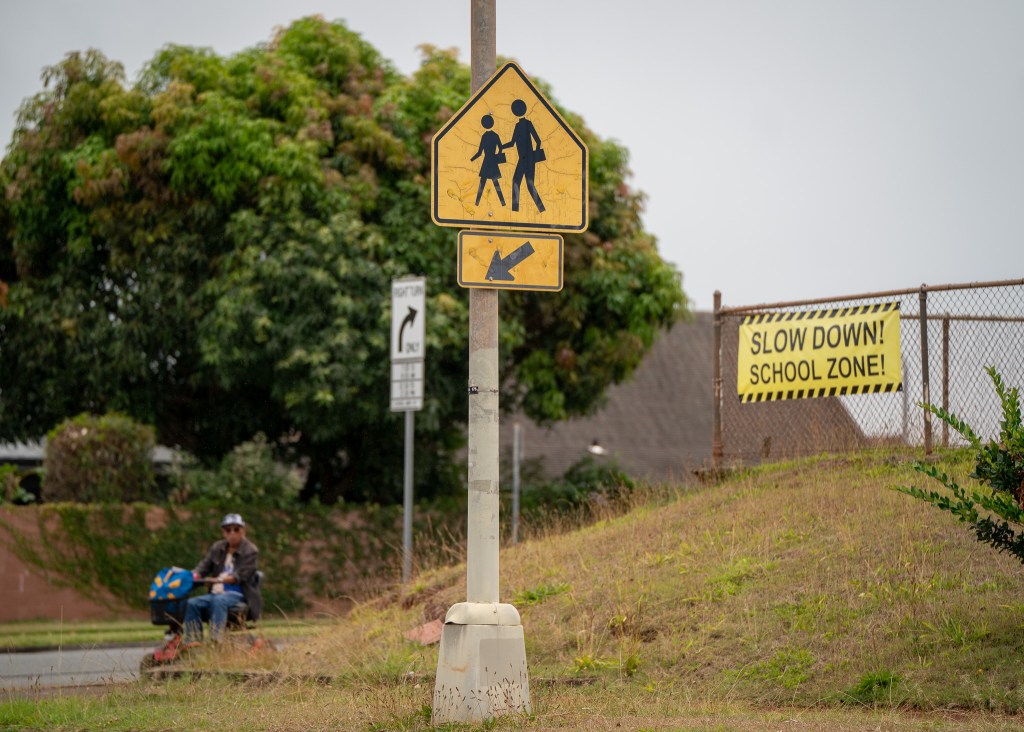
Rep. Darius Kila, chair of the House Transportation Committee, said the intent behind lowering school zone speed limits is an important step — but the change can only be effective if drivers are aware.
“There’s no sense for us to advertise the new ordinance when we don’t have the signage to match,” he said. “I always tell people: Do not be sorry after the fact. Let’s be attentive now.”
Getting the speed limit to 20 mph is already an accomplishment and a major step toward creating safer roads for everyone, he said, especially children walking and biking to school.
“We have every opportunity to try our best to prevent (accidents),” Kila said. “It’s a shared kuleana of every single person that we need to work together to make sure that people can arrive alive, both walking, biking, and vehicular cars or motor carriers.”
Jon White, a member of the Kailua Neighborhood Board and a longtime youth sports coach, is also concerned about driving speeds near schools. Moreso than signage, he would like to see speed bumps in front of every school on the island to force people to slow down.
“I think we should give the keiki the best shot at being safe,” he said. “I’m not willing to sacrifice any kids.”
But if signs are taking this long to install, how long would speed bumps take?
“Who knows,” he said.

