In Puna, It Takes Years To Get A Mail Box At The Post Office
In the fastest growing part of Hawai‘i, a post office box shortage has made voting, shopping online, accessing important paperwork and sending packages an ongoing challenge.
Malia Everette only checks her mail on Mondays. The Puna resident drives 20 minutes to get to the Mountain View post office, where she pays for a post office box. When she’s there, she picks up mail for herself, her two adult sons and a friend who is between homes and has no other way to get mail.
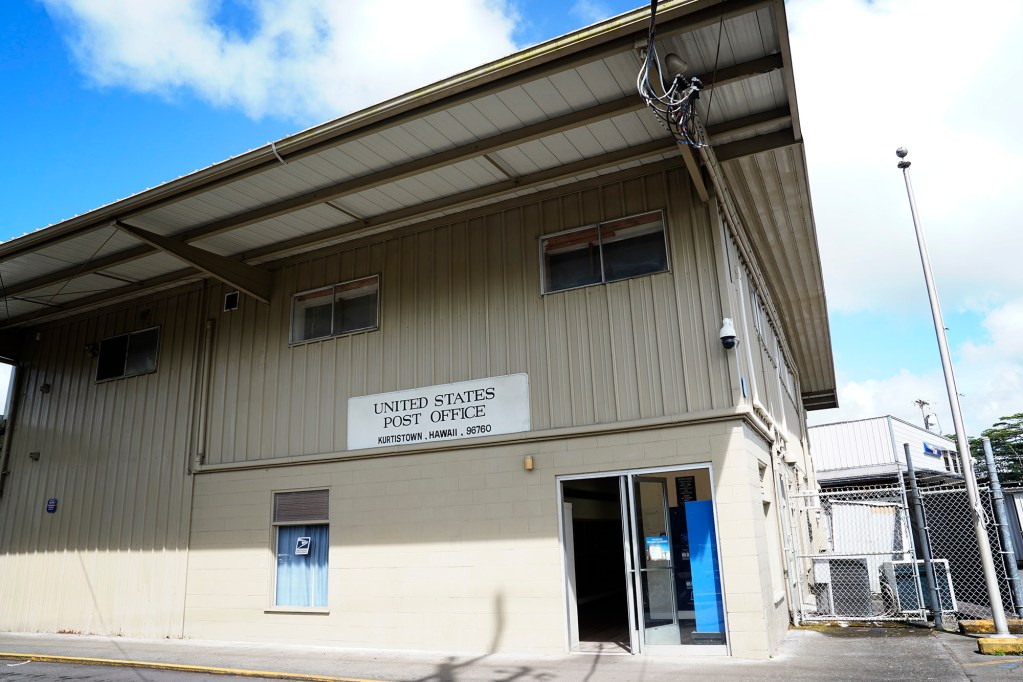
Everette applied for a box at the Kurtistown post office, much closer to her home, when she moved to the area from California in 2020. She’s been waiting to hear back about an open space for six years.
This scenario isn’t unusual in Puna, a place where many residents have told Civil Beat consistent access to mail just isn’t a given. Puna’s population grew by 20,000 people between 2000 and 2020, making it the fastest growing area in the state. The population is now estimated to be around 60,000.
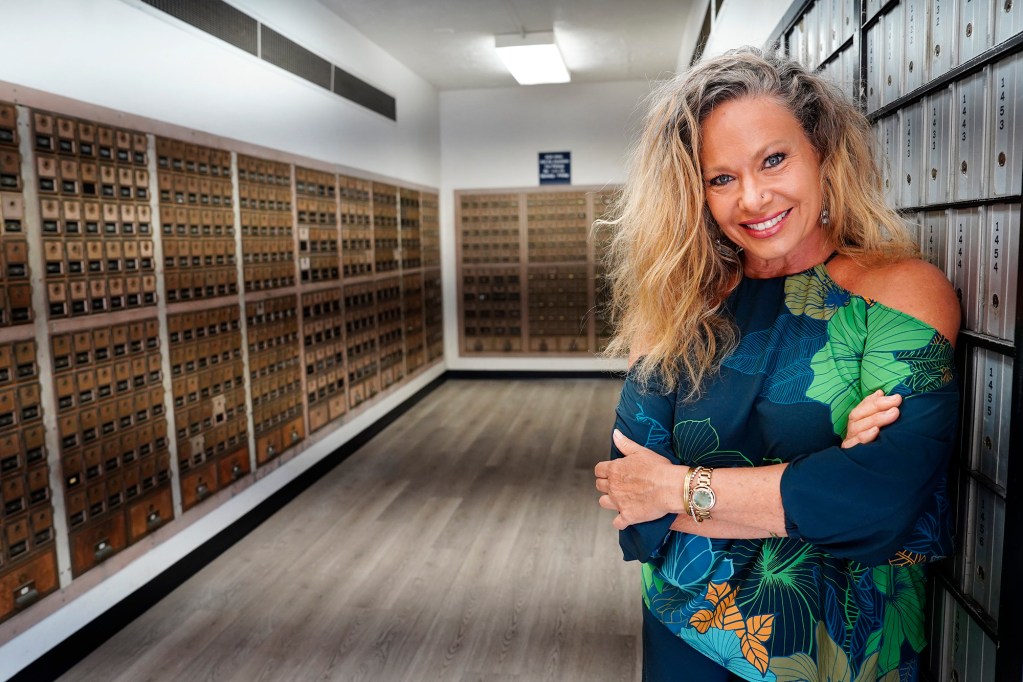
And yet, according to John Hyatt, communications officer for the U.S. Postal Service representing Southern California and the Hawaiian Islands, there are only 7,911 P.O. Boxes spread among the four small post offices in Puna: Kea‘au, Pahoa, Kurtistown and Mountain View.
Most neighborhoods in Puna don’t have residential door-to-door mail delivery, so post office boxes in the area serve as important lifelines. Some residents pay $300 to $400 a year for private mailboxes at mailbox rental companies that have sprung up in recent years to fill the gap. But others have a General Delivery address that requires them to receive mail directly from postal workers, and wait in long lines during their regional post office’s limited hours to pick up their mail.
For Everette, receiving mail only once a week makes it challenging to respond in time to paperwork requests. “My son was a victim of an assault and has a court case going on, so that has been a challenge,” she said. She also described ordering a laptop for her education business and missing the 30-day window to return it.
An Election Barrier
The long lines are also a serious challenge for older customers and those with disabilities. For many, it takes both online shopping and receiving medication by mail off the table because receiving a package at a crowded post office can take over an hour of waiting outside. Parking can also be extremely limited.
Matthew Kaneali’i-Kleinfelder, the current Hawaiʻi County Council member representing Puna and a Democratic candidate for House District 5, has been tracking the problem for years. When he and his wife moved to Puna 10 years ago they put their names on a waitlist for a post office box and they were told it would take three years. They signed up for one about half an hour away in Hilo instead.
Given that 91% of the population in Puna voted by mail in 2024, and the state has prioritized voting by mail since 2020, Kaneali’i-Kleinfelder said, the lack of adequate mail services is especially concerning.
“This is campaign season, and you have this issue of ballots being received in a timely manner, and people who are on General Delivery trying to pick up mail. I mean, it’s just a huge issue,” he said.
Kaneali’i-Kleinfelder passed a resolution at the county level in 2023 that strongly urged the U.S. Postmaster General to prioritize post office infrastructure for the district by expanding, relocating or adding to the number of post offices there. The resolution had the support of all the council members, but it didn’t gain much traction beyond the county.
“I forwarded it to our federal folks, and I followed up with phone calls,” the councilman said. “The gist of what I received in response was: the United States Postmaster General did not see Puna as a priority at that time.”
Kaneali’i-Kleinfelder added that he’s especially concerned for kupuna and lower-income residents. “If you’re 60 or 70 years old, and you have limited income, you have limited ability to get in and out of town. Mass transit is also limited in rural areas. So it may not be a priority for USPS federal, but I mean, come on.”
‘Not Meeting The Mission’
Becky Jones is a retiree living in ʻĀinaloa, one of several large, relatively affordable subdivisions in Puna. She sits on the subdivision’s board and has helped it set up mailboxes in partnership with the post office, but she said the board hasn’t been able to serve all the residents of ʻĀinaloa. With a little over 1,000 boxes, they have a long waitlist.
The subdivision was established in 1959 and grew slowly until the last decade, when development there picked up speed. Not all the lots have homes on them yet, but when it’s full, the subdivision will include 3,000 homes, and what Jones estimates will be around 10,000 people.
Jones said an official postal service growth manager visited the island recently, but the result was not what she’d hoped for. ”The money all went to the Kona side,” she said. “It gets to the point where Puna and Kaʻū feel like the redheaded stepchildren of Hawai‘i.”
With a median home price of $400,000, Puna has attracted many new home buyers in recent years due to its relative affordability. Jones regularly interacts with people who buy homes in Āinaloa and move there without realizing how difficult it will be to get their belongings delivered.
And, like Kaneali‘i-Kleinfelder, Jones hears from a wide array of people for whom the post office is inaccessible. “There’s not a handicap line where you can go to the front; you just wait in line with everybody else. It’s just not a good situation.”
Lauri Lyons-Makaimoku, another Puna resident, has a post office box but says the wait to pick up packages is a significant deterrent to shopping online.
On a recent trip to the Keaʻau post office to pick up a package, she said the line was as long as it is at Christmastime, or over an hour. When that happens, she added, “We’re out there with chairs, umbrellas, gloves. You have to come prepared, otherwise you’re going to be miserable.”
Shannon Matson, a Puna resident and candidate for Hawai‘i County Council who also worked for Vibrant Hawai‘i as a social services navigator, said accessing services such as the supplemental nutrition assistance program, or SNAP, is especially difficult without a street address or post office box.
“There are state and federal programs that can help people who are experiencing poverty, and a lot of times those funds aren’t accessible without a physical address and a mailing address that are tied together,” Matson said. “And that’s really challenging if you’re on General Delivery.”
Then there’s the issue of the census count, which Matson estimates could be as much as 10,000 people off because reaching people in Puna is such a challenge. In her neighborhood, census workers visited the house on foot.
“They said there were definitely a lot of houses that they skipped, or places where they left the packet on a fence, and when they drove back around a week later, it was still sitting on the fence,” Matson said.
Matson acknowledged that there are some residents of Puna who opt not to be counted by the government, but added, “There are also people who live in our areas who would love to be able to get mail delivered to their house, and they’re choosing to live in our rural subdivisions because they have no other choice, they can’t afford to buy property elsewhere.”
Census data helps lawmakers and government agencies make decisions about how to allocate resources and that’s crucial in an area like Puna, said Kaneali’i-Kleinfelder. “Everything is based on that census count. When you look at federal numbers — budget, voting precincts, education, Section 8 housing — it all breaks down based on the data that comes in from the census.” Support for Puna’s post offices might also improve if the area had a more accurate census count.
U.S. Rep. Jill Tokuda told Civil Beat she visited the Pāhoa post office in 2024, after state Rep. Greggor Ilagan raised the urgent need for more postal service resources in Puna. Her office is dealing with several active cases regarding residents of nearby Hawaiian Paradise Park who haven’t had safe, consistent access to their mail. Tokuda said she pressed the postal service to look at whether or not the post office was meeting the growing demand in the Puna area and it conducted an internal study in September.
“USPS concluded that the post office in Pāhoa meets their present and projected operational needs, and they have no plans to establish a new or expanded facility in the community,” Tokuda said. “Obviously, we all very much disagree with that conclusion.”
Tokuda pointed to the postal service’s mission, which has been to serve every American wherever they live in the United States. “Right now the current facilities are not meeting that mission,” she said. “We’ve now got to escalate and elevate it to higher levels.”
Under the current administration, which has repeatedly expressed interest in running the postal service like a business, and recently claimed it is running out of cash, that mission might be shifting.
Lawmakers in Congress have had to focus more on preventing entire offices from shutting down than on improving the existing services. In 2025, after post offices in the rural towns of Puʻunēnē, Maui and Keālia, Kaua‘i were permanently closed, Sen. Brian Schatz co-sponsored a bill that sought to require more community input before a post office is relocated or closed. But it hasn’t passed.
USPS’s Hyatt said the postal service recognizes that “customers want timely access to Post Office boxes and we consistently work toward rapid redeployment of boxes as they become available.” He was unable to provide a timetable due to fluctuations in local demand, but he said the service is working to accommodate the requests as soon as possible.
Civil Beat’s reporting on economic inequality is supported by the Hawaiʻi Community Foundation as part of its work to build equity for all through the CHANGE Framework; and by the Cooke Foundation.