‘Wake-Up Call’: How Lala Shut Down Water Service On Big Island
Most of the pumps that deliver water from wells stopped working when the electricity was cut off. The county lacks emergency generators to run them all.
As Tropical Storm Lala approached the Big Island earlier this month, the county Department of Water Supply issued a warning that probably sounds familiar to most longtime residents: It urged everyone to “prepare for their drinking water needs.”
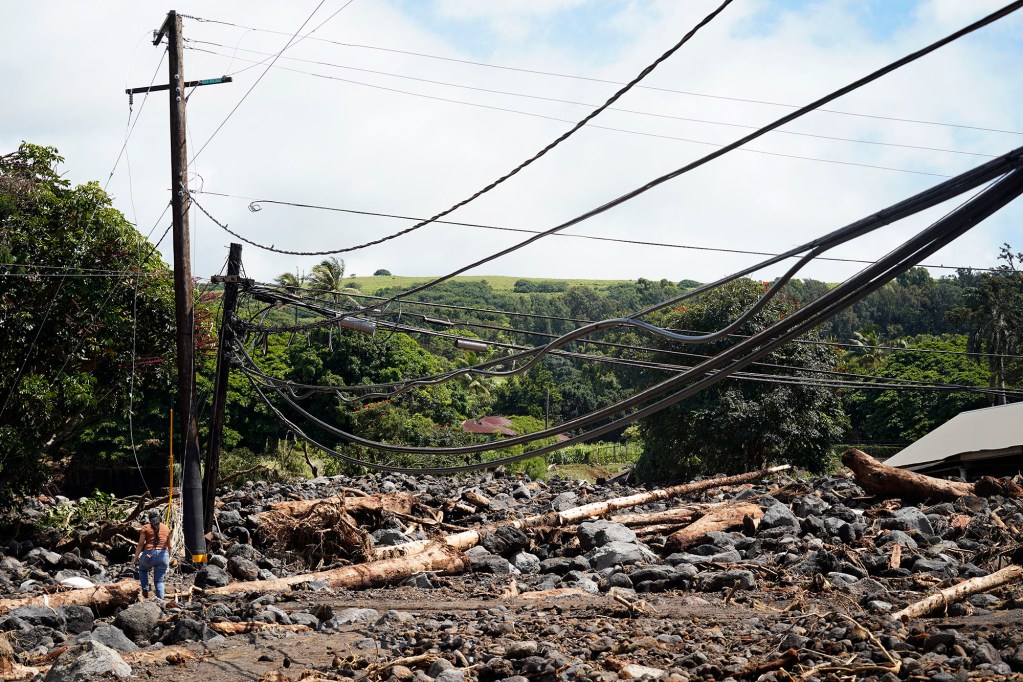
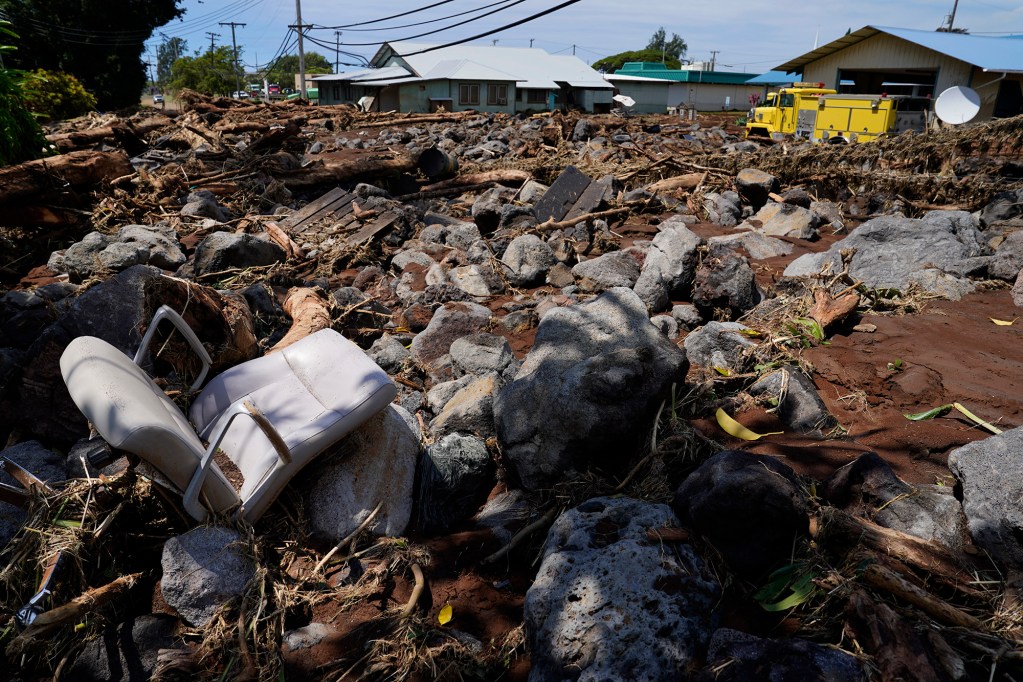
The warning proved to be prescient as many communities lost water service during and after Lala pummeled the Big Island. That’s because county water systems are powered by Hawaiʻi’s vulnerable electrical grid, and the county does not have enough emergency generators to maintain service for everyone when the grid goes down,
The storm did an estimated $13 million in damage to county water systems in Kaʻū, but most of the island’s water infrastructure remained intact. But water systems shut down when the power went off in areas ranging from Kalapana in Lower Puna to Pāpaʻikou outside of Hilo, Paʻauilo and Honokaʻa on the Hāmākua Coast, Hāwī in North Kohala, and at Kaloko Mauka in Kona.
Keith Okamoto, manager and chief engineer of the Hawaiʻi County Department of Water Supply, said in an interview last week his department is trying to add generator capacity, including three large generators it installed in the past two years, but “we cannot duplicate the Hawaiian Electric system. We don’t have that much capacity.”
The Hawaiʻi County Department of Water Supply operates 23 separate water systems across the island with about 70 wells and dozens of booster pumps. Each of those systems relies on Hawaiian Electric for power, and the water department has only 18 emergency generators to keep those systems operating when HECO’s power fails.
Karl Kim, executive director of the National Disaster Preparedness Training Center, described the county water system’s reliance on the electrical grid during disasters as “a huge problem. We need better backup systems and redundancies.”
“It’s a wake up call to invest more in preparedness and hardening our critical infrastructure,” said Kim, who is also the director of the graduate program on disaster management and humanitarian assistance at the University of Hawaiʻi Mānoa. “We need not just robust systems but also backup alternatives and training how to treat and use contaminated water.”
Many Competing Needs
Okamoto said the department has been tapping federal hazard mitigation grant funding to acquire more emergency generators, including three new units that were added in the past two years for $1.25 million. Over the years, the department has spent a total of nearly $4.3 million on emergency generators, including the newest additions.
The county is also developing an energy resilience plan to identify sites where additional generators should go, Okamoto said, but “the other side of that is we have this laundry list of projects we’ve still got to do for our other parts of our infrastructure — the water mains, tank replacements, well repairs, and all of that. So, it’s like a balancing act.”
Data provided by Okamoto shows the department’s record of adding generators over the years has been spotty. It acquired eight of its largest emergency generators ranging from 750 kilowatts to 1 megawatt in 2008, and added a total of seven smaller generators in 2017 and 2021. The most recent additions were a 1 megawatt generator in 2024, and two 500 kilowatt generators this year.
Okamoto said the department has deployed emergency generators strategically to keep the water on at critical facilities such as Hilo Medical Center, Kona Community Hospital, Queen’s North Hawaiʻi Community Hospital in Waimea and Kaʻū Hospital.
The department also keeps generators at a well and two booster stations in North Kohala because the electrical lines to that community are essentially a “dead end” that is particularly vulnerable to power outages, Okamoto told the county Board of Water Supply last week.
The water department and the Hawai‘i Emergency Management Agency urge residents to be “water prepared” by stockpiling emergency reserves of a gallon of potable water per day per person for 14 days, which works out to 56 gallons for a family of four. But it isn’t clear how many families actually store that much at any given time.
The shortage of backup generators is not a new issue. Former Big Island Mayor Harry Kim asked the Hawaiʻi County Council in 2006 to earmark $2 million for emergency generators for the water department, which were to be installed on two wells in East Hawaiʻi and two in West Hawaiʻi. Then-Managing Director Dixie Kaetsu told the council that money would be “making a start” to deal with the problem.
“I told them, we’ve got to make sure that the water keeps running as best as we can,” the former mayor said in an interview. The county was prepared to pay for generators to power the wells, he added. Kim said he does not know the status of that effort, but “I was assured that every major district will have the generators.”
But the department cannot put generators at every location, Okamoto said, because “there’s a whole pile of other needs that by law we need to meet.” That includes requirements under the federal Safe Drinking Water Act that change from year to year, he said, and upkeep of aging pipes and other infrastructure.
As a semi-autonomous agency, the department’s only source of revenue is the charges it imposes on its customers, Okamoto said, and at the moment the department has only an “informal plan” for bringing generators and transfer switches online.
Water Supply Deputy Manager Kawika Uyehara said the department is working with the Hawaiʻi State Energy Office to develop an energy resiliency plan to help with that planning. That is partly because HECO adopted a safety power shutoff program after the Lahaina wildfire that involves deliberately cutting off power in some areas in an effort to reduce the fire risk, he said, and data shows there have been increasing numbers of power outages on the Big Island.
“It’s a wake up call to invest more in preparedness and hardening our critical infrastructure.”
Karl Kim, executive director of the National Disaster Preparedness Training Center
Okamoto told the water board last Tuesday that water service had already been restored to 97% of the department’s customers, but the “big puka” was the Nāʻālehu, Waiʻōhinu and South Point areas that were hard hit by Lala.
“There are damaged pipes all over,” he said. “Maybe not mains, but laterals, so as we’re recharging the line and pushing water through the syatem, we have to flush because storm water probably got into the system.” He guessed service may be restored to most of the department’s customers in those areas by early next week.
Kim, of the National Disaster Preparedness Training Center, suggested government should be doing more scenario planning that starts by imagining how to cope with the “most plausible worst case.”
In this busy El Niño hurricane season, local operators need to have the assets and the resources to bring systems such as power and water back up, Kim said, but community members must also be ready to take care of themselves and others around them who need help.
“There is a tendency to try to fix things,” he said, “but we also just want to get things back up and running as quickly as possible, and then get back to normal, and then we forget about it.”
“These events, these near misses, these things that are bad for many but could have been way worse — these are teachable moments,” he said.