

Judge Dismisses Retaliation Lawsuit Against OHA Trustees
CEO Stacy Ferreira’s case against the Office of Hawaiian Affairs is still moving forward in court.
A judge on Thursday dismissed claims filed against trustees of the Office of Hawaiian Affairs by the office’s CEO, while also tossing out legal filings by four trustees that supported some of the retaliation claims made in that lawsuit.
Stacy Ferreira, the deposed CEO, filed a lawsuit against the agency, its nine trustees and interim CEO Summer Sylva in November, accusing them — and in particular, Chair Kai Kahele — of retaliating against her and violating the state’s open meetings law. The board has been split over how to proceed in the case.
Circuit Court Judge Steven Nichols determined Thursday that the case will proceed, but only against OHA. He dismissed all other claims against the trustees and Sylva, ruling that they should not have been individually sued in the first place. And because they shouldn’t have been named to begin with, he also tossed legal filings made by four dissenting trustees.
Doing so, he said, should let the trustees resolve their differences in the boardroom instead of the courtroom.
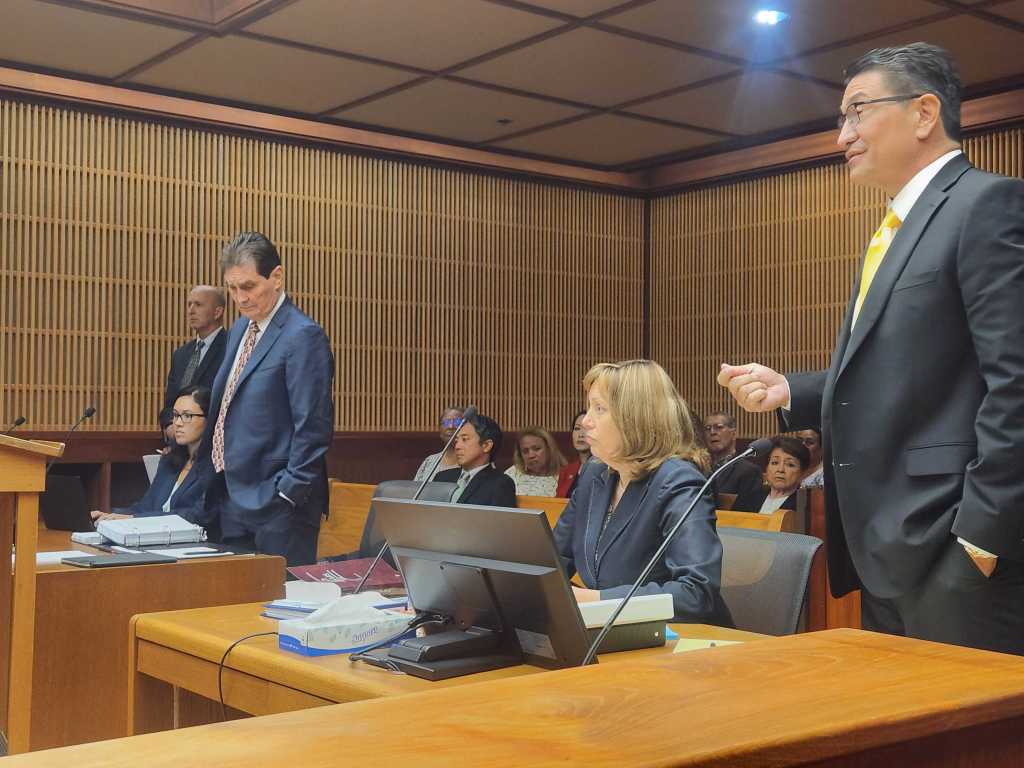
A faction of trustees led by Kahele and their attorneys have accused the four dissenting trustees of undermining OHA’s case when they filed documents in court that admitted to many of the allegations of retaliation in Ferreira’s lawsuit. The dissenting trustees – Kalei Akaka, Keliʻi Akina, Luana Alapa and Carmen Hulu Lindsey – have said they were being silenced by the board’s majority.
Nichols said his ruling is not meant to silence the four trustees.
“They’ll have every opportunity to explain what they believe is going on behind the scenes,” Nichols said. “No one will be silenced. I won’t allow anyone to be silenced.”
Kahele said in a written statement that the rulings mark an important moment for OHA because they allow the office and its trustees to move forward.
“Our beneficiaries can be confident that the trust remains protected, our employees can remain focused on serving our mission, and OHA can move forward united in service to our lāhui,” Kahele said. “We are all in one waʻa, bound by our collective responsibility to protect Native Hawaiian resources and faithfully serve our beneficiaries. That responsibility remains unchanged.”
Akina said he was pleased that Nichols affirmed the trustees’ rights to voice differing opinions. In a written statement, he said he stood apart from the majority to fulfill his fiduciary obligations to OHA’s beneficiaries. He and the three other dissenting trustees beleive Ferreira’s suspension was improper.
But whether these rulings stand is yet to be seen.
OHA’s lawyers indicated they would seek to appeal the judge’s decision to allow Ferreira’s case to proceed in court, arguing her contract requires arbitration, which would take place in front of a hearing officer. Such a decision would require a vote by the Board of Trustees. Paul Alston, OHA’s lawyer, asked for a pause in the proceedings until that could happen.
But Nichols said he wanted to continue. He’d watched OHA’s recent contentious board meetings over the lawsuit and was determined to resolve some of the issues in the case.
“A lot of these issues,” the judge said, “are taking up a lot of time in the governance of OHA.”
A Tactical Lawsuit?
Ferreira has accused OHA and its trustees of retaliating against her last year after she reported Kahele to the Attorney General’s Office and Ethics Commission over changes he made to the budget last year that appeared to unfairly favor certain Native Hawaiian organizations.
In recent court filings, OHA’s attorneys have painted the lawsuit as an effort by Ferreira to head off a bad job review. They write that she “tactically initiated a series of complaints” against Kahele ahead of her performance review. She was suspended by a supermajority of the board last September due to conduct that predates the allegations she made against Kahele, according to court documents.
Members of the Board of Trustees have been feuding over this lawsuit since earlier in the year.
In March, the four dissenting trustees took the unusual step of opposing OHA’s motion to dismiss claims against the trustees “effectively agreeing to keep being sued,” as the office’s lawyers put it in court documents.
During the hearing on Thursday, Alston said Ferreira’s attorneys named all of the trustees in the lawsuit to create the “chaotic situation” that the board found itself in.
Later, Nichols questioned Margery Bronster, one of Ferreira’s attorneys, about Alston’s argument that filing the lawsuit and naming all of the trustees was a tactical move.
“Couldn’t be further from the truth,” Bronster said. “We did not know they were going to file a dissent … we did not know they were going to file these admissions.”
She also said that “those admissions that help (Ferreira’s) case should stay in the case.”

The dissenting trustees undercut the office’s ability to defend itself when they made allegations in court filings that largely supported Ferreira’s claims, OHA lawyers said. They asked the court to strike the filings several weeks ago.
Such legal filings need to be voted on by the board, and no vote at an agendized meeting took place to approve the dissenting trustees’ legal filings. The potential for Sunshine Law violations has triggered a formal complaint against the four dissenting trustees from Vice Chair Keoni Souza.
Whether any violations of the open meetings law actually occurred would need to be investigated by the Office of Information Practices, the minority trustee’s attorney John Mackey wrote. And that hasn’t happened yet. He characterized advice OHA received from an OIP attorney as hearsay.
He repeated those arguments in court Thursday and, after questions from Nichols, declined to say specifically how the four trustees communicated with him or made the filings that they did, citing attorney-client privilege.
The four trustees have said they are being silenced by the board. In recent court filings, they wrote that it is necessary for them to take adverse positions to the rest of the board and to bring to light what they believe amounts to breaches of trust by the majority trustees.
OHA’s lawyers have said they were not authorized to make legal filings that purport to speak for OHA. But they also wrote that the dissenting trustees have a First Amendment right to criticize the board’s majority and can do so publicly, even in OHA’s Ka Wai Ola newspaper if they want.
“They can scream from the mountain top,” Alston said. “Nobody is trying to stifle their ability to talk about it.”
The trustees faced 12 counts related to whistleblower retaliation and Sunshine Law violations. Kahele also faced one count of defamation. And the five majority trustees faced a separate count of civil conspiracy.
Nichols set a trial for the week of Oct. 25, 2027.

