Lawsuit Alleges Hawaiʻi Prison Staff Enabled Gang Attack
The suit alleges corrections officers at the state’s largest prison gave members of a prison gang access to an inmate in protective custody, who was then beaten.
A lawsuit filed by the family of a Hawaiʻi prisoner who was severely beaten at Hālawa Correctional Facility early this year alleges prison staff allowed gang members to pass through security checkpoints to attack a protective custody inmate who was housed in another part of the facility.
Aaron Ka’ehu was placed in protective custody at Hālawa after a prison gang called Murder Inc. “ordered a hit” on him, according to the lawsuit, but “that protection was an illusion,” according to the lawsuit. It added that the beating on Jan. 3 caused bleeding in Ka’ehu’s brain that led to permanent brain damage as well as broken facial bones and broken ribs.
Staff at the prison failed to make mandatory security checks after the attack, leaving Ka’ehu unattended and choking on his blood in his cell for hours, according to the lawsuit filed on behalf of Ka’ehu’s mother, Cheryl Ka’ehu-Anderson. Ka’ehu allegedly remained on the floor of his cell long enough for the blood to dry on his mouth before he received medical attention.
“I want the whole wide world to know what’s going on in that prison,” said Ka’ehu-Anderson, who has been appointed as Aaron’s guardian. She said in an interview Tuesday the last time she talked to Aaron on the phone “he was watching his back while he’s talking to me on the phone. It sounded like he kept turning back and forth.”
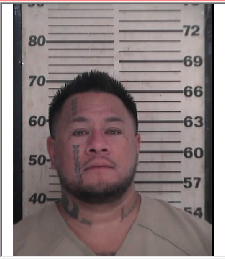
“He didn’t tell me what was wrong, but I knew something was happening, but he wouldn’t tell me,” she said.
Aaron Ka’ehu finally began cursing, and told his mother not to answer his phone calls again. Ka’ehu-Anderson said her son has now been hospitalized for eight months, and still cannot walk, talk or write.
“Beyond seeking compensation for catastrophic destruction of Mr. Ka’ehu’s life, this action seeks to expose a lethal, systemic breakdown in DCR policy and management,” according to the lawsuit.
By shedding light on the institutional failures in the case, the lawsuit aims to ensure “that no other vulnerable ward of the state is ever subjected to such an atrocity.”
Tommy Johnson, director of the Department of Corrections and Rehabilitation, said in a written statement Tuesday the department “cannot comment on pending and/or current litigation.”
In recent years, Hawaiʻi has paid out hundreds of thousands of dollars in court cases because of inmate deaths at Hālawa, including one to the estate of a 28-year-old man who was awarded $1.375 million in damages after he committed suicide. The 2022 judgment demonstrated dangerous shortcomings in the care that correctional officials have been providing to mentally ill and suicidal inmates.
The latest lawsuit was filed just weeks after the death of 55-year-old Godwyn Foster, also known as Denise Foster, who was apparently murdered in a cell at Hālawa on Aug. 4. Foster’s death was the sixth murder or suspected murder in the state correctional system since May 2024.
The lawsuit filed in Ka’ehu’s case was filed by attorney Alexander Skopis. It alleges corrections officials had “documented intelligence” since at least Jan. 14, 2025 that Murder Inc. had threatened Ka’ehu while he was serving his sentence at Saguaro Correctional Center, a privately run prison in Eloy, Arizona. Ka’ehu was serving up to 20 years in prison for sexually assaulting a Canadian tourist in 2014.
While at Saguaro Ka’ehu had become “engaged in a prohibited romantic relationship” with a female correctional officer in 2023, according to the lawsuit, and the relationship was discovered by the prison administration. Ka’ehu was transferred last fall to Hālawa, Ka’ehu-Anderson said, and according to the lawsuit his illicit relationship with the female officer in Arizona became known to the staff at Hālawa.
“Consequently, a culture of deep-seated animosity and guard solidarity formed around Mr. Ka’ehu at HCF, creating a retaliatory environment where DCR officers actively despised him and viewed his safety as a low priority,” according to the lawsuit.
“I want the whole wide world to know what is going on in that prison.”
Cheryl Ka’ehu-Anderson, mother of an inmate who was severely beaten.
The report of the gang’s threatened “hit” on Ka’ehu was also part of his records, and he was placed in protective custody. That meant general population inmates were prohibited from entering protective custody modules, but the lawsuit alleges there was a “complete abandonment of protective custody security practices” on Jan. 3.
The lawsuit does not indicate how many inmates may have been involved in the attack, but alleges that “given the catastrophic, bone-breaking force required to inflict Mr. Ka’ehu’s injuries, the (unnamed) defendants on duty either heard the prolonged assault and intentionally ignored it, or willfully blinded themselves to the security of the unit.”
Ka’ehu suffered such extensive brain damage that he will require 24-hour nursing care for the rest of his life, according to the lawsuit.
The lawsuit against the state, Hālawa Warden Shannon Cluney and other unnamed defendants alleges prison officials showed “deliberate indifference” to the danger Ka’ehu faced, his medical needs after the assault, and his constitutional rights.
The lawsuit seeks monetary damages to include payment for his medical and 24-hour nursing care as well as punitive damages.