‘Locked Out’: 30-Year Maui Water Lease Back On The Table For Private Company
As the Board of Land and Natural Resources meets to vote on the lease for Mahi Pono, water advocates bemoan the lost opportunity for county management.
Update: On Friday, after over seven hours of testimony from East Maui farmers, residents, and water advocates, the Board of Land and Natural Resources voted not to take up the staff proposal to offer Mahi Pono a 30-year lease.
Members of the state Board of Land and Natural Resources will vote Friday on whether to authorize a public auction for a 30-year lease on the irrigation system that channels water from the streams in East Maui to the agricultural fields in the Central Valley.
While it might sound like the auction is open to everyone, the only company positioned to bid on the water system is Mahi Pono, a large diversified farm and subsidiary of the Canadian pension fund PSP Investments.
The board, led by Chair Ryan Kanaka’ole, will vote on a plan laid out in a 120-page document by the Department of Land and Natural Resources that proposes offering two licenses: one for Mahi Pono to use 87.95 million gallons a day and one that would allow Maui County to use 6.5 million gallons a day.
The proposal is a far cry from what Mayor Richard Bissen and the county had sought from the state after Maui residents voted in 2022 to create the community-led East Maui Water Authority, which was designed specifically to take over the water system.
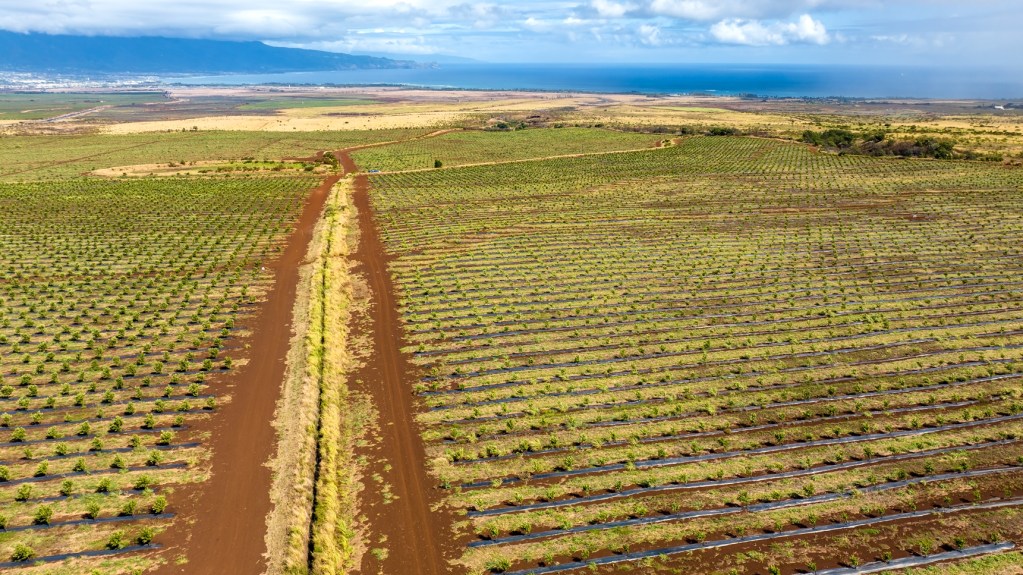
Environmental advocates, Native Hawaiian water protectors and taro farmers were shocked and angered by the proposal when it was published earlier this week, as it effectively takes county ownership of the system off the table. If the board votes to move forward with the plan, they say it could embroil the state and the county in a protracted legal battle.
Grant Nakama, Mahi Pono’s senior vice president of operations, said the lease would allow the company to make investments that didn’t make sense under the previous one-year revocable permits it inherited from Alexander and Baldwin, the sugar company that owned the land until 2018.
“One of the key benefits of a long-term license is confidence that agriculture in Central Maui can continue to be supported by an adequate, reliable, and cost-effective source of irrigation water. This would allow Mahi Pono to continue to invest and further its diversified farming plans,” Nakama told Civil Beat over email.
“Under this structure, the (East Maui Water Authority) seems poised to play an important role in helping shape how those resources are managed to meet the County’s municipal and agricultural needs,” he added.
Jonathan Scheuer, chair of the water authority’s community advisory board, Aha Wai O Maui Hikina, disagrees. “The small license to the county and the proposed negotiated operating agreements are largely worthless,” he said. And he’s far from alone in this perspective.
The taro farmers, fishers and gatherers behind Nā Moku Aupuni O Koʻolau Hui, a group that has been fighting for water access in East Maui for over a decade, are among the many people who have prepared written testimony opposing the auction for the 30-year lease. They planned to rally outside the land board meeting Friday morning and provide in-person testimony.
Nā Moku’s testimony said the proposed license would ensure that “an entire generation is locked out of decisions about a public trust resource.”
The Sierra Club has also responded in writing in advance of the meeting. The group has been working to bring attention to how Mahi Pono is using water under its current short-term annual leases, and was the subject of a recent court decision ordering DLNR to hold a contested case hearing on the topic.
“The contemplated water license would continue over a century of direct, private exploitation of East Maui’s most precious resource by a private, profit-focused corporation,” the group wrote.
The Question Of Flow
The state Commission on Water Resource Management regulates the stream diversions in East Maui through instream flow standards, which were created to determine how much water must remain in the streams to protect traditional cultural practices and other “beneficial uses.”
As long as that water remains in the streams, the land board is in charge of deciding where the rest of it goes. But the board must also legally uphold the state’s Public Trust Doctrine, which says all freshwater resources should be held in trust for the benefit of the people. It has multiple obligations under the doctrine, including to supply water to the Department of Hawaiian Home Lands as well as to domestic water users.

While the DLNR staff proposal said that Mahi Pono will only get access to the water after it has gone to serve public trust uses, critics say the instream flow standards are not a reliable tool to determine how much water can safely be diverted from the streams.
In its testimony, the Sierra Club pointed out that the Commission on Water Resource Management’s 2018 order “allows Mahi Pono to drain streams dry for months at a time, so long as the average amount of water flowing over a one-year period exceeds the (instream flow standards). A large rainstorm disproportionately affects the mean amount of water flowing downstream. Stream animals cannot survive and traditional gathering activities cannot take place when a stream does not flow.”
DLNR’s document says there are 185 million gallons of water available for off-stream uses. That number is based on the mean amount of water that can be taken out of the streams, but the Sierra Club said it does not reflect the reality on the ground.
Ashley Obrey, senior staff attorney at the Native Hawaiian Legal Corporation, agreed. She told Civil Beat that the instream flow standards are being used too broadly. She took issue with the fact that the document didn’t discuss how DLNR staff had arrived at the 87.95 million gallons per day number, and appeared to rely solely on the environmental impact study Mahi Pono had commissioned in 2021.
“So much has changed. That (environmental impact study) is several years old now,” Obrey said. “That number represents what water could be available and how much water Mahi Pono thinks it needs. But it’s just not tied to anything anymore.”
Given the severity of recent droughts and the shifts in rain patterns as the climate warms, the Sierra Club added, “There is no good reason to lock public trust resources up for three decades.”
Can A Private Entity Serve The Public Good?
In its proposal, DLNR staff wrote that if the county were to take control of the system, it could pose conflicts. It “would simultaneously manage the resource, take water for its own domestic, municipal, and agricultural purposes, and serve as the purveyor of water to a private commercial agricultural user.” In that situation, the staff argued, “the entity controlling allocation would be one whose own demand competes with the other public trust uses the resource must serve.”
The staff added that the department does not see the county as ready to take on management of the water system. “The operational plan is still being developed, operations are anticipated to begin only by the end of the year, and the County remains in discussions with Mahi Pono and East Maui Irrigation regarding contracting services,” they wrote.
The question of who owns the land beneath the water system has been central to the conversation, ever since Scheuer raised it at a land board meeting in April. At the time, he presented evidence that suggested East Maui Irrigation, a subsidiary of Mahi Pono, only technically owned the portion of the Wailoa Ditch between Honopou Gulch and the Kamole treatment plant, while the state and county owned the rest of the system. However, rather than see that as a point of leverage for the state and county, the DLNR document argues that Mahi Pono could use that stretch of canals to somehow block the county’s access to the gravity-fed water system.
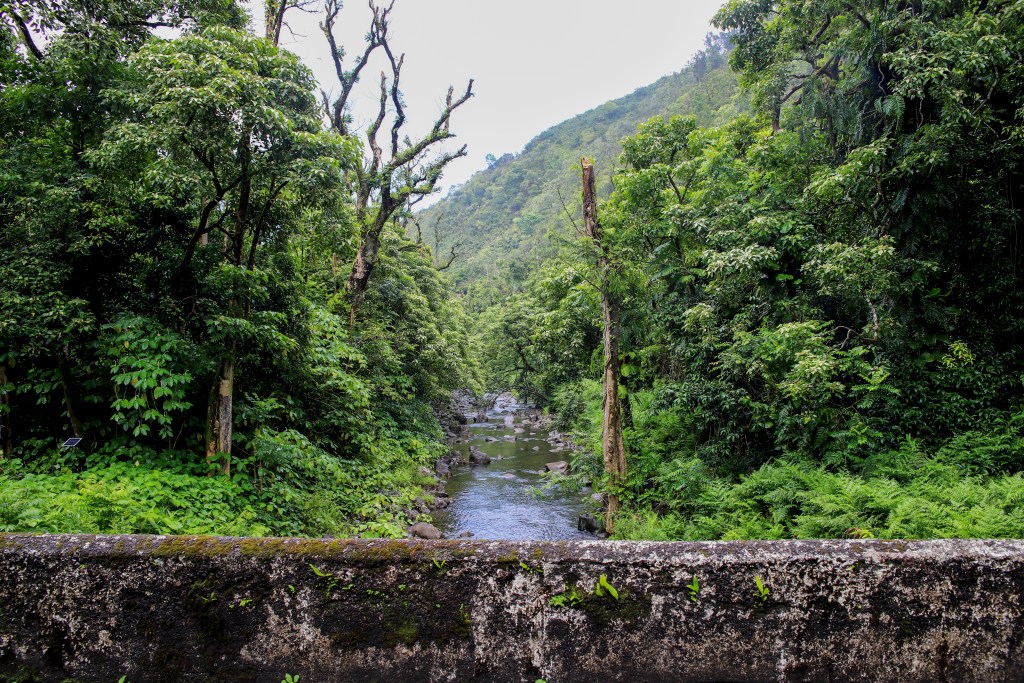
All this runs counter to what appears to be a consensus among the Hawaiian community on Maui. At an Office of Hawaiian Affairs committee meeting in late July, a number of prominent community leaders gave testimony in support of county management, including Kyle Nakanelua, vice chair of Aha Wai O Maui Hikina; Maui kalo farmers and water rights advocates Mahealani and Ed Wendt and state Rep. Mahina Poepoe. The OHA board members voted to publicly support county acquisition of the water system.
“It’s a matter of principle when we think of the future generations and who should control our water systems,” said Poepoe in her testimony before the OHA board. She described Mahi Pono as a company that has a duty to maximize shareholder profits. For that reason, despite the good work she has seen the company do for the community and the multiple friends she knows employed by the company, she determined that the system needed to be managed by an entity that is accountable to the public rather than motivated, ultimately, by profit.
For all these reasons, when DLNR announced that the vote would take place on Friday and shared a document that to many suggested it had essentially already decided against county management, many advocates found it hard to wrap their brains around the rationale.
“Why would public interests be better served by giving total control for 30 years to a private company over a public entity,” Scheuer said. “It just makes no sense.”
Scheuer drew a connection between the fight over access to water in East Maui and the water disputes playing out on the other side of the island, near Lahaina. In West Maui, after a long process spent deciding whether to create a designated water management area, the Commission on Water Resource Management has delayed the approval of permits for kalo farmers and others with rights to water in the region by three years, despite a state water code that requires processing the permits within 90 days.
Meanwhile, Scheuer said, the commission has seemingly responded attentively to the water-related concerns of large landowners Maui Land and Pine and TY Management when they express concern about adequate water for their developments.
He compared that dynamic to the priority BLNR has consistently given Mahi Pono over the last two years. This is the fourth time a 30-year lease for the company has been on the table in that time.
“Both of these organizations are within DLNR … and when you look at the airtime that was given to MLP and TY Management, the one common factor is this administration is prioritizing bringing the water requests by powerful and wealthy private corporations forward for decision making — which is not what the law requires.”
Shay Chan Hodges, a former member of the Maui Board of Water Supply, has been raising the alarm about PSP Investments and what she describes as a history of investment in “water-intensive agriculture and its private-equity-style focus on high returns,” for several years.
She said that record raises urgent questions about whose interests are being served. “Maui residents did not need to know PSP’s global record to understand that they do not want their water controlled by foreign investors,” Chan Hodges told Civil Beat.
It’s not yet clear whether the state land board will vote to approve the public auction for the 30-year lease. If they do, the Sierra Club and other advocates will most likely ask for a contested case hearing. The board has already been ordered by Judge Lisa Cataldo of the Environmental Court to hold such a hearing about the one-year permits Mahi Pono currently operates under, and it’s possible that it could combine both issues in one case.
After a contested case hearing, there would likely be another vote and an appeal, Scheuer said. “It’s highly likely, regardless of the outcome, that the parties will appeal. That appeal will go straight to the Hawai‘i Supreme Court. So we’re adding two to three years more of uncertainty for everybody — including PSP.”
When asked for comment on Friday’s meeting, DLNR spokesperson Andrew Laurence said the department would “reserve all comments for the open meeting … where members of the public will have their opportunity to be heard.”