Maui May Allow Even More Condos To Stay Vacation Rentals
Using sea level rise exposure for justification, two resolutions before the council could help more units avoid being phased out for long-term housing.
Maui County Council members are taking up legislation Thursday that would add hundreds of condo units to the list of properties that could apply for special hotel use zoning to avoid the planned phase-out of several thousand vacation rentals over the next five years.
If passed, the resolutions would revise the West Maui and Kīhei-Mākena community plans to move up to 26 properties into the new H-3 and H-4 hotel zoning districts that the council approved last month in a 7-2 vote despite the advice of all three county planning commissions.
The measure establishing the new hotel zones was based on recommendations from the council’s Temporary Investigative Group for Bill 9, the legislation that laid out Mayor Richard Bissen’s plan to create more housing for local residents by ending the exemptions that have long allowed about 7,000 residential units across the county to operate as transient vacation rentals.

The two resolutions currently before the Housing and Land Use Committee were introduced by council members Nohelani Uʻu-Hodgins, who chairs the committee, and Tom Cook, who represents South Maui. They’re in addition to amendments proposed by Cook, Yuki Lei Sugimura and council chair Alice Lee, and state that specific properties near the shoreline in South and West Maui are better suited for short-term uses because they lie within the county’s sea level rise exposure area.
The properties being discussed have been predicted to experience negative effects from rising sea levels by the year 2100, Uʻu-Hodgins said at the start of a meeting on Aug. 5. Council members are now considering whether it makes more sense to allow short-term rentals than to encourage residential uses in units that “may be no longer viable in a few decades,” she said.
The properties being considered for rezoning are: Island Sands, Māʻalaea Kai, Kīhei Bay Surf, Kīhei Bay Vista, Lokelani, Hale Ono Loa, Pikake, Hale Kai I, 10 Walaka Street in Kīhei, Makai Sunset Inn, Makani A Kai, Māʻalaea Banyans, Kamaole One, Kahana Reef, Nohonani, Makani Sands, Hoyochi Nikko, Noelani, Puunoa Beach Estates, Kīhei Resort, Waiohuli Beach Hale, Shores of Maui, Polynesian Shores, Lahaina Roads, Kīhei Parkshore and Kaleialoha.
Thursday’s meeting will be a continuation of two meetings earlier this month, during which council members heard hours of public testimony from divided community members.
Testifiers in favor of rezoning the additional units said doing so would prevent lawsuits and make it easier for property owners to afford rising homeowners association and maintenance fees for units that were not intended to house long-term residents, while opponents said the proposed legislation and amendments would only further undercut Bill 9’s intended purpose of creating more permanent housing.
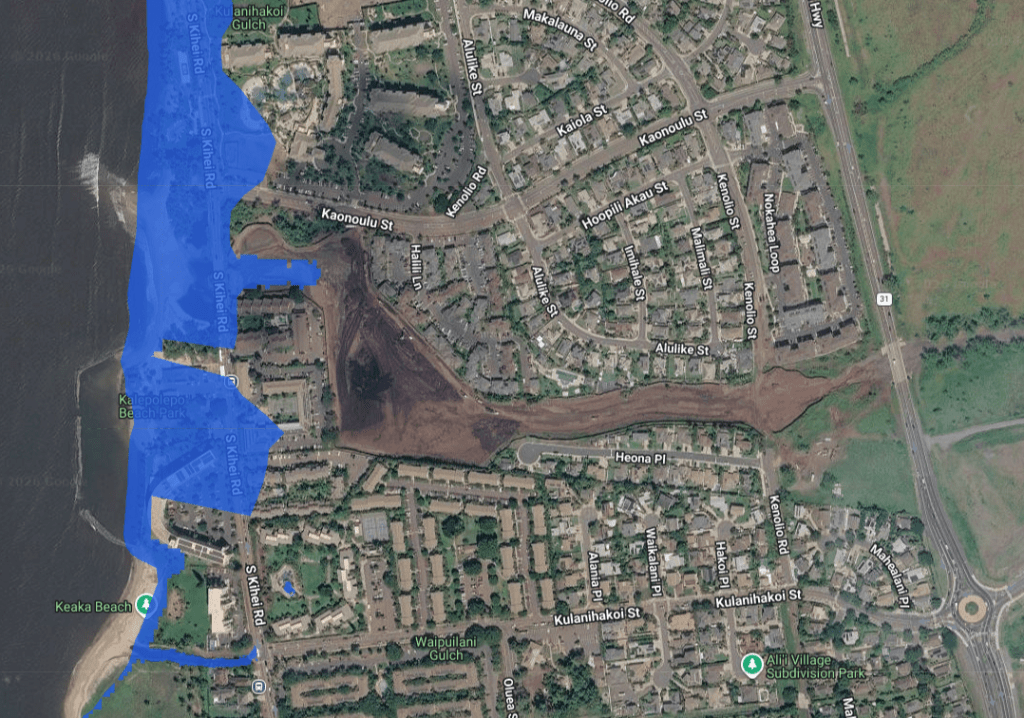
Some supporters requested that the coastal complexes where they own units be added to the list of properties being considered for rezoning because they fall within the sea level rise exposure area. Kevin Smith, who owns property at the Waiohuli Beach Hale condominium complex in Kīhei, told council members last week that oceanfront properties like his are not well-suited for long-term residents due to their high cost, small square footage and frequent exposure to salty air, humidity, wind and flooding.
“We’re not asking for special treatment. We’re asking that the same criteria already applied to other Kīhei shoreline properties be applied consistently to ours,” he said. “Excluding us while including similarly exposed properties on the same stretch of coastline appears to be an oversight and not a deliberate choice.”
‘Our Voices Don’t Matter’
Nara Boone of the nonprofit Maui Housing Hui said there were more than enough short-term rentals and hotel rooms for visitors, and many residents have made clear that they were desperate to see more of the local housing stock available to residents.
“Some allowances obviously should be made for places that operate as hotels, we get that,” she said. “But to continue to chip away at this list of places that could be possible homes for our community is completely defeatist. What this has created, when so many people came out to testify against Bill 9, is a sense that our voices don’t matter.”
A few opponents pushed back on the idea that some of the properties being considered for rezoning have largely served as hotels, noting that there are Maui residents who live in those units.
“I’ve been in these buildings and in these units. I’ve had beers with my friends who live in there in their unit,” said Autumn Ness, referring specifically to Kīhei Bay Surf and Kīhei Bay Vista. “If you support the rezoning of these units, I would argue you’re actively giving away units of housing.”
Maui residents have also lived at 10 Walaka St. in Kīhei, and the units there are among many that the community has seen be “given away to tourists,” Ness added. Some former residents of properties that have since been converted into vacation rentals now live in their cars, she said.
“It’s so painful when I hear people say things like locals can’t afford these units or they’re not appropriate,” she said. “I just kind of scream, because market prices of these units are not a fixed number.”
During the meeting on Aug. 5, Peg Kelley, who has lived at Kīhei Bay Vista for about 15 years and serves as the complex’s vice president, said she didn’t think others should consider living there full time because of how frequently the property experiences catastrophic flooding, she said.
“My family has lost eight motor vehicles in floods in the last 13 years,” Kelley said, including during a Kona Low storm earlier this year. “I can’t afford a mortgage on Maui now. My mortgage is low, so I’m trapped living there with these floods.”
Revenue collected from vacation rentals would allow the community’s board to pay for upgrades intended to make the property more prepared for natural disasters, she said.
Once public testimony has concluded, council members will move into discussion before voting on whether to recommend passing the legislation and refer the resolutions to the Maui Planning Commission.