

Trump-Backed Program Offers Money For Students. Will Hawaiʻi Take It?
An infusion of scholarship money could help families pay for private school tuition and other educational expenses. But Hawaiʻi will have to cross political lines to get it.
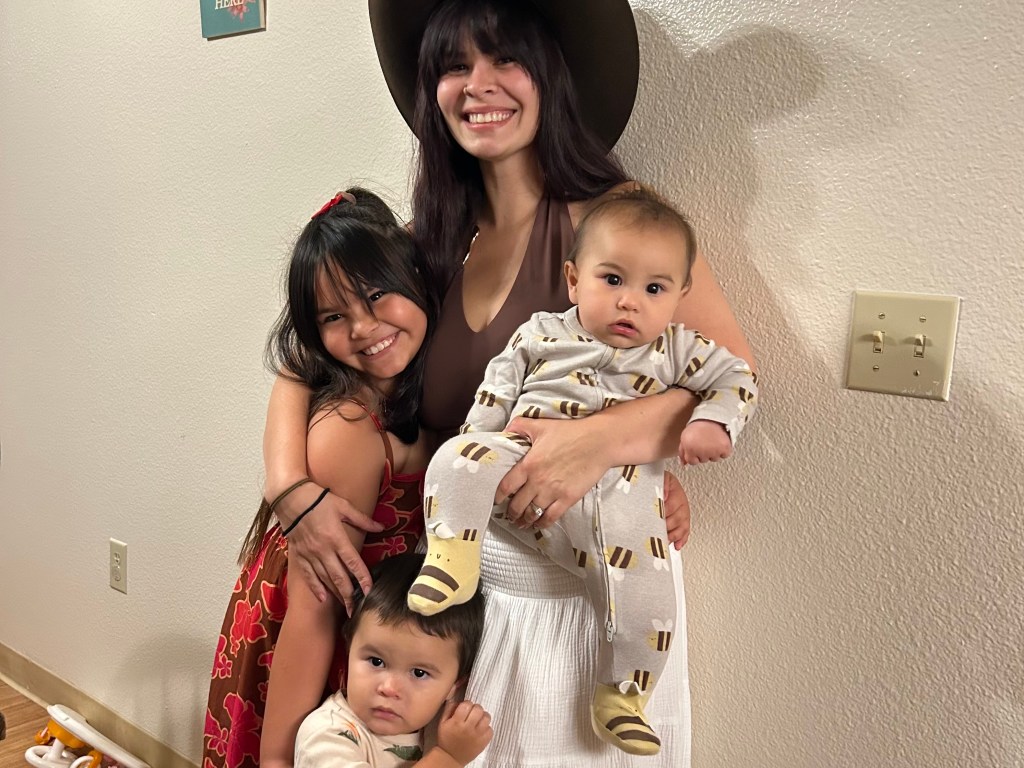
Paige Ernest began searching for a new school for her daughter after she finished first grade in the local public school and struggled to read. She was drawn to Hoʻāla School, which offered small class sizes and hands-on learning, but she knew her family couldn’t afford to pay the $12,000 annual tuition.
Last year, a $3,000 annual scholarship from a national nonprofit, along with a discount the Wahiawā private school offers military families, made it possible.
“If I didn’t have a scholarship, I would not be able to send my daughter to the school,” Ernest said. “And if I couldn’t send my daughter to the school, she probably still wouldn’t be able to read right now.”
More scholarships could be on the way to Hawaiʻi parents, but they would come from what the state may consider a politically unpalatable source: the Trump administration.
Part of President Donald Trump’s One Big Beautiful Bill Act, the federal Education Freedom Tax Credit is a first-of-its-kind initiative to expand school choice across the country. It promises to help pay for school expenses like tutoring or after-school care and could even help cover private school tuition beginning next year. That may entice Hawaiʻi parents who pay thousands, or even tens of thousands, of dollars per year for education in a state with one of the highest private school usage rates in the nation.
But Hawaiʻi Gov. Josh Green has not yet decided whether the state will participate.
While island families may welcome the financial help, there are questions about whether the program violates the Hawaiʻi Constitution. And the use of taxpayer dollars to support private schools could anger a politically powerful group that has backed Green’s political campaigns: the union that represents public school teachers.
“Some less fortunate children can benefit, but overall, it’s opening the door to just so many problems,” said Lois Yamauchi, a professor in the College of Education at the University of Hawaiʻi Mānoa. “I think we should be supporting public education, not trying to chip away at it.”
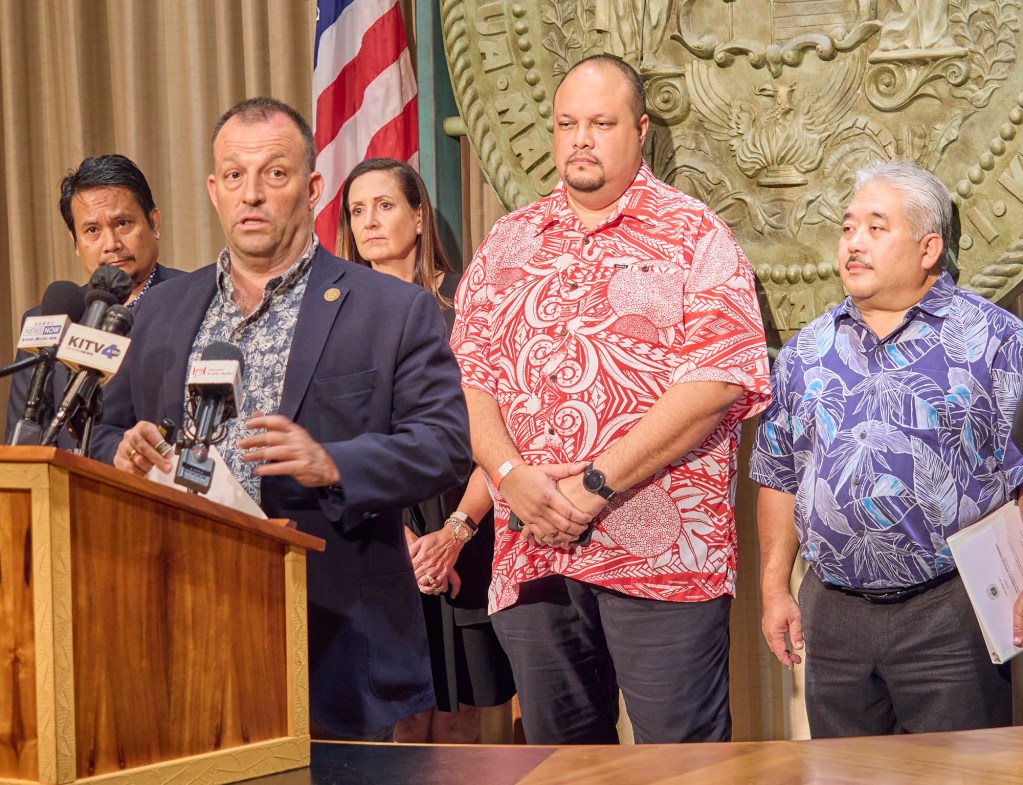
The program asks governors to take a stand on the politically fraught issues of school choice and school privatization, and state participation has largely been split among party lines. As of late July, Hawaiʻi was one of 20 states that has yet to commit to the initiative, and only a handful of Democratic governors have supported the program at this time.
But the program could have a real appeal for Hawaiʻi families who are struggling to pay for private school tuition and other out-of-pocket educational expenses, said Colin Moore, a political scientist at the University of Hawaiʻi Mānoa. Financially, the state has nothing to lose. The scholarship funds don’t come from state coffers.
“It puts the governor in a very tough position,” Moore said. “My guess is that the state’s strategy here is going to be kind of wait and see.”
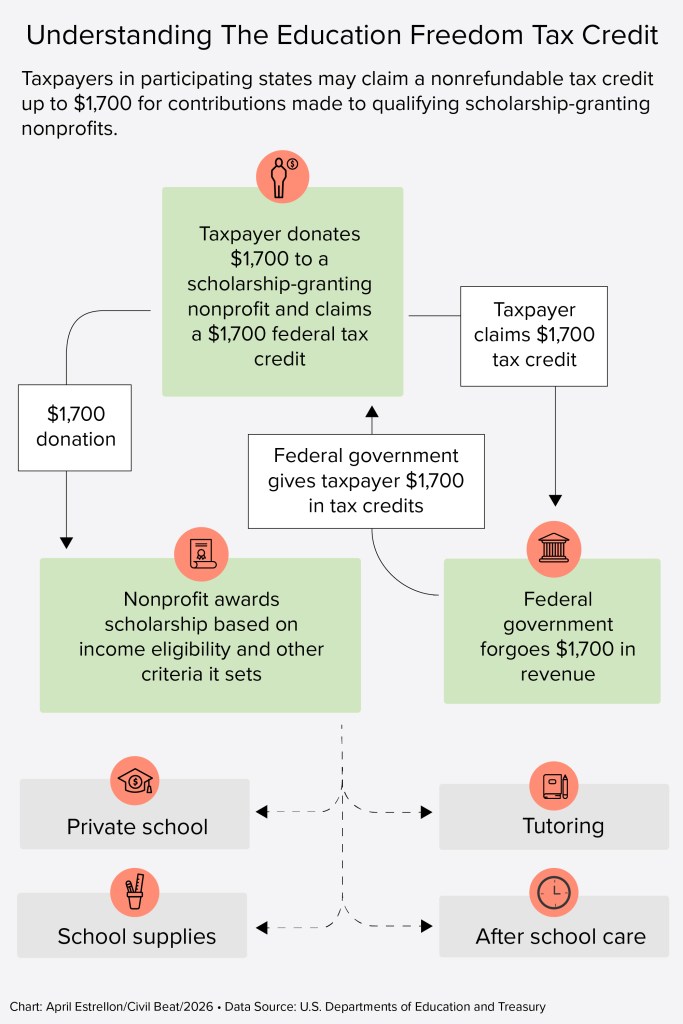
Under the program, taxpayers could donate to any nonprofit dedicated to distributing educational scholarships to students. Donors receive a dollar-for-dollar match in federal tax credits, which are capped at $1,700. In essence, the program costs donors nothing at all if they give less than that threshold.
The nonprofits must distribute taxpayer donations to public or private school students in the form of scholarships, which can cover expenses ranging from tuition to books and uniforms. Nonprofits can decide how much their scholarships are worth and what student groups can benefit, meaning that organizations could target kids attending private Catholic schools or those who are homeless or in the foster care system.
“I think we should be supporting public education, not trying to chip away at it.”
Lois Yamauchi, University of Hawaiʻi Mānoa professor
Over 91% of Hawaiʻi students meet the broad financial requirements for the scholarships, according to an analysis from the American Federation for Children, a school choice advocacy organization. Income limits are set at 300% of the local area median gross income. That comes out to $400,200 for a family of four in Honolulu. Families do not need to donate to a nonprofit and use the tax credit to receive a scholarship.
Gov. Josh Green initially said Hawaiʻi would not participate in the scholarships, but he is now waiting for the federal government to release program regulations in September before consulting with other state agencies, Director of Communications Makana McClellan said in an emailed statement.
More Money For Schools?
Ernest, the mom at Hoʻāla School, was able to cover her daughter’s tuition with the help of ACE Scholarships, a Colorado-based nonprofit that supports private school students in 13 states, including Hawaiʻi.
Micah Hirokawa, president of Hawaiʻi’s branch of ACE Scholarships, said families’ demand far exceeds the scholarships he can provide. Last year, nearly 300 qualified families applied for ACE scholarships and had an average household income of $17,615. But Hirokawa only had enough funds to award 50 scholarships to students at Oʻahu schools.
Hawaiʻi’s participation in the federal tax credit program would open the door for ACE Scholarships to reach more students, Hirokawa said. He currently awards scholarships to families with the greatest financial need at certain private schools but would be open to serving public school students if the state opted into the tax credit.
The federal tax credits could incentivize everyday taxpayers to contribute to organizations like ACE, said Brandy Ann Sato, president of Sacred Hearts Academy, an all girls private school in Kaimukī. Sacred Hearts Academy is partnering with ACE Scholarships for a second year to provide scholarships to families, with awards running from roughly $3,000 to $4,000 depending on students’ ages.
But Sato is worried that Hawaiʻi students won’t be able to benefit from local taxpayers’ donations next year.

Anyone can receive the federal tax credit next year by donating to local or national scholarship organizations. But states must confirm their participation in the program and submit a list of scholarship organizations to the federal government before their students can start using taxpayers’ donations.
That means Hawaiʻi taxpayers could donate to organizations distributing scholarships to students outside the state to claim their credit, Sato said. But the money would be leaving the state when it could otherwise help Hawaiʻi families afford private school tuition or resources like tutoring or books.
“If we don’t opt in, that money is going to go somewhere else,” Sato said. “Having this type of resource stay at home in Hawaii is going to benefit all of our students in one way, shape or form.”
In participating states, public schools could take advantage of taxpayer donations to expand the services they offer students, said Marguerite Roza, director of the education research center Edunomics Lab at Georgetown University.
For example, public schools could issue an annual fee to families that would cover typical out-of-pocket costs like field trips, club dues and tutoring, Roza said. In turn, schools could partner with scholarship organizations to cover the costs for all eligible families.
But not all parents are convinced that it could benefit all students equally – or even be enough to entice some families to send their kids to private schools.
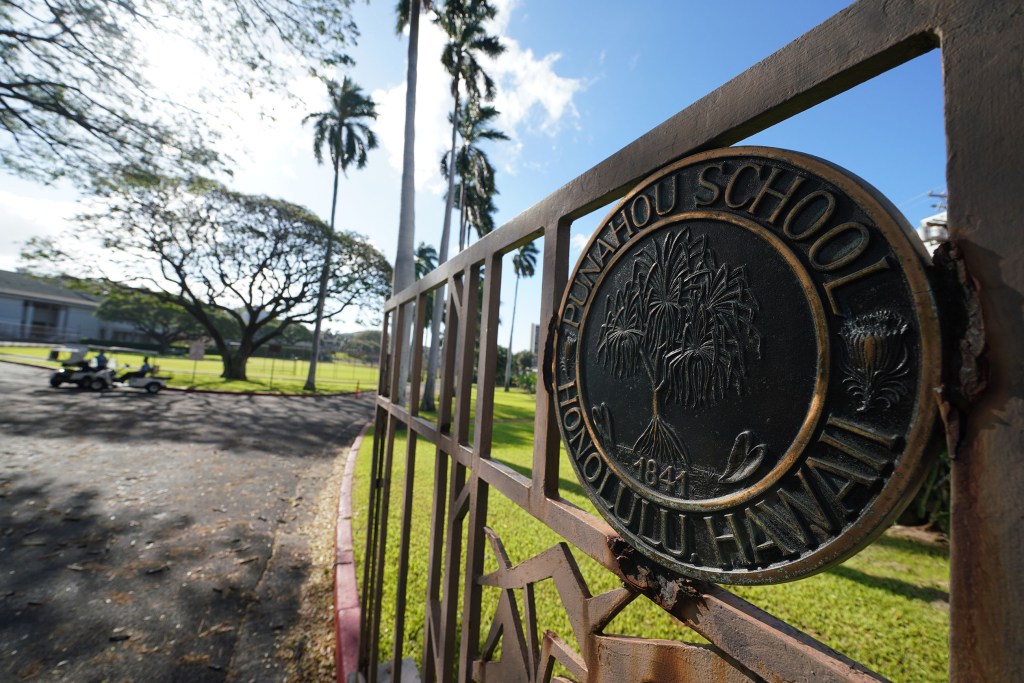
Catherine Toth Fox sent her son to Punahou School in Mānoa from kindergarten through second grade. But financial uncertainty led the family to transfer to Nuʻuanu Elementary. Toth Fox was worried her husband’s job at UH could face federal funding cuts, and the family couldn’t afford Punahou’s tuition — over $31,000 at the time – on one salary.
Even if the family received a scholarship from the federal tax credit, Toth Fox said, it’s unlikely it would have been enough to keep them at Punahou. At public school, a few thousand dollars could go further, covering expenses like a year of after-school care, said Toth Fox, who has also written for Civil Beat as a columnist.
Toth Fox would rather see people donate directly to local public schools instead of scholarship organizations, especially when many private schools already have robust scholarship and financial aid programs to help parents, she said.
“It sounds like a well-intended, nice idea, but I wonder how it’s going to be implemented and executed,” she said, adding that she’s happy with the quality education her son is receiving in public school. “If that part is problematic, then I worry that the people that need the money aren’t going to get it.”
The Politics Of Participation
In the view of Moore, the UH political scientist, it’s only a matter of time before Hawaiʻi participates in the program.
But it won’t be an easy decision for Green. Hawaiʻi has a large number of students attending private schools, likely making the program popular among voters, Moore said. The initiative doesn’t directly take away state or federal money from public schools, and all families could potentially benefit from the extra money.
Already, some Republican lawmakers have urged Green to opt into the program. Rep. Diamond Garcia introduced a related resolution last session and wrote a letter to Green asking him to approve Hawaiʻi’s participation in the tax credit, but said he has not yet received a response.
“There’s no loss to the state,” Garcia said. “I don’t see any justification, a logic, as to why we should not be opted in. The only answer really appears to be politics.”
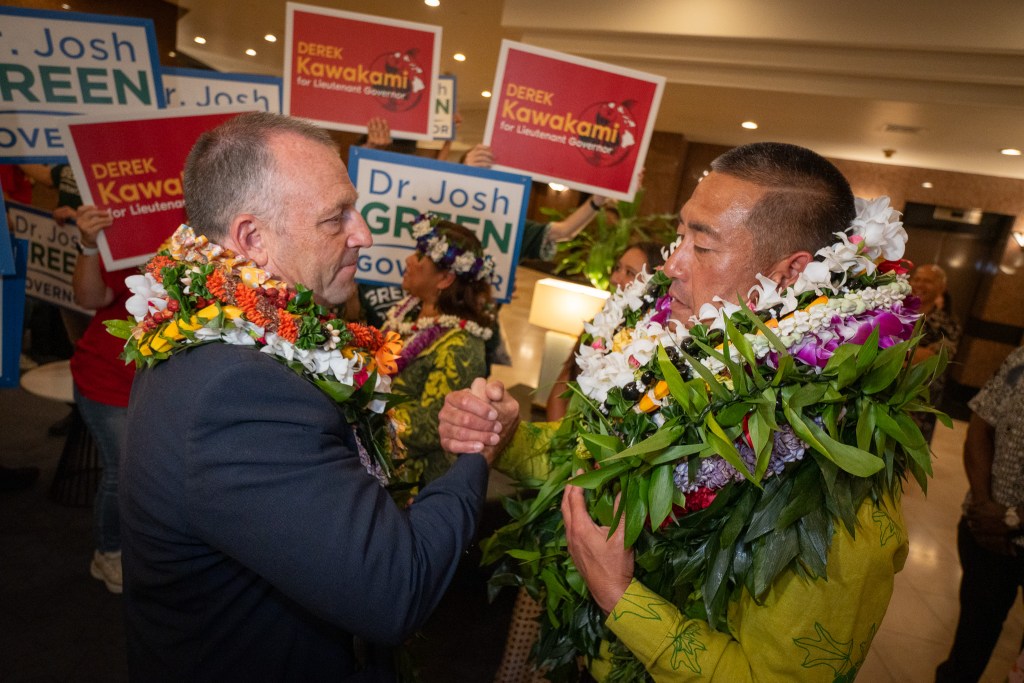
On the other hand, the program has received strong opposition from teachers’ unions across the country, including Hawaiʻi. The Hawaiʻi State Teachers Association has argued that the initiative will subsidize private schools using taxpayer dollars, pulling support away from public schools. The program has been compared to school vouchers, which typically use state dollars to subsidize private school tuition for families.
“This initiative acts as a backdoor voucher system that uses taxpayer dollars to fund private tuition and religious instruction, blurring the boundary between church and state,” union president Osa Tui Jr. said in an emailed statement.
The teachers’ union has endorsed Green for governor in the past two election cycles, and its political action committee contributed $1,000 to Green’s campaign this year.
“I don’t see any justification, a logic, as to why we should not be opted in. The only answer really appears to be politics.”
Republican Rep. Diamond Garcia
There’s also the question of whether the initiative could withstand challenges under the Hawaiʻi constitution, which states that public dollars can’t fund private education. The provision has been used to argue that Hawaiʻi cannot have a voucher program.
Unlike a voucher program, the scholarship program uses taxpayer donations to fund students’ education, instead of state or federal money. But the state would still play a clear role in the initiative by authorizing the program and actively opting in, said Aviam Soifer, former dean of UH Mānoa’s School of Law.
The state’s involvement could be enough to disqualify the program under the state constitution, Soifer said.
“The key constitutional question is, ‘Is the state involved?,'” Soifer said. “There would be no question that the state is involved enough. It doesn’t have to be state funds as such.”

There’s also the danger that scholarships could enable more families to leave the public school system at a time when schools are already struggling with low enrollment, said Yamauchi, the UH Mānoa education professor. Since public schools receive funding based on the number of kids they enroll, she said, shrinking student populations directly affect the resources and number of teachers schools can hire.
As a result, more families may leave their local school, making it harder for those campuses to stay open and retain parents, Yamauchi said.
But Diment Singh, parent of a Mid-Pacific Institute student, said he supports the program, even though his family makes too much to qualify for the scholarship. While the $1,700 tax credit reduces federal revenues, he said, there’s no guarantee that this money would fund education initiatives in Hawaiʻi.
On the other hand, he said, when people donate to scholarship organizations, they know their money is supporting students’ education.
“I don’t necessarily agree with all the things that are coming out of the Trump administration,” Singh said, “but anything that guarantees that the money is earmarked for education is a plus in my book.”

