

$300M For Disasters? Hawaiʻi Gov Seeks To Tap Rainy Day Fund
Hawaiʻi has suffered Kona lows, two hurricanes and an earthquake since March. Another storm is expected this weekend.
Gov. Josh Green will ask the Hawaiʻi Legislature for $300 million from the state’s $1.7 billion rainy day fund to help the state recover from a series of natural disasters this year, the governor said Wednesday.
The state faces $1 billion in recovery and resilience needs, Green said. But those figures are preliminary and could change as new damage assessments are made and eligibility for federal funds is determined.
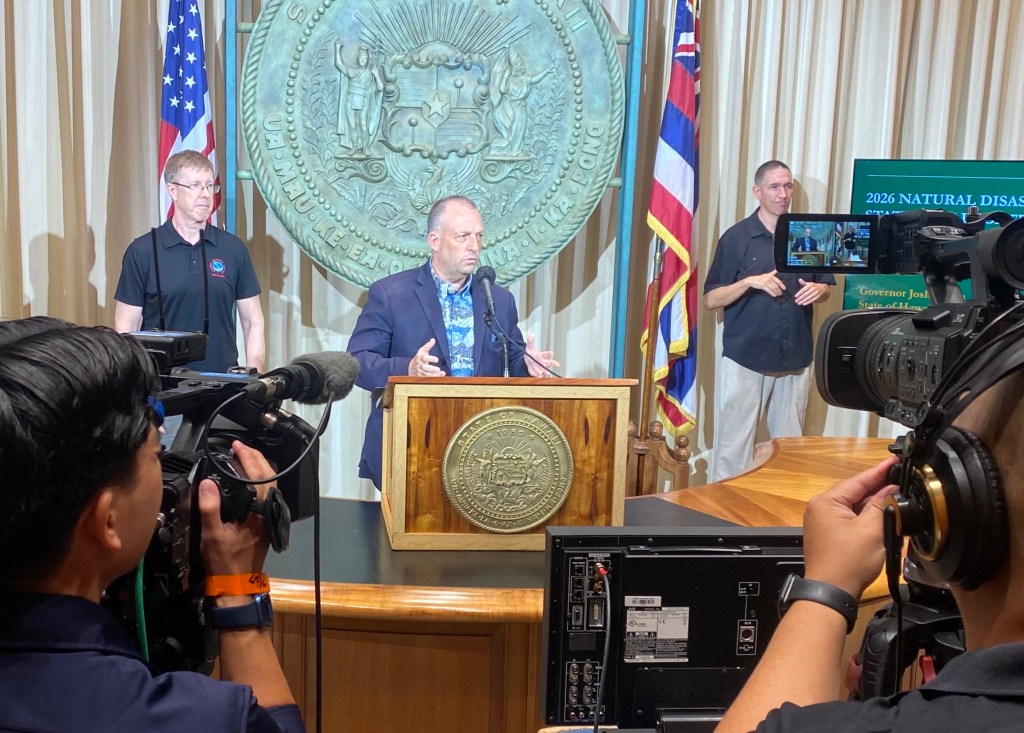
The announcement came at a press conference at the State Capitol as another storm neared the islands. Tropical Storm Nolo is forecast to bring up to 30 inches of rain to the Big Island, which is still recovering from Hurricane Lala in August and an earthquake in May.
The governor also said he would work with legislators and county officials to find a new place for the aging Emergency Operations Center in Diamond Head Crater on Oʻahu. The University of Hawaiʻi Mānoa campus and Wahiawā are being considered, he said, and the facilities could include a biosecurity hub.
Another goal is to have a second deepwater port besides Honolulu Harbor, which experts say is vulnerable to a hurricane or other catastrophe. Green suggested the Big Island for the alternate port, perhaps in Hilo, the state’s second largest city.
The string of disasters began in March with two Kona low storms that caused heavy devastation. Just last week Hurricane Lowell struck Kauaʻi and Niʻihau.
The administration estimates that 1,290 homes were affected by the disasters including 74 destroyed, 451 with major damage, 514 with minor damage and 251 “otherwise affected,” according to the administration. There have also been several fatalities linked to the storms.
Green said he recently discussed the disasters with his wife as well as how to pay for the ongoing recovery.
“As Jamie and I were talking about this morning, it has rained, and those rainy day funds will be utilized significantly with the partners that I have in the Legislature,” he said. “I’m grateful to them. I’m grateful that they are on board with that. So we will take hundreds of millions of dollars from the rainy day fund, whatever we don’t have in support from the federal government and the dollars that we’ve already gotten, will be able to cover these disasters.”
The governor said the state has thus far benefitted from federal assistance while other requests are pending. The most recent Council on Revenue economic forecast suggested the state was in good shape financially. And the Legislature had already appropriated $170 million for storm assistance earlier this year, which was separate from the new $300 million request.
But Green also indicated he would keep his options open in terms of asking the Legislature for more help, as the hurricane season — driven by the Super El Niño season — does not conclude until the end of November. The administration’s biennial budget will be submitted to the Legislature in mid-December.
Much of the 90-minute press conference served as an update assessing the damage of the disasters and recovery efforts. In addition to Green, several state officials were on hand.
There were also updates on Nolo, which is scheduled to reach major hurricane status in the coming days and pass just south of Hawaiʻi island sometime Saturday.
While the storm’s path is uncertain and evolving, officials urged state residents and visitors to prepare for the storm as soon as possible.
“You need to take action now,” said John Bravender, Warning Coordination Meteorologist with the National Weather Service. “Everybody across the state needs to pay attention to this and be ready in case this forecast does change.”
Cost Estimates So Far
The Green administration has identified $686 million in “currently identified” damage and recovery costs. They include:
- $463.6 million for the Kona low storms
- $1.5 million so far from the Hawaiʻi island earthquake
- $108 million for Hurricane Lala
- $112.4 million for Hurricane Lowell
Future resilience and mitigation projects are expected to total $319 million. They include:
- $80 million to modernize the State Emergency Operations Center
- $175 million to harden Honolulu Harbor
- $20 million to study a potential alternate port
- $20 million for community resilience hubs
- $9 million for airport generators
- $15 million for natural disaster mitigation
Besides the federal government, state insurance and the Legislature, additional appropriations could come from revenue from the Green Fee.
The more pressing matter for now, of course, is Nola.
“This seems like it’s going to be a very strong hurricane,” said Hawaiʻi Adjutant General Maj. Gen. Stephen Logan. “Stay tuned to your weather experts at the National Weather Service, your local media, and your county emergency management agency.”
Logan urged residents and visitors to visit ready.hawaii.gov.
“There’s a plethora of information that’s there and links to the counties, to the National Weather Service, to the Federal Emergency Management Agency. So it’s really a one-stop shop to be able to get to all of those tools. Contact your loved ones to ensure that they’re also prepared and knowledgeable about possible threats.”

