

Rare Hawaiian Birds Weather Hurricane Lala But More Storms Loom
The birds and ecosystems of Kamole are in recovery after Hurricane Lala passed over the remote Northwestern Hawaiian Islands.
The hundreds of thousands of animals that call the Northwestern Hawaiian Islands home felt the fullness of Hurricane Lala’s strength last week, bringing 130 mile per hour winds and intense rains through the federally protected islands and atolls.
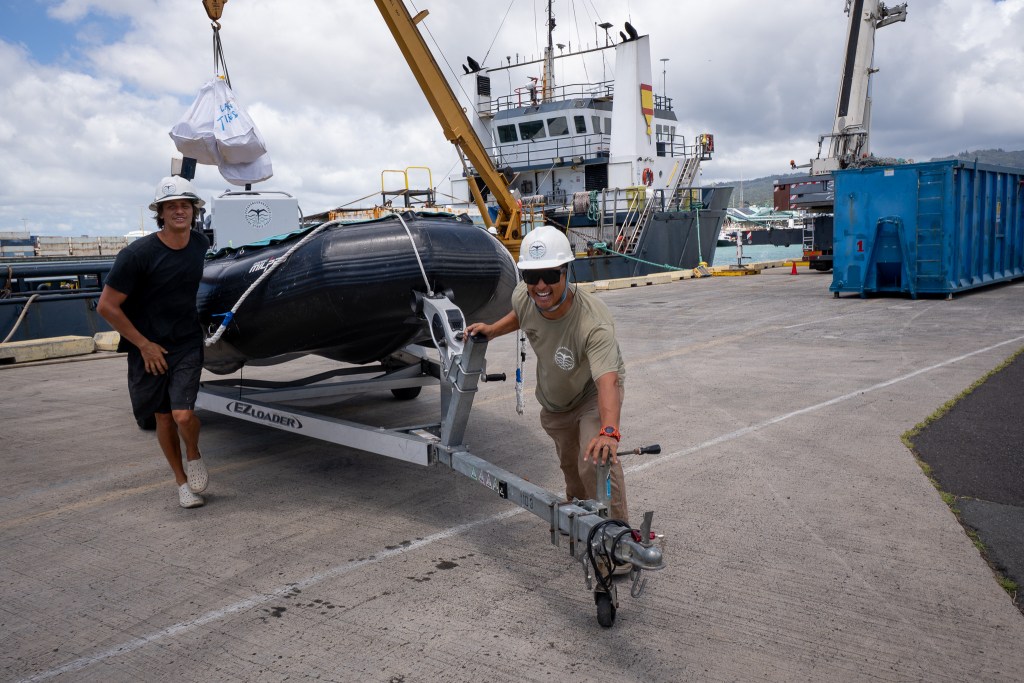
On Kamole, also known as Laysan Island, many birds died when swells reaching 31 feet high brought heaps of sand ashore. The sand filled the burrows of shearwaters and petrels, burying some birds alive from the neck down. Some survived after being freed by the crew of the Papahānaumokuākea Marine Debris Project, whose ship Imua trailed Lala and returned to Oʻahu on Friday.
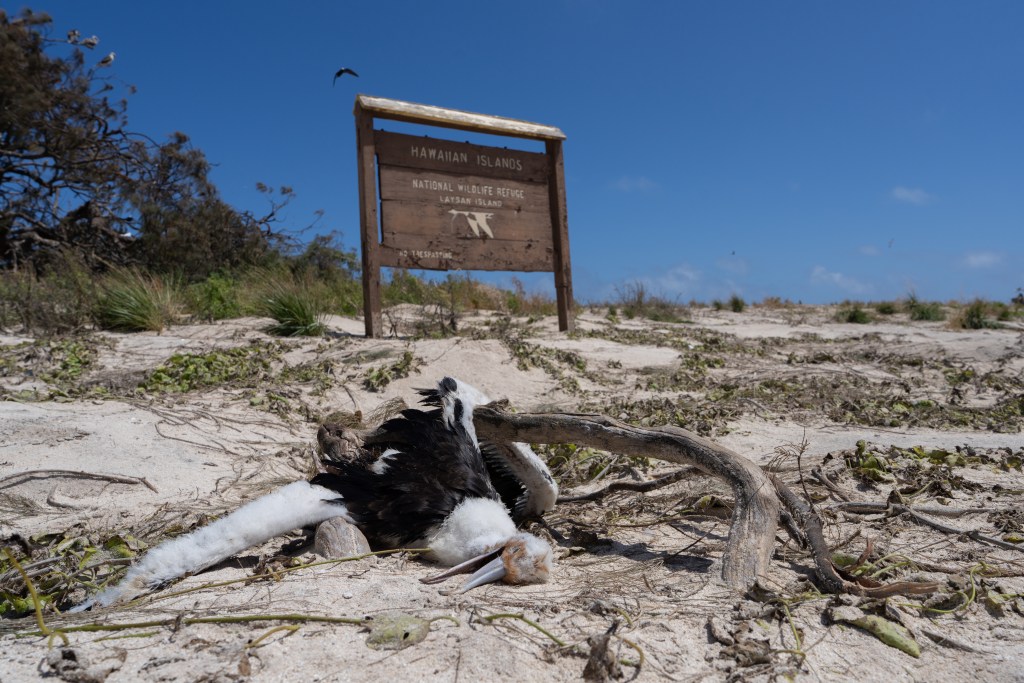
The crew was collecting the last of the 48,000 pounds of debris it was clearing from the uninhabited islands, and took the opportunity to see how the animals fared, especially four endangered species: ulūlu, Nihoa millerbirds; ‘ekupu’u, Laysan finch; koloa pōhaka, Laysan duck; and Hawaiian monk seals.
“It wasn’t a complete bloodbath,” project president Kevin O’Brien said. “I think it’ll be alright over there.”
But hurricane season isn’t over, with Tropical Storm Lowell now developing south of the islands and more chances for hurricanes to develop before the year ends. That’s a serious concern for the islands’ endemic birds and migratory species, especially as this year’s El Niño season is anticipated to be the strongest on record.
Lala weakened after devastating parts of Hawaiʻi island but regained strength as it moved north, reverting to a hurricane over the Northwestern Hawaiian Islands in Papahānaumokuākea Marine National Monument. At Kamole, a 1,000-acre island about 900 miles northwest of Honolulu, winds were fortunately slightly weaker than forecasted despite the hurricane making landfall, O’Brien said.
NOAA’s Office of National Marine Sanctuaries evacuated field crews ahead of the hurricane, according to NOAA spokesperson Jennifer Crawford. NOAA Fisheries Pacific Islands Fisheries Science Center had seven biologists with the center’s Hawaiian monk seal and sea turtle field camps on Lalo (French Frigate Shoals) about 200 miles from Kamole at the time. Those biologists are now back on O‘ahu, she said.

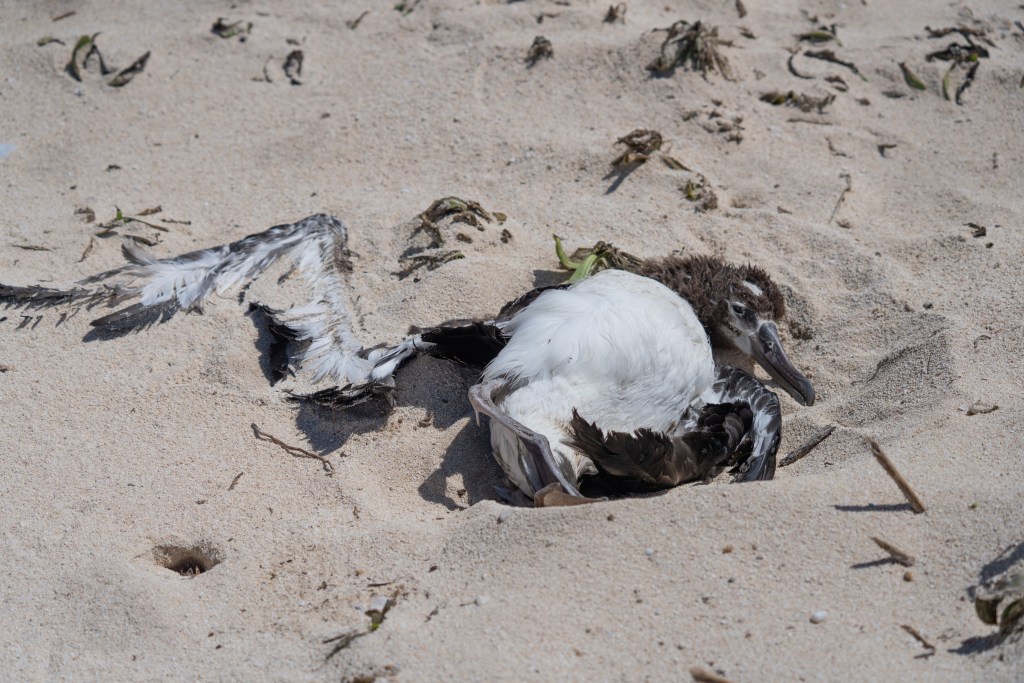
The day after Lala passed through, the debris project’s staff found “a ton of monk seals hauled out” and napping on the beach, O’Brien said. But they were more concerned about the vulnerable birds and their habitat.
Winds stripped the low-lying island’s heliotrope trees and sand buried the pōhuehue, or beach morning glory. Denuding those plants is a serious threat to the island’s bird populations because they provide critical habitat for nesting birds.
The beach naupaka and kāwelu grass were resilient, providing shelter for the birds in the southwest quadrant of the island, which debris project visual coordinator Andrew Sullivan-Haskins surveyed by drone. He hopes the grasses will bounce back quickly, following the rains.
“In a wildlife sanctuary like that, you see the whole rhythm of life. Not everybody makes it. They have good years. They have bad years,” Sullivan-Haskins said. “So visiting Kamole, you could see it was a bit of a shock to the system.”
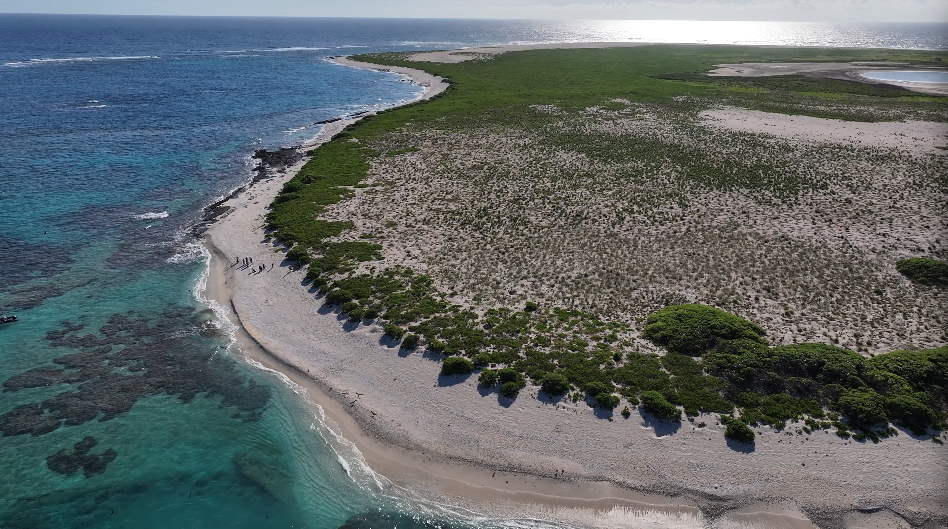
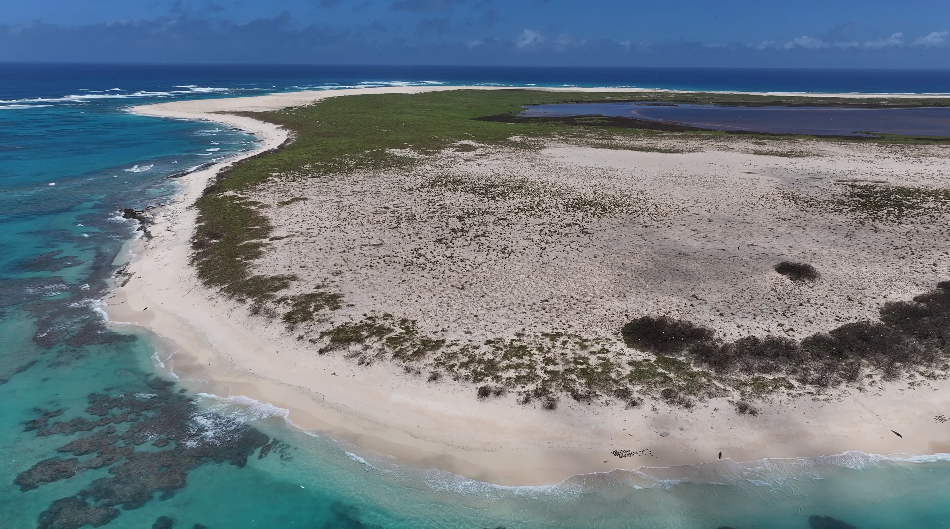
The shocks could also be seen in the skies, Sullivan-Haskins added. He witnessed almost a dozen instances of kleptoparasitism – birds stealing each other’s food – within three hours.
‘Iwa, the great frigatebirds, are the most common thief, and koaʻeʻula, or red-tailed tropic birds, are the most common victim. The behavior is typically associated with hurricanes, which disturb the animals’ food sources. It’s the most he’s ever seen in the past decade of working in the monument.
“It’s like a dogfight,” he said. “They’ll just dive down, pull on their big red tail, and they grab their wing, and they shake them around until the bird vomits up its meal, and then they all dive down and they catch it.”
Hastening The Rebound
The Northwestern Hawaiian Islands’ bird populations have been threatened for decades due to rising seas, ocean temperatures, increased severity of weather events and proliferation of ocean debris and invasive species.
Just days before Lala ran through the island chain, federal fish and wildlife staff transported endangered palihoa, or Nīhoa finch, from Nīhoa to Kapou to help increase and stabilize the population. That project also includes translocations of the endangered ʻekūpū, or Laysan finch, whose population has already disappeared from several islands.

Land loss is among the birds’ most serious threats, given the islands’ already-small footprint. Organizations such as Pacific Rim Conservation recognize the need to mitigate any land lost in the Northwestern Hawaiian Islands for all endemic birds’ benefit, including the mōlī, by helping establish new nesting sites on Hawaiʻi’s larger islands.
The islands’ seabird populations are resilient but they’re strongest when at sea, according to Jonathan Plissner, a recently retired biologist overseeing Midway Atoll further up the island chain. The birds can sustain shocks like Lala too but they’re most vulnerable when nesting in the low-lying northwestern islands, which makes maintaining native ecosystems important.
“Catastrophic loss of eggs or chicks for a year may not be significantly detrimental to the population if it occurs infrequently,” Plissner said in an email. “Many of these species are seeing decreases in reproduction for other reasons and aren’t going to be as resilient to these events as they once were.”
That’s why organizations such as those working in the Northwestern Hawaiian Islands, whether clearing debris or helping the island ecosystems return to their original state, are so important, Hawaiʻi Wildlife Center Development Director Rae Okawa said.
The impacts of this year’s potentially record-breaking El Niño season are concerning for center staff, as the proliferation of devastating hurricanes appear likely. Those weather events, Okawa said, can injure a lot of birds at once.
Because of Lala, the wildlife center’s Big Island hospital took in 100 birds in August, twice the number of injured birds it typically would take in a month. More than half of those birds, including petrels, shearwaters and terns, came in because of Lala.
“Just as important as the birds themselves — their ability to be resilient — is the community rallying around them and their readiness, willingness and ability to mobilize,” Okawa said.

