Sewer Rate Hike? Big Island Wastewater System Is Millions In Debt
The County Council is weighing a bill that would more than double the rates over the next five years.
Most residents on Hawaiʻi island aren’t connected to county sewers. Yet for over a decade, all county taxpayers have been paying for the cost of the municipal wastewater system.
Since 2013, the county’s wastewater division has been pulling around $1 million to $6 million every year from the county’s general fund to afford operations and system maintenance, according to budget records. The general fund is largely funded by property taxes. The county’s sewer fund, paid for by fees, can’t cover the full costs.
To get out from under this longstanding shortfall, the department has proposed a substantial sewer rate hike.
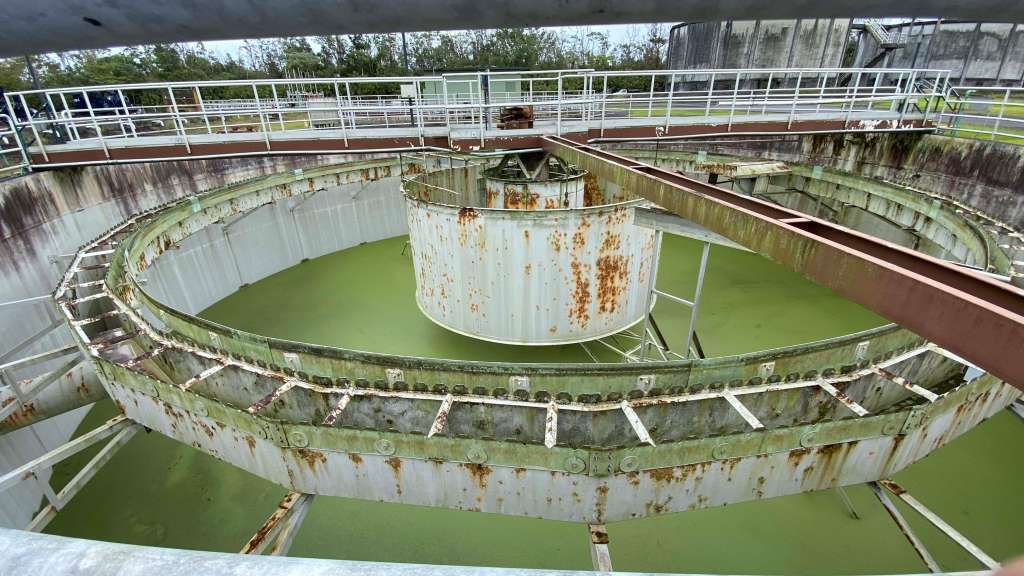
The Hawai‘i County Council got an earful from the public when it took up the bill Tuesday to enact the rate increase. After over an hour of public testimony and deliberation, the council’s Policy Committee on Environmental and Natural Resource Management voted to defer the measure until Sept. 15.
The rate hike would increase customers’ monthly sewer bill by 21% in January, to $63 per month with step increases that would bring monthly bills to $125 by 2031.
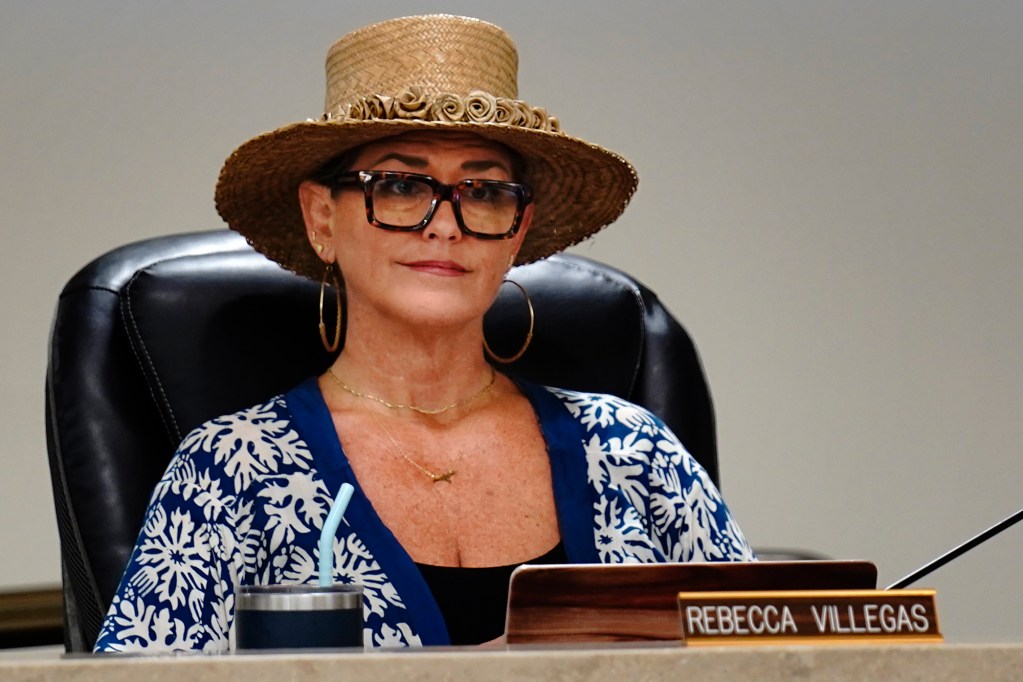
Councilwoman Rebecca Villegas, who chairs the policy committee, told Civil Beat she was concerned about how the rates would affect residents.
“It’s a wild time to be navigating a path for infrastructure improvements, which ensure long-term health, safety and longevity of our community,” she said, “without adding more stress, pressure and burden to people who are already struggling.”
The annual revenue from monthly sewer fees amounts to just a fraction of the division’s costs to maintain and operate the system, according to a 2026 sewer rate study by FG Solutions. And as inflation rises and upgrades continue, the cost of maintenance is expected to increase by about $6 million over the next four years, according to the study.
“Right now the only reason we can pay our bills is because we get money from the general fund,” Environmental Management Director Daniel Girvan said at a June Environmental Management Commission meeting. The volunteer county commission has been reviewing the council bill to increase the sewer rates and plans to submit its own recommendations.
First Increases Didn’t Work
This isn’t the first time the Department of Environmental Management tried to use rate increases to reduce dependency on the general fund.
The last time the council approved new rates was in 2019. It was the first time in 17 years that the council had raised residents’ rates.
The department was making enough from sewer rates before 2012 to cover the cost of operations, but it wasn’t the first year money was transferred from the general fund — $100,000 to $200,000 was transferred sporadically since at least 2000.
Barbara Bell, department director from 2002 to 2009 under mayors Harry Kim and Billy Kenoi, said the department had bigger worries at the time with its solid waste division, which was undercharging. Bell said she planned to propose new sewer rates but stepped down before she did.
“You need political will as well as focus,” Bell said. “And so it probably wasn’t a focus.”
The county first estimated that it would need to transfer money to the sewer fund in its 2010 budget. By 2019, the wastewater division was siphoning millions annually from the general fund for six consecutive years.
Then-department director Bill Kucharski said in council testimony that the 2019 rate increase would allow the department to stop using tax dollars to pay its bills by the last step increase and help with much-needed repairs.
The wastewater facilities needed significant upgrades, Kucharski said, and “the wastewater division is not supposed to be taking from the general fund.”
It’s been three years since the final increase, but the transfers haven’t stopped. The county transferred nearly $41 million between 2013 and 2025. And a nearly $3.9 million transfer was budgeted for the 2027 fiscal year, which started July 1.
The current proposed increases, including a new rate class for hotels, will get the department off the general fund by fiscal year 2031, according to the study.
The new rates would cover the increasing cost of operation and maintenance as well as the cost of additional staffing that new and upgraded wastewater facilities will require, the study says. The county plans to hire three full-time employees in fiscal year 2029 to operate new facilities in Nāʻālehu and Pāhala.
Currently the Wastewater Division services 14,800 customers, according to the 2026 wastewater rate study. The island mostly relies on cesspools and has nearly 50,000 of them. But the state has mandated the closure of all cesspools by 2050 because the systems leach into groundwater and the ocean, posing threats to marine ecosystems and humans.
Recent efforts to connect new customers will increase revenue but also increase operation costs, current director Girvan said during June’s commission meeting.
To see a big increase in revenue, he said, the county needs to extend its existing collection systems. But there’s no money for that, Girvan said.
The county is currently strapped for cash as it takes on significant debt to renovate its long-neglected wastewater treatment plants. The debt service from the upgrades is expected to put the county in a budget deficit.
For fiscal years 2026 and 2027, sewer charges covered roughly 54% of the wastewater division’s annual budget, according to county spokesperson Tom Callis.
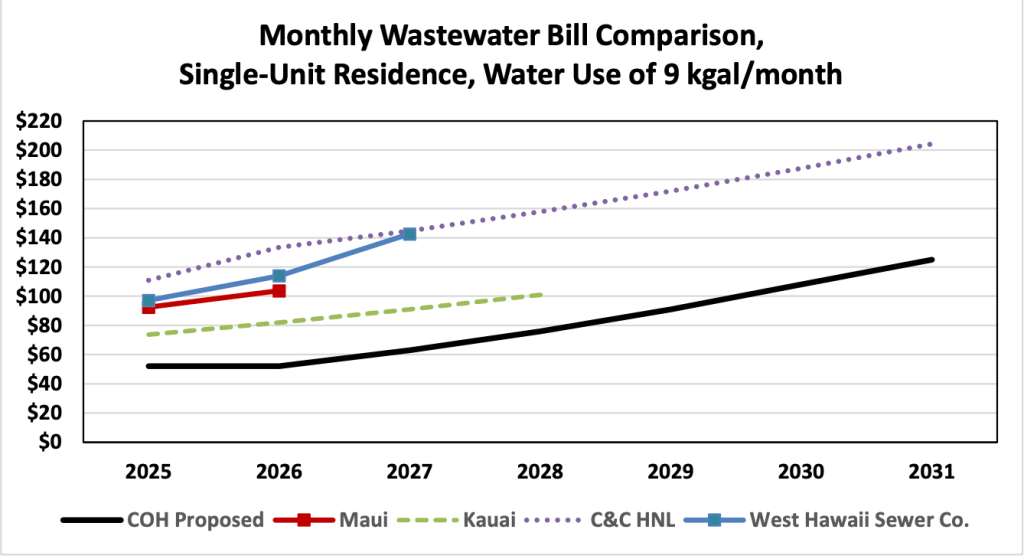
The new rates would still be well below what other counties in Hawaiʻi charge. But council members expressed worry on Tuesday about how the added costs would affect residents who are already struggling with the rising cost of living.
The county is evaluating a new low-income assistance program, Girvan told the council on Tuesday.
Members of the commission that advises the department also suggested charging vacation rentals at a separate rate similar to hotels. The new rate for hotels was a policy suggested in the 2026 rate study.
“This customer class was created to provide greater equity in nonresidential rates, recognizing that hotels typically discharge stronger wastewater than other non-residential customers,” the study says.
At Tuesday’s council committee meeting, some from the hotel industry pushed against the new class. Jerry Gibson, president of the Hawaiʻi Hotel Alliance, described the new class in written testimony as “punitive.”
The new class, Gibson wrote, “places a disproportionate, inequitable burden on our industry during a particularly fragile economic period.”
Matthew Pickett, general manager of the Hilo Hawaiian Hotel, said in written testimony that the rate increases go too far and does not recognize the economic contributions that hotels make to the county through property taxes, the transient accommodations tax and general excise tax.
“Isolating our brick and mortar hotels with rate increases of more than 300% disproportionately burdens local properties,” Coleman said, “meanwhile, short-term rentals escape this classification.”
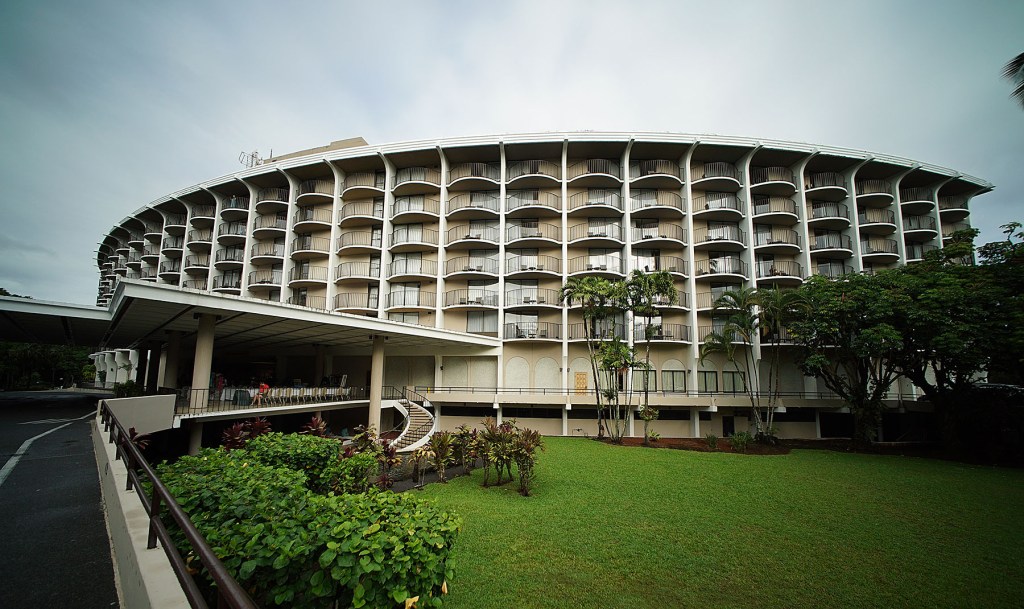
Girvan addressed those concerns on Tuesday in front of the council. He said the rates proposed for hotels were carefully calculated and reflect the cost of service. Hotels, he said, discharge more wastewater, and that water often requires more treatment than an average resident.
“I am sensitive to the idea that the price is higher (for hotels),” Girvan said. “What that really means is that for a very long time, we have been undercharging.”
Bell agreed with a new hotel class and said businesses should be charged their fair share. She lives in a neighborhood with many vacation rentals too, and says that if they have a high occupancy rate they might deserve their own class.
“When you’re in business making a profit,” she said, “you have an obligation.”
Currently, vacation rental homes are charged the residential rate. Commissioner Louisa Lee said in June that she didn’t believe residents should have to pay the same rate as vacation rentals.
“That is wrong,” Lee said, “and there should be an easy way to track that with people who are applying for (vacation rental) permits.”
Villegas planned to explore options to make the burden of rate hikes easier to bear, like pushing back the first increase, she said. The councilwoman, who voted for the 2019 increase, also questioned why the first round of hikes wasn’t enough to bring the wastewater division out of the red.
“If we keep doing the same thing, we always get what we’ve always gotten, right? And that’s what got us here,” she said. “So, how do we establish new patterns and practices that allow for a healthier paradigm?”
Whether the county should continue to rely on all taxpayers for its sewer system is something Villegas was conflicted about.
“I’m a strong believer in paying it forward for the collective good, but it has to be done with balance,” Villegas said. “Ideally we’re all someday going to be on that sewer system, right?”