If Tuesday’s Election Is Exciting Hawaiʻi Voters, They Aren’t Showing It
Early voter turnout in Hawaiʻi is behind that of past midterm elections. That contrasts with early voting in other states.
Less than a week before Election Day, Hawaiʻi’s voter turnout – once again – lags behind its historical count.
As of Wednesday, roughly 165,000 ballots have been returned. By comparison, about 195,000 ballots had been returned statewide this far out from Election Day during the last midterm four years ago.
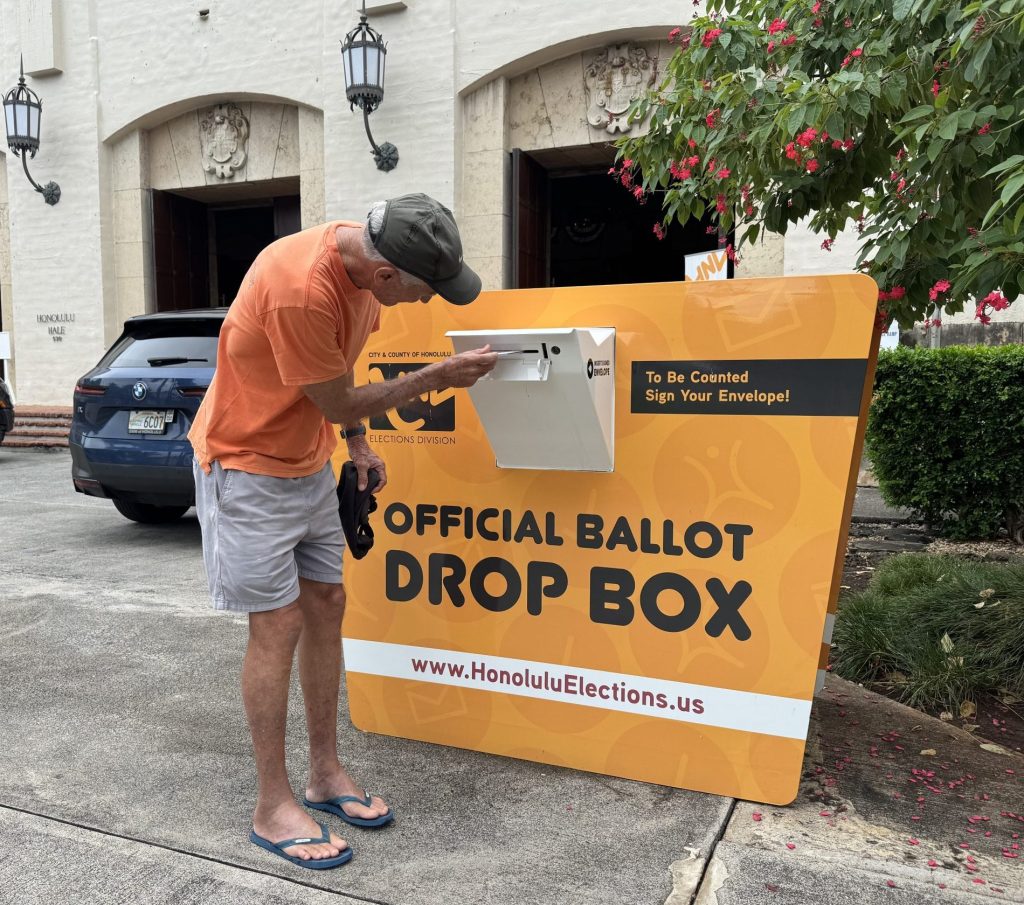
“This is not the first year we’ve had a set of contests that didn’t capture the public’s imagination,” Honolulu Elections Administrator Rex Quidilla said, noting a significant drop in the number of ballots submitted using the postal system.
At 22% of registered voters, the Hawaiʻi numbers paint a stark contrast with voter enthusiasm nationwide. Millions of Americans have already voted and early voter turnout is higher than in 2018 and 2022 at the same point.
Of course, there is still time for the numbers to change. For residents who are not registered to vote, same-day voter registration is available at voter service centers. Those registered can vote through mail, ballot dropoff or in-person. Visit the Office of Elections website for more information about where and when locations are open.
So far, it has been a relatively sleepy campaign season. The two biggest offices on the ballot, governor and lieutenant governor, are not competitive. For many, the most notable part of the ballot is a series of yes/no questions having to do with infrastructure financing and sometimes technical changes to county charters.
University of Hawaiʻi student Gabrielle Gamil, 21, said she plans to vote in this election but hasn’t gotten around to researching the candidates in her ʻEwa Beach district yet – nor the 22 ballot questions she is being asked to decide upon.
“I would have to research all of those too and then make my decision,” she said. “I take it very seriously.”
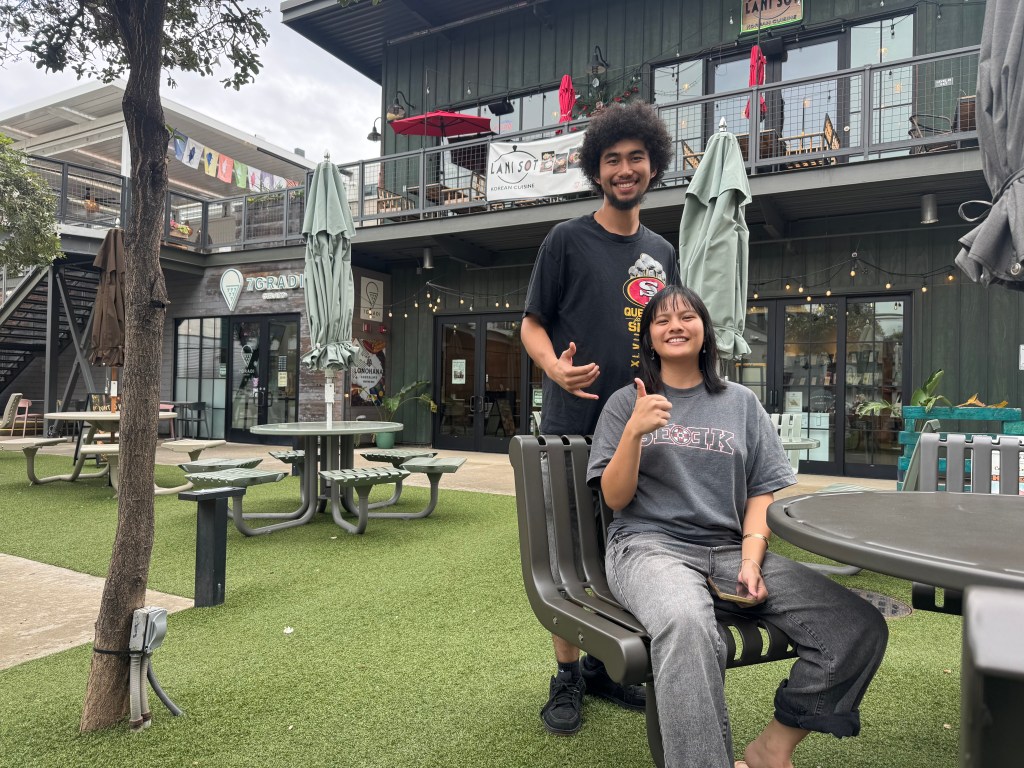
Work and academics has left her little time to finalize her decisions, she said, and she didn’t vote in this year’s primary election because she was too busy and realized too late that the deadline had passed.
“It was just kind of hard to find the time to do so,” she said, “especially because I didn’t really understand where I was supposed to drop it off.”
Hawaiʻi Common Cause Executive Director Camron Hurt said he’s not surprised that Hawaiʻi once again is struggling to get people to vote. He argues that officials should put more effort into continuous civic education and easily accessible voting locations.
“We don’t emphasize the importance of voting except for six months before an election,” he said. “It’s just that simple.”
Slogans and media campaigns in the months leading up to an election don’t sufficiently help people understand how voting works, he said. And despite there being no evidence of widespread election fraud, a lot of residents still have concerns about election integrity.
If people want to vote in person, Hurt said, officials should provide more options for that, including by opening more polling places in people’s neighborhoods on Election Day.

“The ultimate problem with our voter turnout is that we prioritize shaming voters for not showing up instead of meeting them where they are and rectifying issues,” he said.
Kauaʻi and Maui County both have competitive races for mayor, with Kauaʻi Mayor Derek Kawakami termed out and Maui Mayor Rick Bissen facing Yuki Lei Sugimura, a well-financed opponent from the County Council.
But even that hasn’t spurred much turnout – just under 19,000 people have voted so far in Maui County, representing 16% of registered voters, based on the number at the time of the primary. Using the same metric, Kauaʻi’s turnout is close to 24%.
Bissen’s bid for reelection comes as his feud with Maui Police Chief John Pelletier has exploded, with Pelletier announcing at a press event earlier this month that Bissen is under criminal investigation. This came days after the county’s police commission put Pelletier on paid leave for a corruption investigation. Bissen has rejected claims he’s the subject of an investigation.
Gamil, the UH student, said people’s ambivalence also comes from questioning if any of the candidates can make a meaningful difference in addressing Hawaiʻi’s myriad challenges.
“That’s why people get really uninterested in politics and things like that,” she said. “Because they’re busy with stuff, and then nothing really changes. So then why would they be interested?”