Honolulu’s New Police Chief Unveils 5-Year Plan — And Wants Your Input
Members of the public can submit feedback on the department’s strategic plan through Oct. 29.
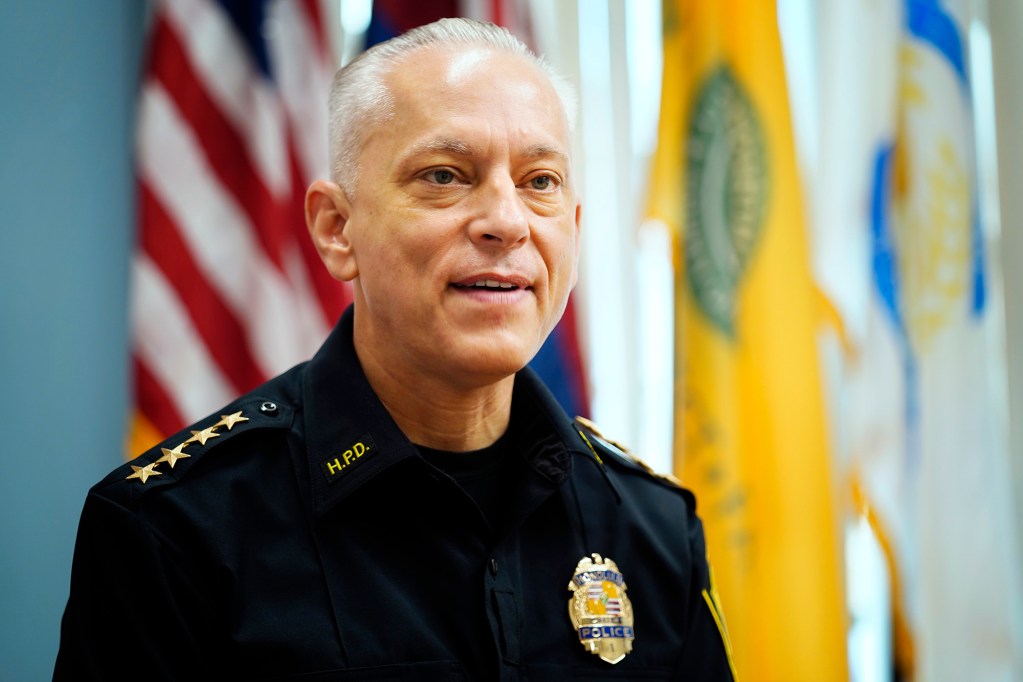
New Honolulu Police Chief David Lazar has big plans: installing new technology, increasing public communication, boosting hiring and retention, and supporting employee mental health, to name a few.
His vision was outlined in a strategic plan posted last Thursday.
The roadmap for the department’s direction over the next five years includes numerous action items with deadlines. It includes plans to implement a drone as a first responder program by this December and set up a real-time investigative center, which would serve as a hub for the department’s technology and surveillance programs.
In just four months on the job, Lazar has already shown he is willing to shake things up at HPD. Last week, he announced he would move 100 officers from various divisions to patrol. But he’s also open to pivoting in response to feedback. After members of the public criticized the reassignment of officers running certain youth programs to patrol, Lazar said he would leave the officers in place.
Some members of the public have been wary of the police department’s ambitious embrace of new technology, particularly automated license plate readers, which have been causing controversy around the country. The department announced last month it is seeking to activate the license plate reading capability of 20 cameras already installed in the Chinatown district. The department was previously sharing license plate data with the IRS, but Lazar said he stopped the practice in September. Lazar has said automated license plate readers are important tools for helping solve crimes, but he has promised the department won’t share data with any outside agencies.
Honolulu Police Commission member Chris Magnus said technology can be an important crime-fighting tool, but it needs to be rolled out carefully and with a lot of input from community members and groups with expertise in privacy and civil liberties.
The police department is asking the public to submit feedback to the strategic plan by Oct. 29. Members of the public can email their comments to hpdspu@honolulu.gov.
Kimie Korenaga-Kepo’o, a Waiʻanae resident and manager of Searider Productions, a multimedia program based at Waiʻanae High School, said she’s been impressed so far by how visible the chief has been in the community.
“I’m seeing that he is trying to be more transparent on social media and putting himself out into the communities, and I appreciate that,” she said. “I haven’t seen another chief really take that initiative in the past 10, 20 years.”
Technology And Oversight
Technology has been a priority of Lazar’s since he was sworn in as chief in July. The following month the department launched a pilot of the drone as a first responder program in two districts — District 1, which encompasses downtown, Chinatown, Nuʻuanu, Makiki, Ala Moana, and Kakaʻako and District 5, which includes Kalihi, Iwilei, and Kapalama.
As part of his strategic plan, Lazar aims to expand the department’s use of technology further by setting up a real-time investigation center, which would serve as an intelligence hub where the department can monitor all of its surveillance tech, including drones, automated license plate readers and live cameras. He plans to establish the center by next December as well as implement an AI-assisted report writing process by June 2028. The department began testing AI-assisted report writing tools last year.
The plan also outlines a goal to evaluate AI tools that can help with investigations and case analysis and implement them by June.
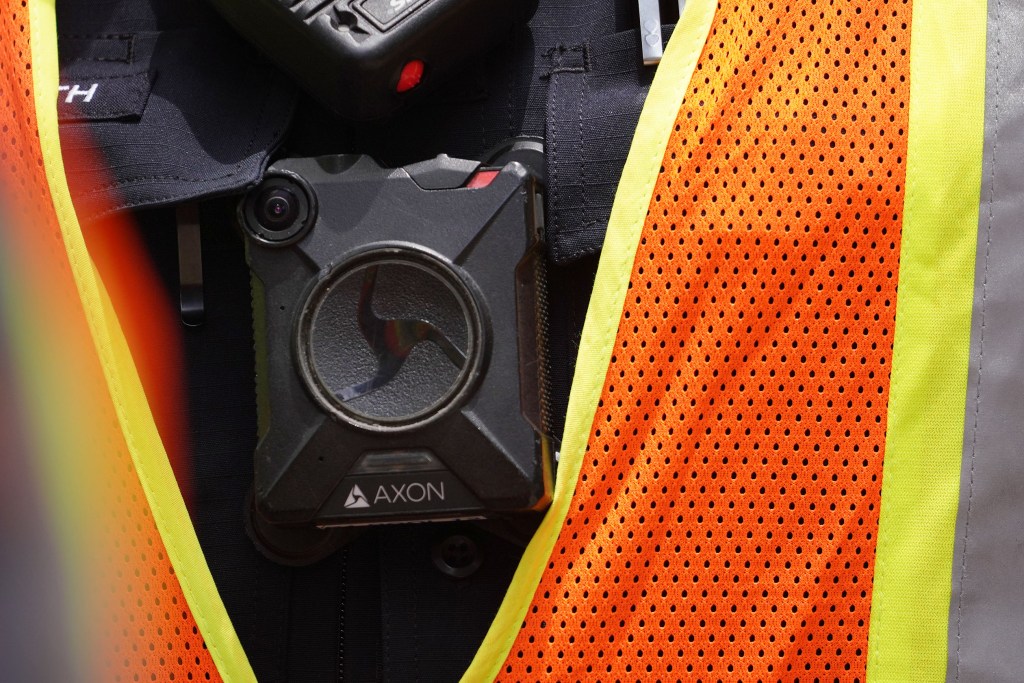
Some members of the public are wary of how quickly the technology is being rolled out and want to ensure it’s being done with community input and privacy protections in place.
“We should not build a surveillance infrastructure and decide how to control it later,” said Liam Chinn, facilitator of the group Hawaiʻi Community Safety Coalition.
Chinn said before expanding its technology, he wants to see the department establish limits on how data can be accessed, shared and retained. He also wants to see policies established with public input and regular audits of the department’s tech use by an independent agency.
Magnus said he also wants to ensure the department is seeking input from outside groups, like the New York University Policing Project and American Civil Liberties Union, on how to best implement surveillance technology while addressing privacy concerns.
The strategic plan includes implementing a communication system to address any privacy concerns the public may have with the drone as a first responder program as well as a metric to evaluate the AI-assisted reporting tool. Once it’s implemented, the department will survey officers about how the tool is working with the goal of at least 75% saying it helped reduce their report writing time by 2029.
Wellness In Policing
Improving employee wellbeing is another pillar of Lazar’s plan. Objectives range from honoring the achievements of sworn officers and professional staff on social media to setting up an employee wellness unit focused on mental health.
Retired Honolulu Police Sgt. Duane Samson, who founded Safer Communities Hawaiʻi, an organization that helps organize neighborhood watch patrols, said he’s glad to see the chief focusing on the mental wellbeing of his officers.

Sometimes, the stigma around seeking professional mental health treatment can prevent officers from getting help when they need it, he said. Lazar putting mental welling in his strategic plan will hopefully help shift the internal culture, he said.
“Make it known that it’s okay to get help,” he said. “I think it’s a great step forward for the department and for their wellness.”
“The more the culture improves within the department, the better we’re going to be treated by those officers.”
Chris Magnus, Honolulu Police Commission member
Lazar plans to start offering wellness programs created in partnership with outside community groups by June 2028, include wellness instruction in officer training by December of that year. He also wants to launch a physical fitness program with 30% staff participation by June 2030, according to the plan.
Magnus said he heard during a series of community meetings that members of the public want to see a greater focus on officer wellbeing because it will positively impact how officers behave in the field.
“The more the culture improves within the department, the better we’re going to be treated by those officers,” he said.
Hiring And Retention
The strategic plan also includes steps to increase hiring and retention and address HPD’s major gaps in staffing. HPD is regularly hundreds of officers short of its intended strength.
One idea is to evaluate officer pay on an annual basis and compare it to similarly-sized mainland departments using Oʻahu cost-of-living adjustments. Lazar also wants to establish retention bonuses or service-based incentives for employees approaching common turnover points, and he hopes to launch a childcare program by December 2027.
Some goals are also aimed at addressing officers’ workload.
Lazar plans to evaluate how 911 calls are screened and create a process to allocate certain nonviolent calls to partner agencies that can handle them. The department will publish a list of call types that can be diverted from police and a list of providers that could take them. Ultimately, the goal is to reduce by 20% police responses to certain types of calls by June 2030, according to the plan.
Chinn said he hopes certain nonviolent calls that involve homeless people or the mentally ill can be handled by civilian agencies or social workers instead of police. He said he was glad to see the department looking into diverting those types of calls, though he would like to see more specifics around what types of calls will be redirected and what outside agencies will be asked to handle them.
“We believe the evidence is very clear around mental health crisis calls, that the vast majority of the time, police, a gun and a badge is not necessary,” he said. “Rather, a public health-based approach is more appropriate.”