

Two Months After Lowell, Kauaʻi’s Low-Income Tenants Await Repairs
Residents have dealt with leaky roofs and worry that the latest round of heavy rain will exacerbate the problem.
Nearly two months after Hurricane Lowell sideswiped Kaua‘i and Ni‘ihau, tenants in a Kekaha low-income housing complex are still waiting for their landlord — the Hawai‘i Public Housing Authority — to fix the damage and clean up the debris.
Residents say they’ve dealt with leaky roofs and worry that the next round of heavy rain will exacerbate the problem. One tenant says his landlord didn’t respond to his request for a nonprofit to come and temporarily tarp his roof to prevent further damage. The housing authority doesn’t allow unauthorized individuals to access building roofs for liability reasons.
“We’re constantly cleaning up our areas if it rains. It’s not fair to us. We’re paying our rent, and you guys not even stepping up,” said Joseph Naka‘ahiki, referring to the housing authority. He has lived at the 78-unit Kekaha Ha‘aheo property for five years.
The Hawai‘i Public Housing Authority takes the residents’ concerns seriously and believes every resident deserves a safe, well-maintained home, according to an emailed statement sent by chief planner Benjamin Park.
“Like other property owners addressing storm-related impacts, HPHA must assess conditions, arrange qualified contractors, and ensure repairs can be performed safely,” the housing authority’s statement said. “As stewards of taxpayer funds, we must also ensure that repairs are appropriate, properly completed, and a responsible use of public resources.”
Helping His Neighbors
Naka‘ahiki said he’s repeatedly complained about his leaky roof and damage to other buildings to the housing authority in the nearly two months since Lowell. On his building, the hurricane’s winds dislodged a circular, metal vent cap, allowing rainwater to leak through his roof and into his living room and kitchen.
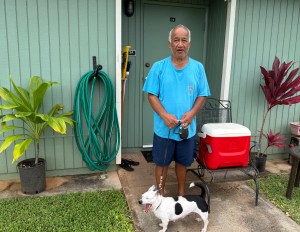
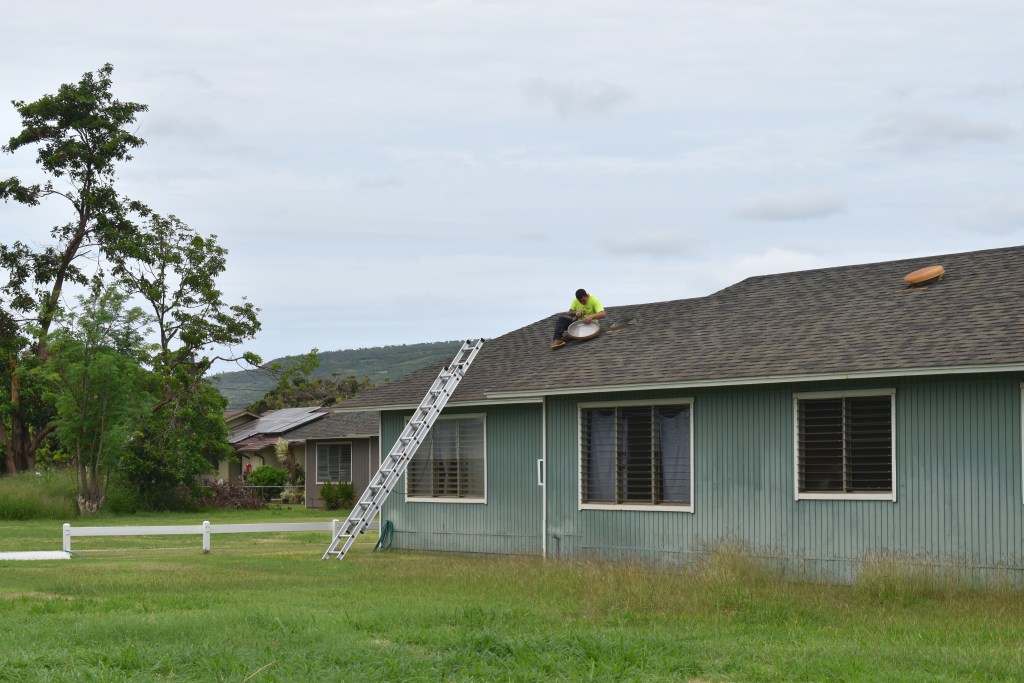
On Tuesday afternoon, a maintenance worker finally fixed his roof’s vent cap. Naka‘ahiki said he found it ironic that the housing authority finally got back to him the day after he started reaching out to the news media.
He estimates there’s a handful of other units on the western side of Kekaha Ha‘aheo that are still dealing with hurricane damage, based on his conversations with his neighbors. Other tenants have also reported broken windows, leaky roofs and frustrations with the housing authority’s slow response.
Mila Mangayayan, who has lived at the property for a little over a year and a half, said Lowell tore off some of the shingles above her kitchen and living room. She’s been anxious every time Kaua‘i expects heavy rain, including this week, and worried an incoming monsoon trough would cause her ceiling to leak.
She said she called the housing authority after it had distributed a brochure to tenants asking them to report hurricane damage, but she hasn’t heard back.
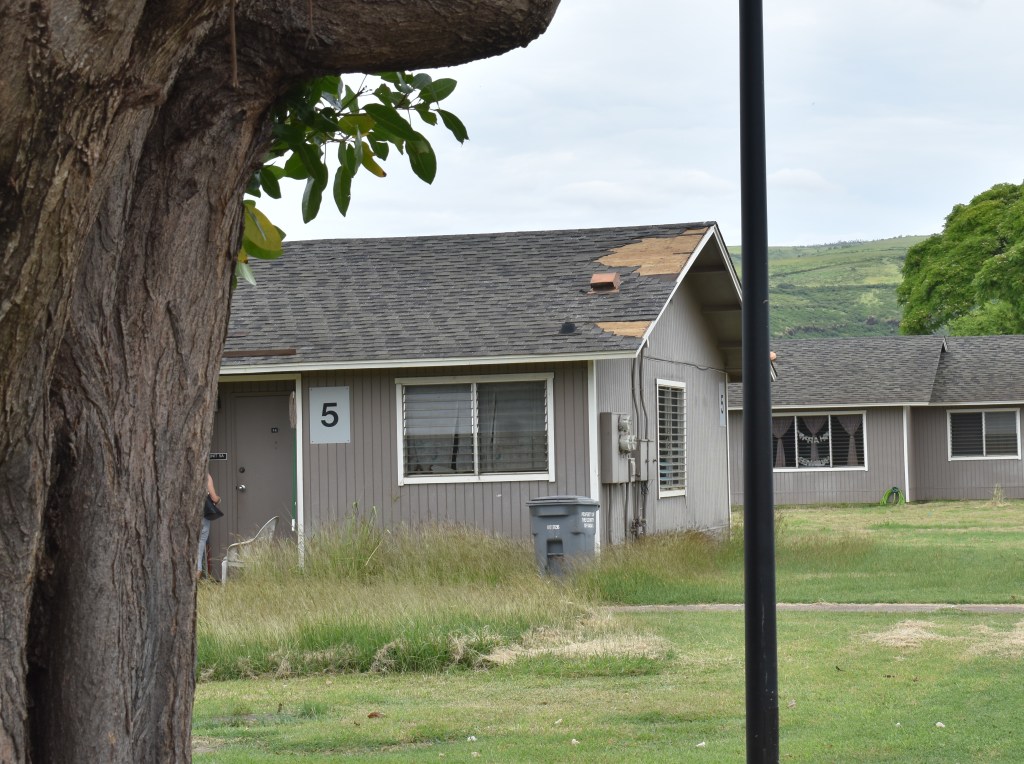
As the sky darkened ahead of the monsoon trough on Tuesday afternoon, several buildings across the 9-acre property had missing shingles and another had a displaced metal vent cap. A couple of units’ windows were missing louvers. Piles of broken and cut branches that residents had cleared after the storm still remained.
Naka‘ahiki said most tenants he knows aren’t willing to speak out about their concerns for fear of retaliation, so he’s raising the alarm for them. His neighbors include other kūpuna, individuals living with disabilities and families.
“I’m afraid of retaliation too, but I’m a fighter,” he said. “I’m not going to be quiet.”
According to the housing authority’s statement, staff inspected Naka‘ahiki’s unit on Sept. 21 and Sept. 29 and found no leaks, interior water damage, mold or mildew. A later inspection identified a roof vent requiring repair after heavy rainfall, during which Naka‘ahiki reported drops of rain entering the unit.
The housing authority offered Naka‘ahiki a temporary move to the closest available family unit at ‘Ele‘ele Homes so that repairs could be made to his unit. Naka‘ahiki told Civil Beat that he declined the offer because he wanted to stay in Kekaha, where he was born and raised and where he is part of a supportive tenant community.
Staff are coordinating with a contractor to further assess the extent of the damage, determine necessary repairs, and evaluate whether the resident can safely remain in the unit while work proceeds, the authority said in it statement.
Authority staff have identified minor leaks affecting two units, including Naka‘ahiki’s, at the Kekaha complex, but the total number of affected roofs has not yet been confirmed. Further assessment is needed to determine the scope of repairs and whether there is additional damage. Staff will also continue to inspect and evaluate any additional reports of water intrusion.
To repair any leaks, the housing authority has to inspect and document affected areas, prepare an estimate, confirm available funding and secure a qualified, licensed roofing contractor. The authority must also follow the state’s procurement process.
Temporary Repairs
Mālama Kaua‘i has been helping to coordinate emergency roof tarping since Hurricane Lowell. Megan Fox, the organization’s executive director, said it’s been especially difficult for renters because volunteers can’t tarp roofs without the homeowner’s permission. Tarps must be screwed and nailed to the building, and an owner waiver must be signed.

“We have a lot of renters across the island, small private ones too, where it’s been difficult for the owners to coordinate protection and repairs and insurance coverage and things like that, especially for the ones who aren’t on island,” she said.
Mālama Kaua‘i is part of a hui of organizations called Voluntary Organizations Active in Disaster. After Lowell, the group received nearly 800 requests for cleanup and recovery assistance, with almost 200 specifically related to roofs.
In its statement, the housing authority said it does not allow residents or other volunteers to tarp its roofs due to concerns about injuries and improper installation, which can damage the roof and worsen water intrusion. A qualified roofing contractor must determine whether tarping is appropriate and how it can be installed safely and effectively.
“Allowing individuals without the necessary qualifications and safety equipment onto the roofs would risk injury, property damage, and liability,” the authority said in its statement. “As stewards of public funds, HPHA must protect residents and ensure taxpayer dollars are used responsibly.”

