She’s Famous As The Shark Whisperer. These Divers Recall A Toxic Boss
More than a dozen former workers report workplace abuses they say they suffered at One Ocean Diving, which has been operating cageless shark tours on the North Shore for more than a decade.
At the height of the Covid-19 pandemic, Mariana Perez-Varona was doing cancer research at a hospital in Portland, Oregon, when she saw a job posting for a safety diver position with One Ocean Diving in Hawaiʻi.
She was a marine biologist and a divemaster — the first tier of professional certification in scuba — but because of the pandemic, she hadn’t been diving in a while. The job looked like the perfect opportunity.
“It was my chance to get back in the field,” she said.
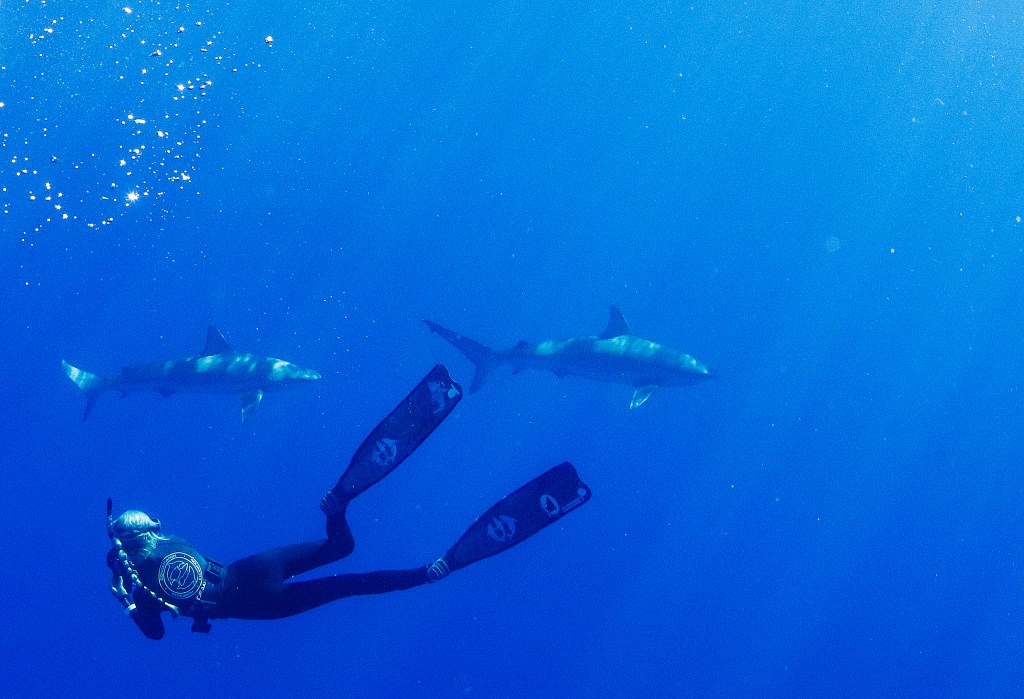
She moved to Oʻahu and started what she thought would be the job of a lifetime: helping run cage-free shark tours and doing research and conservation work for Ocean Ramsey. Somewhat of a shark conservation celebrity, Ramsey has gone viral for her videos swimming alongside tiger sharks and great whites. She’s been the focus of two documentaries — including “Shark Whisperer,” which came out on Netflix last year.
Many in the marine biology field take issue with Ramsey’s hands-on approach, including sometimes gripping the dorsal fins of the sharks, and some of Perez-Varona’s former professors had questioned Ramsey’s academic credentials. But still, Ramsey has been influential in bringing awareness to shark conservation, and Perez-Varona couldn’t wait to start diving with her.
“It was like a dream,” she said. “You’re going to work with the best of the best, right?”
But shortly after arriving in November 2021, Perez-Varona realized the job was nothing like what she’d expected.
She and more than a dozen other former workers have come forward on social media in recent weeks to allege rampant workplace abuses at One Ocean Diving. The former workers, who detailed their allegations on Instagram and in interviews with Civil Beat, say they were subjected to a toxic work environment and lengthy unpaid training periods that culminated in a “30-day push” during which they were forced to work for 30 days straight without pay.
They say they were pressured to work while sick and in unsafe ocean conditions and were asked to sign documents that made them feel trapped: non-compete contracts that prohibited them from working with other cage-free shark diving companies on Oʻahu and non-disclosure agreements that forbade them from speaking about the inner workings of One Ocean.
In the world of shark diving, competition is steep and apparent danger is a selling point. But the allegations against One Ocean suggest the people who are supposed to protect tourists and other divers were the ones at risk.
Four attorneys interviewed by Civil Beat who specialize in labor law, maritime law and civil rights say the working conditions former crew members described could violate labor laws, and they may be entitled to back pay for the unpaid training periods, although the statute of limitations for back pay is two years after a violation occurs.

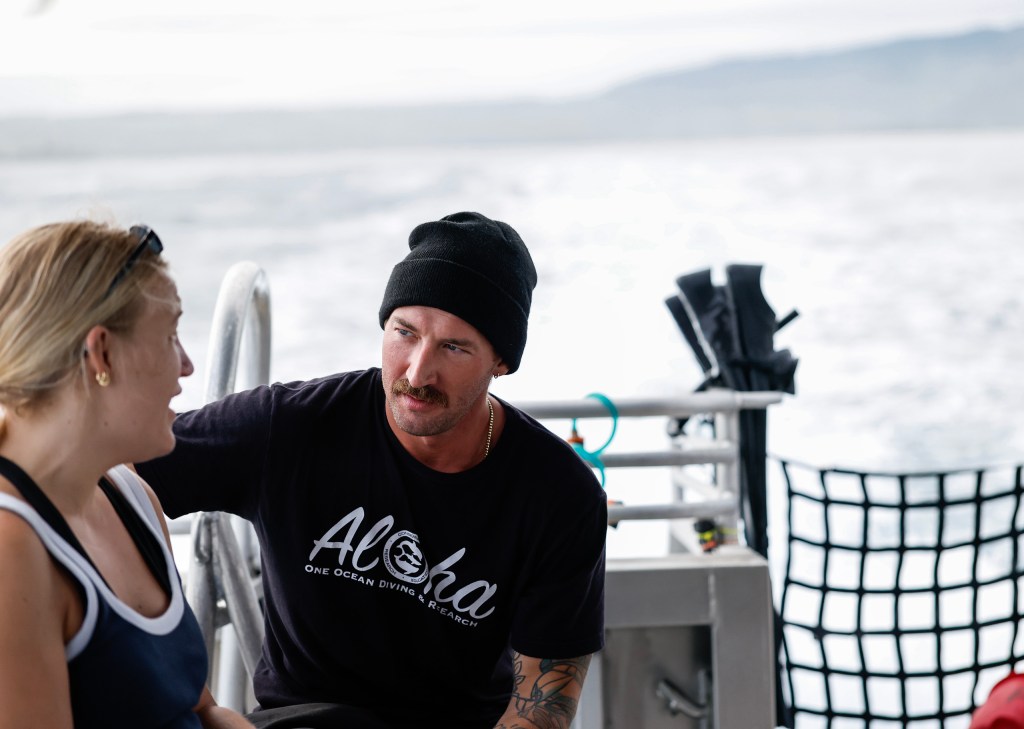
Ramsey and her husband, One Ocean co-owner Juan Oliphant, declined to be interviewed but invited a Civil Beat reporter and photographer onto a charter boat to observe their operations and speak to current crew members, who described a positive and supportive company culture.
In a statement, the business owners denied subjecting divers to a toxic work environment. They defended their safety training procedures, saying they are necessarily rigorous to prepare safety divers for working in potentially dangerous and unpredictable conditions.
“We firmly deny allegations that we physically or verbally abused staff, and we dispute statements circulating online about our company that are false or materially misleading,” the statement says. “Our training and business practices have always continued to evolve over the years. We are reviewing practices and policies with professional advisers to identify where clarification or improvement is needed.”
However, Ramsey said in an Instagram post that some of the company’s policies have changed since the ex-workers spoke out. Training will be compensated “in accordance with applicable wage and hour laws,” her post said, and the company will stop using non-compete contracts.
“To everyone who is patient, keeps an open mind, and gives us the benefit of the doubt, we are admittedly not perfect, but we are good people,” — especially Oliphant — Ramsey wrote, “and I continue to grow and strive to do better.”
Three current crew members who spoke to Civil Beat said, in their experience, Ramsey and Oliphant are serious about safety standards but kind and supportive bosses. They said they enjoy their job and have stayed more than four years.
“To everyone who is patient, keeps an open mind, and gives us the benefit of the doubt, we are admittedly not perfect, but we are good people… and I continue to grow and strive to do better.”
Ocean Ramsey, shark diver and conservationist
But seven former workers who spoke to Civil Beat, many of whom have gone on to work at other shark diving or marine-life related companies, say the treatment they experienced at One Ocean was harsher and more volatile than anything they’ve seen in the dive industry. More than a dozen others echoed that sentiment on social media. The former workers also said most companies pay their trainees and do not require them to work days on end without breaks.
“I think we can all agree that the ocean is a place where we go for healing, for connection, for peace, where our mind can sort of escape all of the craziness of the world above the surface,” said Kayleigh Grant, who worked for One Ocean Diving from 2016 until 2020. “It should not be a place where people can scam, can scheme, can exploit, take advantage of.”
Other shark diving companies on the North Shore did not respond to requests for interviews to discuss industry standards in shark diving, but a company running cage diving tours off the coast of California said the practices described at One Ocean seem outside of what’s normal.
Jane Reifert, vice president of marketing for Incredible Adventures, a company that offers cage-diving shark tours out of San Francisco, said their divemasters may go out on one charter to observe without pay, but otherwise are paid from the day they start work with the company. The company also does not run tours more than three days in a row so as not to exhaust staff.
“This is a very serious thing, safety is very important,” she said. “We want our people to be paid well and safe.”
The Shark Whisperer
Ramsey has a major following on social media, now more than 2.5 million on Instagram, and has made international headlines for her daredevil swims with giant great white sharks. And she’s had real influence. She advocated for the passage of a bill in 2021 that banned shark fishing in Hawaiʻi and outlawed knowingly capturing, killing or entangling sharks in state waters.
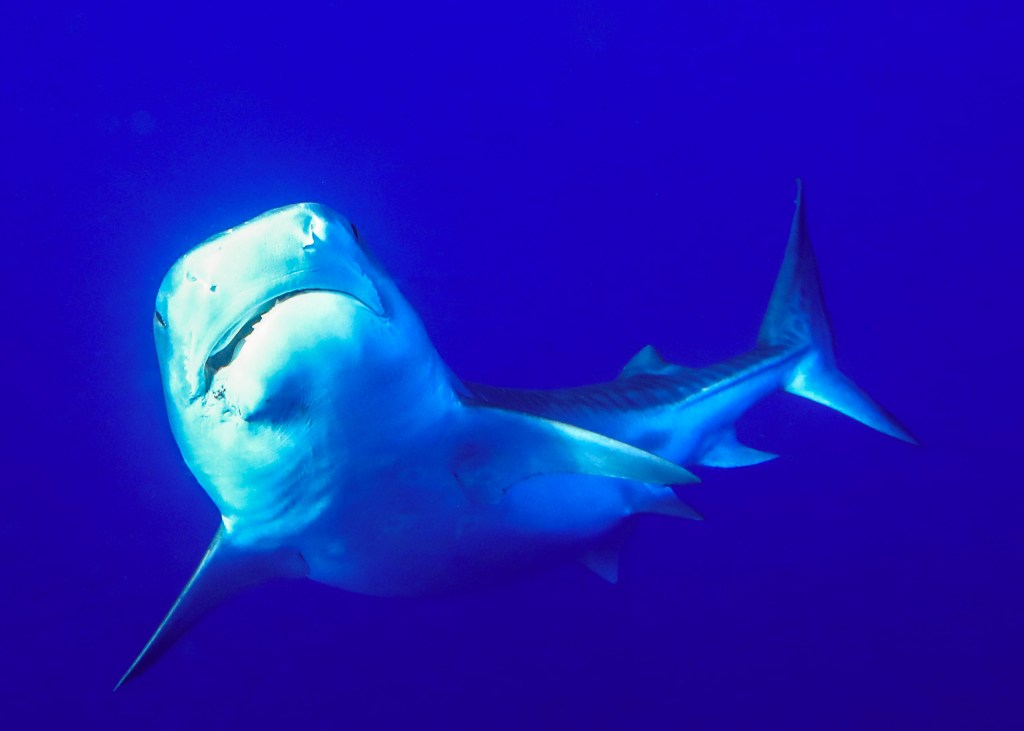
She’s become known for her up-close-and-personal interactions with sharks more than twice her size. Some of her videos demonstrating “redirection” techniques, such as touching the snouts of tiger sharks with a locked arm and pushing them away, have tens of thousands of likes.
She and Oliphant, an underwater photographer, founded One Ocean Diving in 2010, according to its website. A Hawaiʻi Magazine article from 2020 described it as the “first and only cageless shark research and diving program in Hawaiʻi.”
Ramsey has attracted many critics, but her love of sharks and passion for raising awareness about them is undeniable. For young shark lovers, the chance to work with her seemed like the opportunity of a lifetime, former workers said.
Tracy Izor started training as a safety diver in 2018 after earning her bachelor’s degree and getting her divemaster certification — two prerequisites for the job.
She trained for more than five months, helping run tours, which included work like setting up and launching the vessel, giving safety briefings to guests, accompanying them into the water and cleaning up at the end. Guests pay $150 per person to join the tours, according to the company’s website. Izor said trainees weren’t paid, aside from tips.
When her training was nearly over, she had one more challenge to complete — the “30-day push.”
This was a period of 30 days where trainees, mainly college graduates in their 20s, were asked to work for 30 days straight with no days off, in most cases without pay. After the push, trainees would be “signed off” and ready to work as paid safety divers, where they’d earn a starting pay of $50 per charter, and eventually up to $100 per charter.
“It was good money once we were paid,” Izor said, “which was an incentive to keep trying.”
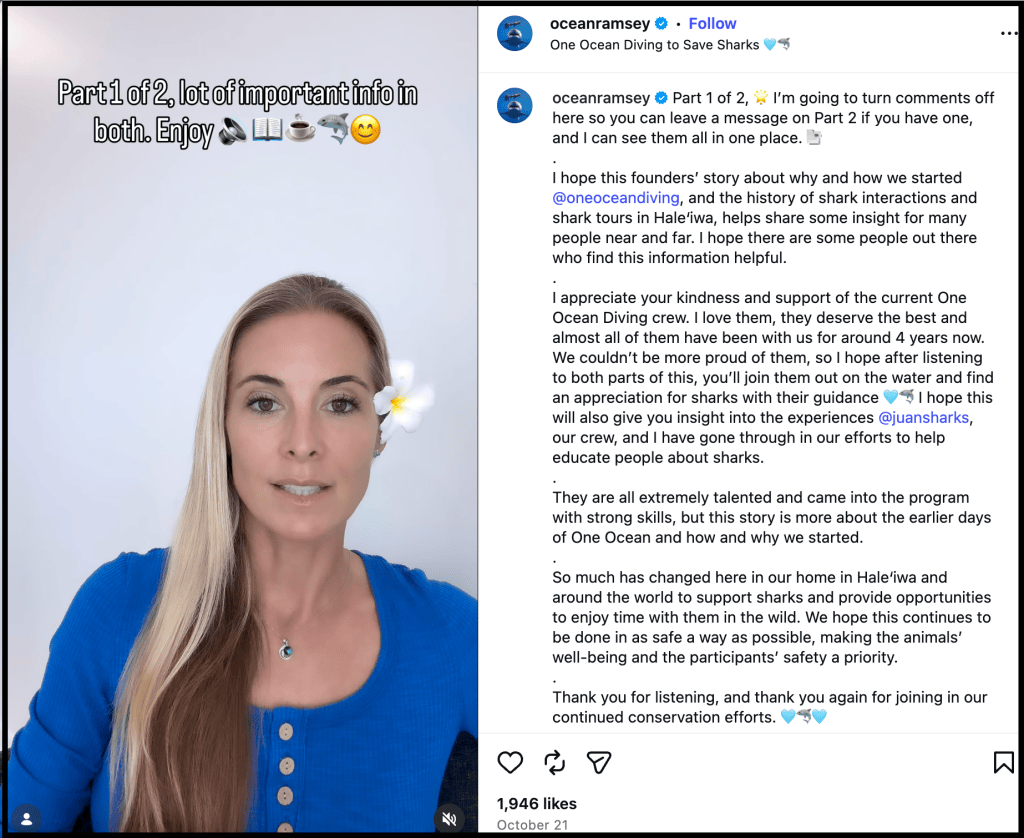
Ramsey wrote in an Oct. 15 Instagram post that she encourages, but does not require a “30-day challenge to build muscle memory & experience the intensity of working with apex predators even when tired.”
“That’s the training I’d want for anyone guiding my family,” she wrote.
But Gary Wagner, who went through the 30-day push in 2017, said it was presented as a requirement for trainees to finish training and start getting paid. After days on end of working sometimes 12- to 14-hour days, it didn’t feel like safety was the goal.
“It’s meant to emotionally and physically break you,” he said.
Perez-Varona remembers arriving at her North Shore apartment one night during her 30-day push in December 2021 with swollen ankles and deep cuts and blisters from the friction of wearing her fins and wetsuit. But she still couldn’t rest. She would stay up a few more hours doing social media posts for One Ocean, she said, which trainees could do to earn a little money — around $5 per post.
“My ankles would be throbbing and so swollen,” she said. “My neck was like, raw. It was exhausting.”
The workers who went through the grueling final push said it made them feel unsafe.
“You’re putting people’s lives in jeopardy by making someone work under that emotional distress,” Izor said.
In a statement, U.S. Department of Labor spokeswoman Chauntra Rideaux said crew members of vessels are usually covered by the Fair Labor Standards Act, which states that required job training generally must be paid at least minimum wage. The complicating factor for these ex-workers is that they were technically considered independent contractors, who aren’t afforded the same rights as employees.
But certain criteria can lead to a determination that there is in fact an employee-employer relationship, such as if the employer requires a strict schedule and has heavy oversight of someone’s work — two factors the former workers said they were subjected to at One Ocean.
‘You Just Have To Show Up’
Six former safety divers interviewed by Civil Beat said they were yelled at, grabbed and pushed in the water by Ramsey during training. Others voiced the same allegations on social media.
“She comes up to, like, ‘bite you’ and grab you really hard,” said Andriana Fragola, who worked for the company from 2018 to 2022. “That kind of grabbing would actually result in bruising on me.”
Ramsey denied all allegations of physical abuse but said in a video on Instagram that her training techniques are rigorous on purpose. She acknowledged simulating bites on trainees if she felt they weren’t paying attention as a way to get them to realize the potential consequences of losing focus in the water.
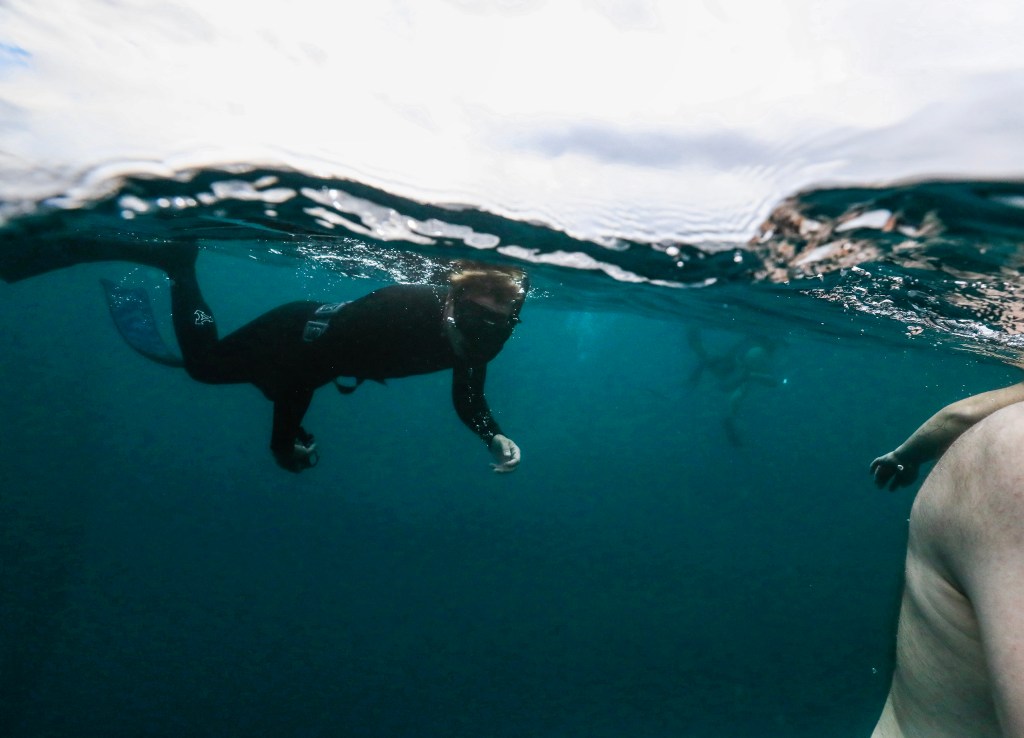
“I could just tell them like, ‘Hey, you’re not looking around enough,’ but that didn’t seem to work,” she said. “So I’d be like, ‘Bite! Come on, look around. That could have been a shark… There’s no room for error.”
Current employees said they didn’t mind Ramsey’s rigorous training or the 30-day push and credited the company’s stellar safety records to her methods. But the former workers considered her tactics needlessly rough.
“The training overall was extremely aggressive and unnecessary,” Grant said. “I got my divemaster before going to work at One Ocean, and even getting my divemaster, you’re treated normally, with respect.”
Former safety divers said they were expected to come in to work no matter what, even if they were sick or going through an intense personal issue.
“She told us that even if our mom dies, the next day we’re expected to show up to work,” Izor says. “That was the level of ‘You cannot call out’ that she expected.”
Oliphant said in an email that Ramsey denies making such a statement.
But this was put to the test for Grant when she tried to call out during her training period in 2016 after she’d just learned a friend in her hometown in Pennsylvania had died. When she told Ramsey and Oliphant, she said they didn’t offer her the day off.
“I was so beside myself and frazzled that there was some of my gear for the job that I had forgotten in my car, like my fins,” she said. “My mind was totally with my friends back home.”
Fragola said during her first year as a safety diver, she had bronchitis, which made it impossible to equalize the pressure on her sinuses when she dove below the surface. Ramsey and Oliphant told her to run the tours anyway and to just avoid diving down too deep.
“You just have to show up,” Fragola said.
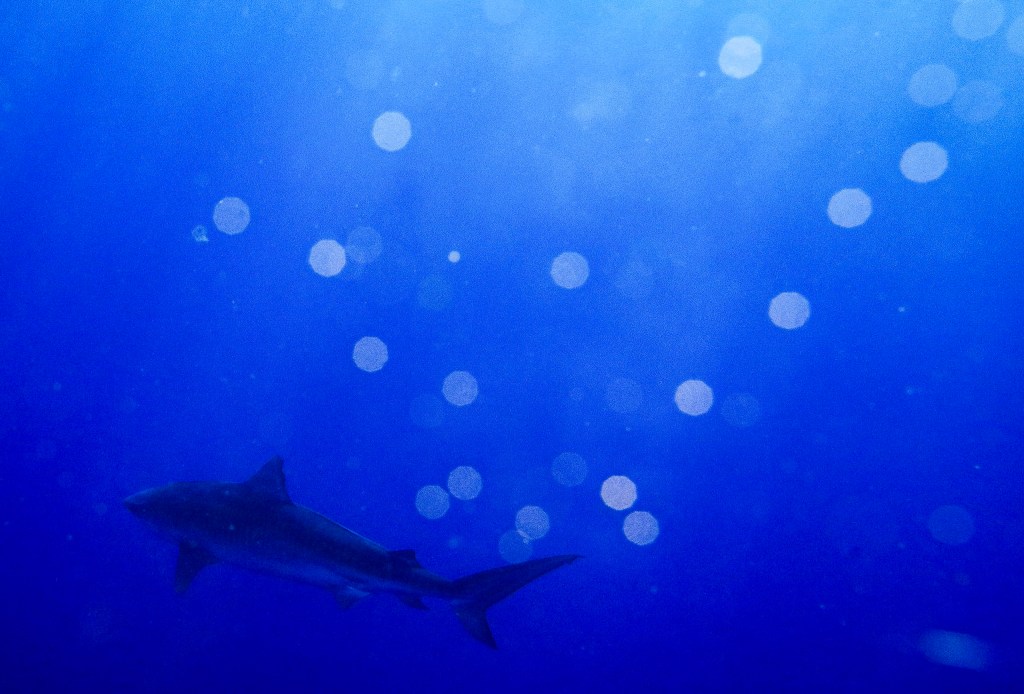
Former safety divers said they were also not allowed to make safety calls and cancel tours if the ocean conditions were bad.
“They would belittle you,” Wagner said. “You were made to feel less than if you did not want to run a tour because it was unsafe.”
Other former workers echoed this and said they, too, were not allowed call off charters because of bad conditions. Customers mentioned poor visibility and rough conditions in at least eight reviews on TripAdvisor for One Ocean, but the vast majority of reviews are positive with more than 3,400 five-star ratings.
Oliphant said he and Ramsey regularly encouraged employees to take time off while sick, especially during the Covid-19 pandemic, and said the team has regularly canceled charters due to poor conditions. The company also has online reviews from customers who say their tours were canceled last minute due to weather.
“We do not want anyone operating in conditions they believe are unsafe,” he said. “That would contradict our training, our conservation mission, our responsibility to guests and crew, and the long-term sustainability of our company.”
The treatment wasn’t all bad, former divers acknowledged. Ramsey was often extremely kind and caring and offered crew members food and gifts, such as wetsuits, fins and rash guards. But those kind moments would inevitably be followed by yelling or harsh reprimands if a mistake was made.
Fragola described it as “lovebombing.” One former boat captain who posted on Instagram said she felt like she had Stockholm Syndrome working there.
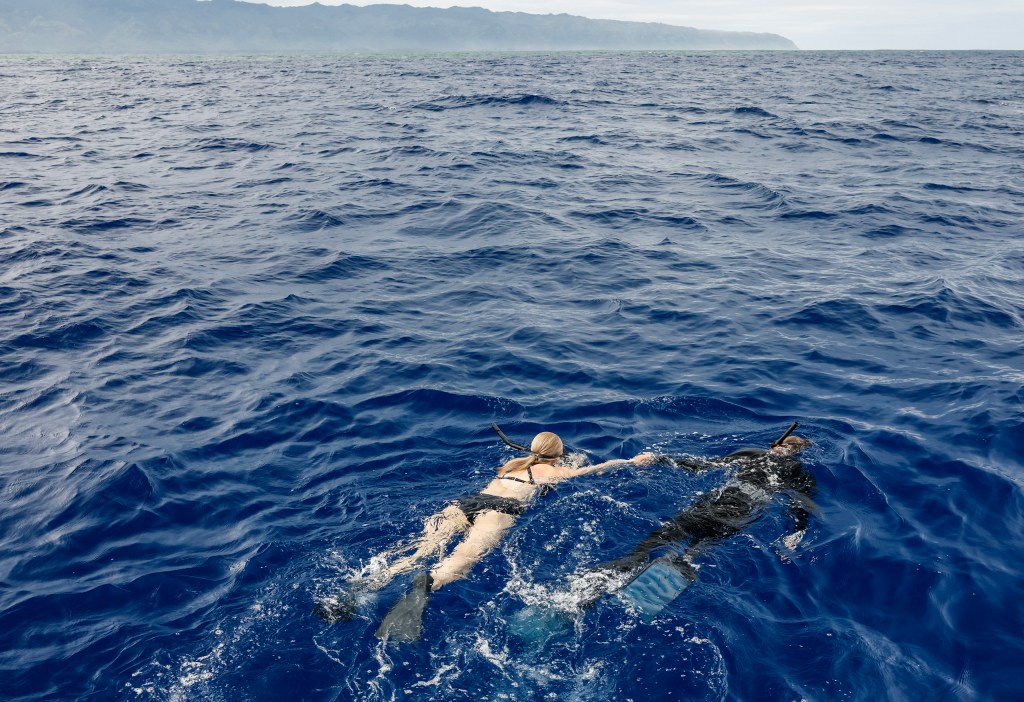
Perez-Varona quit abruptly in June 2022 after she said a captain sexual harassed and stalked her. She said she told Ramsey and Oliphant that the captain’s behavior, and how unsafe it made her feel, was her reason for quitting and moving home to Oregon.
In a text to Perez-Varona reviewed by Civil Beat, Ramsey and Oliphant acknowledged they’d had a “bad run of captains” and said Perez-Varona’s experience would lead to improved company policies.
But Perez-Varona was shocked to later find out the captain had been promoted. Oliphant said in a statement the captain had been informed that if he attempted to contact Perez-Varona again, he would be fired. But Perez-Varona said his continued presence at the company, especially in a managerial position, puts other women at risk and was a major reason for her wanting to speak out about her experiences at One Ocean.
‘We Didn’t Want Competition’
Before starting training, former workers told Civil Beat they were required to sign non-compete contracts that prevented them from working for other cage-free shark diving companies on Oʻahu for up to three years. They were also required to sign non-disclosure agreements that prevented them from discussing many aspects of their work at One Ocean.
Former workers, who feared they’d have to move if they wanted to work with sharks at another company, said they felt they had no choice but to stay. Perez-Varona had already moved to Hawaiʻi from Oregon and paid to have her car shipped over when she was presented with the non-compete.
“I remember I called my family crying and saying like, ‘I’m stuck,’” she said. “‘I don’t have an option anymore.’”
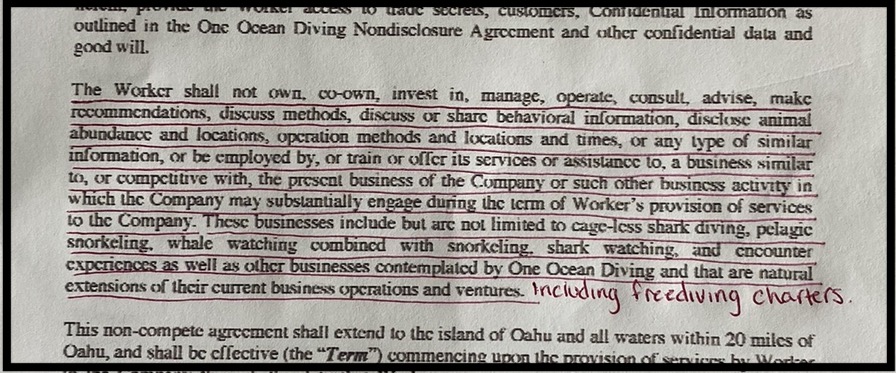
Ramsey said in an Instagram video that she required non-compete contracts for two reasons: Her company devoted a lot of time and resources to training people who she didn’t want to then lose to another company. She also wanted to discourage people from trying to open their own shark diving businesses that might not have her same commitment to safety.
“If they’re not trying to protect the sharks,”Ramsey said in the video, “and that’s not their first and foremost thing, or safety isn’t their first and foremost thing, and a bite happens, that’s going to negatively affect us, and then our bigger goal of getting sharks protected.”
Three lawyers interviewed by Civil Beat said the terms of the contracts sound overly broad and likely would not hold up in court.
But for workers starting out in an industry, signing a non-compete, even a non-valid one, can scare them into staying at a company, even under poor conditions, said Ted Hong, a Hilo-based employment attorney.
“The newly-minted employee, they’re not going to be aware of what their rights are,” he said. “That’s the downside, the dark side of taking advantage of these employees with respect to these types of agreements.”
The workers were also required to sign non-disclosure agreements.
Ramsey said on Instagram that they were meant to protect customer information, private company data and “the privacy of our crew, owners, and affiliates and individuals collaborating with us on research or media projects.”
She noted the agreements do not prohibit anyone from reporting harassment or discrimination or speaking out about “legally protected workplace matters.” She did not specify in the post whether One Ocean will continue to request confidentiality agreements.
Former workers said Ramsey and Oliphant would try to prevent them from speaking about other aspects of the company, such as employee pay, and cite the NDAs.
Oliphant said in an email he wasn’t aware of any time he instructed employees not to talk about pay.
“If such a statement was made, it would have been an unintentional mistake rather than an attempt to establish or enforce such a policy,” he said. “We recognize that employees have legal rights regarding discussions of their wages and compensation.”
Kevin Tinneny was One Ocean Diving’s first captain when the company started doing tours around 2014. He said he saw countless young safety divers come through the company who weren’t aware they’d need to sign non-competes before starting. The fear of not being able to work anywhere else kept them there despite suffering mistreatment, he said.
“A lot of them, it was their first job in the industry,” he said. “They walked into the industry thinking, ‘I guess this is what it is,’ and they got chewed up and spit out.”
Tinneny, who now runs a fishing charter boat company out of Haleʻiwa Harbor, said Oliphant and Ramsey also threatened to sue him on multiple occasions for violating his non-compete, but a formal lawsuit never materialized.
Perez-Varona said Ramsey and Oliphant threatened her with a lawsuit after she returned to Oʻahu a year after quitting One Ocean and starting working for another shark diving company.
“They walked into the industry thinking, ‘I guess this is what it is,’ and they got chewed up and spit out.”
Kevin Tinneny, former One Ocean Diving captain
Perez-Varona said she saw Oliphant and Ramsey filming her while she gave a safety briefing for the other company. She texted them asking them to never film her again.
Oliphant replied “please stop harassing us with your dramatic texts,” according to messages reviewed by Civil Beat. He then threatened to sue her and the company she was working for.
On Instagram, Ramsey said her company has not sued any of its former employees over violations of the non-competes.
‘Don’t Lose The Love For The Sharks’
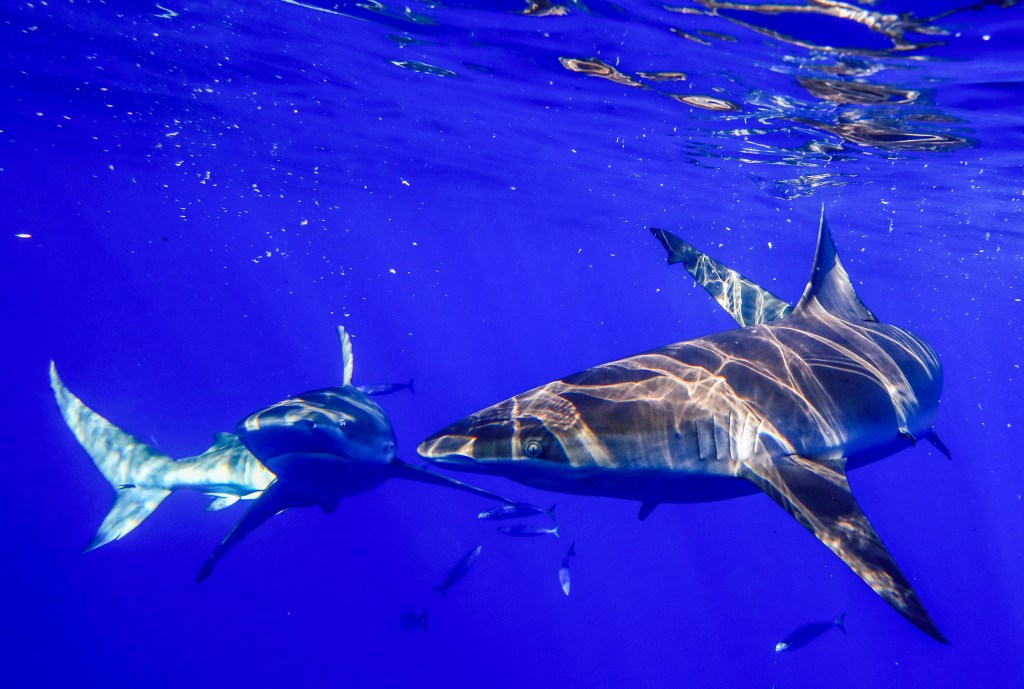
On a recent Tuesday morning, the One Ocean charter boat bobbed in the swells off Haleʻiwa as crew members flipped through laminated cards and named the sharks guests might see that day: sandbar sharks, Galapagos sharks — which they affectionately call “galaps” — and, possibly, the crew’s favorite species, tiger sharks.
“If we see a tiger shark today, we’re going to call out, ‘Tiger! Tiger! Tiger!’” one of the safety divers said. “But I promise we’re not worried, we’re actually super stoked.”
Lauren Friedel, a guest on the boat visiting Hawaiʻi from Rockaway, New Jersey, was dripping wet when she emerged from the water after having seen more than 20 sharks. She’d been nervous that morning, but was surprised at how calm she felt once she was actually in the water with them.
“This was more peaceful than scary,” she said.
Friedel said she had followed Ramsey on Instagram for a long time and was always intrigued by her photos and videos swimming with sharks. After her dive, she said she planned to share her experience with loved ones who still have misconceptions about the danger of sharks, including a friend who was too scared to join the tour that day.
“I’m going back home and telling everybody that this is the best experience ever,” she said as the boat made its way back into the harbor.
This message about sharks is what Ramsey says is her core mission.
“Getting people in the water with them to see them, to see that they’re not monsters,” she said in an Instagram video, “we realized that that was the most effective way of changing people’s minds and getting them on board with protecting sharks.”
Ramsey said in a statement that the allegations from former workers online have hurt her team and led to lower turnout at recent conservation events and beach cleanups. Current crew members said they’ve also been targets of negative comments online from internet users piling onto the drama. Even a guest on Tuesday morning’s charter had seen some of the comments.
“Ignore the haters online!” he called as he walked off the boat.
The former workers who’ve spoken up say they, too, have been the targets of online attacks, including accusations that they brought up the allegations for clout or to promote competing shark diving businesses, something they firmly deny.
While some of the former workers speaking out do work at other shark diving companies on the North Shore, others have continued their careers on neighbor islands or in other states.
They say speaking out about what they went through at One Ocean is part of a wider reckoning going on in the dive industry where those who’ve experienced abuse are raising awareness in the hope of bringing change.
“My goal with this is for other people not to end up in this cycle of abuse,” Perez-Varona said. “Even if people that work there now don’t acknowledge that it’s happening, it doesn’t mean it didn’t happen.”
Based on Ramsey’s post announcing some policy changes at One Ocean, it appears their effort has already had an impact.
“I think what we’ve done is force them to change, so I’m really proud of us,” Grant said. “I don’t see a world where they can go back to unpaid training and harsh non-competes and NDAs.”
Current and former crew members of One Ocean emphasized a desire to keep sharks at the center of the conversation. What they all have in common is a love for the deeply misunderstood apex predators and a commitment to protecting them.
“Don’t lose the love for the sharks because of something coming out that might contradict the way that you thought or perception that you had about a specific person,” Fragola said. “We all share this passion.”