‘The Biggest Change Happens Locally’: Last-Minute Voters Cast Their Ballots
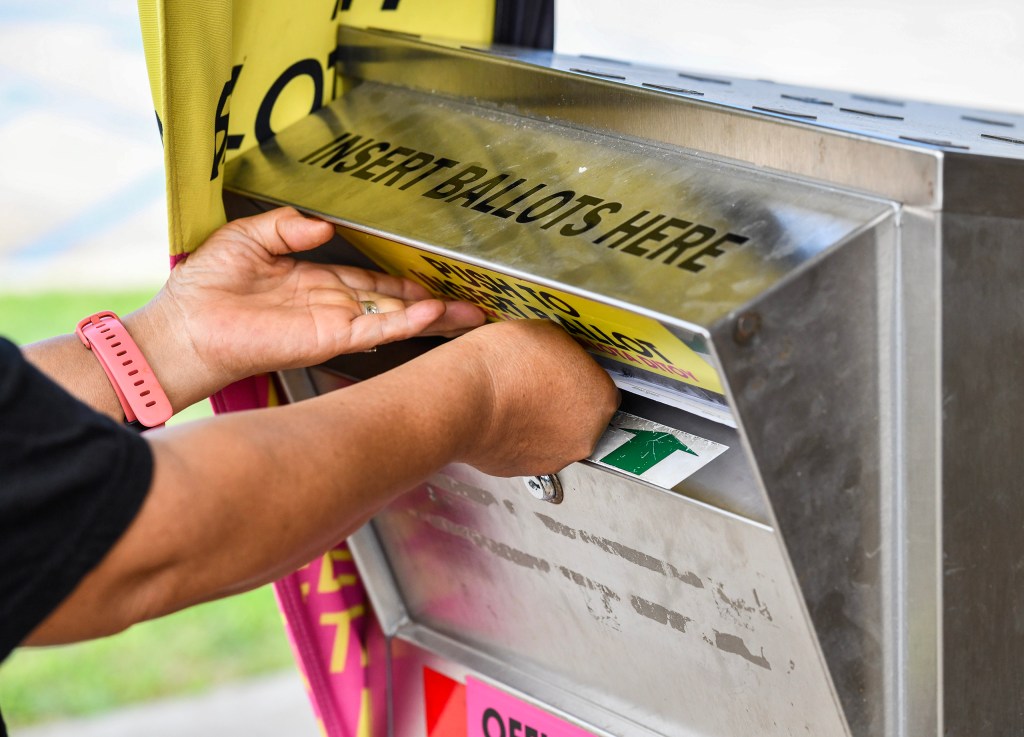
Even though Hawaiʻi voters can send their ballots in the mail, many folks still prefer to vote in person.
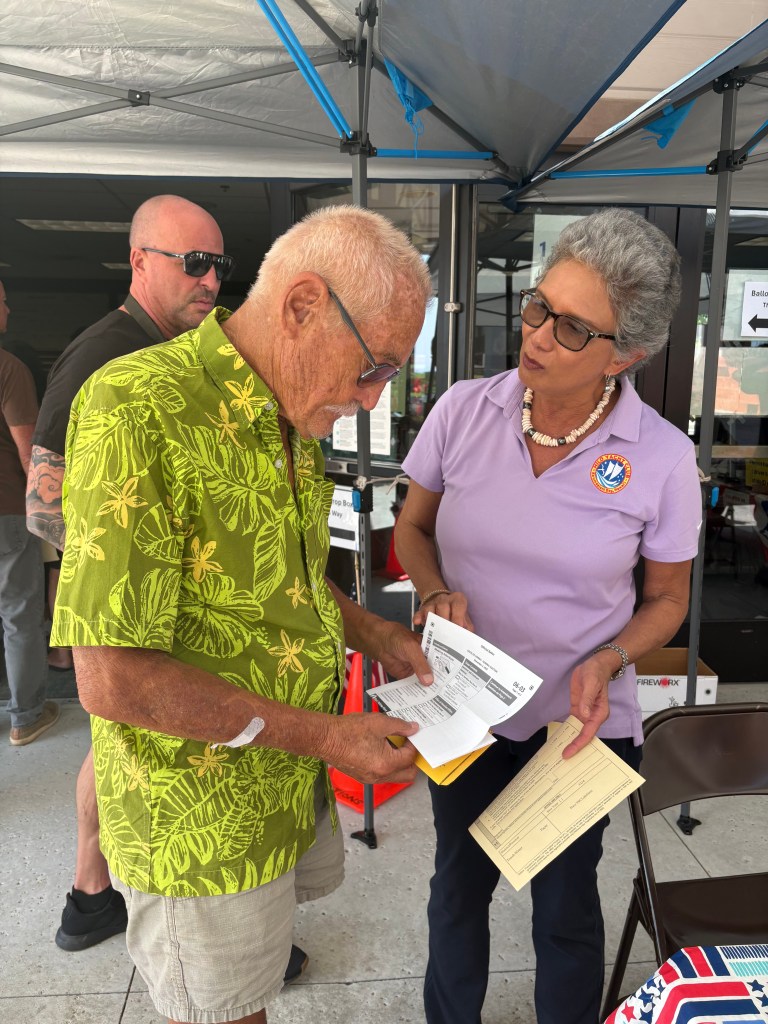
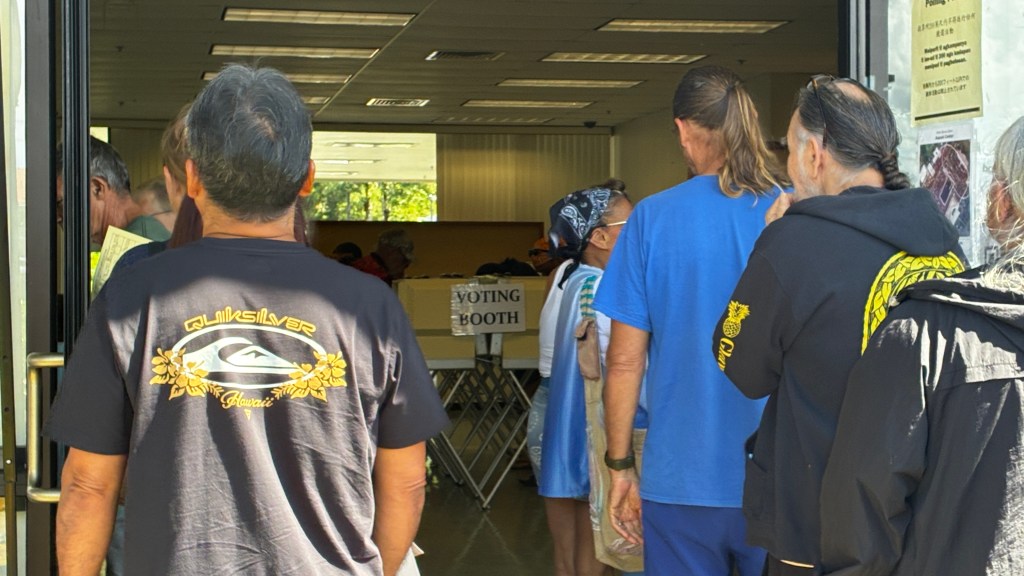
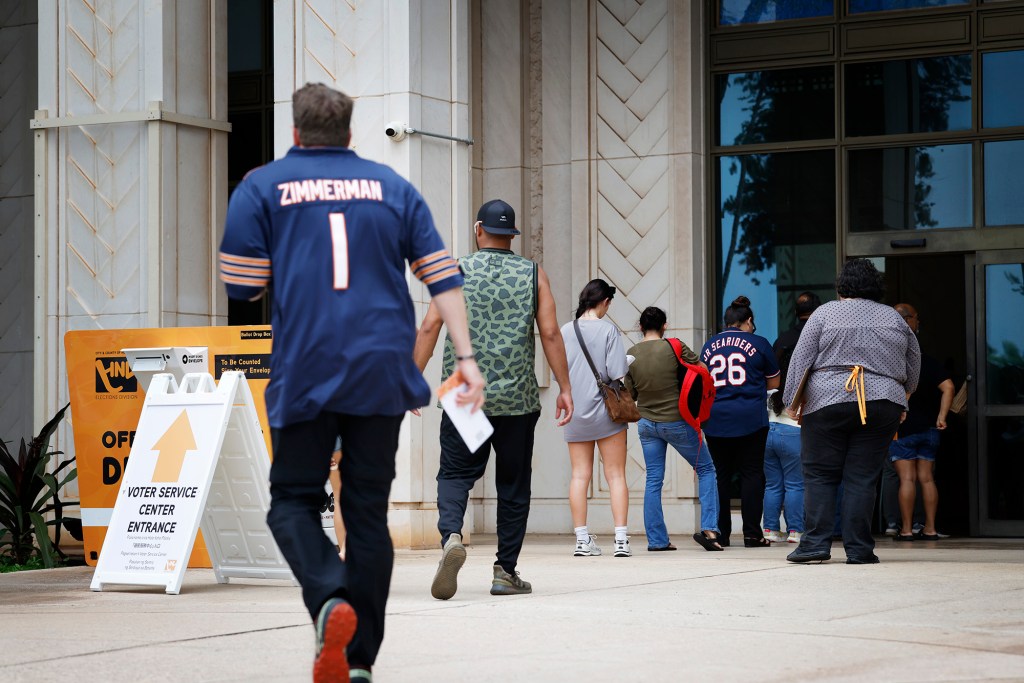
Voters flocked to Hawaiʻi’s in-person voter service centers on Tuesday, motivated by the idea of interacting with other voters and staff and eager to influence local politics.
“I want to contribute and at least try to make a positive difference,” said Arjun Ramani who was voting for the first time in Hilo after moving there a year ago. Though he got his ballot in the mail, he wanted to come in person to cast his vote alongside his new community.
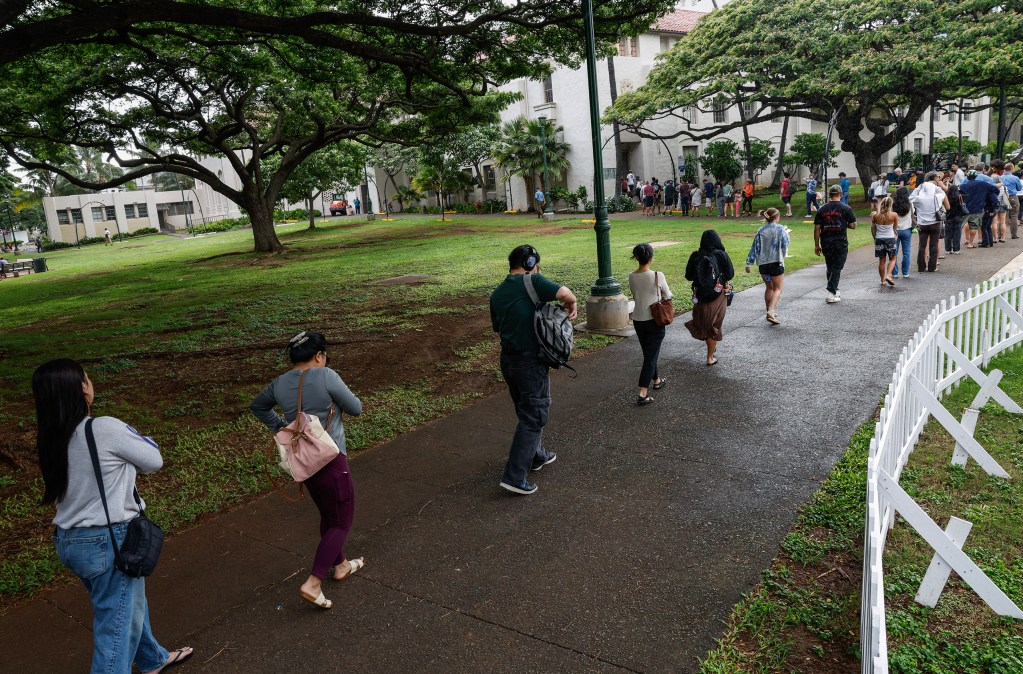
Island residents have had more than two weeks to submit their ballots, which were sent through the mail. But some prefer the in-person experience at centers, where lines of people on foot and in their cars moved relatively quickly on Tuesday. Election workers’ worst fears about overwhelmingly long lines at polling places did materialize.
Hawaiʻi has some of the lowest voter turnout in the nation, and this general election is not on track to change that trend.
As of 9:00 p.m. Tuesday, the Office of Elections reported 308,786 ballots cast statewide, an unofficial tally subject to final certification.
The number represents 36.2% of the 853,399 registered voters and falls well below the turnout in the 2022 midterm which reached 48.7% or 419,665 out of 861,358 registered voters.
The enthusiasm of those who turned out to vote in-person Tuesday translated into less 1.9% of the ballots cast, the same in-person turnout as 2022.
At the Kailua-Kona Service Center, longtime election volunteer Kāhealani Meeker said the line started forming at 7:00 a.m. when the polling place opened and hadn’t let up. Still, it was only a trickle compared to the long snaking line at the Civic Center in 2024.
In-person voting in Hawaiʻi in the 2024 general election reached 4.5%.
Tuesday was a welcome change from the previous weeks, when volunteers were “twiddling our thumbs.”
“Everyone waited ’til the last minute,” Meeker said, adding that most people don’t know they can vote in person during the two weeks before Election Day.
Nationwide, the picture was different, with early-voter turnout surpassing the turnout from the last mid-term election, according to an analysis by the Associated Press on Tuesday. But in Hawaiʻi, there are only a few competitive electoral races this time around.
Mayoral Race Motivates Maui Voters
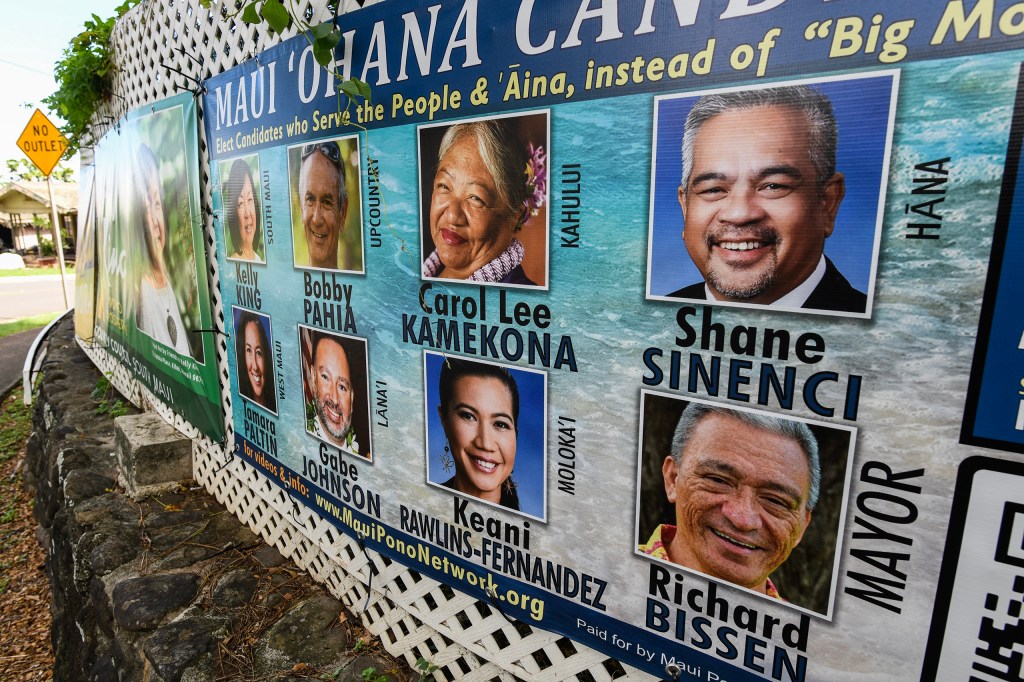
On Maui, which has a tightly contested mayoral race between incumbent Richard Bissen and challenger Yuki Lei Sugimura, in-person voting had been very strong Tuesday, said deputy clerk Richelle Thomson.
“I would say it was extremely low earlier in the week,” she said, “and it’s been steadily increasing.”
At the Velma McWayne Santos Community Center in Wailuku, parents like Renata Fuzetti brought their children with them.
“It’s important to teach her, and for her to see how it works,” Fuzetti said, standing next to her 14-year-old daughter.
Fuzetti, who is originally from Brazil and has lived in Wailuku for many years, said she has always considered voting an important civic duty, and she was disappointed to learn how low the state’s voter turnout has been.
Housing and the economy were the issues she thought most about while filling out her ballot, Fuzetti said.
“I try to see who actually had a proposal or a policy,” she said.

Eighteen-year-old Mikela Soriano Marras was voting for the first time.
“I did it, I voted, and I got a sticker!” she shouted to Laurie Keyhani after bursting out of the voter service center. Soriano Marras said she spent a lot of time researching the candidates and was particularly motivated by the mayoral race.
Maile Kekona, 49, was so disappointed when she left the voter service center and realized she hadn’t received an “I voted” sticker that she went back inside to ask for one.
‘Promises Don’t Come True’
On Oʻahu, where there are only a few contested races, voters were asked to decide on 20 proposed amendments to the Honolulu City Charter as well as the two proposed amendments to the Hawaiʻi State Constitution appearing on on all state ballots.
Makiki Heights resident Tony Lee, 55, said he votes every election and used to work with the local Democratic Party.
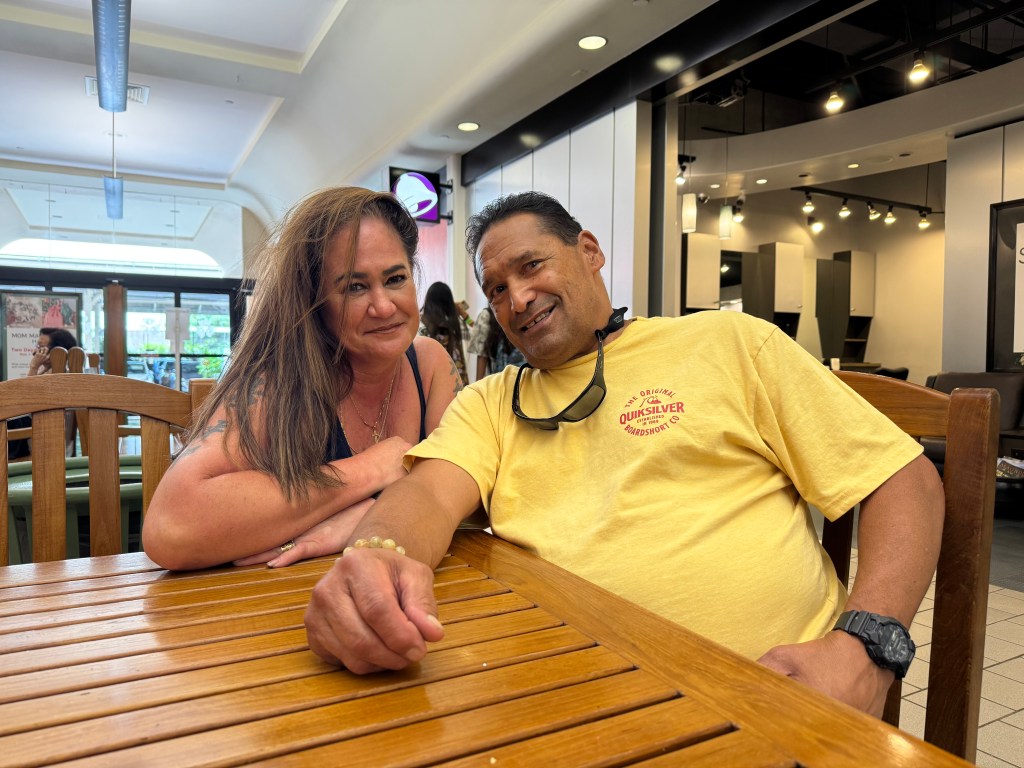
Nowadays, he said, his work in biotech keeps him too busy to engage as heavily as he used to, but he still makes time to vote. He said it took him roughly half an hour to research all the charter questions.
He said he’s heard that voter turnout is low, and theorized that the lack of competitive races – especially at the federal level – might have contributed to that.
“We’re not much of a swing state,” he said.
Other Honolulu residents expressed disillusionment with the whole process.
Kalihi residents Keoni Farias and Kristy Lewis said they don’t vote because they don’t believe the people in charge will make a difference. Farias said he used to campaign for people such as former Honolulu Mayor Frank Fasi, but that more recently he’s been discouraged by government corruption as well as empty campaign promises.
“The promises don’t come true,” Farias said.
Lewis agreed. “The people that are running for the election,” she said, “I don’t think they’re doing things to make Hawaiʻi better and make things easier.”
‘Your Vote Will Have Impact’
That ennui didn’t deter a dozen voters who were waiting for the voter service center in Līhuʻe to open at 7:00 a.m. Tuesday, according to deputy county clerk, Lynton Yoshioka.
The center had served over 330 voters by noon.
“Just the fact that more people are appearing to vote in person would imply that people are excited and of course they’re motivated to vote, so that’s always a good sign,” he said.
On Kauaʻi’s westside, a steady stream of cars pulled into the ballot drop box at the Waimea Neighborhood Center.
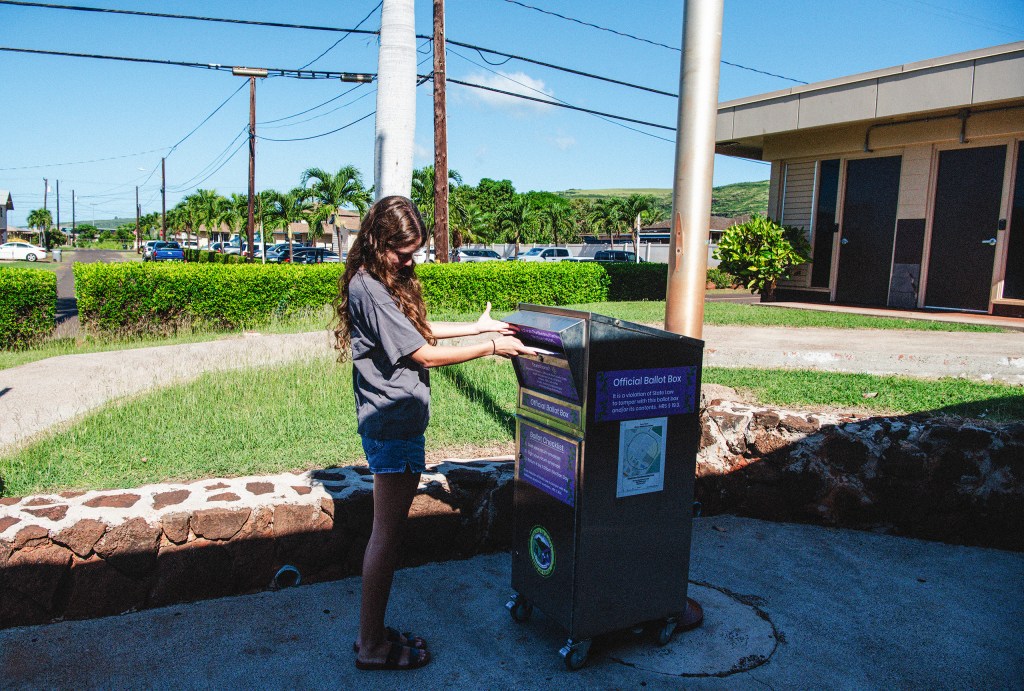
Matea Davalos’ mother took her photo as the 19-year-old slipped her first ballot into the box. A Kekaha resident, Davalos said she’s passionate about politics and has been encouraging her friends to vote since she was 17.
“It’s important for young people to learn how important it is to vote and how their vote will have an impact,” she said.
Davalos has been especially interested in the mayoral and county council races because she feels it’s important to have good, trustworthy people in office — particularly for a small county.
Reporters Matthew Leonard, Ben Angarone, Twilight Greenaway, Erin Nolan and Noelle Fujii-Oride contributed to this report.