

Hawaiʻi Schools, Already In Disrepair, Hit Hard By Intense Storms
Most schools are on track to reopen later this month, but at least two schools are searching for alternatives in the final months of the school year.
After Hawai‘i’s worst flooding in 20 years, schools across the state are reporting damage so severe that some students are forced to return to online learning or possibly relocate to other campuses for the remainder of the year.
Even before the storm, some campuses were desperately in need of repairs to their roofs, gutters and athletic facilities. Now, the education department is facing more than 500 reported incidents of storm damage across the state. The total cost of the damage has yet to be totalled up, but lawmakers estimate it could take $20 million to repair three hard-hit schools on the Big Island alone.
School closures on nearly every island this week ranged from one to two days in response to local roadblocks and heavy rain to more than a week for flood damage and classroom cleaning. So far, Konawaena High School on the Big Island is the only campus to have transitioned to online learning this quarter because of damage to its campus. The school has not yet announced when it will reopen for in-person learning. Some parents and lawmakers predict the campus won’t open until next school year.
The recent damage to schools has raised questions about how the department should better prepare its aging facilities for severe weather while doing a better job of maintaining its schools.

“When they’re going in to do deferred maintenance, they could be strengthening the schools if they had that kind of foresight and sense of planning,” said Rep. Amy Perruso about the Department of Education’s approach to facilities.
Some of the most common damages – roof leaks, water intrusions in classrooms and flooding – were problems long before the state faced two major storms in the course of a week. An assessment of school campuses from 2020 to 2023 found that nearly 1,000 roofs required fixing, with roughly 530 of these facilities in critical condition.
But state lawmakers have historically forgone supporting repair and maintenance projects in exchange for funding larger, flashier projects in their districts, such as new gyms or music centers. Last year, the department requested $450 million for deferred maintenance – major repair projects like reroofing buildings or fixing air conditioning units – but received much less than school leaders wanted: only $131 million in a two-year budget.
At the same time, schools are grappling with how to deal with an unusually high number of class cancellations this year in response to extreme storms and flooding. While some districts on the mainland are considering shifting their school calendars or extending their school years to account for disruptions from extreme weather, some state leaders and families are skeptical of making these changes in Hawai‘i.
“That would drive us nuts,” said Konawaena High School parent Lee Price, adding that he would only be in favor of extending the school year if students needed to miss weeks of school at a time.
Alternative Learning Spaces
When teacher Summer Whitmore left her classroom at Konawaena High School in mid-March, she had no idea she wouldn’t be returning.
Superintendent Keith Hayashi had closed schools the day before spring break leading up to the state’s first Kona low storm, but Whitmore assumed she would return to campus when classes resumed later in the month. She had left all of her supplies in her classroom, including binders filled with student work, assignments she collected in nearly two decades as a teacher and recently donated supplies intended to build catapults in her math classes.
“My classroom at the school is completely destroyed,” she said. “I’ve lost everything.”
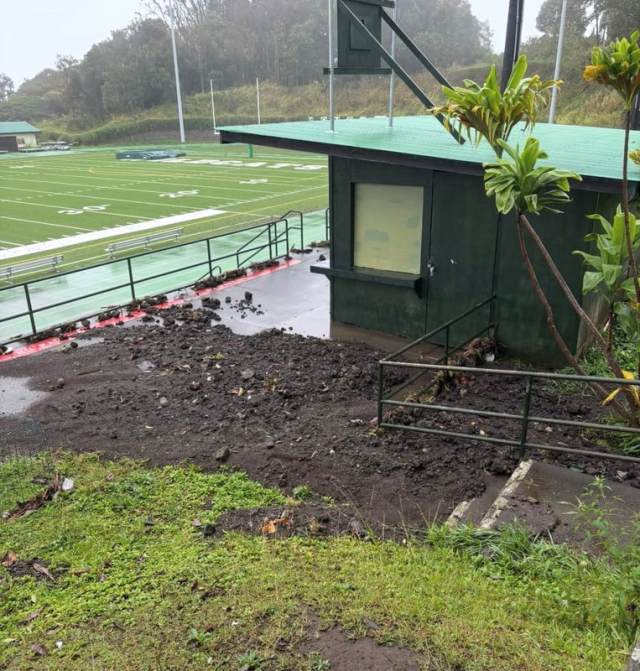
Photos posted on the school’s website earlier this month showed mud and brown water snaking through hallways and classrooms, piles of rocks blocking the walkways and dirt covering the track.
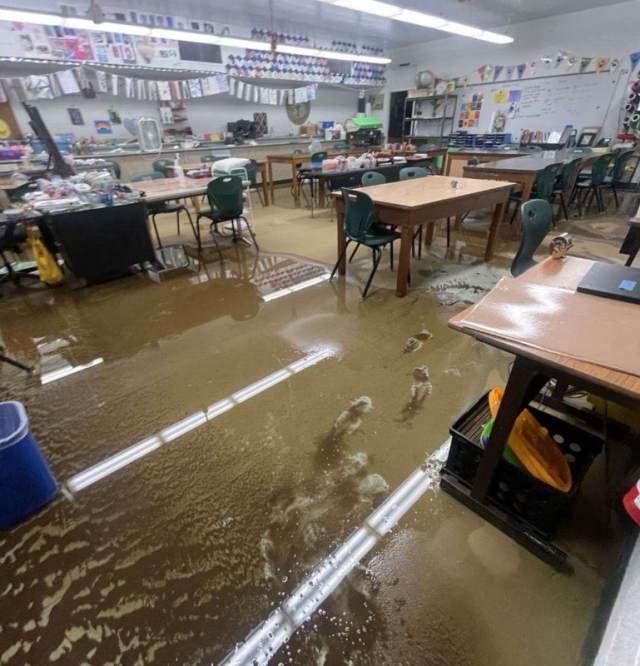
At the high school alone, 96 out of 124 instructional spaces were damaged, including classrooms, the library and the gym, said Rep. Kirstin Kahaloa, who represents the area. She said it could cost nearly $300,000 just to fix the cafeteria, which the high school wants to repair the facility as quickly as possible since it also regularly provides meals to two surrounding schools.
It’s still unclear if federal funding could help cover the costs of school repairs, Kahaloa said. Earlier this week, Gov. Josh Green wrote to President Donald Trump, requesting disaster aid to help with the aftermath of the storms.
The state is also grappling with significant damage to two Manoa elementary schools, which faced flooding and severe rainfall on Monday afternoon. Both schools were in session on Monday but closed for the remainder of the week.
Noelani Elementary is aiming to open next Monday, said Rep. Andrew Garrett. Its cafeteria and kitchen equipment sustained some of the greatest damage.
Less than three miles away, Hokulani Elementary School faces the possibility of closing its campus for the year, Garrett said. When the Manoa stream clogged and jumped its banks, the debris and water flooded into classrooms. Roughly a dozen teachers lost their cars that were in the parking lot at the time, he said.
Now, he said, the school is scrambling to find alternatives at the University of Hawai‘i or other local campuses to bring roughly 260 kids back to in-person learning next week. While Hokulani Elementary could transition to online learning, he said, the remote format isn’t ideal for young kids.
Protecting School Facilities
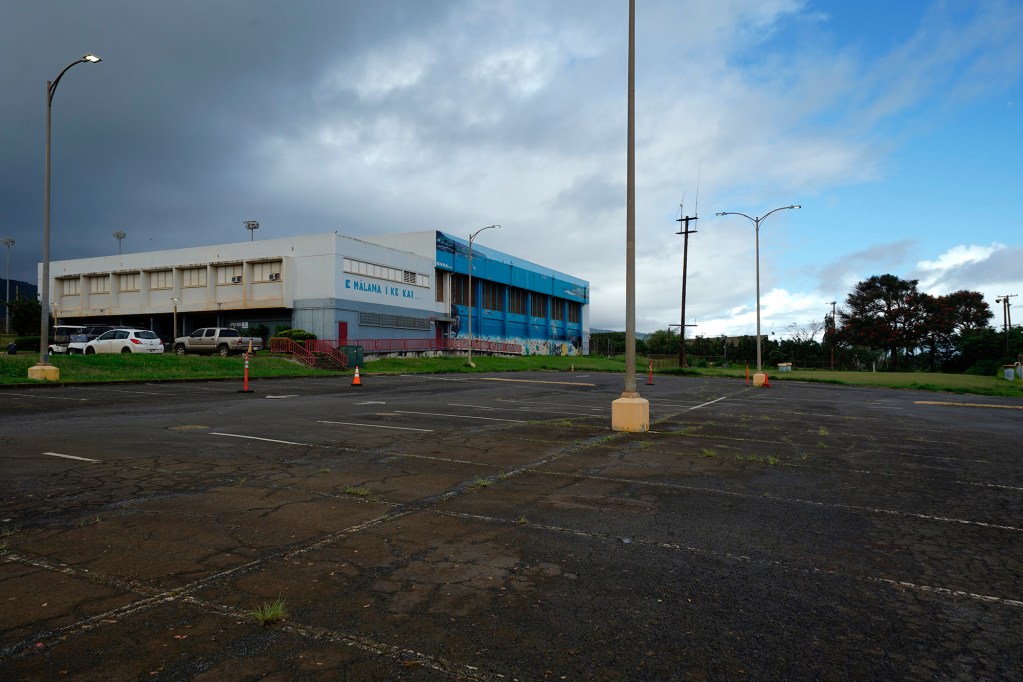
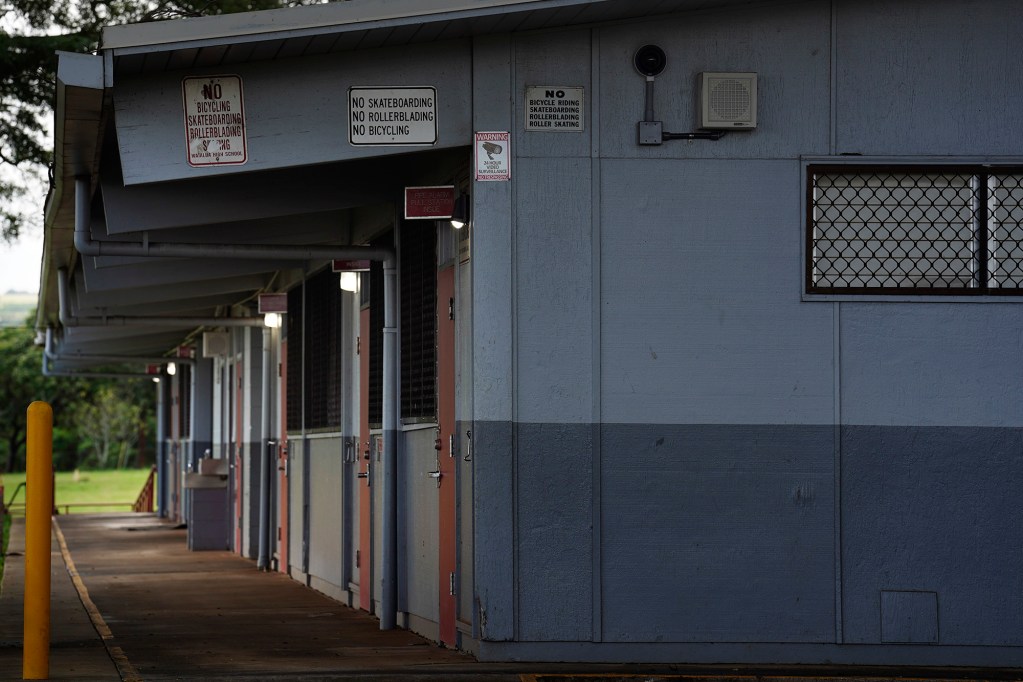
At Waialua Elementary School, the campus showed no signs of the recent flooding that devastated nearby homes on a recent Tuesday evening. School gardens and plumeria trees were intact, flyers remained pinned to bulletin boards outside of the classrooms and the sidewalks were clear of any dirt or debris.
The campus, along with Haleʻiwa Elementary and Waialua High and Intermediate School, was closed for cleanup and a city boil water notice for the first four days this week.
Perruso said Waialua schools were fortunate, but lawmakers and DOE need to do a better job of prioritizing school repairs and construction projects that can protect schools from future natural disasters.

At Waialua High and Intermediate School, roofs and building structures were scored as critical in a 2023 evaluation, with evaluators raising concerns about poor drainage on campus and rotting gutters in one building. For years, staff and community members have raised concerns about a dilapidated band room, which requires scaffolding to keep the structure intact.
The process of directing funding to longtime repair projects has become overly politicized, Perruso said. In some cases, rural campuses with smaller student populations have struggled to receive money to fix their campuses.
At the same time, the department has also struggled to spend the money it receives for the repair and maintenance of schools – a problem Perruso attributes to continued turnover in the DOE facilities branch in recent years.
For example, the department has yet to spend $14,000 it received for the renovation of Waialua High and Intermediate in 2013 and is still working on using an additional $995,000 for the repair of campus buildings, according to its recent update to the education board.
In the case of the Big Island schools, it’s unlikely making repairs to campus facilities would have stopped severe flooding, Kahaloa said. The three impacted schools are built on a mountain, she said, and debris and brown water flooded from properties above the campuses and accumulated in classrooms.
“This flood is something that’s very difficult to prepare for,” she said. “I see this as an extreme event that I don’t know if the DOE could have prepared for.”
Moving forward, Kahaloa said, she would like the department to consider how to mitigate flood risks for schools, especially for older campuses like Konawaena High School. The campus was built over 100 years ago, she said, and the environment surrounding the school has evolved over time, making the campus more vulnerable to flooding and storm damage.
Perruso agreed, adding that DOE should consider strengthening school infrastructure and hardening facilities against future storms while they’re repairing campuses.
“We should be thinking more holistically when we think about these structures for our kids, but we’re not even providing basic health and safety,” she said.
A Return To Online Learning
At schools sustaining some of the greatest damages, parents and students are apprehensive about a shift to remote learning after months of online classes six years ago during the Covid-19 pandemic.
At Konawaena High School, Price said his daughter, a sophomore, is most concerned how the shift to remote learning next week will impact her chances of attending college and connecting with friends and teachers. Her schedule currently consists of eight hours in front of the screen, with two 20-minute breaks and a lunch period, Price said, and he’s worried how the shift will impact her stress levels.
While his daughter was a fourth grader during the pandemic, Price said, it’s hard to know what to expect now that she is in high school and has a much different schedule.
“We’ll just play it one day at a time,” he said.
Teachers and coaches at the high school are trying to provide as much normalcy to students as possible. All spring sports resumed this week after the school was able to find alternative practice sites for students, with the exception of softball and baseball, Konawaena High School Athletic Director Kellye Krug said.
Whitmore, the Konawaena math teacher, said she’s also discussing options for offering in-person tutoring to students after school to help kids socialize and maintain strong relationships with their teachers.
Even at schools that weren’t closed for extended periods of times, teachers are assessing how to make the most of the remainder of the year. While it’s relatively rare for schools to shutter statewide, the education department issued sweeping directives to cancel classes in the past two months as Hawai‘i saw unusually high amounts of rain.
At Sunset Elementary School, which was closed for one day in February and two days in March, teacher Rex Dubiel Shanahan said she’s on a time crunch to help her students prepare for state tests in the coming weeks. In the spring, she said, teachers are pressed for time to cover all of their lessons before end-of-year assessments, and the school also needs to find the time to reschedule an awards assembly that was supposed to take place before spring break.
More importantly, she said, she’s worried about kids’ ability to learn after the stress their families have gone through in the past week.
“This is traumatizing,” she said. “They’re going to be worried and scared.”
Research shows that a week of weather-related school closures can result in roughly two weeks of learning loss for elementary school students, said Megan Kuhfeld, director of growth modeling and data analytics at NWEA, a learning assessment and research organization. The loss could be closer to three to four weeks for middle schoolers.
Some districts add extra days to their calendars to account for weather-related school closures, she said, while others might cut back on holiday breaks to increase classroom time. Districts are increasingly concerned about extreme weather that can shutter schools, she said, although some have opted to move classes online rather than cancelling them altogether. It’s typically more important for districts to consider making up days once students have missed more than a week of school, she said.
DOE is still determining how storm-related cancellations affected the required number of instructional days for students, Communications Director Nanea Ching said, adding that adding make-up days to the end of the year would require an agreement from the unions. Hawai‘i law requires 180 days of instruction, although the department has received waivers in the past when schools faced prolonged closures.
Aneli Lefiti, a parent of Haleʻiwa Elementary students, said she would be open to an extended academic year after her two kids missed nearly a week of school after the flood. But, she said, lengthening the year might not be feasible for all families if they planned their summer travel months in advance.
While she’s worried about the learning and socialization her kids are missing while school is cancelled, Lefiti said, it’s also important for them to be in the community this week and see their neighbors rally to support each other after the flood.
“They’re being educated in a different way, as in seeing families help all families,” she said. “Even though they’re not in school learning, they’re learning something bigger and more important.”
Civil Beat’s education reporting is supported by a grant from Chamberlin Family Philanthropy.

