

Honolulu to Host World’s Biggest Astronomy Conference in August
A tour of Mauna Kea observatories could be canceled if the road is still closed, but most plans are proceeding for the International Astronomical Union conference.
Despite the ongoing standoff atop Mauna Kea, plans remain largely unchanged for the world’s largest astronomy conference later this summer in Hawaii.
More than 2,000 astronomers from around the world are expected to convene in Honolulu from Aug. 3 to Aug. 14 for the International Astronomical Union’s 2015 Conference.
The IAU — described by some as the “world federation of astronomers” — holds a conference every three years, and voted on Honolulu as a location for the 2015 event six years ago.
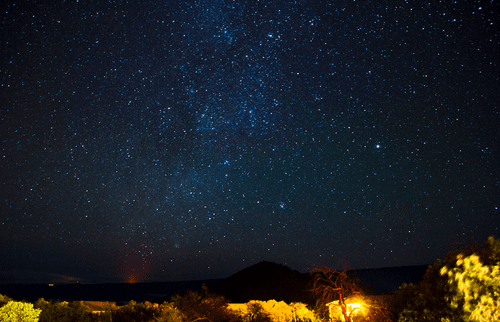
A tour to the observatories atop Mauna Kea is still planned as part of the IAU conference.
Although the University of Hawaii and the Institute for Astronomy are helping to organize local events, neither institution is hosting the gathering.
The conference is an opportunity for astronomers to share knowledge and discoveries, and to vote on astronomical decisions such as the protocols for naming newly discovered planets and efforts to promote astronomy and science in developing countries, said Roy Gal, an IfA assistant astronomer and chair of the local planning committee for the conference.
The IAU general assembly voted at its 2006 conference in Prague to demote Pluto from a planet to a dwarf planet. While the IAU votes on science issues, it doesn’t weigh in on political issues or individual telescope construction, Gal said.
Most of the conference sessions are heavily science-based, and the schedule was decided this spring before many of the protests against the Thirty Meter Telescope began, Gal said.
Although most of the conference is open only to attendees, there will be several free public events including a talk on Polynesian voyaging and another on the development of modern astronomy in Hawaii.
While the conference takes place in Honolulu, conference planners partnered with a tour group to offer a weekend excursion to Hawaii Island — including an excursion to the observatories atop Mauna Kea. That tour is still scheduled, but could be canceled if the road to the summit is still closed next month, Gal said.
Although the IAU conference may not be the right venue, it would be good if astronomers coming to Hawaii wanted to discuss astronomy’s role in the modern world, said Kealoha Pisciotta, a spokeswoman for the anti-TMT protest movement who is also party to the lawsuits attempting to block telescope construction.
“I think it would be good if the astronomy community began to have a bigger conversation about (its) place in the world,” Pisciotta said. “There are lots of places around the world where astronomy is causing stress to the native peoples of those lands, Mauna Kea is not the only one.”
Gal said the local planning committee is currently talking with IAU about trying to facilitate a meeting between IAU leaders and leaders of the protest movement against TMT.
Although the issues surrounding construction of TMT can’t be incorporated into the conference schedule, it also wouldn’t be appropriate to “turn a blind eye,” Gal said.
“It is important for IAU to understand what is happening here,” Gal said. “It seems kind of obvious that there should be some mechanism for communication.”
Gal said his committee is also working with trustees from the Office of Hawaiian Affairs to make sure that Hawaiian elements of the opening and closing ceremonies are culturally appropriate and respectful.

