

Mosquito State Of Emergency Extended
The two-month extension is designed to help with creating a comprehensive plan for battling future mosquito-borne illnesses.
The spread of dengue appears to have halted on Hawaii Island, but the state is not ready to declare the battle over just yet.
With peak tourist season approaching, Gov. David Ige opted Monday to extend the state’s emergency proclamation over mosquito-borne diseases like dengue and Zika. The proclamation, signed two months ago, allows the state to tap into emergency funds and waive certain laws.
According to a press release from the governor’s office, the two-month extension will help with state efforts to “develop a comprehensive response plan” for dealing with illnesses spread by mosquitos. The state is also planning a public awareness campaign for later this year.
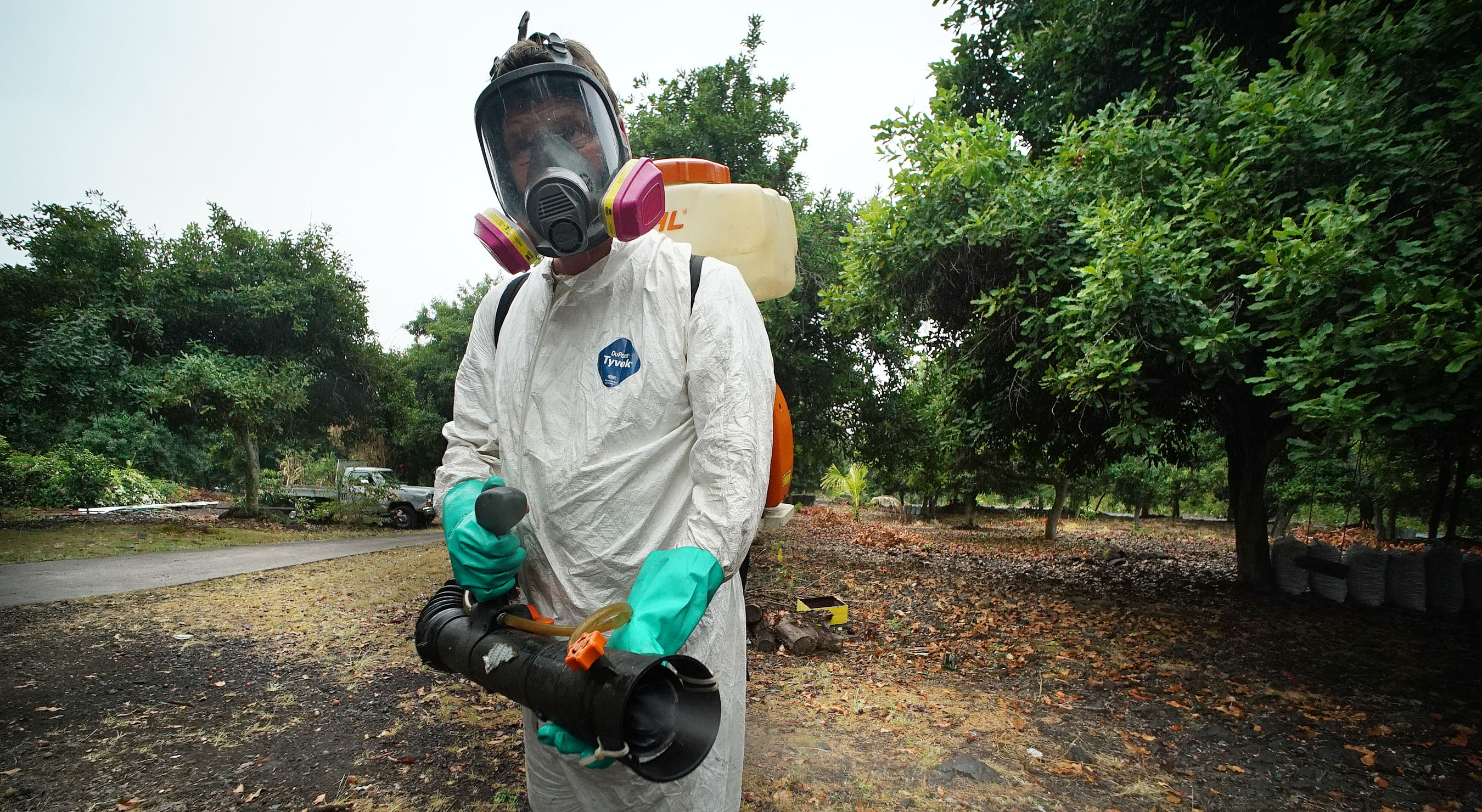
In December, the Centers for Disease Control and Prevention praised Hawaii’s coordinated efforts in fighting the state’s largest dengue outbreak since World War II, but also pointed out “critical deficiencies” at the agency for tackling future vector-borne diseases.
Since the report was issued, the Department of Health has hired eight vector control workers, an entomologist, and an additional communications worker. The state’s vector control program had been gutted several years before the outbreak began.
There have been 263 confirmed cases of dengue on the Big Island since the outbreak began in October. As of April 11, the DOH was reporting zero active dengue cases on the island and only considered two geographic areas as having “some risk” for transmission of the disease.
“We have continued to assess and monitor mosquito activity on Hawaii Island since the dengue outbreak is not over yet,” DOH Director Virginia Pressler said in a press release Tuesday. “We have also been responding to multiple imported cases of dengue fever, Zika, and chikungunya across the state. Each time a travel-related case is discovered, we take steps to investigate the case and ensure that they understand proper precautions to take during the infectious period to prevent the disease from spreading.”


