In Kauai Mayor’s Race, Rapozo Faces Uphill Battle Against Kawakami
The County Council chairman looks for a turnaround after being significantly outpolled by the former state representative in the primary.
LIHUE, Kauai — After the August mayoral primary, in which County Councilman Derek Kawakami inflicted a drubbing on Council Chair Mel Rapozo by more than a 2-to-1 ratio, Rapozo read a Civil Beat analysis speculating that Kawakami was virtually unbeatable.
During lunch a few days ago at JJ’s Broiler near where the cruise ships dock in the harbor, Rapozo recalled that the piece displeased him — not, he said, because he thought the analysis was flawed, but that it might be correct.
So he printed the story out and keeps it on his desk for inspiration.
“I was pretty surprised, actually,” he said of the primary results. “I thought we’d gotten a little closer, but 90 percent of the people who saw the damned results felt that way. It is what it is.”
Rapozo is not the sort to surrender. He is soldiering on toward Election Day. After all, he chuckled, he was the guy who originally advised Kawakami to get into politics.
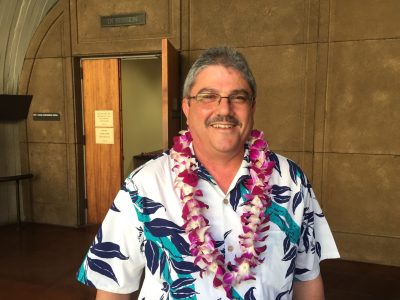
And there sits a historic mayor’s race. It represents the exit of Kauai’s longest-serving mayor, Bernard Carvalho, and the entrance of a new era in the mayor’s office, as well as on the council itself.
The mayoral result may turn, said Rapozo and local political observers, on what happens with the people who voted for the third-place finisher, Councilwoman (and former mayor) JoAnn Yukimura. Kawakami got 48.2 percent of the primary vote, Rapozo 22 percent and Yukimura 19.8 percent.
Even if all of Yukimura’s votes switched to Rapozo, an obvious deficit remains, with Kawakami still leading.
But that was then. With no polling in any local race, reliably predicting the general election outcome is impossible.
Turnout is likely to be higher than in the primary. It’s possible other races — like governor — may bring voters out in numbers greater than the dreadfully low normal turnout on Kauai. Rapozo can only hope any additional votes go to him.
Candidate for Kauai Mayor
Website
Community organizations/prior offices held
Rapozo actually believes he may be able to draw the lion’s share of people who voted for Yukimura.
But there’s a history of hostility between the two. Early in his tenure as chair, Rapozo rammed through new council rules that severely limit the interactions members can have with people testifying before them. Yukimura chafed at that and she and Rapozo have clashed repeatedly — sometimes angrily and publicly — over a wide variety of issues.
Yukimura declined to wade into not just the question of whether she thought her voters would switch to Rapozo and jilt Kawakami, but even which of the two she favors.
“Although I have been asked many times for my recommendation in the mayor’s race, I will not be making any,” she said. “If we, as voters, want real results, we need to go beyond nice words and flashy, bold statements to look closely at the candidates based on actual record.”
Both Rapozo and Yukimura term out this year and could not have sought reelection to the council. Kawakami could have, but he elected to give up his seat and run for mayor. There are many who believe his strategy ultimately is more long-term and that the U.S. Senate, House of Representatives or the governor’s office is his ultimate objective.
Candidate for Kauai Mayor
Website
Community organizations/prior offices held
Kawakami, for his part, has stuck consistently to a high-road strategy that emphasizes the variety of his elective office service. He actually started out running successfully for the board of the Kauai Island Utility Cooperative, then ended up in the state House of Representatives, where he helped form and maintain an unusually powerful Kauai delegation.
Despite the county’s small population, Kauai has arguably gotten more than its share of state resources. That amount of money is grossly insufficient to meet the island’s needs, but the county’s delegation has delivered at levels that belie Kauai’s status as the most remote and least populous county.
Probably no one here would argue that what Kauai does get is enough or that the island has not been held hostage financially by the powerful Honolulu interests that control Hawaii politics. It has long been true — and likely always will be — that the diversion of hundreds of millions of dollars to Honolulu’s troubled rail project has left a bitter taste in the mouths of locals.
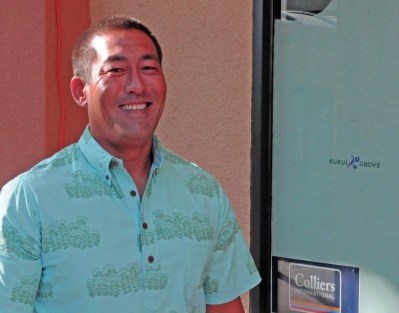
Rapozo, on the other hand, has clashed with legislators often enough that many believe he could face great difficulty wringing cooperation out of them if he is elected mayor. That’s an argument to which Kawakami returns often.
“I can tell you the immediate advantage is all the great relationships that I’ve been able to build during my time at the Legislature,” Kawakami said. “I think my biggest advantage is understanding how the Legislature works.
“The County of Kauai and her people deserve to have a network that goes beyond Kauai and I think I’ve proven that we fight hard for Kauai and we’re willing to build bridges and bring in resources when need be.”
Thoughts on this or any other story? Write a Letter to the Editor. Send to news@civilbeat.org and put Letter in the subject line. 200 words max. You need to use your name and city and include a contact phone for verification purposes.
You can also comment directly on this story by scrolling down a little further. Comments are subject to approval and we may not publish every one.