

Lawsuit: Last-Minute Honolulu Talk on Mauna Kea Violated Meeting Law
The public was robbed of a meaningful opportunity to provide written or oral testimony, a lawsuit argues.
The Honolulu City Council violated the Hawaii Sunshine Law when members discussed policing on Mauna Kea at a meeting without providing six days of public notice, according to a lawsuit filed on Friday.
Honolulu City Councilwoman Heidi Tsuneyoshi’s resolution – requesting the city administration produce a report on the police department’s involvement with Mauna Kea protesters – did not appear on the July 19 agenda for the Public Safety and Welfare Committee. Instead, council members voted on the day of the meeting, July 25, to add it to the agenda.
That robbed the public of an opportunity to chime in, said Brian Black, executive director of the Civil Beat Law Center for the Public Interest, in his lawsuit complaint.
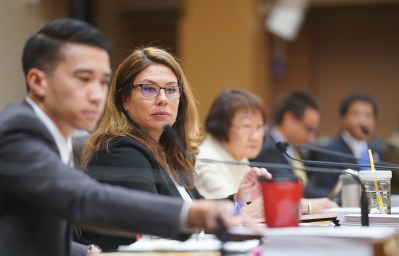
“What the City Council has been doing is avoiding public testimony on controversial subjects by giving notice to the public with less time than is required by the Sunshine Law,” Black said.
Items are not supposed to be added to agendas within six calendar days of a meeting if they are of “reasonably major importance” and action by the government body will “affect a significant number of persons,” the lawsuit states.
Black’s complaint quotes Tsuneyoshi from the July 25 meeting: “The issue at Mauna Kea has been a very important issue to a lot of residents here in the Islands and afar.”
There are exceptions for legislation related to emergencies or threats to public safety, but Black said the Mauna Kea measure was neither.
With the lawsuit, Black is challenging a common practice by the council that some see as a tactic to stifle public discussion.
“When the council ‘sunshines’ items onto agendas, the public is essentially cut out of the process,” Natalie Iwasa, a community advocate, wrote in a Civil Beat community voice column this month. Iwasa identified 13 examples in the past two years of the council considering legislation without giving proper notice to citizens.
For example, on Sept. 25, the Executive Matters and Legal Affairs Committee discussed a search warrant federal officials executed during their investigation into Louis and Katherine Kealoha, the criminally convicted former police chief and deputy prosecutor.
The topic did not appear on the public meeting agenda. Members voted to add it to the agenda after the meeting had already started in a mostly empty council chamber. Members then discussed the matter behind closed doors in executive session.
Tsuneyoshi did not immediately respond to a request for comment.
“The Honolulu City Council will not comment regarding this pending litigation,” said Louise McCoy, the council’s communications director.
Black is seeking court orders declaring that the council violated the Sunshine Law on July 25, requiring the defendants to participate in annual Sunshine Law training and prohibiting the city from amending agendas within six days without approval from the Hawaii Office of Information Practices.

