How Susceptible Are You To Coronavirus? The Answer Could Be In Your DNA
Researchers think ethnicity may play a role in how hard a population gets hit by the virus.
One of the mysteries of the new coronavirus disease is this: Why do some infected people never feel ill, while others become horrendously sick and, in some cases, die?
A team of local researchers suspects the answer could be hidden in our DNA.
The University of Hawaii Cancer Center and the Honolulu biotech startup LifeDNA are teaming up to analyze the role of genetics in determining a person’s susceptibility to COVID-19, as well as the severity of their symptoms.
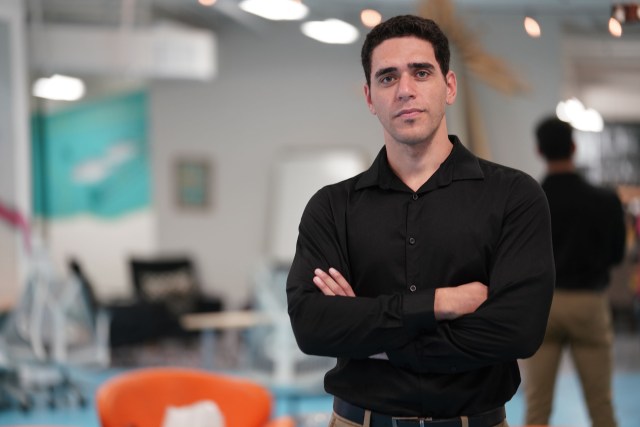
“Some people are asymptomatic, they feel no symptoms when they get the disease, while others end up in the hospital,” said Cyril Moukarzel, co-founder and CEO of LifeDNA. “Some of it is obviously correlated to age and their lifestyle and environment, but a big portion of it could also be attributed to DNA and genetic variations in DNA — and that’s what we’ll be studying.”
The project will focus on a specific gene called the ACE2 gene, which scientists say could be the gateway that allows the coronavirus to invade human cells. The gene may have an impact on how vulnerable a person’s lungs are to the virus once it enters the body.
“When it attacks the body, the virus likes to go after the lungs and essentially what it does is it binds to certain receptors on your lungs and those receptors are created by that particular gene,” Moukarzel explained. “Certain people might not have as many of those receptors as others, and that’s due to a particular genetic variation in the DNA.”
Ethnicity may play a role in determining why some people and global populations appear to be hit harder by the disease. The recovery rate for infected patients in China and South Korea, for example, seems to be higher than those of European countries, according to realtime data available online.
“It is possible that Asians have more resistance to the virus,” said Moukarzel, who said he suspects that genetic variations will differ by race.
Another factor could be the efficiency of governments in their efforts to tamp down the virus.

Moukarzel and his research partner Maarit Tiirikainen, an epidemiologist at UH Manoa, plan to study the gene with the goal of uncovering whether certain ethnicities within Hawaii’s population are more susceptible to coronavirus and its more severe symptoms.
The researchers plan to partner with a Hawaii laboratory to obtain positive COVID-19 patient samples, on which they will perform a DNA analysis. According to Moukarzel, the research team is still working out the lab partnership.
When the study is complete, the researchers expect that the findings will identify the most vulnerable people and populations to coronaviruses — information that could be invaluable ahead of a future outbreak.