Hilo Was Easy, Honolulu Was Hell: How Prince Kūhiō Rebuilt Hawaiʻi
Kūhiō’s legacy includes lighthouses, breakwaters, roads and parks and helping get women the vote.
Since the U.S. Congress first convened in 1789, more than 12,500 people have served, 10,500 of them as representatives.
But when staff historians look back in time, there is one person who stands out to them even today — Prince Jonah Kūhiō Kalanianaʻole — not just because he was the only member of royalty to serve but also for the effectiveness with which he operated in the nation’s capital.
His achievements are particularly notable because he was a territorial delegate and had no vote in Congress.
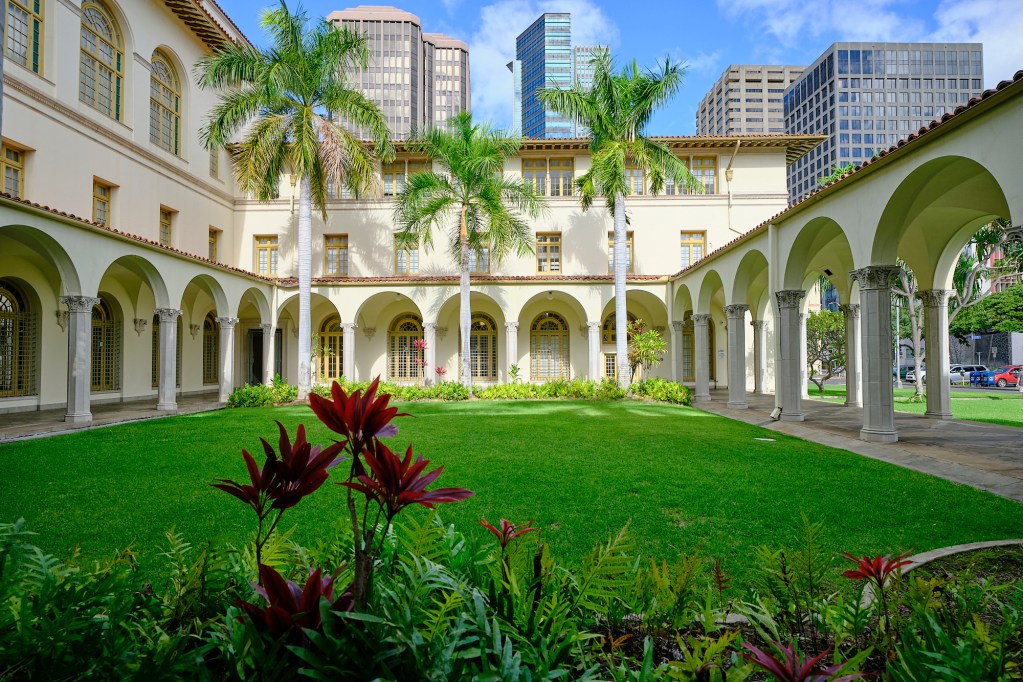
Kūhiō is best known for passage of the Hawaiian Homes Commission Act. However, he also successfully championed legislation that led to the construction of key infrastructure in Hawaiʻi, including Makapuʻu lighthouse, a hospital on Molokaʻi, Kalanianaʻole Highway on Oʻahu, the breakwater and wharf in Hilo, impressive federal government buildings in Honolulu and Hilo, commerce-boosting harbor improvements on four islands, the fortification of Pearl Harbor and a national park on the Big Island.
As a long-standing member of the House committee on territories, Kūhiō also laid the groundwork for Hawaiʻi eventually becoming a state, which four decades later gave the islands and its voters rights and powers that territories still lack. Kūhiō had watched and participated as Oklahoma, New Mexico and Arizona made their own pitches for statehood and he moved slowly and deliberatively in that direction for Hawaiʻi as well.
And he made sure that women in Hawaiʻi got the right to vote. He shepherded through Congress some necessary wording changes in the Organic Act, the legislation that established Hawaiʻi as a territory, just as the woman’s suffrage movement finally caught fire. The Organic Act had defined voters in Hawaiʻi as males, and the language needed to be changed so women could vote. Kūhiō’s wife had spoken in favor of suffrage, and when women could vote as a result of changes in federal law in 1920, women in Hawaiʻi were ready as well.
Many of these endeavors took years, even decades, of work. Kūhiō frequently told friends he wanted to step down and come home, but each time elections rolled around, he ran for office and returned to Washington, because the work he had undertaken was not yet done.
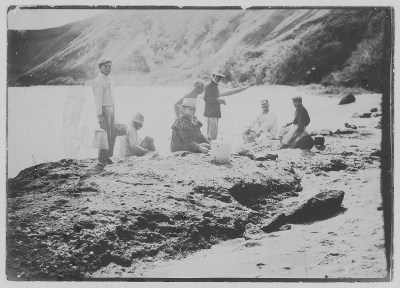
Kūhiō had an oddly bifurcated life. When in Hawaiʻi, he lived as Hawaiians do. He was fond of fishing and water sports, rode horses, participated in civic groups and enjoyed spending time with his friends by the water. He was spotted wearing scruffy clothes while he paddled around in a boat and he lived in a restful home by the ocean.
Then there was his more formal urban existence in Washington, D.C. There he dressed in impeccable style, lived in the mid-rise Shoreham Hotel at 15th and H streets and balanced a full calendar of social and political events. He still found time for sports: He liked to golf and was a regular at the World Series.
A Plan For Kalaupapa
By the early 1920s, Kūhiō had been in office for almost two decades and he had mastered Washington. Popular in the halls of Congress, he was also a welcome friend almost everywhere he went in the city.
When Peter C. Beamer, a storeowner in Hilo who became the patriarch of a famous music and hula clan in Hawaiʻi, visited Washington, D.C., around that time, Kūhiō took him on an impromptu tour of the nation’s capital.
“In all the public buildings where we went, every employee and official seemed to know Kūhiō well, and he was everywhere referred to as ‘The Prince,’” Beamer told the Hawaiʻi Tribune-Herald in 1922. “Many times people would cross the street to greet him, giving and taking exchanges of cordialities in a most friendly manner.”

Kūhiō used these connections to pass legislation that bolstered Hawaiʻi’s economy, changed its landscape and fended off misguided efforts that could have damaged local people.
He had arrived in Washington in 1903 with a to-do list that included establishing and maintaining lighthouses in Hawaiʻi to prevent shipwrecks, getting Pearl Harbor fortified, making improvements to the islands’ harbors to make it easier to transport freight and passengers and providing appropriate buildings to house federal government agencies operating in substandard locations.
He had also inherited a particularly difficult task from the previous delegate, Robert Wilcox, a Native Hawaiian who had run for office on the Home Rule Party. While he was in office, Wilcox had proposed converting Kalaupapa on Molokaʻi into a federal reservation controlled by the U.S. Department of the Treasury.
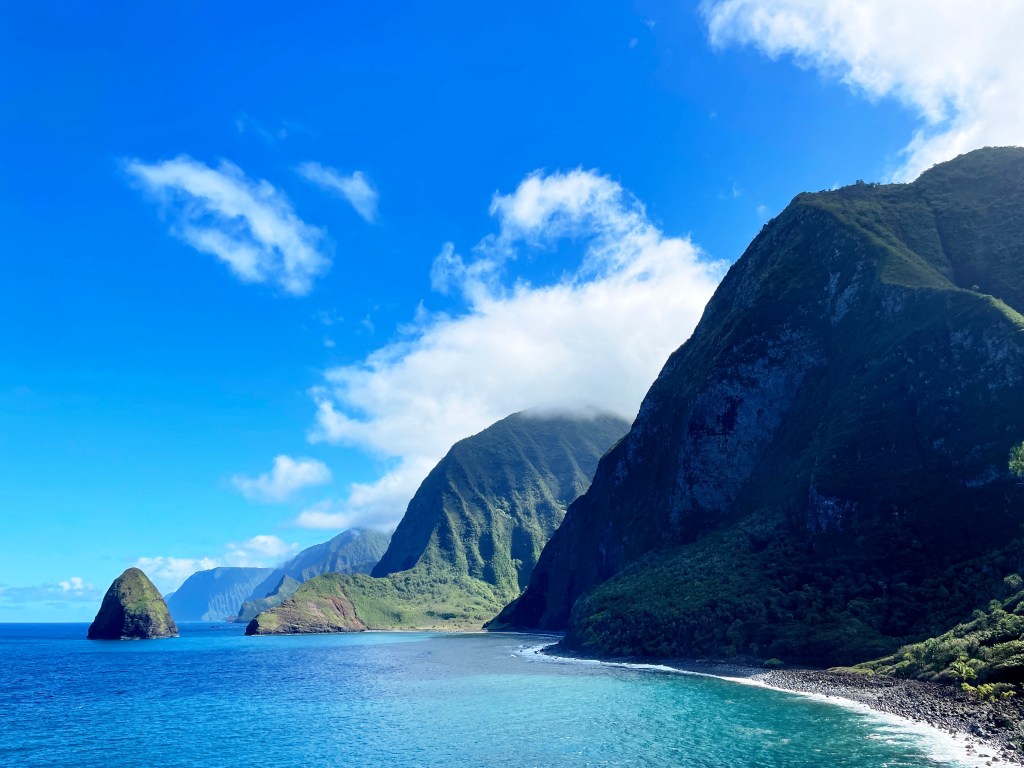
Leprosy, now called Hansen’s Disease, is an infectious bacterial infection that causes people to become disfigured, with severe skin and eye damage. Antibiotics had not yet been invented and at that time there was no real cure. The disease had appeared in the islands in the 1800s and Hawaiians turned out to be especially susceptible. It was believed to be easily contagious and, in a sad episode in history, the Hawaiian government exiled people who contracted it to Kalaupapa, a remote location on Molokaʻi isolated by steep cliffs.
Wilcox told congressional investigators that he believed people with leprosy would get better care from the U.S. government than from the Hawaiian Board of Health. He also told investigators and his colleagues in Washington that all other people with leprosy in the United States could be housed there as well.
The congressional investigators wanted the federal government to assume control because they favored more draconian quarantine measures, and believed that people with the infection should be banned from having intimate contact with their spouses. But at Kalaupapa, it was loving family members who often acted as “kōkua,” providing essential nursing care and support.
Many territorial officials in Hawaiʻi had urged Wilcox to pursue this plan because it was expensive to care for a colony of up to 1,000 patients and they wanted to get the federal government to foot the bill instead.
Public opinion in Hawaiʻi was mixed. Many people were afraid of contracting leprosy themselves and dreaded the thought that more people with the disease would come to Hawaiʻi. They recoiled at Wilcox’s plan and voted him out of office. But they were also sympathetic to people who had the disease and, in 1904, more than 1,500 Hawaiʻi residents, including people on Maui, Oʻahu and Hawaiʻi island, signed petitions asking Kūhiō to seek federal funding to research a cure.
In Washington, D.C., meanwhile, Wilcox’s plan became very popular because many health department officials liked the idea of transporting their own patients to a far away island in the Pacific. Lawmakers in Texas and Mississippi asked for the entire island of Molokaʻi to be made available to infected people from the mainland, according to documents at the state archives.
Kūhiō had to navigate the situation carefully. He told Hawaiians that while getting financial assistance would help, deeper federal involvement would further undermine local autonomy and Hawaiʻi’s reputation might be injured if it became known as a holding station for people with a disfiguring disease.
“Our birthplace would … become famous to the world as the home of the leprosy cases of the whole United States of America,” Kūhiō told one audience of Native Hawaiians, saying it could make the word Hawaiʻi a name that inspires “hatred.”
Kūhiō went to President Teddy Roosevelt for advice, and, at the president’s suggestion, Kūhiō provided the names of congressmen who could sponsor more desirable legislation. Roosevelt applied the appropriate pressure. Rep. William P. Hepburn of Iowa, best known today for his work on the Pure Food and Drug Act of 1906, introduced a bill that met Kūhiō’s specifications and Kūhiō threw his support behind it.
“As I am more interested in getting relief for Hawaiian lepers than I am in getting political prestige out of the measure, I cheerfully waived my right to introduce and press my own bill, and shall cooperate in securing the passage of Chairman Hepburn’s measure,” Kūhiō told the Honolulu Evening Bulletin on Jan. 19, 1905.
By the next month, Kūhiō had secured $150,000 for a scientific study of the condition at a hospital with the most modern equipment available, conceived as a national measure to seek to eradicate the disease. Local administrators also remained in control of Kalaupapa. Kūhiō had also fended off efforts to send people with Hansen’s Disease to Hawaiʻi from the mainland United States.
The U.S. Leprosy Investigation Station was established on Molokaʻi, bringing jobs and construction money. The spacious hospital, called the most expensive medical facility for the disease in the world, was completed in 1909, according to historian O. A. Bushnell, and electricity was introduced to Molokaʻi at the same time.
The complex became a failure, however, because very few people with Hansen’s Disease wanted to live under the American restrictions, according to Bushnell. The facility was shut down in 1913 and those living at Kalaupapa eventually stripped the structure for materials to use for their own homes. There was no cure for Hansen’s Disease until 1941.
A Coastal Road Comes Into View
Simultaneously, Kūhiō was pressing for funding that would permit Honolulu’s harbor to be dredged to accommodate larger ships. Again, he discussed the issue with Roosevelt, as well as with congressional committee members who could approve the expenditure. He lined up support from the San Francisco Chamber of Commerce, a regular trading partner with Honolulu, and the organization’s leaders applied pressure to California lawmakers. Kūhiō soon secured “special action” to include this funding in the next appropriation.
Similar improvements were made at Hilo, Kahului and Nāwiliwili, costing in total more than $3 million for the four locations, according to the Honolulu Star Bulletin, on Jan. 16, 1922.
Kūhiō was pushing for new federal buildings containing post offices, too. Soon after he arrived in Washington he landed a spot on the House’s post office and post roads committee, which determined what communities needed new post offices and also made recommendations on which roads needed to be upgraded to meet postal service needs. “Post roads” became main roads in cities across America.
The U.S. post office in Hilo at that time was “a small and wooden shed, made temporarily available,” according to Kūhiō’s papers at the state archives, and the Hilo Board of Trade asked Kūhiō to see if it would be possible to get a new structure built. Kūhiō got a new federal building and post office approved and built quickly for $200,000, with the bid coming in at $185,000. It was completed in 1917.
Hilo was easy. Honolulu was hell.
The goal for the Honolulu building was to consolidate a number of scattered federal government offices into one central location. The grand new building would house the weather bureau, U.S. courts, the customs house, federal engineers, the light house inspector, public health officials and a post office in a single complex located at 335 Merchant St., facing King Street and ʻIolani Palace.
The process turned out to be complex and took 20 years. First the site had to be condemned to be purchased and the project required road work that the federal government would not finance. Lawsuits erupted. Once the site was purchased, local businessmen began fighting, belatedly, over what site should have been selected and sent cables to Washington officials criticizing the original site as too costly, which made the bureaucrats there very nervous.
Kūhiō got cross-examined. Newspaper coverage in Honolulu suggests that once it became clear the project was moving forward, other nearby property owners realized they had missed out on getting proximity to a prominent new facility.
Kūhiō got it done, at last, but the expense had spiraled. The federal building, estimated to cost $1.4 million in 1907, ended up costing at least $275,000 more. The grand Spanish Colonial structure was completed in 1922 and eventually became an anchor building to Hawaiʻi’s downtown historic district.

Then there were the roads.
They were becoming a big issue because more people were buying and driving cars. Kūhiō was given a report in 1914 that found there was now one car in Honolulu for every 54 residents, which the author of the report noted was “very high.” They worried about road capacity.
Waimānalo was one place that badly needed roads. When Kūhiō planned the itineraries for visiting congressional delegations, he let them spend their first day in Waikīkī to rest and get their bearings but on the second day, he would take them to Waimānalo Beach, a favorite vacation spot of the aliʻi during the monarchy.
But the road between Honolulu and Waimānalo was poor, and it was a difficult trip. That, too, was part of what Kūhiō was showing his fellow lawmakers.
In 1915, Kūhiō introduced legislation for the construction of what he billed as a military highway, which would start in Kaimukī, pass through the area that would become Hawaiʻi Kai, around Makapuʻu Point to Waimānalo and then to Kailua.
It was helpful that he was soon serving on the military affairs committee, a plum assignment during World War I.
Kūhiō pitched the project as a “strategic necessity” for military purposes. Soon he had a copy of a letter from Newton Baker, Woodrow Wilson’s secretary of war, telling Rep. Ashton C. Shallenberger of Nebraska, chairman of the military affairs committee, that “the lessons of the present war in Europe” had made it obvious that any “initial defense of Oʻahu” would require “an active and energetic use of mobile troops to prevent landings.”
Baker suggested some specific wording to cover construction of a coastal road on Oʻahu. W. M. Black, chief of engineers of the U.S. Army, gave a letter of support for the plan and estimated it would cost $1 million to build.
Archival records don’t give all the details, but a territorial map from 1925 shows the plans for the road’s construction, and notes it is being financed by federal aid. The highway was already named for Kalanianaʻole.

Kūhiō’s biggest achievement, for those who measure success in terms of dollars, was the militarization and fortification of Pearl Harbor, which brought construction money and thousands of good paying jobs to Oʻahu and, over the years, may have deterred attacks by invaders. In 1908, Kūhiō had won $3.1 million in appropriations to build the largest dry dock in the world at Pearl Harbor.
By 1921, he had brought a total of $27 million in military spending to Hawaiʻi, equal to $450 million in 2023, adjusted for inflation.
In 1921, Kūhiō completed his last major task in Washington. The Hawaiian Homes Commission Act passed in July of that year, and he had to remain in Washington, D.C., during a long hot summer to see it pass. It sapped his energy.
He was desperately eager to get home. He was only 50, but he was tired. He was reported to be considering resigning, but that rumor had circulated before and Kūhiō had always gone back to Washington, because there was always something important that needed to be done.
Things would change in 1922.
NEXT: Kūhiō sets his sights on the governor’s seat.