

Navy Wastes 2 Billion Gallons Of Water During Red Hill Cleanup
Regulators required the Navy to make a plan for reusing the water but never required them to act on it.
After the Navy contaminated the Red Hill well with fuel, it worked to purge the aquifer of tainted water by pumping several million gallons per day out of the shaft.
The plan was to filter the water to render it harmless and dump it in the Halawa Stream until the Navy could come up with a plan to reuse it or pump it back into the ground.
A year and a half later, there is still no plan to repurpose the water. More than 2 billion gallons of water have been wasted, and millions more are being tossed every day.
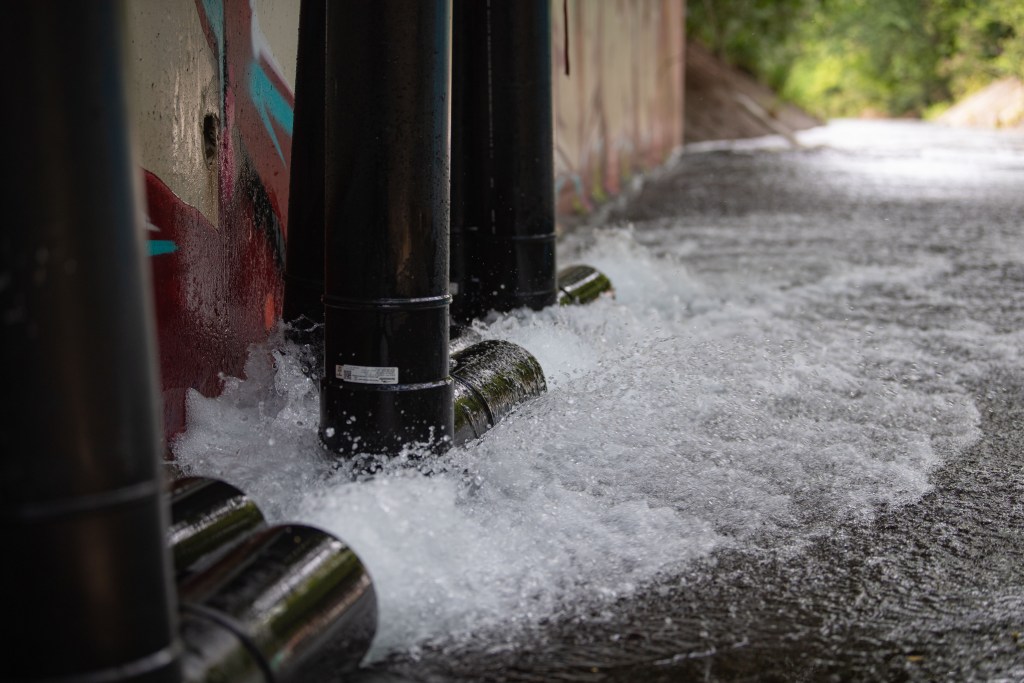
“This is very upsetting,” said Healani Sonoda-Pale, a member of the advocacy group Oahu Water Protectors. “The U.S. Navy is not a good caretaker of the limited resources we have here on Oahu, and they’ve shown that time and time again.”
Honolulu Board of Water Supply spokeswoman Kathleen Elliott-Pahinui said it’s disappointing that the water continues to be dumped when it could serve some purpose on Joint Base Pearl Harbor Hickam.
“The water should be reused for non-potable irrigation and cleaning facilities and large equipment on JBPHH instead of being discharged to Halawa Stream,” she said. “Our wai is a precious resource that should be conserved and not wasted.”
The pumping began on Jan. 29, 2022, just a couple of months after the Navy contaminated the Red Hill well with thousands of gallons of fuel, sickening families living around Pearl Harbor.
There was a concern that the fuel would migrate throughout Oahu’s primary aquifer and toward other wells, so the Navy and regulators agreed to pump the contamination out to control the spread.
For much of the last year and half, the Navy has been pumping 5 million gallons per day. The plan signed with regulators suggested this was supposed to be temporary.

“Once the Treatment System has been operational for a period of time and has demonstrated that the
treated effluent is consistently free of contaminants, the Navy will evaluate the utility of treated effluent for non-potable use or groundwater recharge,” the plan states.
While the agreement with regulators required the Navy to explore its options, it made no mandate that the military act on them. And apparently, the Navy has decided it won’t.
Last year, the Navy considered how the water could be used for golf courses or other irrigation needs, according to Sarah Moody, the Navy’s acting Red Hill environmental officer in charge. But doing that would require the installation of pipelines separate from the regular drinking water system, she said.
“That would have to be constructed and would take several years,” Moody said in an interview.
“It’s not a ‘never.’ It’s just that right now, we just don’t have that infrastructure and all of our engineering focus right now has been on defueling. And because of the defueling activity, we can’t exactly go in and start ripping up the Red Hill area for infrastructure building.”
Driving tanker trucks to carry the water from Red Hill to where it’s needed was also deemed a “nonviable” option, according to Moody. Because of limited accessibility to the area, only one truck could go at a time, she said.
“When they did the overall analysis, it was found that the emissions from the amount of trucks it would take to carry that water away would create a larger impact to the environment than the benefit of reusing that water,” Moody said.
Michael Buck, a recently departed member of the state water commission, said he’s not buying it.
“When the Navy wants to do something, they figure it out. Now they’re comparing carbon emissions?” he said. “Value the water better and stop making excuses.”
The Navy’s study on the reuse possibilities is not yet final, Moody said, so it hasn’t been shared yet with regulators or the public.
Moody said the Navy hopes to reduce its pumping soon. Crews took samples from monitoring wells to see the extent to which the contamination has been cleaned up. They’re waiting on all the results to come in. If the news is good, Moody said they could reduce pumping from 4.3 million gallons a day to 1.8 million gallons.
For now though, it’s unclear how much longer the pumping will continue, Moody said.
In the meantime, Kathy Ho, deputy director of environmental health at the Hawaii Department of Health, said the agency is urging the Navy to “pursue options for beneficial reuse.”
“We share the community’s concern for our precious water resources, and will continue to push the Navy to invest in infrastructure to divert this water from Halawa Stream for beneficial reuse,” she said.

