

Maui Wildfire Lawyers Try To ‘Manage The Unmanageable’
With billions of dollars at stake and the potential for thousands of lawsuits, lawyers are trying to bring order to the chaos of litigation sweeping into Hawaii courts.
Litigation surrounding the Maui wildfires has reached a new phase, as lawyers representing fire victims pivot from merely filing lawsuits to trying to organize the scores of complaints threatening to overwhelm Hawaii’s courts.
For lawyers and judges in the state, the wildfire litigation is uncharted territory, a mass disaster that some predict will result in thousands of legal claims seeking billions of dollars in damages from private corporations such as Hawaiian Electric Industries, as well as the State of Hawaii and Maui County.
“I don’t think at least in this state we’ve had to wrestle with the numbers of this size before,” said Mark Davis, a Honolulu trial lawyer who has been practicing in Hawaii since 1974. The plaintiffs’ lawyers are now, Davis said, “trying to help the court manage the unmanageable.”
The procedural framework being hammered out will guide the litigation for months, possibly years. Some defense lawyers, including those for Hawaiian Electric Co. and Kamehameha Schools, are already questioning what opposing lawyers have proposed.
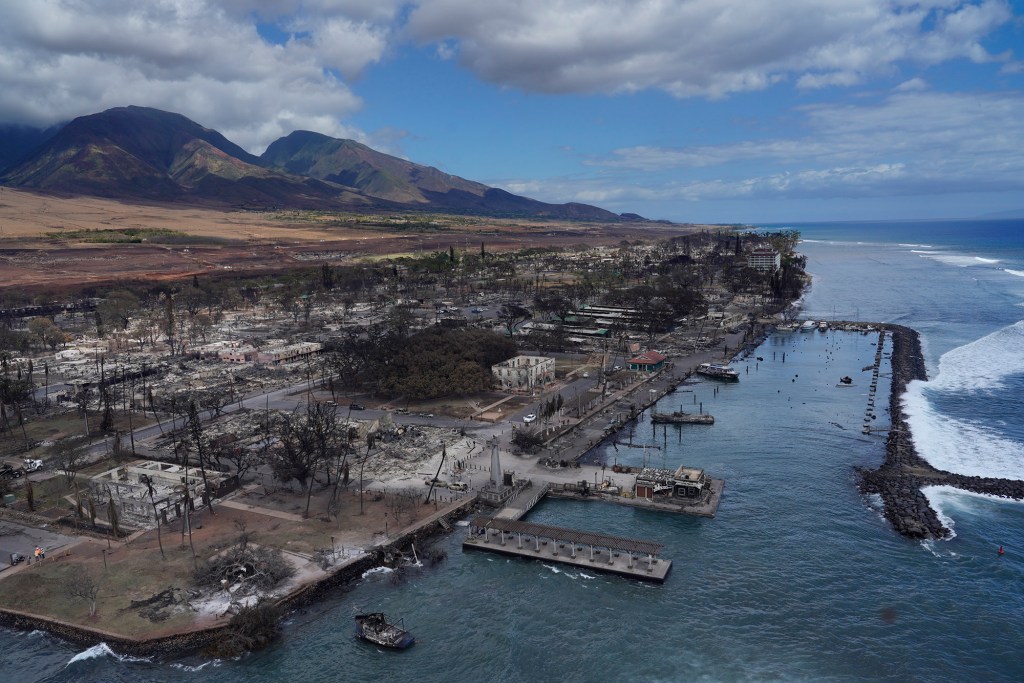
Maui Circuit Court Judge Peter Cahill is scheduled to meet Wednesday with both sides for a closed-door status conference in advance of a Dec. 13 court hearing. At stake is the speed and efficiency with which victims will be able to get relief. More than 2,200 buildings were destroyed and at least 100 people were killed in the deadliest wildfire in modern U.S. history.
Managing Separate But Similar Lawsuits
The special proceeding before Cahill comes as Hawaiian Electric has begun filing boilerplate answers to the first of the massive number of suits facing the company. Last week, the company filed 38 such answers. While the documents offer no real substantive responses to allegations that the company started the devastating fires, the sheer number of answers shows the enormity of the litigation.
In another effort to speed the resolution of cases, Hawaii Gov. Josh Green has floated the concept of a $150 million settlement fund for fire victims who agree not to pursue claims in court. But he has provided few details.
As of late October, there were approximately 50 different firms representing fire victims, according to a document filed in the special proceeding. That number continues to grow as new suits are filed.
The overarching goal of the plan is to manage separate but often similar lawsuits to speed the process of getting cases to trial and avoid bogging down the courts. As part of that five lawyers would act as liaison counsel who could communicate with the court on behalf of the plaintiffs’ lawyers.
“The wheels of justice can move slowly – and justice delayed is justice denied.”
Lawyer Jesse Creed
The idea is to “bring order to chaos,” said Jacob Lowenthal, a Maui lawyer who would serve as one of five liaison counsel.
Jesse Creed, a Los Angeles-based lawyer licensed in Hawaii who would also be a liaison counsel, said it was the best way to serve their clients.
“They’ve suffered extreme losses, unprecedented losses. The wheels of justice can move slowly – and justice delayed is justice denied,” Creed said.
Maui attorney Cynthia Wong, another liaison counsel, moved to designate the fire cases as complex litigation under Hawaii Circuit Court Rules, then launched the special proceeding to coordinate the fire cases. Other proposed liaison counsel include Davis and Maui attorney Jan Apo.
The idea, which Wong laid out in a letter to other plaintiffs’ lawyers and a proposed order submitted to Cahill, is for the liaison counsel and a larger steering committee of more than two dozen plaintiffs’ firms to organize and facilitate activities of the individual plaintiffs.
In many cases, pretrial proceedings — status conferences, motions, witness depositions, document requests and other matters — can turn even a single civil suit into a quagmire. Wong and her colleagues hope to prevent that. Under her proposed order, for instance, plaintiffs could make one universal discovery request to a given defendant instead having hundreds or thousands of plaintiffs making separate requests.
Another motion calls for the various lawsuits to be coordinated into a “master complaint” containing all of the potential allegations filed against the defendants. An individual plaintiff would be able to say which portions of the master complaint the plaintiff was adopting for the plaintiff’s particular case. Defendants in turn could file a “master answer.”
Defense Lawyers Seek Certainty
Defendants aren’t so sure. For example, lawyers for Kamehameha Schools trustees being sued have submitted a position statement to the court saying Wong failed to notify all plaintiffs’ attorneys of the plan. In addition, Kamehameha Schools trustees argue, Wong failed to follow Hawaii Rules of Civil Procedure when she emailed notices instead of mailing hard copies or delivering them by hand.
“As it stands, it is not clear whether or when all the interested parties have received, much less had a fair opportunity to comment on” the proposed case management order, the document says.
Paul Alston, a lawyer for Kamehameha Schools trustees, declined to comment beyond the filing.
Kamehameha Schools trustees also have joined a response submitted by Hawaiian Electric Industries’ attorney, Joachim Cox.
“Defendants maintain their earlier support for the coordination of the numerous related cases in Maui and Oahu through the opening of a special proceeding,” but the order proposed by Wong didn’t incorporate any of the defendants’ recommendations, Cox wrote.
For example, Cox wrote, the proposed order would “allow any individual plaintiffs to serve discovery unilaterally, which would defeat the purpose of coordination,” and wouldn’t give the liaison counsel “sufficient power to bind plaintiffs in day-to-day case management issues.”
Cox asked Cahill to amend the proposed order “to incorporate the edits that reflect defendants’ concerns.”
Such opposition was to be expected, said Davis, the Honolulu plaintiffs’ lawyer and proposed liaison counsel.
Mass tort cases are often wars of attrition, with pitched fights over minutia. Time is typically on the side of the defense counsel, who get paid by the hour regardless of the outcome. By contrast, plaintiffs’ lawyers working for contingency fees can work for months or years without a paycheck — and might never get paid if their clients don’t win.
Hawaiian Electric alone spent $10.7 million in legal fees related to the wildfire between Aug. 8 and Sept. 30 – a rate of more than $1 million a week – the company reported in its most recent quarterly financial statement.
“The objections are not surprising because there’s a certain defensive advantage in making things disorganized,” Davis said.

Maui Recovery Fund
The Hawaii governor’s proposed Maui Recovery Fund, announced earlier this month, is another effort to expedite the process by offering victims seriously injured and families of those who died in the Maui fires more than $1 million if they agree not to pursue claims in court.
Green said that would be the first phase of a multi-part plan, but details were scant. Green said the state has partnership commitments from Hawaiian Electric, Kamehameha Schools and Maui County. But only Hawaiian Electric has said how much it will contribute, $75 million, and where the money will come from, liability insurance proceeds.
Green by contrast hasn’t said how much the state will commit or where the money will come from.
Creed, the plaintiffs’ lawyer and would-be liaison counsel, commended Green for being proactive but couldn’t say much about the fund.
“Until I see details, I don’t have a particular judgment,” he said.
Creed said that even if the fund were willing to pay $1.5 million to each victim killed, an amount that has been quoted, some families would be entitled to far more, depending on circumstances, including the number of people the victim left behind as survivors sharing the payout.
“Every family is different: $1.5 million for five people is very different than $1.5 million for one person,” he said.
While Creed said the plaintiffs are eager to learn about Green’s plan, there’s another issue he said he would like the governor to address in the meantime.
“Not a single person in Lahaina caused this disaster; it was the wrongdoers, and there needs to be accountability,” Creed said. “I would like to see the governor talk more about that.”
Civil Beat’s coverage of Maui County is supported in part by grants from the Nuestro Futuro Foundation.

