


Final Shipment Of Fuel From Red Hill Tanks Leaves Hawaii, Marking The End Of An Era
Some 64,000 gallons remain in pipelines, but the military has vowed to remove every drop from the World War II-era facility.
Approximately 5 million gallons of fuel from the Navy’s troublesome Red Hill storage facility departed Hawaii on Wednesday, marking the completion of the military’s effort to remove the vast majority of the 104 million gallons that was once stored there.
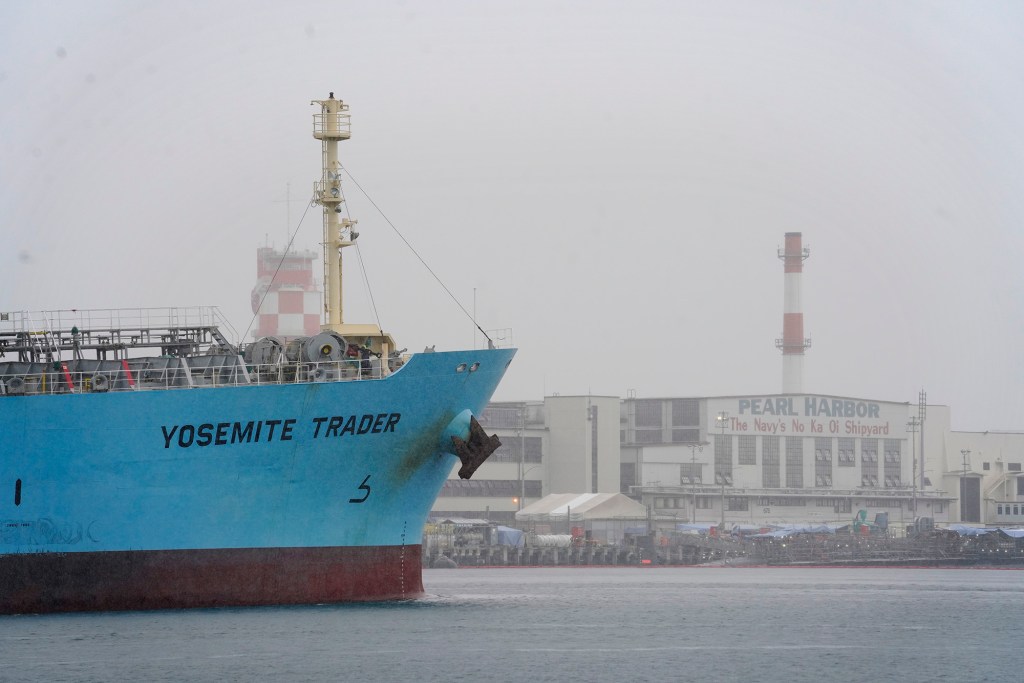
Yosemite Trader, a nearly 600-foot fuel tanker, departed Pearl Harbor after 9:30 a.m. and began a three-week journey to Subic Bay in the Philipines. The eighth and final shipment of fuel removed from Red Hill’s massive tanks is a major step toward permanently decommissioning the tanks, built into an Oahu mountainside in the early 1940s.
The Department of Defense ordered the defueling and closure of Red Hill after petroleum from the facility leaked into Pearl Harbor’s drinking water supply and sickened families in 2021. Since then, the fuel had continued to sit underground just 100 feet above Oahu’s primary drinking water source while military officials devised a plan to remove it safely.
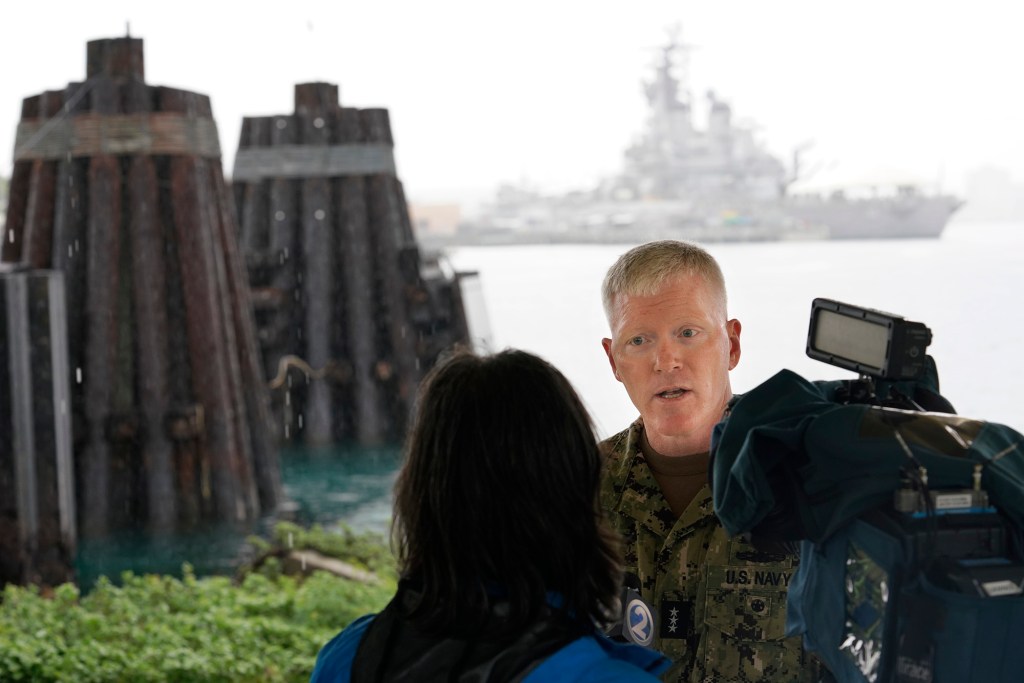
“From a personal level, honestly, I’m relieved,” said Vice Adm. John Wade, who led the defueling mission as commander of Joint Task Force-Red Hill. “That fuel sitting above the aquifer was a threat to the community and the environment.”
The task force completed the majority of the defueling ahead of schedule, bringing to fruition a goal that local environmental advocates had long called for but which the Navy had long resisted.
For years, community members, groups like the Sierra Club of Hawaii and the Honolulu Board of Water Supply had raised concerns about the possibility of a catastrophic fuel leak. A fuel release in 2014 of an estimated 27,000 caused particular concern. But Navy officials said the 2014 leak was a fluke. They maintained that the facility was in fine shape, that the risks of a leak were minimal and that Red Hill was a “vital strategic asset” in the Pacific.
Since then, Defense Secretary Lloyd Austin has said it is strategically advantageous to spread the military’s fuel resources throughout the Pacific rather than having one big gas station in Hawaii.
About 36 million gallons of the fuel from Red Hill has been relocated to Campbell Industrial Park in West Oahu, 39 million went to Subic Bay, 12 million was sent to California and the remaining fuel is being stored at the so-called upper tank farm at Joint Base Pearl Harbor Hickam, according to Nico Melendez, a Joint Task Force-Red Hill spokesman.

Healani Sonoda-Pale, an activist and member of the Red Hill Community Representation Initiative, said the removal of most of the fuel is a “victory for the community.”
“It’s like a burden has been taken off the backs of the people of Oahu,” she said. “We have lived with over 100 million gallons sitting above our aquifer for decades, and from 2014, we’ve been asking for this.”
However, the military’s job isn’t over. Approximately 64,000 gallons of fuel remain in Red Hill pipelines. Joint Task Force-Red Hill will remove the majority of it, some 60,000 gallons, by the end of March, and move it into storage at Pearl Harbor, according to Wade.
A new closure task force – led by Navy Region Hawaii’s commander, Rear Adm. Stephen Barnett, and Rear Adm. Marc F. Williams – will be responsible for the remaining 4,000 gallons. Accessing it will require the destruction of pipes, according to Wade.
The closure task force will also be in charge of manually removing sludge from the Red Hill tanks and taking out toxic firefighting chemicals that remain in facility pipelines. Some 1,300 gallons of those firefighting chemicals leaked from the facility last year.
The timeline for that work hasn’t been solidified but is expected to be complete by the target date for Red Hill’s closure in 2027, according to Williams.
The last of the residual fuel will be removed via forced air ventilation throughout about 11 miles of pipelines, and much of it is expected to evaporate, Williams said. The rest of the removed material will be transported to an off-island disposal facility approved by the U.S. Environmental Protection Agency, he said.
The military has committed to removing “every last drop” from the facility, Wade said. Sonoda-Pale said the community plans to hold the military to that promise.
“We really want to make sure they finish the job, that the residual fuel is taken out, that the sludge is taken out, tested and put somewhere safe,” she said. “And we also need to be very alert about the quality of our water.”

