

Ewa Beach Residents Left In The Dark About Possible Lead Contamination From Marines’ Shooting Range
A state lawmaker is refusing to share a taxpayer-funded lab report while endorsing a Marine-backed plan community leaders oppose.
Alex Gaos was eager to see the test results.
The Ewa Beach Neighborhood Board member and marine biologist had caught fish and collected dust samples to send to a lab, all part of an effort to answer a key question: Is there lead contamination around the Marine Corps’ Puuloa Range Training Facility?
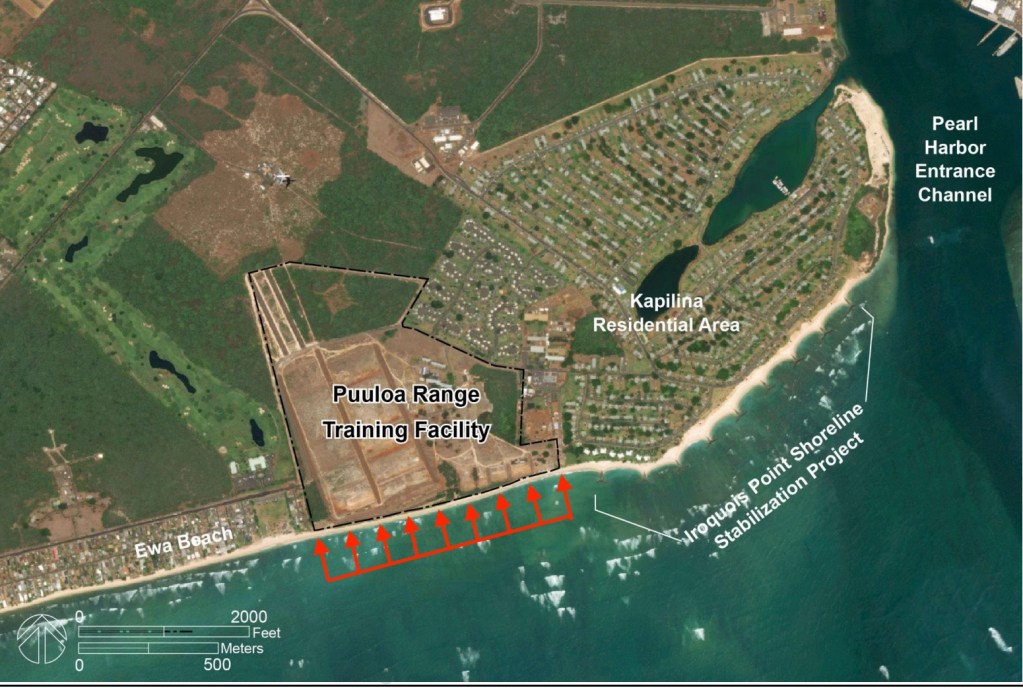
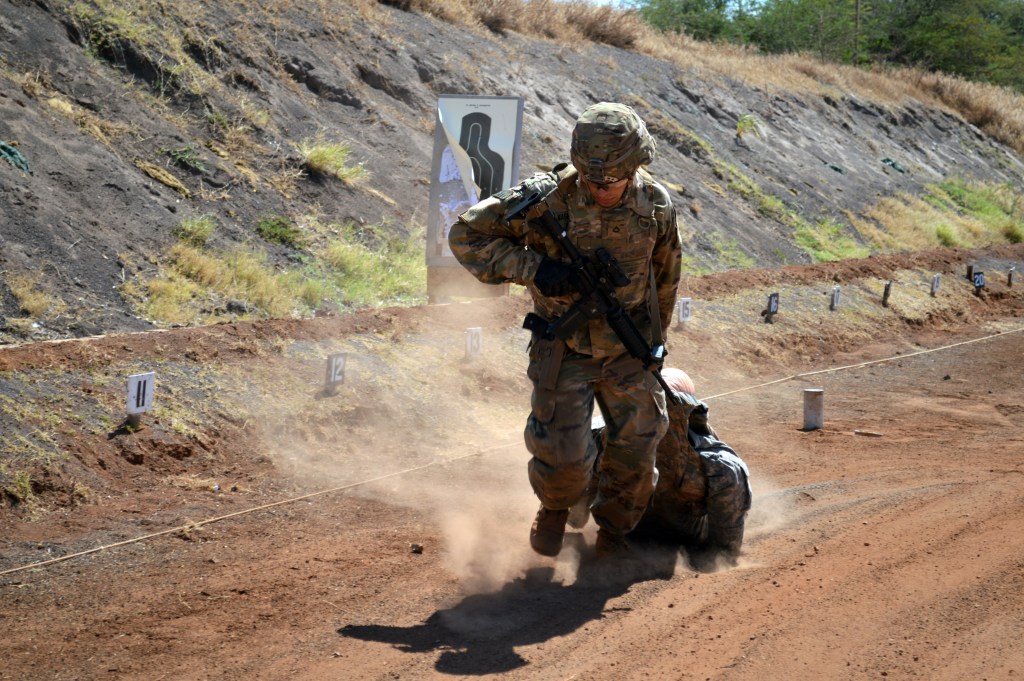
The shooting range, in operation for more than a century, is home to a pistol and rifle practice center that the Marines say is essential for training thousands of troops. But unlike most shooting ranges throughout the country, it sits in the middle of a residential area.
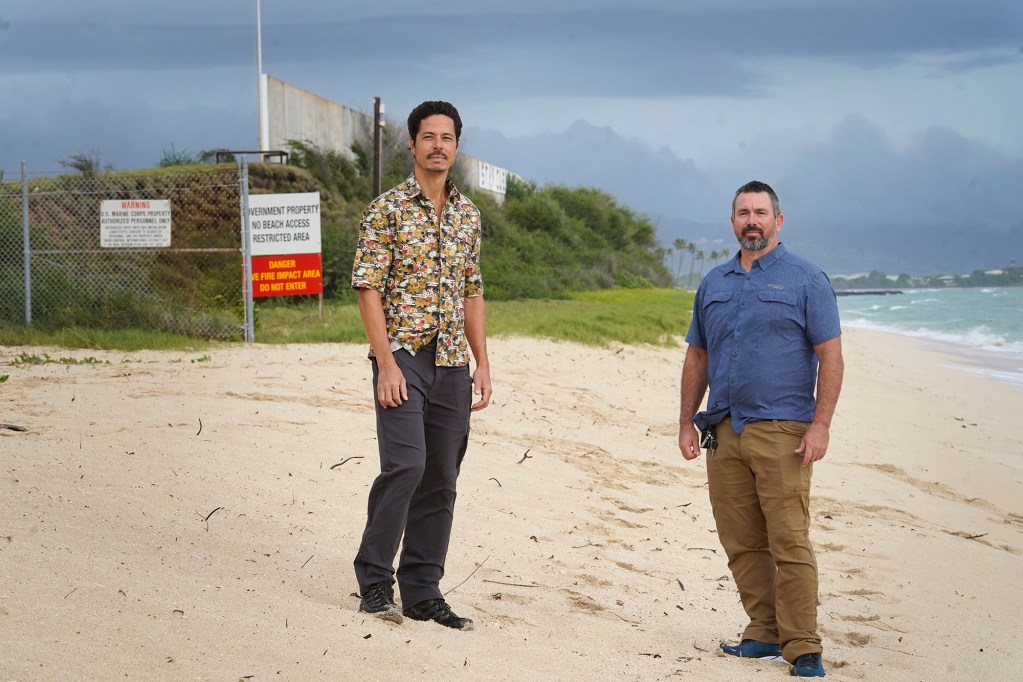
Over the years, as neighborhoods grew around it and the Marines increased their target practice, residents have complained about early morning announcements via loudspeaker, heartstopping gunfire and dust kicked up with each shot. Increasingly there are worries about lead from military bullets. Residents fear potentially contaminated dust could be drifting toward their homes and tainted soil may be slipping into the ocean as the boundary between the facility and the beach erodes.
In response to those concerns, state Rep. Rose Martinez’s office sought to investigate. Her chief of staff Tracy Arakaki ordered lead testing of Gaos’s samples, a lab document shows. And in a November text message to Gaos, Arakaki shared some troubling news.

“The tests came back positive,” Arakaki wrote. “Numerous scientists confirmed.”
Since then, however, Martinez’s office has clammed up. Arakaki has rejected requests from community members and Civil Beat to share copies of the lab report.
The testing, which cost $1,160, was paid for with taxpayer dollars from Martinez’s legislative allowance. And the Hawaii public records law specifically states environmental test results require disclosure.
Nevertheless, Martinez’s office on Monday denied a Civil Beat public records request for the report, calling the document and related communications “confidential” and protected by a state constitutional privilege.
In a phone conversation last month, Arakaki called the results “inconclusive” and twice hung up in response to a reporter’s questions.
“We’re not going to share it,” Arakaki said. “It is just based on one random test … The information gathering is incomplete.”
Martinez, a freshman Democrat who was elected after Republican Bob McDermott vacated his seat, did not respond to repeated requests for comment.
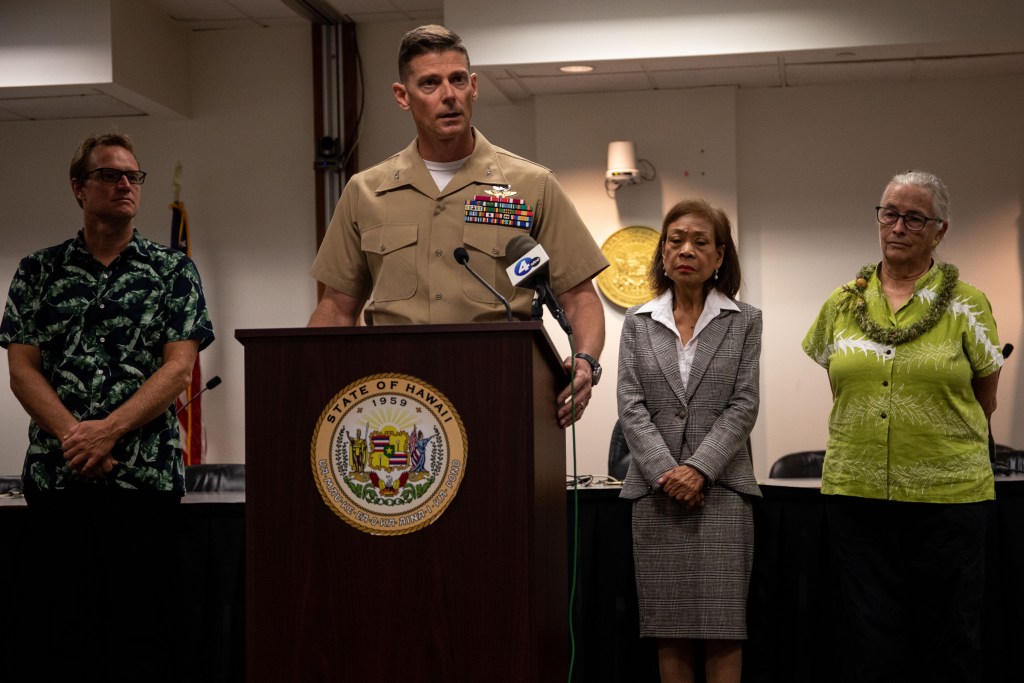
Meanwhile, Martinez has endorsed a sampling and analysis plan proposed by the Marine Corps in which the Marines will test their own property. The plan, according to a copy on the DOH website, limits testing to the outer part of the berms touching the beach.
It includes no sampling from areas of Puuloa abutting the Ewa Beach and Iroquois Point neighborhoods to the east and west, where the closest home is about 230 feet away. It does not call for any testing on the range itself, within surrounding communities or in the ocean. The Hawaii Department of Health questioned some parts of the plan, including a lack of air monitoring, but ultimately approved it.
The whole testing effort is estimated to take a week, the plan says.
“Everyone is framing this as: The Marines will test and whatever happens, that’s the end,” said Liam Chinn, another Ewa Beach Neighborhood Board member. “They are literally testing a tiny fraction of the facility.”
The Marines will start sampling in the first quarter of this year, according to Marine Corps spokesperson Maj. Jordan Fox. The results will be made public, he said.
Marine Corps Base Hawaii “has, and will continue, to listen to community concerns and work toward tenable solutions that ensure the viability and compatibility of the range to continue operations while being good neighbors and stewards of the environment,” he said.
According to Arakaki, Martinez is working to secure a grant to fund further testing by University of Hawaii scientists who will take samples from the surrounding community and nearby marine life.
But for now, community members are left with unanswered questions, and they don’t think they’re going to get the information they seek under the current plan.
“It’s not what the community wants,” Gaos said. “The community wants them to test for lead in the areas surrounding the range, not just the berms fronting the ocean. We don’t want it just one time, either. Do it all over.”
‘Incompatible With The Community’
Puuloa has been a topic of increasing public criticism in recent years.
There have been community complaints that the area sounds like a “war zone,” startling neighbors, including veterans with post-traumatic stress disorder.
“It sounds like someone is lighting firecrackers right by my head,” Chinn said.
Loudspeaker announcements as early as 5:30 a.m. jolt residents out of bed, community members say. A Marine Corps plan to install a seawall to protect the facility in 2019 raised alarm among neighbors who feared significant beach loss.
Some residents also worry about the potential for bullets to fly past Puuloa’s boundaries into residential areas or into the sky as planes come and go from the Honolulu airport located less than three miles away. There are no confirmed reports of bullets escaping the facility, but residents don’t want to take their chances.
“Categorically, this is incompatible with the community,” Gaos said. “PRTF would not be allowed to be built today where it is.”

In 2022, sampling by the Surfrider Foundation identified high levels of lead in soil samples taken on the beach side of the facility, seizing the health department’s attention. Chinn believes that study is what led to the Marines’ current lead investigation.
The pressure has been mounting. In March of last year, the Ewa Beach Neighborhood Board passed a resolution calling for the military to move its berms from the shoreline to prevent them from further eroding into the ocean.
Soon after, the Hawaii House and Senate passed resolutions calling for the Marines to move their activities out of the Puuloa facility entirely. But the measures were non-binding and the Marines have no plans to leave. They have pledged to move their smaller ranges mauka, further from the shoreline, but will be leaving the two bigger sniper ranges in place. Fox said those ranges are built to industry standards and are designed to prevent “contaminant migration off-range.”
“For them, it’s an inconvenience to move,” Chinn said. “For us, it’s our livelihood. We’re afraid to have kids on the beach now.”
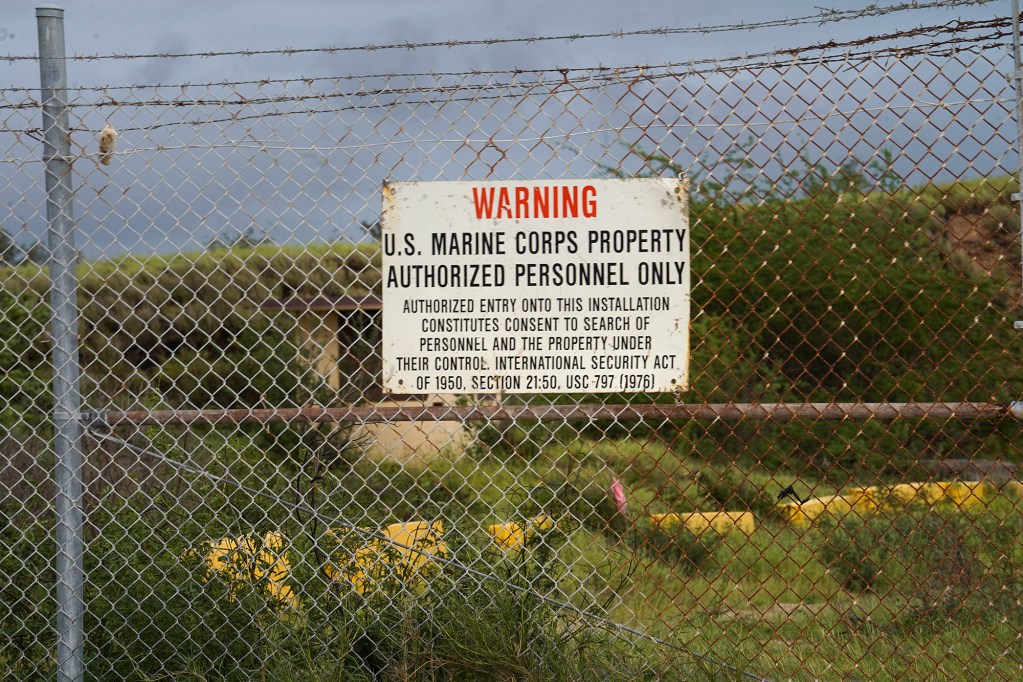
Chinn says it’s a matter of equity. The majority of Ewa Beach residents are people of color, he noted.
“I’m often asked: Would this be allowed in Lanikai, or Kailua? Would this be allowed in Manoa?” he said.
In a statement, Fox said Congress requires the Marines to conduct marksmanship training, and Puuloa is currently the only viable location.
“PRTF cannot be closed until a similar range in size and capability is identified, provided to the Marine Corps, established and fully operational,” Fox said. “Closing the range prematurely would directly impact training requirements, operational readiness, and ultimately the mission of Marine Corps Base Hawaii.”
Instead of reducing its activities, the Marines are considering doing even more training at Puuloa. In an environmental assessment released in December, the military branch said it may increase its “training tempo” by 20%, with 35 additional days of training.
Hawaii’s congressional delegation has not echoed the calls from the community and Legislature to shut down operations at Puuloa.
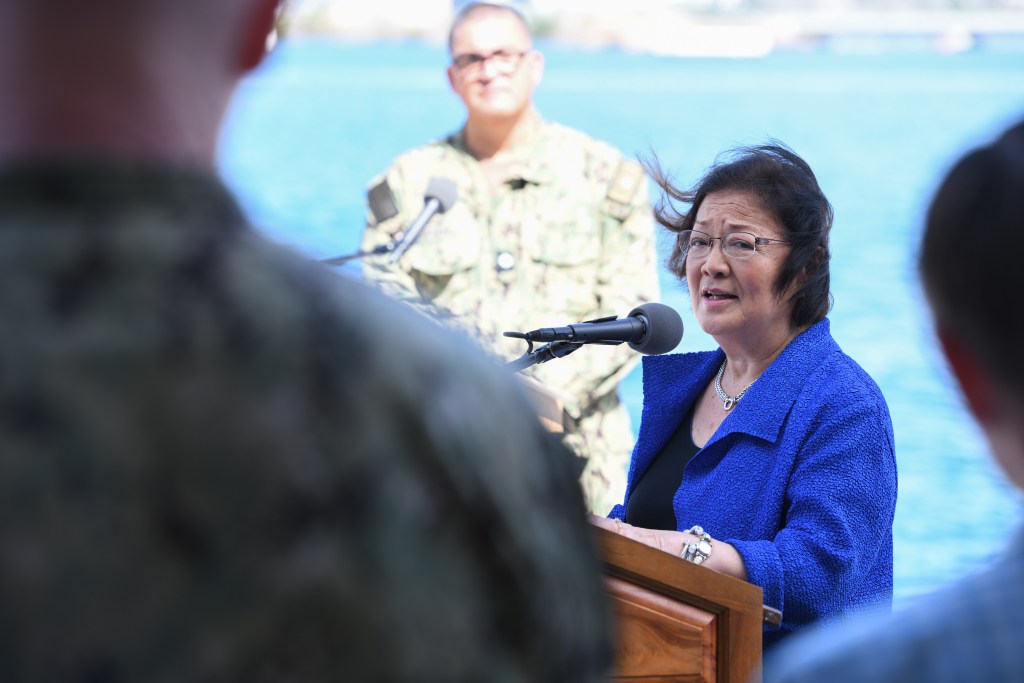
In a statement, U.S. Sen. Mazie Hirono said the Marine Corps must adjust in the face of community pushback. She said she has encouraged leadership to mitigate its impact on the area, including installing noise abatement barriers and starting live-fire training later in the day.
“While Puuloa range plays a critical role in Marine Corps training, I’ve made it clear to the DOD that they must minimize the effects of their training exercises on the surrounding communities,” she said.
U.S. Rep. Ed Case, who represents Ewa Beach, said he has increased his focus on Puuloa in the last six months and has been in talks with the Marine Corps and community members. The first step, he said, will be to agree on “basic facts” and then identify whether range operations could be modified or alternative facilities created.
“At this point, we are still confirming the basic facts and starting into the alternatives consideration,” he said in a statement.
Fear Of Exposure
Lead contamination from shooting ranges can accumulate in the soil and remain there for hundreds of years, research has shown.
It can spread throughout the environment in several ways, including through stormwater runoff and migration through soil, according to a U.S. Environmental Protection Agency manual on shooting range management.
Humans and wildlife can also be exposed to “airborne particulates,” researchers wrote in a 2017 article in the journal Environmental Health.
“Dust from lead-contaminated soil can be resuspended into the atmosphere and transported from a firing range whether outdoor or indoor,” the authors wrote.
Lead exposure is dangerous, particularly to children, according to the Centers for Disease Control and Prevention. Even in small amounts, exposure has been shown to cause brain and nervous system damage, slow development and problems with learning, hearing and speaking. In adults, lead exposure can negatively impact heart and kidney function, and in pregnant women, it can cause reduced fetal growth.
The Marine Corps said it does remove bullet fragments from its berms but leaves behind contaminated soil. That allows lead to build up over time.
“There is a toxic waste site sitting right next to a community and a beach park,” Chinn said. “Why isn’t DOH playing a more substantial role in this?”
In an interview, Sven Lindstrom, a state environmental health specialist, said DOH will oversee the Marines’ testing of their property but has not done any independent testing of its own and doesn’t plan to.
“That’s not our job,” he said. “Our job would be to conduct the oversight of that and ensure they’re doing it properly.”
Lindstrom’s division of the Hazard Evaluation and Emergency Response office would only take over if the Marines refused to do their own testing, he said.
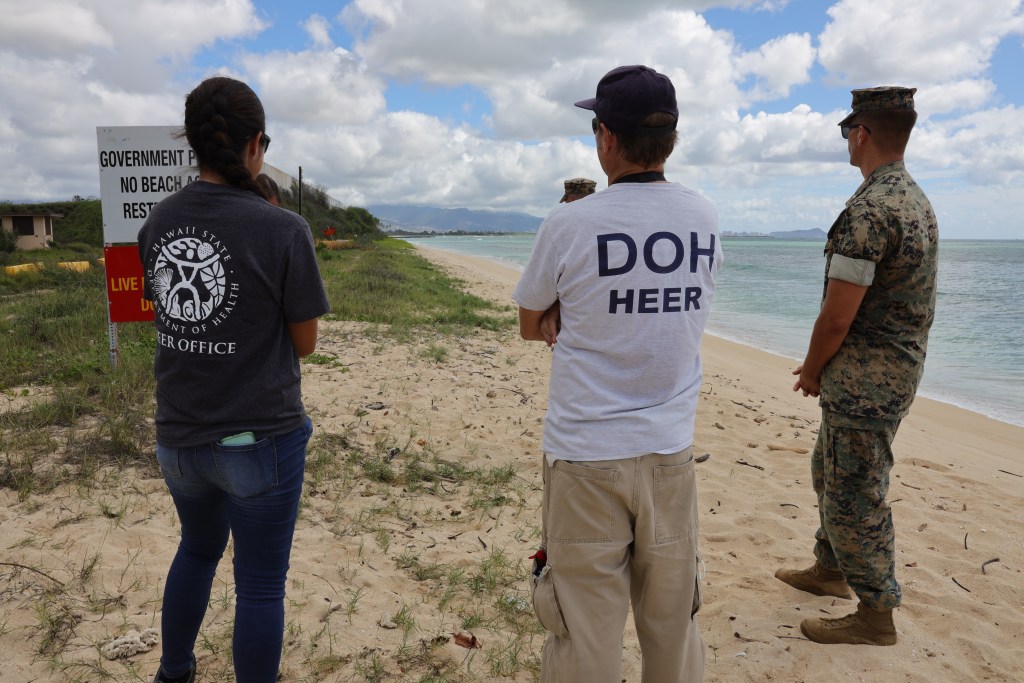
Emergency responders in a separate division could also do their own investigation if there was clear evidence of a release that affected areas beyond the facility, Lindstrom said. But that hasn’t been established.
“We don’t have any evidence that the contamination is leaving the site, except for just hearsay we’ve heard, that anecdotally there might be contamination off-site,” he said. “Nobody has brought anything to us.”
Establishing lead contamination is present, and directly connecting it to a specific source, is a tall order when there could be many potential sources, including lead paint in historic homes, Lindstrom acknowledged.
The Marines’ testing approach will start close to the facility, Lindstrom said. If there is evidence that the contamination is migrating beyond their borders, he said DOH can call for additional testing.
“We don’t generally start far away and then move back toward the source,” he said. “We start at the source and we try to step out and see where that takes us.”
Lindstrom recognizes that some community members are not satisfied with the plan.
How To Report A Release
“We can’t please everybody,” he said. “It’s a good first step. And then based on whatever results they come up with from this investigation, then we’re going to let that direct us to what the next steps are. We’re just going to follow the data.”
DOH uses the same self-testing model with the Navy and the Red Hill water system. The Red Hill well was contaminated in 2021 by leaks in the Navy’s fuel storage system after years of forewarning by environmental advocates.
Chinn says the comparison is apt.
“With Red Hill, we waited until people got poisoned to decide that it was a bad idea to put fuel tanks above an aquifer. Did we have to wait until people got poisoned? No,” he said. “Do we have to wait until people and children get lead poisoning to come to the conclusion that putting a shooting range in the middle of a densely populated neighborhood is a bad idea?”
For now, in the absence of scientific studies, it’s hard to say to what extent lead from Puuloa may have migrated off the federal government’s property, leaving the community to fear the worst.
“The federal government has stated that there is no known level of lead that is safe for children,” Gaos said. “So, why are we arguing about this? There is a range a couple hundred feet from houses.”
The Marine Corps said it has no “authority or jurisdiction” to test for lead in off-base areas, but Chinn says that’s just an excuse.
“Anyone right now could walk in the park and take a sample,” he said. “Why would they not do it?”
Civil Beat’s community health coverage is supported by the Swayne Family Fund of Hawaii Community Foundation, the Cooke Foundation, Atherton Family Foundation and Papa Ola Lokahi.
Correction: An earlier version of this story mistakenly referred to artillery fire at Puuloa. In fact, the range hosts training for shooting short-distance pistols and long-distance rifles.

