Sudden Deluge Does Little To Move The Needle On Maui Drought
The disruptive storm forced many roads and schools to close. But it wasn’t enough to erase Maui’s persistent drought.
Despite a heavy rain storm that unleashed flooding, undermined road infrastructure and forced school closures, Maui is still in the grips of a drought.
Conditions on the Valley Isle are the driest in the state and, despite recent rains, meteorologists predict the dry spell could endure into spring.
Still, the storm Tuesday brought temporary relief to an island that for months has been abnormally dry, and also windy — prime conditions for the destructive wildfires that scorched Maui in August. The island has endured water shortages in West Maui and Upcountry since last June. The shortages, caused by a lack of rainfall, have led the county to restrict public water usage in these areas.
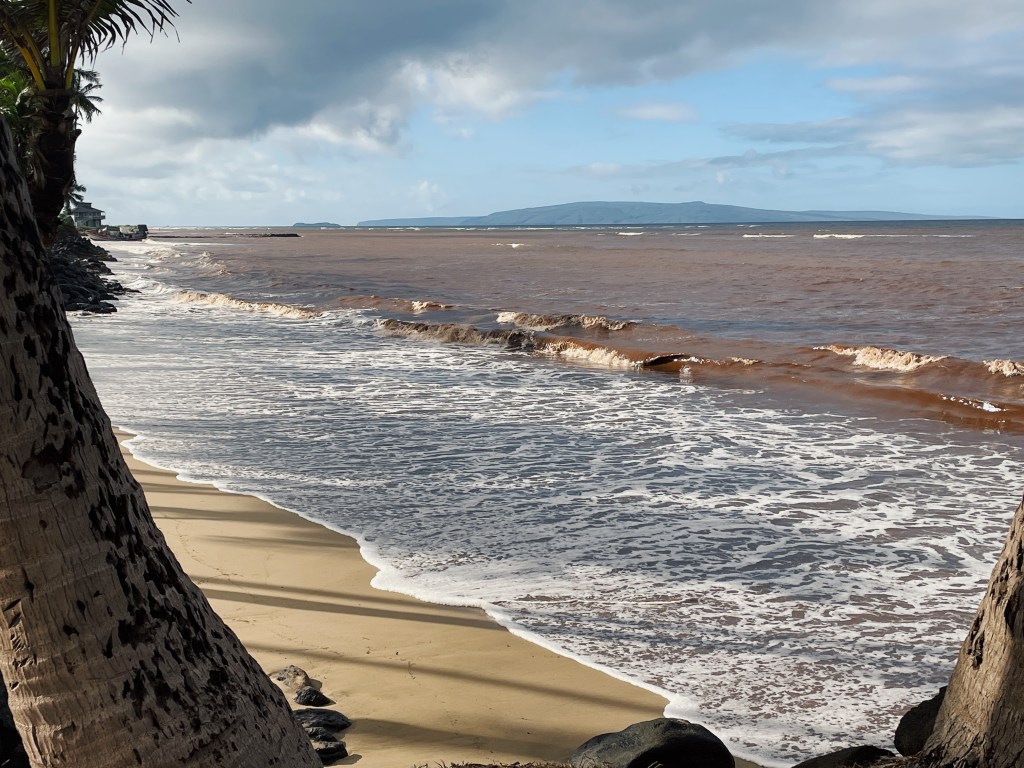
Rainfall totals Tuesday ranged from 2 to 6 inches across most of the Valley Isle, with greater accumulations occurring in upper Kula and the tops of the West Maui mountains. The south flank of Haleakala received roughly over 10 inches, according to radar estimates.
The deluge downed trees in Upcountry, washed a boat ashore in Kihei and shut down numerous roads with mud and standing water.
Even after the soak, roughly 40% of Maui County remains in moderate or severe drought.
“Every storm can move the needle to some degree,” said John Hoffman, director of the U.S. Geological Survey’s Pacific Islands Water Science Center in Honolulu.
But the sudden precipitation was not enough to make a major dent in the island’s drought, which is expected to persist through the end of March, according to the National Oceanic and Atmospheric Administration’s drought outlook.
“All that rain was helpful, of course, but to fully recover you need more than one rain event,” said Kevin Kodama, a NOAA hydrologist.
What’s needed now, he said, is more follow-up rains, especially in the Kihei and Makena regions.

Among the main Hawaiian islands, Maui is suffering the most widespread and severe drought. Kauai and Lanai are free of drought or abnormally dry areas, according to the most recent report from the U.S. Drought Monitor. Oahu and Molokai have tiny patches considered abnormally dry. Only Maui and the Big Island contain large swaths of areas that are abnormally dry or in moderate drought, and Maui is the sole island experiencing severe drought.
For the state as a whole, the drought picture has improved dramatically in the past three months. In early October, all of Hawaii was either abnormally dry or in some level of drought. Now, only about half the state is in those categories.

Hawaii typically receives more rainfall in the winter months. But the islands are in the throes of a powerful El Nino, known to turn weather norms upside down. Typically, a strong El Nino causes drier conditions in Hawaii during the winter months.
The last strong El Nino Hawaii experienced was in 2016.
Scientists say extreme weather is becoming more frequent in Hawaii as a result of climate change. The trouble with heavy rain storms like the one Maui experienced on Tuesday, however, is that much of the rain runs off into the ocean. What’s needed are steady, less severe rain events that do a better job of replenishing the aquifer, according to weather experts.
“This storm had a pretty good rain rate and so the bulk of it would just run off and go out to sea,” Kodama explained. “You need more of a lighter rainfall that percolates down to really start to change things.”
Civil Beat’s coverage of Maui County is supported in part by grants from the Nuestro Futuro Foundation.
Civil Beat’s coverage of climate change is supported by The Healy Foundation, Marisla Fund of the Hawaii Community Foundation and the Frost Family Foundation.