

Emails At Bribery Trial Show Alleged ‘Courtship’ Between Mitsunaga And Kaneshiro Reps
The messages capture the development of a “corrupt relationship,” the feds say.
After former Honolulu prosecutor Keith Kaneshiro and businessman Dennis Mitsunaga met in 2012, they developed a relationship that involved lunch at an upscale Honolulu restaurant, a New Year’s party and numerous chummy emails exchanged between their representatives, according to testimony and evidence presented to a jury on Thursday.
On the witness stand was Carol Nakamura, a childhood friend and longtime executive assistant to Kaneshiro. Throughout Thursday afternoon, federal prosecutor Michael Wheat questioned Nakamura about a series of emails capturing communications between Mitsunaga’s firm, his attorney Sheri Tanaka and Kaneshiro’s office.
In legal filings, prosecutors said the emails “tell a story about the courtship and corrupt relationship” between Mitsunaga’s associates and the county prosecutor’s office.

The feds say Mitsunaga and his associates bribed Kaneshiro with nearly $50,000 in campaign contributions so that he would pursue a meritless felony prosecution of one of Mitsunaga’s former employees, Laurel Mau.
The defendants – Mitsunaga, Tanaka, Terri Ann Otani, Aaron Fujii and Chad McDonald – have pleaded not guilty. Their attorneys have framed the campaign donations as a legal way to gain access to a politician and argue Mau stole from the firm by doing side jobs on company time.
The emails illustrate key moments in what the feds say was a criminal conspiracy that could land the defendants in prison for up to 15 years.
“Once complete strangers, the (Mitsunaga firm) defendants and Kaneshiro were brought together by the former’s single-minded obsession with exacting revenge on (Laurel Mau) and by the latter’s need for campaign money to maintain the power of his office,” prosecutors wrote in court records.
Nakamura is one of 80 witnesses who are set to testify in the trial that began last week. Already the jury has heard from former Mitsunaga firm employees about Mau’s alleged side jobs and her firing from the firm; a prosecutor’s office secretary who said she kept Kaneshiro abreast of his political donations; and Mau’s attorney Carl Osaki who was extensively cross-examined, including about his client’s litigation against Mitsunaga’s firm.
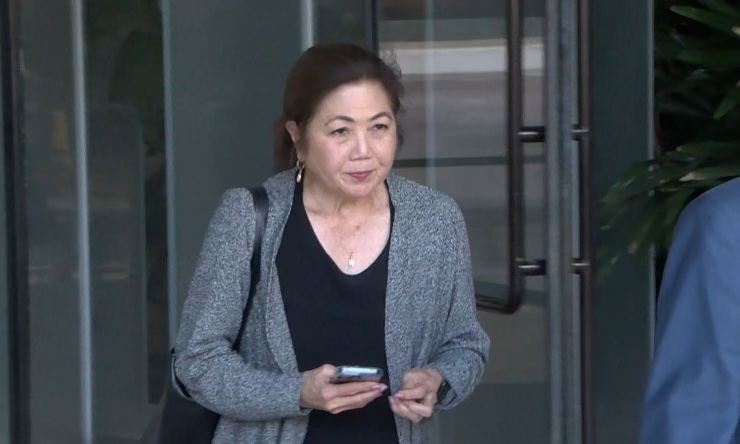
Nakamura’s emails, introduced into evidence on Thursday, show the alleged conspiracy started with a meeting brokered by then-Honolulu City Council member Ann Kobayashi in 2012. It then progressed to lunch at the Mariposa restaurant at Ala Moana’s Neiman Marcus in 2013 – paid for by Mitsunaga, Nakamura said – and a New Year’s celebration attended by Nakamura.
Throughout the events, Nakamura was a “conduit” for Kaneshiro, according to the feds.
“Missed you at the new years get together~ gosh Mr. Mitsunaga really is a gracious host,” Nakamura wrote to Tanaka in an email. “The food was amazing!”
Tanaka responded that she and her husband were unable to attend the party.
“Oh, I want to meet your husband!!! Maybe next party,” Nakamura wrote.
“I would love for you to meet my husband,” Tanaka wrote back.
Another email from Nakamura in January 2013 stated: “Hi Sheri! Please convey our appreciation for the wonderful lunch and company today. Isn’t it amazing that Keith and Mr. Mitsunaga are SOOO alike? Mr. Mitsunaga is a fascinating man and we could have sat there for hours to hear his stories — from politics to building a business … I hope we will have more of these get togethers!”

Tanaka responded: “I completely agree … They are both incredible individuals with so many accomplishments and are such an inspiration to those around them. I am glad we had the opportunity to get together and have such an enjoyable lunch. We had a wonderful time and are looking forward to our next get together. Thank you again!!”
Wheat questioned Nakamura about the enthusiastic tone in the messages between herself and Tanaka. He asked if Nakamura was happy when she sent the email with multiple exclamation points and three O’s in the word “so.”
“It seems that way,” Nakamura said on the stand.
Other emails demonstrate how Tanaka was feeding Nakamura documents, including depositions, that the firm had obtained through ongoing civil litigation with Mau. That lawsuit evidence later formed the basis for Kaneshiro’s prosecution of Mau, according to prosecutors.
A state court judge ultimately found that Mitsunaga’s people “orchestrated the vast majority of the investigation.” That judge, Karen Nakasone, called the case a “threat to the judicial process” and dismissed it.
Nakamura’s direct questioning and cross-examination is expected to continue next week. Attorneys estimate the trial will continue through mid-May.

