

Hundreds Of Hawaii Island Residents Protest Proposed Housing Project In Punaluu
The more than $200 million development would be located in a culturally and environmentally sensitive area.
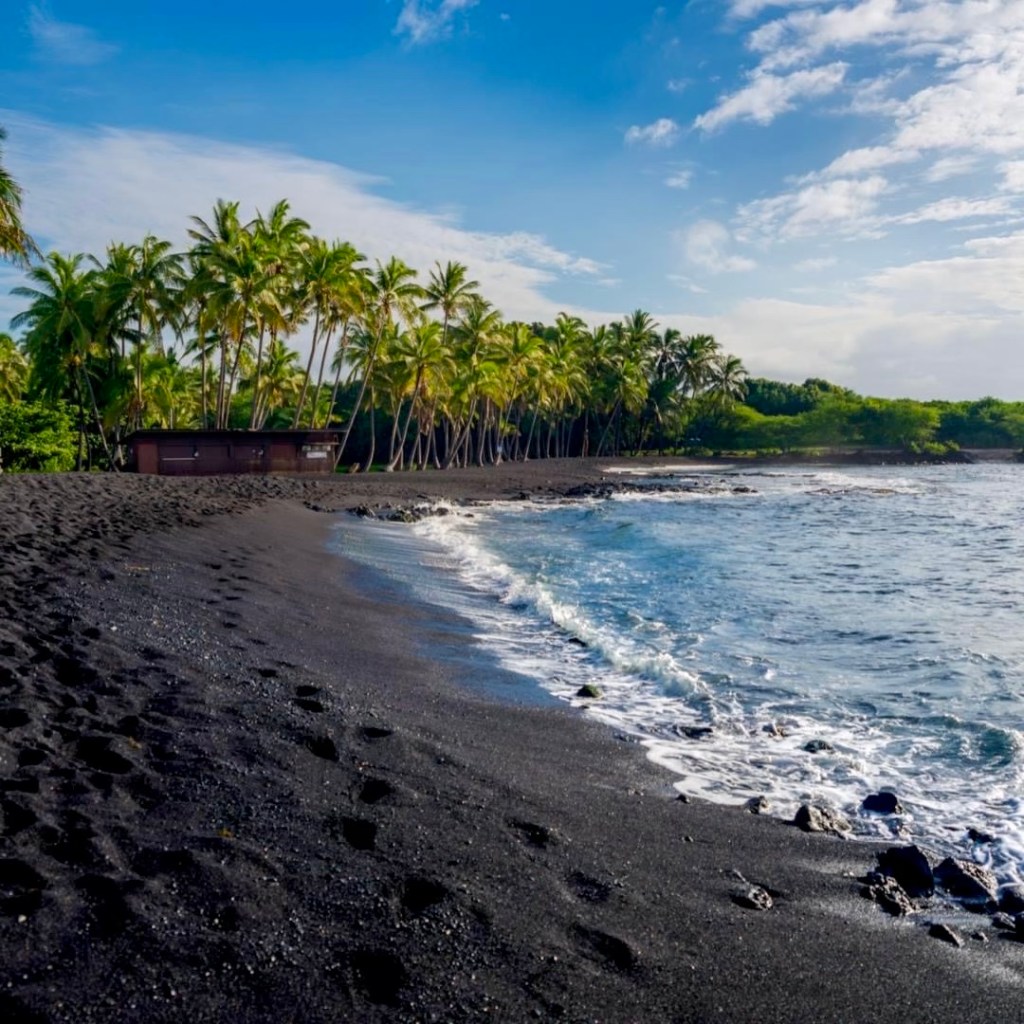
A battle is brewing on the Big Island over a proposed development in Punaluu, a stretch of black sand beach and ponds along the rugged Kau coastline that’s popular among locals, tourists, fishermen and many others.
Located on the southeastern shore, the isolated area provides habitat for critically endangered hawksbill sea turtles and threatened green sea turtles. Hawaiian monk seals and orange-black damselflies, among other endangered and threatened animals, also frequent the area that sits between the former plantation towns of Pahala and Naalehu.
Beyond its ecological importance, Native Hawaiians view Punaluu as a wahi pana, or culturally significant place. The area features heiau, or temples, as well as koa shrines, a historic cemetery and church, petroglyphs and burial sites, according to the county Planning Department.
These qualities were driven home last week by hundreds of people at a weekday meeting of the Windward Planning Commission in Hilo.
“It’s wrong for anyone to desecrate sacred ground,” said Jonah Maikahoku I, a cultural practitioner who addressed the commission.
With the recommendation of the county planning director, the commission is considering granting a Special Management Area permit to Black Sand Beach, a limited liability company that wants to develop 147 of the 434 acres it owns at Punaluu.
The company’s permit application for its Punaluu Village entails building 225 residential and vacation rentals, a retail and wellness center, a fish market and seafood restaurant and rehabilitating an existing golf course, among other features. The company estimates the construction cost at between $200 million and $350 million.

Although no action was taken at Thursday’s hourslong hearing, the commissioners got an earful from the Kau community and others who phoned in from places on Maui and Oahu.
Testifiers, many of whom arrived by caravan from Ocean View, Naalehu, Pahala, Volcano and points along the way, raised concerns about a range of issues.
Holding signs with slogans like “Keep Kau Country” and “Protect Our Land and Natural Resources,” they shared concerns over an outdated wastewater treatment plant in Punaluu, increased population and traffic, an influx of tourists, lack of a disaster mitigation plan in an area vulnerable to king tides and tsunamis, and the potential disruption of culturally important areas and ancient burial grounds.

“The greatest disrespect you can do to your kupuna is to expose their bones to the sun,” said Nohealani Ka’awa.
The project lacks a burial treatment plan and there’s iwi kupuna, or ancient bones, throughout the site, she said.
A few people expressed support for the project both orally and in written testimony. Among them was Nora Kawachi who said Black Sand Beach’s chief executive, Eva Liu, “has been diligent in her efforts to get to know the area and residents.”
“It is evident that feedback from the community has been factored into this project. She has donated generously to local organizations for community projects,” Kawachi said.
Liu, a California resident, could not be reached for comment.
Dane Shibuya, who lives in Naalehu, wrote the commission to say Liu is a caring person who is “always willing to listen and take criticism or advice,” and that she wants to create employment opportunities for Kau residents.
Liu’s company recently sent a letter to the community that was published in the Kau Calender, a local online news site. Black Sand Beach’s project consultant Daryn Arai shared it with Civil Beat.
“In the past few years, when communicating our development plans with the community, the most common and heartfelt response we received was: ‘You can’t please everyone.’ However, we have still tried to communicate as widely as possible with the community. After four years, we have finalized our current plan,” the letter reads, in part. The full statement is available here.
Planning Director Zendo Kern has recommended that the commission greenlight the development, writing in his 17-page report to the panel that the project “will not have any substantial adverse environmental or ecological effect” provided that best management practices are used to mitigate any impacts.

Kern recommended moving ahead without making the developers prepare an updated environmental impact statement or environmental assessment because the project did not meet the criteria set out in state law for such a requirement.
The last time a full EIS was completed was in 1988. A new draft EIS was done in 2008 but never finalized.

“The proposed project, Punaluu Village, provides an opportunity to properly manage, repair, and enhance this area after years of neglect,” Kern wrote.
No one from the Planning Department was available for an interview.
Project consultant Arai said no EIS is needed because the project application contains detailed information and the company conducted additional cultural, archeological and other studies.
In a written statement provided by his communications director, Mayor Mitch Roth said his administration was pleased to see the community actively engaging and being heard about the proposed development.
“The process is designed to give all of us a voice in transparently shaping our community’s future,” Roth said in the statement.
Former Hawaii County Council member Emily Naeole urged commissioners to listen to local voices and keep Punaluu intact as a place for residents who, in her view, have been pushed aside in favor of developments catering to tourists, out-of-state investors and the well-off.
Naeole said she didn’t like residents getting “shoved out for the big bucks people.”

The Center for Biological Diversity is preparing to try and stop the development should it advance.
The nonprofit’s Hawaii director and staff attorney Maxx Phillips said she has filed paperwork to get legal standing to request a contested case hearing in the event the Planning Commission decides to approve the project.
For Phillips, the county is blundering by not requiring the developer to update the environmental impact statement. She described that as a glaring “red flag.”
“The impacts of this development will be huge. Without doing an updated EIS, there’s no way the commission or the community will have all the information in front of them,” Phillips said.
Elsa Dedman and her ohana own a kuleana parcel in Punaluu. The family can trace their lineage in the area back eight generations.
Dedman said in an interview that her family has fought for years to keep developers out of Punaluu. She’s not opposed to tourism but thinks there should be places in Hawaii that remain largely untouched, like the rural coastline in Kau. If people want to visit the Big Island, they have plenty of places to go like Kona, Hilo or Volcanoes National Park.

Punaluu is unique and deserves to stay that way, Dedman said.
“This developer would place their wellness center on our burial grounds. That should not happen,” Dedman said. “We’ll be successful. We’ve done it in the past.”
Project consultant Arai said mitigation plans for burial sites and other culturally sensitive features of the area would be developed if an SMA permit were granted. They would be written into the permit requiring the applicant to take any needed steps to protect important assets.
Roth is trying to tamp down rising stress over the project.
“The community should rest assured that the Planning Commission will carefully consider all opinions and concerns brought before its body before making their final decisions,” Roth said in the statement.
The commission has not yet scheduled its next meeting on the issue.
Civil Beat’s coverage of environmental issues on Hawaii island is supported in part by a grant from the Dorrance Family Foundation.

