

Dillingham Airfield And Nearby North Shore Residents Brace For Looming Water Shutdown
The airfield is poised to get the reprieve it needs to stay open, but it still doesn’t have a new group ready to step up and manage the water system.
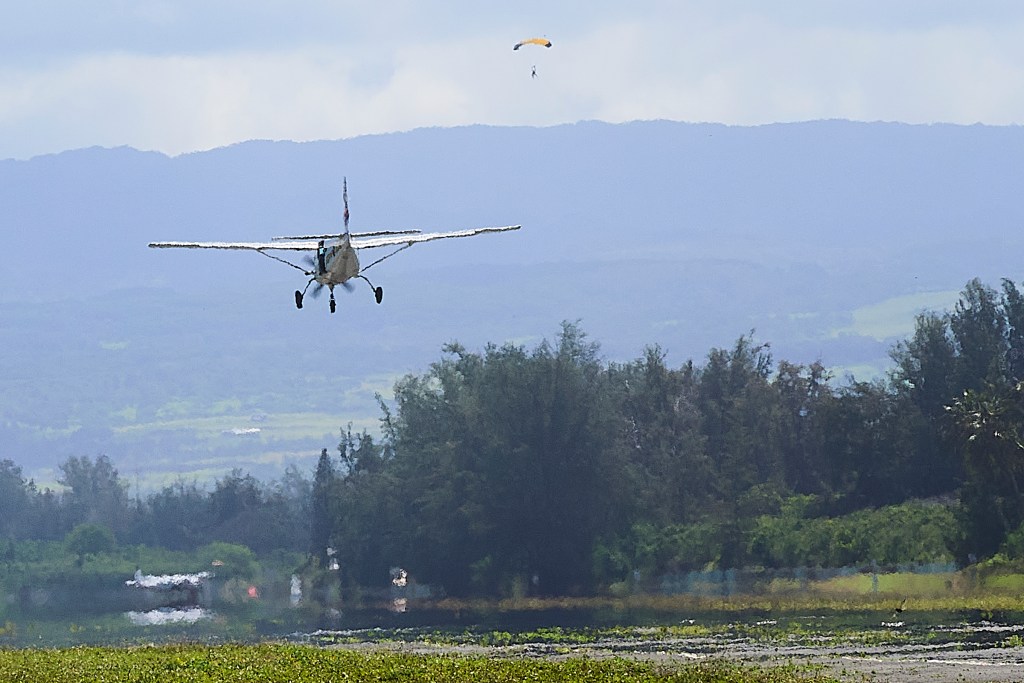
Dillingham Airfield is close to securing a new long-term lease with the Army that would stave off the threat of permanent closure and keep the popular aviation hub on the North Shore open for the next 50 years.
But in an odd twist, officials say there’s a likelihood the airfield would suddenly lose access to water when that new lease takes effect.
That’s because the Hawaii Department of Transportation can no longer manage the area’s water system under the proposed lease, which would start July 5, and no other entity has stepped in yet to take over those duties.
Community members have taken early steps to potentially replace HDOT with a nonprofit community water cooperative, but even if that group manages to launch it won’t be ready in time for the July handover, organizers say.
The Army, meanwhile, has told state officials that it won’t run the Dillingham water system because there’s no mission-based need for it. The military branch will make the system available to a licensed water operator — but there’s no one to hand it off to yet.
The void has created an unusual scenario in which not only the airfield but also some 30 nearby residential water users plus YMCA of Honolulu’s Camp Erdman might lose access to the local water system they’ve depended on for decades if no short-term solution is found.
What happens after that remains unclear.
Ben Devine, a parachute mechanic at the airfield and leader of the grassroots organization Save Dillingham Airfield, said the solution could involve trucking water out to Mokuleia until a group is formed to manage the water system.
“All of that is costly, inefficient and not the outcome that anybody wants,” he said.
YMCA of Honolulu President and CEO Greg Waibel said he’s not sure whether Camp Erdman, which hosts some 16,000 kids annually for its day and overnight camp activities, could operate without access to the water.
“I suppose there’s a scenario where we ask parents to send water for the week. But no baths or showers for the week? Are there some creative solutions? Yeah, I suppose. Is that a good experience? Probably not,” he said.
The Honolulu Board of Water Supply, which provides water to most of Oahu, is not interested in taking over the aging Dillingham Public Water System because it’s not up to BWS’ standards and it would be too costly to install the additional lines required to hook up to BWS’ system, agency spokesperson Kathleen Pahinui said.
The Hawaii Public Utilities Commission, meanwhile, doesn’t regulate the water system because it’s owned by the Army. The PUC only regulates private utilities, according to agency spokesperson Deborah Kwan.
The state DOT has run the water system for years and provided it to users at no charge. Waibel said the users would be willing to pay their fair share for the resource.
However, the Federal Aviation Administration has warned the state agency that if it keeps managing that system under a new lease it could be considered out of compliance and lose federal funding.
That’s why DOT made it a non-negotiable requirement in any new lease that the state agency be formally absolved of its responsibility in running the water system.
That requirement did not include having a replacement entity up and running, however.
Clock’s Ticking
This month, DOT Director Ed Sniffen sent the Dillingham water users at least two letters warning of the impending water shutdown, attempting to spur action. He recommended they prepare for the possibility that the system will stop operating after July 5.
U.S. Army Garrison Hawaii said in a statement this week that the military is trying to help bring in a third party to operate the system.

Devine said that some of the system’s users have met with attorneys who might help them form the cooperative as well as state Department of Health officials to discuss the necessary studies. Simply incorporating the group could cost between $10,000 and $20,000, Devine added.
That’s more expensive than it typically costs, but the cooperative would need to be compliant with state requirements so that HDOT could participate, he said.
The cooperative would likely qualify for state and federal grants a year or so after it launches. But it would face hefty financial challenges if the need for significant repairs or upgrades spring up before then, Devine said.
Most of the water users there support forming the cooperative but they’re overwhelmed by the complexity, he added. Not all users have responded to organizers’ communications on the proposal, either.
“It’s a heavy lift to take on an aging water system,” Devine said.
Co-op organizers hope to have a timeline set in June for when the group could eventually launch.
“It has a lot of ramifications, and I’m concerned about the timing of everything,” said state Rep. Amy Perruso, whose House district includes Dillingham Airfield, officially known as Kawaihapai Airfield. “It’s challenging to put together a nonprofit that could actually do this work. I’m nervous about it.”
Read Sniffen’s April 10 letter warning of the water shutdown here:

