

Latest UH Board Of Regents Nominee Approved By Senate Committee — And Its Influential Chair
Sen. Donna Kim was pleased that Michael Miyahira shares her views on Senate oversight of the University of Hawaii.
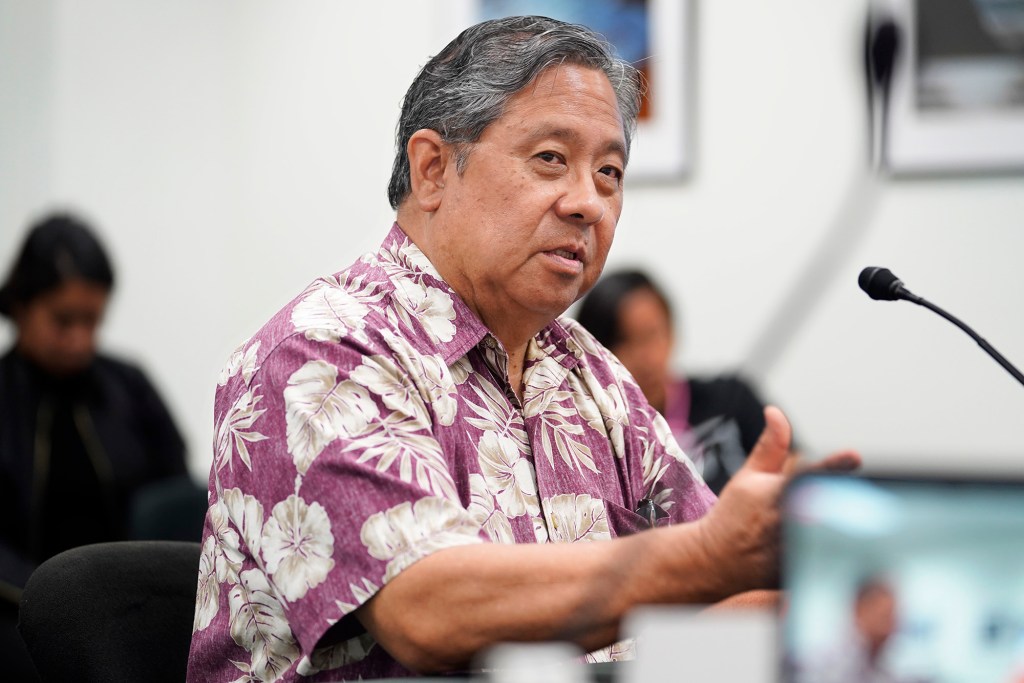
A confirmation hearing for a new University of Hawaii regent on Tuesday turned into more of an examination of whether the nominee agreed with the committee chair and less about his qualifications.
Senate Higher Education Committee chair Donna Kim seemed intent on defending herself against criticism raised in a Civil Beat story earlier this week in her questions to Michael Miyahira, Gov. Josh Green’s pick to fill a vacancy on the 11-member University of Hawaii Board of Regents.
The vacancy was created last month when Kim’s committee rejected Alapaki Nahale-a for another term on the board because he was not, in Kim’s view, sufficiently critical of the administration.
Kim, who declined to be interviewed for the earlier story, did most of the talking during Tuesday’s hearing and seemed happy that Miyahira agreed with her intense oversight of the board and the UH administration.
Her questions essentially followed — point by point — concerns raised in the Civil Beat story, “Emails Reveal A State Senator’s Unrelenting Demands On The University Of Hawaii.”
Kim asked if Miyahira would speak up if it seemed the administration was dictating the regents’ meeting agendas. Miyahira, a Hilo resident who provides consulting services to owners of businesses across the state, said he would, pointing out that the regents are in charge and that the UH president reports to the regents.
Is it acceptable, Kim asked, that the regents and the administration seem to keep issues raised by the Senate — namely, problems with student housing, something Kim has harped on for months — in the dark rather than being held accountable in public for those problems?
Miyahira said that was not acceptable and that he would try to change things if placed on the board.
Did Miyahira have a problem with Kim emailing regents and administrators to get answers about concerns raised about conditions at UH, even if they come from anonymous sources?
No, replied Miyahira, the regents need to know those concerns.
And should Kim follow up if she does not get those answers? Absolutely, said Miyahira: “I think you need to keep knocking on that door. The Board of Regents needs to be responsive to provide you with an answer.”
Kim then asked, “So, should I be relentless in doing this?”
Yes, Miyahira replied.
“Maybe the media needs to hear this so that they understand that these are issues that you are damned if you do and you’re damned if you’re not when it comes to providing responses,” Kim responded. “Because they don’t trust the — from what I’m told by these people who call — they don’t trust the (regents’) Whistleblower Hotline, and they try and try again and they don’t get responses, and many times they beg not to give their names out, because they fear retaliation.”
Previous reporting by Civil Beat and other local media have focused on student housing, board agendas and Kim’s worry that the regents are passively accepting the direction of UH President David Lassner.

The other senators on the panel were favorable in their questioning of Miyahira, too, although they addressed issues related to the nominee’s background and qualifications.
Carol Fukunaga said she appreciated what he had to say in his questionnaire about his desire to see additional investments and facility upgrades to various campuses. Troy Hashimoto welcomed Miyahira’s view that campuses should be safe, clean, secure and inviting places for students, especially housing facilities.
Kurt Fevella expressed his concerns that some campuses were not safe, while he and Michelle Kidani admired the nominee’s goal to help the University of Hawaii West Oahu campus located in their part of the island.
But it was Kim who asked the most questions by far, and she seem to appreciate Miyahira’s answers.
Miyahara, addressing concerns that have been raised by Kim and others critical of his predecessor, said he would not approve a UH budget if he was not given enough time to read it, for instance. Faculty and staff positions should be filled as soon as possible. And he agreed that the Senate should hold him accountable for whatever happens during his term, especially if he wants to serve another.
Kim said 24 people submitted testimony in support of Miyahira and no one opposed him. The testimony was not posted by the time the hearing began but was finally available online around 5 p.m. No one testified in person.
Miyahira’s nomination now goes to the full Senate for a vote, something that would appear to be a foregone conclusion.
“We look forward to working with you,” Kidani, the committee’s vice chair, said.

