Maui Newspaper Cutback The Latest Sign Of Financial Distress In Hawaii News Industry
Amid a search for a buyer, The Maui News slashes its print edition to once weekly.
The Maui News announced plans to slash its daily print edition to once a week, shifting the island’s 124-year-old newspaper of record to a digital-first model as its owner continues to search for a buyer.
Chris Minford, the paper’s publisher and circulation manager, notified readers of the move to Thursday-only home delivery, which begins June 6, and outlined plans for a digital future in an open letter to readers. He described the change as an “entrepreneurial decision.”
“This is the future of local news — and moving there now will allow us to continue serving you in the most effective manner,” Minford said in the letter published on the front page of the newspaper’s Thursday edition.
Minford did not respond to a request for comment.
Any time a local news organization cuts back, there are risks for the community it covers. Less scrutiny of public officials. Less civic engagement. More political polarization. The decision by Ogden Newspapers to reduce its print product to a weekly publication is happening at a time when multiple newspapers in Hawaii are showing signs of financial duress.
It also comes on the heels of the deadliest American wildfire in more than a century. Recovery from the Lahaina fire that killed at least 101 people, displaced 13,000 survivors and caused an estimated $6 billion in property damage is expected to be a slow and painful process.
“It’s a really unfortunate development what’s happening with The Maui News and the timing makes it even more tragic,” said Colin Moore, a political scientist at the University of Hawaii Manoa. “In a situation like Maui, where trust is already low, it’s more important than ever for the people in charge of the fire recovery to be held accountable and these cutbacks just make it more difficult.”
“I hope they can survive in this form but it certainly isn’t going to be the paper that I grew up with.”
Lee Imada, formerly of The Maui News
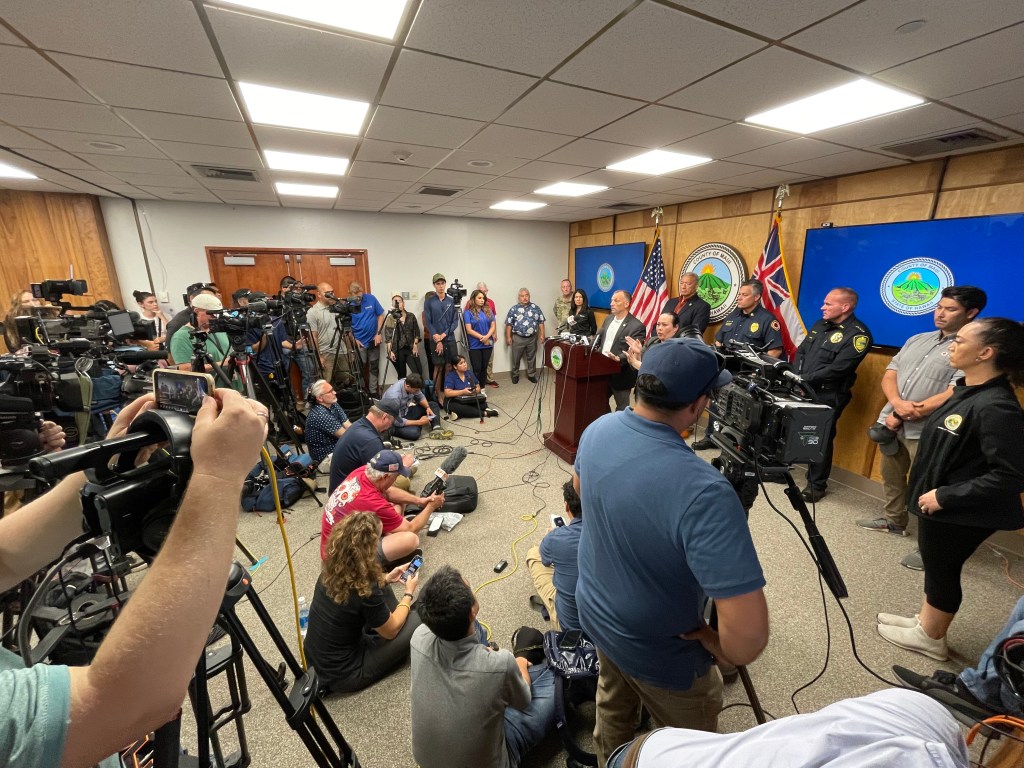
Maui government officials have faced increased scrutiny in recent months. National media flocked to the island days after the deadly August wildfires and regularly grilled officials at what became contentious news briefings during the chaotic first weeks.
Many of the national reporters who descended on Maui left almost as quickly as they came. And unlike local journalists, their outsider status often means they’re unfamiliar with Maui’s cultural nuances and political dynamics — factors that can lend important context to community news.
“The thing that isn’t always appreciated about local news organizations is that they know the community,” Moore said. “It’s very difficult to parachute into a community — even if you have tremendous resources like The New York Times or The Washington Post — and make those connections on the fly and develop sources that trust you to understand their story. I think that’s something that local media can provide that really nobody else can.”

Publishing a print edition and online, The Maui News is a leading source of community journalism on Maui, Molokai and Lanai. But the newspaper, which had an editorial staff of 30 throughout much of the 1980s and ’90s, has in recent years dramatically curtailed its coverage and the size of its staff.
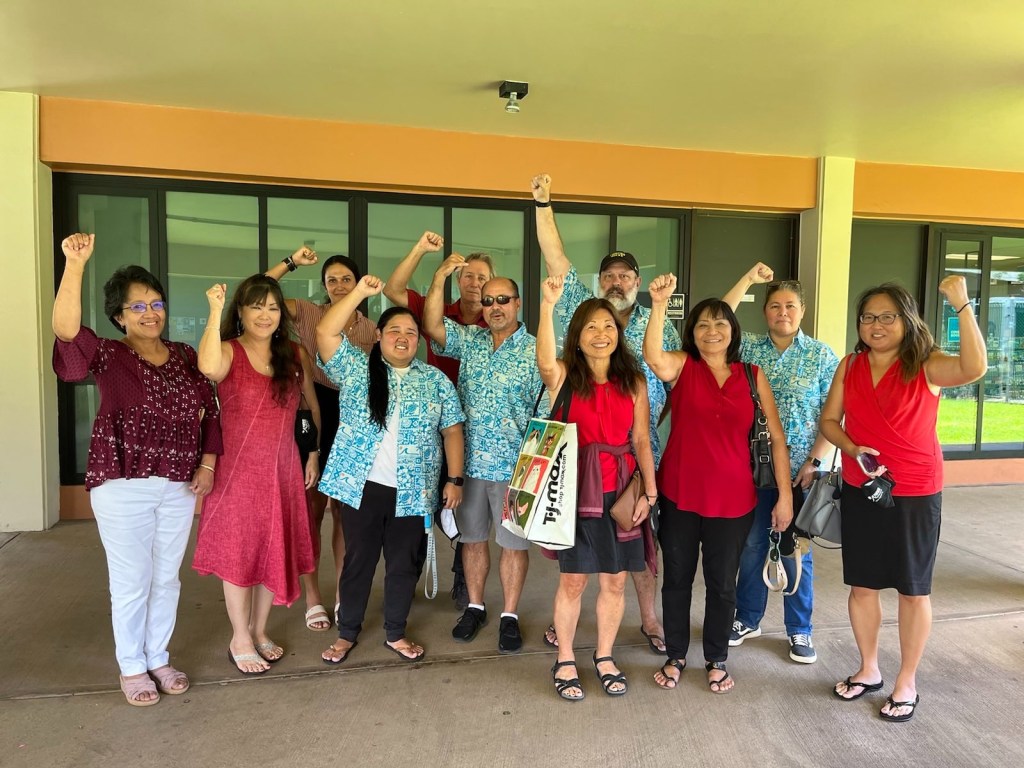
In June the West Virginia-based media company Ogden Newspapers announced its intent to sell the paper amid yearslong contract negotiations with the Pacific Media Workers Guild, which represents the paper’s union membership. Ogden has owned The Maui News since 2000.
Lee Imada, who retired from the paper after a 39-year career in 2020, said constant cuts and downsizing have been a blow to the community.
“As a recently departed managing editor, I tried to pass the torch,” Imada said. “Something was given to me and I wanted to make sure that it got passed on for the next generation of readers to have and, unfortunately, it doesn’t look like that’s going to happen. I hope they can survive in this form but it certainly isn’t going to be the paper that I grew up with.”
Newsroom cuts have become an industry norm driven by evaporating profits. Nationally, local papers are dying at a rate of two per week.
In Hawaii, some neighbor island papers struggling to find enough drivers to get newspapers delivered on time have pivoted to postal delivery. For some subscribers, this means the paper arrives in the afternoon, after the news on its pages has already gone stale.
Other signs of a weakening local news industry include staff furloughs, voluntary buy-outs and ownership changes.
The Honolulu Star-Advertiser changed hands in March as part of a court-supervised debt sell-off. The state’s largest newspaper, as well as The Garden Island on Kauai, The Hawaii Tribune Herald, West Hawaii Today and Midweek, is now owned by Carpenter Media Group, which owns more than two dozen small town newspapers in Louisiana, Mississippi and other Southern states.
The Garden Island, Kauai’s newspaper of record since 1901, has long struggled to retain editorial staff, relying on a revolving door of mainland recruits to fill a dwindling number of newsroom positions.
Lanai Today failed to publish a May edition last year after the paper lost its editor and lead writer, Nelinia Cabiles, who took over when billionaire Larry Ellison bought up the island’s only dedicated news source.
West Hawaii Today recently lost its lead reporter, Nancy Cook Lauer, whose yearslong investigation of Billy Kenoi exposed the former Big Island mayor’s misuse of a county-issued credit card. The Molokai Dispatch lost its longtime editor and lead reporter, Catherine Cluett Pactol, in August.
The loss of coverage in Hawaii has meant reporting on the bread and butter of local government simply isn’t as robust as it once was.
“We wanted to go down fighting,” Imada said of the newsroom sentiment when he was a leader at The Maui News facing a difficult financial forecast a few years ago. “My only gripe is that we didn’t get to do that. It just seems like part of the death spiral of the newspaper industry.”
Civil Beat’s coverage of Maui County is supported in part by a grant from the Nuestro Futuro Foundation.