

Proponents Look To Create A New Hawaii Marine Sanctuary ASAP In Case Of A Trump Return
UPDATED: The former president, currently locked in a close race with incumbent Joe Biden, considered changes to Papahanaumokuakea when he was in office.
A proposed national marine sanctuary is on pace to take shape in the Northwestern Hawaiian Islands by early 2025, and supporters hope that timeline will make it harder to roll back the environmental protections there if former President Donald Trump retakes office next year.
Federal fisheries officials are gathering public comment at meetings across Hawaii for the proposed Papahanaumokuakea Marine National Sanctuary, which would have the same boundaries as the existing national monument that covers a vast ocean area. Unlike the monument, the sanctuary would not include the islands, only the water.
Once the public comment period ends, in early May, the National Oceanic and Atmospheric Administration will prepare the final documents to designate the new sanctuary. NOAA expects to have those documents completed this winter, according to the agency’s timeline.

The monument is already one of the largest so-called marine protected areas on the planet, prohibiting commercial fishing, oil drilling and other impacts within a more than 582,000-square-mile area.
However, in 2017 Papahanaumokuakea was among the more than two dozen national monuments that came under review during the Trump administration to be potentially shrunk, changed or even eliminated altogether.
Ultimately, Papahanaumokuakea did not see any changes under Trump.
Nonetheless, some conservationists and Hawaiian cultural practitioners hope that establishing a sanctuary on top of the monument will bolster environmental protections so that they withstand any further attempts at change.
Monuments are created by presidents under the Antiquities Act — and they can be changed by those presidents’ successors. Sanctuaries, meanwhile, require an act of Congress to be dismantled.
In the “previous administration, there were a lot of attempts to roll back protections,” said Kekuewa Kikiloi, a member of the Papahanaumokuakea Marine National Monument Cultural Working Group. “We want to make sure these things are durable to last regardless of who becomes president.”
President Joe Biden has supported more marine environmental protections in the Pacific. Last year, he launched a separate process to expand and increase the Pacific Remote Islands Marine National Monument, making that ocean area a sanctuary as well.
Biden, however, is locked in what polls show to be a tight reelection bid against Trump.
Hawaii Sen. Brian Schatz, who introduced the provision in Congress requiring the NOAA to pursue the sanctuary designation, added in a statement Thursday that it would result in “more lasting protection for the area with greater safeguards for its natural and cultural resources.”
The proposed sanctuary would also build on the monument’s existing protections and close some enforcement loopholes there, said Eric Roberts, NOAA’s superintendent of the monument.
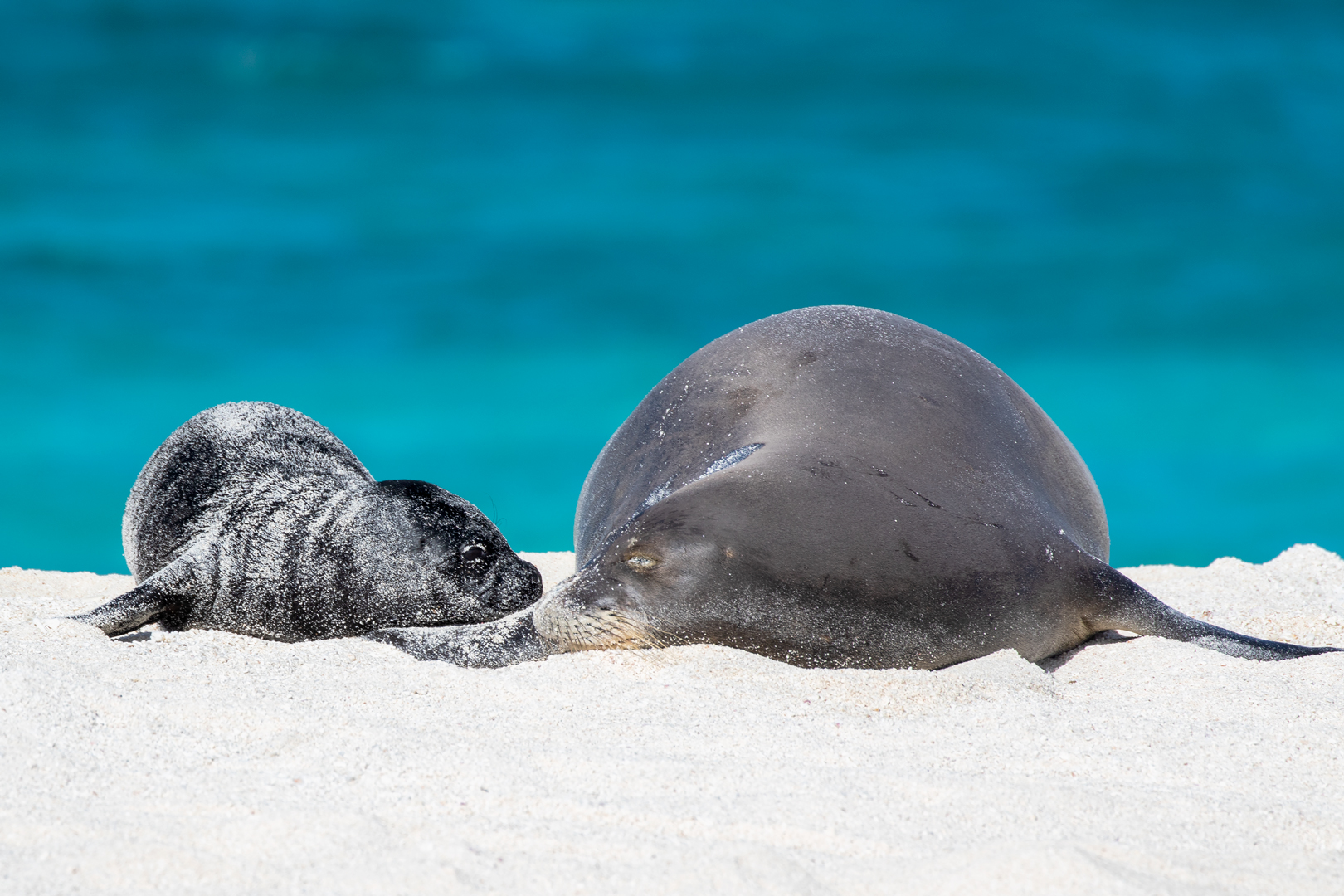
Specifically, the sanctuary would create new regulations and a civil penalty schedule to be enforced against commercial fishing and other violations across the entire expanded monument that extends 200 miles offshore, Roberts said. Currently, those measures are only in place for the original monument area that was created in 2006 and extends 50 miles offshore, he said.
The sanctuary would also add a “natural resource damage program” that allows authorities to hold anyone who damages the environment in that area liable for their actions, he added.
Roberts said the NOAA doesn’t anticipate significant costs to manage the sanctuary because it would rely on the same staff as the monument. “It would just bring additional resources to the table … to have more options available,” he added.
The Office of Hawaiian Affairs co-manages the monument but it wouldn’t be able to do so for the sanctuary under the National Marine Sanctuaries Act, Roberts said.
The Western Pacific Regional Fishery Management Council, which monitors fish stocks across the Pacific, urged Trump during his term to open up marine monuments to commercial fishing as his administration explored lifting various environmental regulations.
Previously, some Wespac council members aimed to use the sanctuary designation process to try and permit commercial fishing within Papahanaumokuakea. Then, in December 2022, the Council issued a proposal that it said would prohibit commercial fishing but still potentially allow for Hawaiian subsistence fishing in the monument with a process that it described as “customary exchange.”
Critics of the proposal, including Hawaii Rep. Ed Case, expressed concerns that the amount of fish permitted under Wespac’s suggestion would open the monument back to commercial fishing.
On Wednesday, a Wespac spokesperson said that the group is not proposing that commercial fishing be allowed within the proposed sanctuary. The Council plans to submit written comments on the sanctuary by the May 7 deadline to get those in, according to that spokesperson, Amy Vandehey.
Public comment meetings wrapped up this week on Oahu, and they continue next week on the neighbor islands. People can also submit comments electronically, and the comment period ends May 7, according to the NOAA website.
Civil Beat’s coverage of climate change is supported by The Healy Foundation, Marisla Fund of the Hawaii Community Foundation and the Frost Family Foundation.

