

Hawaii Moves To Improve Water Testing At Popular Beaches
Advocates have been pushing the state for years to increase how often it tests popular swimming and surfing beaches for harmful bacteria.
Earlier this month, state water quality testing found bacteria levels at Waikiki’s popular and tourist-friendly Kuhio Beach that were high enough to pose health risks to swimmers there.
Usually, when such risky bacteria levels are found the Department of Health performs a follow-up test to confirm the result. Then, it posts signs alerting beachgoers who might go in the water.
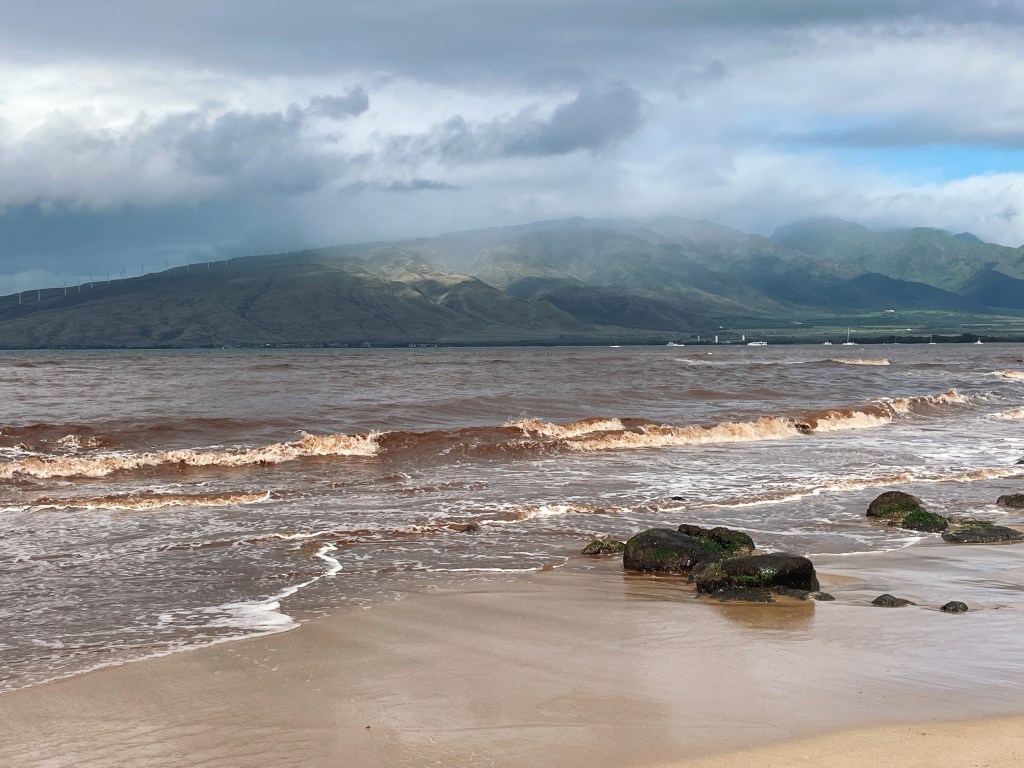
However, no such follow-up test took place that week at Kuhio — and no signs were posted on the beach — because on May 16 the heavy rains that had recently hit Oahu triggered an island-wide brown water advisory that lasted nearly a week. DOH pauses its water quality testing whenever those advisories go into effect.
That policy, which water quality advocates say creates a troubling information gap for beachgoers, appears to be changing.
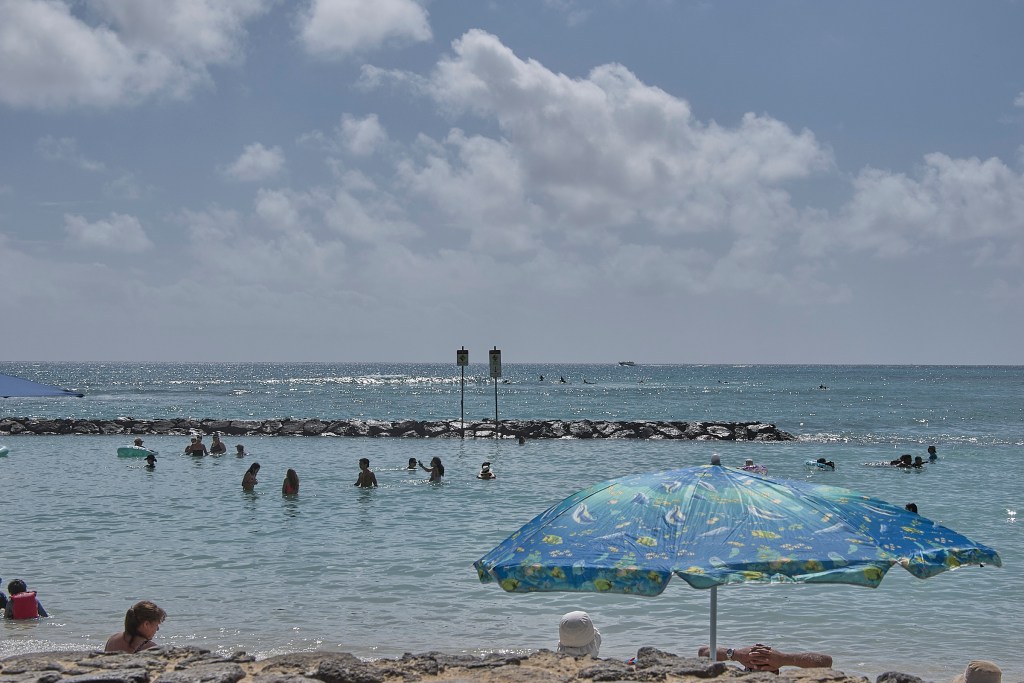
Officials with the agency’s Clean Water Branch recently told a state lawmaker they’re revising the state’s beach monitoring program so that water quality testing can continue at Hawaii’s most heavily used beaches even when they’re under a brown water advisory.
Advocates for more robust testing have lobbied for years to get the change, saying that the current approach to exclude testing in brown water advisories leaves the public without critical water quality data across Hawaii’s beaches.
For nearly a decade, “Hawaii has been … suspending its testing where you expect to have high bacteria levels and want to have an understanding of how high those levels are,” said Lauren Blickley, the Hawaii regional manager for the Surfrider Foundation.
“At the end of the day we want the public to be informed” before they go in the water, she said.
Surfrider volunteers help supplement the state’s water quality testing by taking their own samples at beaches that DOH doesn’t visit, Blickley said.
Previously, DOH has argued that it’s unnecessary to test areas under a brown water advisory because those areas are almost certainly getting elevated levels of the bacteria enterococcus, which is what the state tests for, due to the heavy runoff. The testing takes away from the Clean Water Branch’s limited resources, it said.
But that approach can also leave some waters without official state testing for extended lengths of time, including the entire island of Maui, which was under a brown water advisory for almost three weeks in January, according to Blickley.
During that period, Surfrider did its own testing across the island and found areas where it was actually safe to go in the water, she added. Thus, the testing not only helps beachgoers avoid health risks but it also enables them to take advantage of the areas that are safe.
DOH does not post signs at beaches under brown water advisories. Instead, it’s up to the public to look up that information on its website or to sign up with the agency for email alerts.
“That’s been a huge issue,” Blickley said.
“I think it’s an important tool to have the online alerts,” she said. However, “the best way to communicate the need to stay out of the water is having a sign posted at that specific beach.”
Bill Would Have Forced Brown Water Testing
A bill that would have forced DOH to test during brown water advisories abruptly died at the end of this year’s legislative session even after the final version received support from the agency itself.
That DOH support came after several meetings during the session between lawmakers, Surfrider and DOH to discuss possible solutions, according to Sen. Maile Shimabukuro, whose constituents along the Waianae Coast often voice complaints about the water quality and press for more information.
“There’s a void of data, it’s a frustration on the part of the public,” Shimabukuro said.
Darryl Lum, a program manager with the Clean Water Branch, was receptive to their concerns and found that the division could test so-called “Tier 1” beaches — sites that are either heavily used, very prone to pollution, or both — without needing additional money or resources, both Shimabukuro and Blickley said.
“We were thrilled because all along they kept saying they can’t do it without more money,” Shimabukuro said Thursday. “It was so appreciative that DOH worked that hard to come around.”
It’s not clear why the bill died during the Legislature’s end-of-session conference meetings, which occur behind closed doors. On Thursday, Shimabukuro said it was a mystery.
In an email correspondence on the bill that Shimabukuro shared, she said she believed that it died due to “political rather than substantive reasons.”
Nonetheless, on April 30, Lum told Shimabukuro in that same email chain that DOH was moving forward with the change to test Tier 1 beaches during brown water advisories even though the measure didn’t pass.
Lum said that he’s already reached out to the federal Environmental Protection Agency, which oversees the state’s water quality testing plan, and that the process would also involve a public comment process.
It’s not clear how long the process will take to complete. DOH did not respond to a request Friday to speak with Lum or other officials familiar with the policy change.
Blickley was encouraged by the development, however.
“We’re very excited to take this next step with the Department of Health and move forward on … more robust data on our water to help keep people safe,” she said Friday.
Unlike many coastal states on the mainland, Hawaii’s beaches see year-round recreation, making the constant testing especially important, she added.
“We’re in the water, as a community, throughout the year and all the time.”

