

Miske Defense Denies His Involvement In Conspiracy And Casts Doubt On Government Narrative
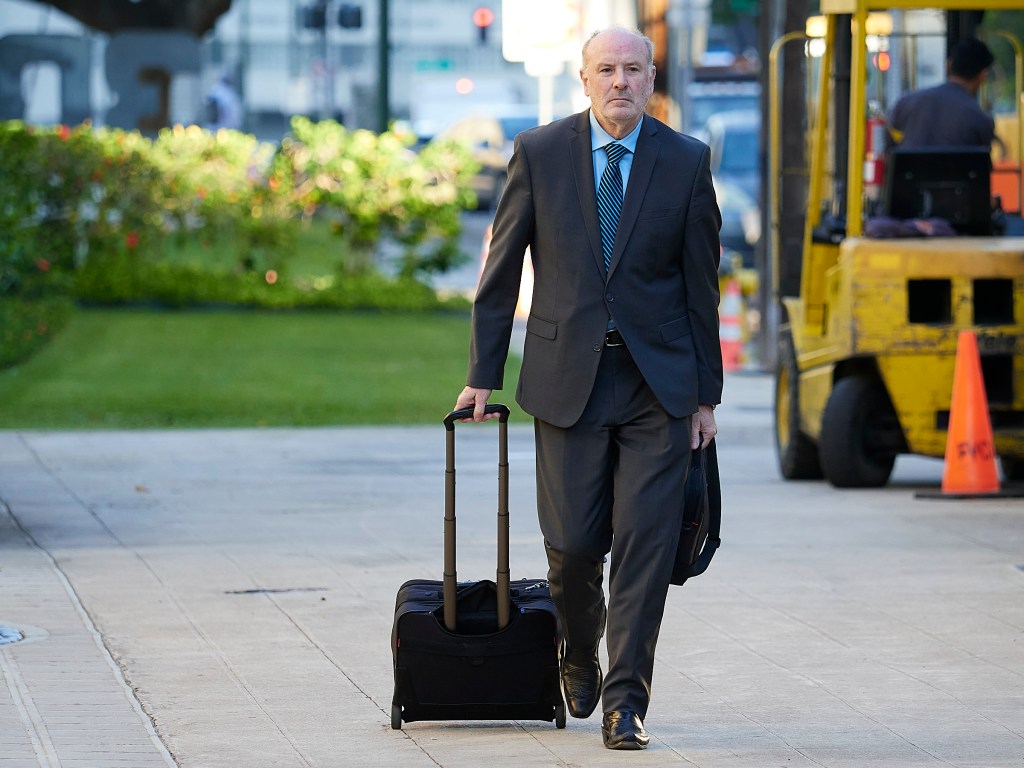
Michael Miske’s defense attorney Michael Kennedy told jurors the government had “blind spots” when investigating his client and questioned the credibility of some of its key witnesses.
Michael Miske’s defense attorney on Friday denied his client’s involvement in what prosecutors called a “criminal underworld” and described Miske as a successful businessman who was wrongfully accused of having a hand in crimes carried out by others around him.
Defense attorney Michael Kennedy attacked the credibility of many of the witnesses the government called throughout the six-month trial, most notably that of Wayne Miller, a man prosecutors say was groomed by Miske from a young age and served as a lieutenant in his criminal organization.
Kennedy called Miller a criminal of his own accord who honed his skills as a crook during an eight-year prison sentence while Miske was on the outside building a reputable business — Kamaaina Termite and Pest Control.
Kennedy also pointed out that the government hasn’t provided evidence to explain who killed 21-year-old Johnathan Fraser or what happened to his body. Miske is charged with murder in aid of racketeering and murder-for-hire conspiracy resulting in death in connection with Fraser’s killing in 2016. Miske has pleaded not guilty to all 16 counts he faces.
Kennedy told jurors he’s never suggested that Fraser is still alive, but said the case is still a missing persons case because his body has never been found and investigators have not determined how he was killed. Fraser has not been seen or heard from since July 30, 2016.
The government’s circumstantial evidence surrounding Fraser’s death is “merely speculation,” Kennedy said, and he accused authorities of having “blinders and blind spots” throughout the course of their investigation.
“The prosecutors and the FBI have relied upon the unreliable here, and when you rely on the unreliable, what you end up with is reasonable doubt,” he said.
Assistant U.S. Attorney Mark Inciong said during his rebuttal that jurors are not required to determine what happened to Fraser in order to find Miske guilty of the counts he faces. He told jurors during his closing arguments Thursday the government has shown sufficient circumstantial evidence to prove Miske conspired to have Fraser kidnapped and killed.
An Alternate Theory Of Fraser’s Disappearance
Kennedy said investigators immediately suspected Miske after Fraser’s disappearance and failed to follow up on other credible leads.
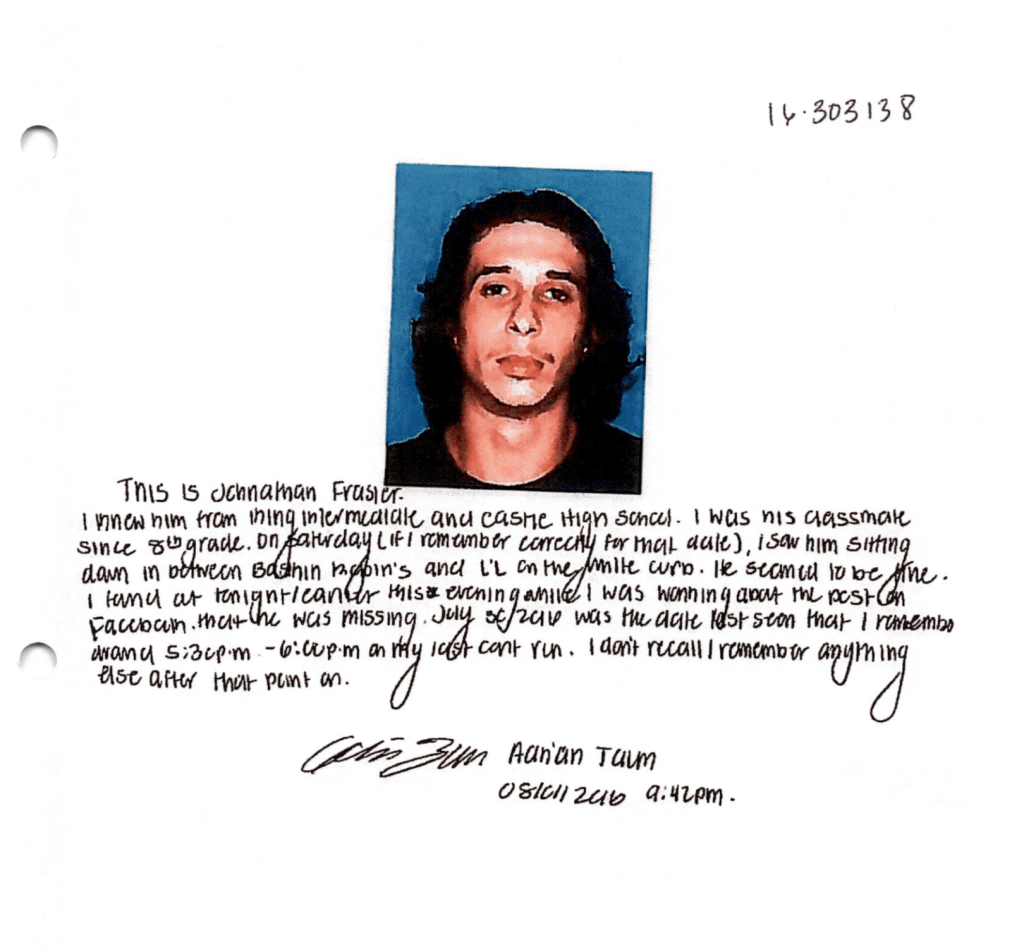
He brought up a statement given to the FBI by a former classmate of Fraser’s, Adrian Tam, who said he saw Fraser sitting on a curb at the Windward City Shopping Center between 5:30 and 6 p.m. on July 30, 2016. Prosecutors say Fraser went missing that morning.
About a week after his disappearance, Fraser’s car was found parked on Summer Street in Honolulu where a witness said it had been for about a week. Kennedy said evidence in the car pointed to Fraser having been the last one to drive it — his hat was in the passenger seat; the driver’s seat seatbelt was buckled, which Fraser usually did in order to sit on top of it while driving; and the fingerprints found inside the vehicle all belonged to Fraser, except for one print that has yet to be identified, Kennedy said.
After the car was found, a Honolulu police dog tracked Fraser’s scent to a house on Kuliouou Road, which runs perpendicular to Summer Street. Despite the dog alerting police to the scent of human remains in the area of house, they failed to search the property, Kennedy said.
In his rebuttal, Inciong said the dog was a cadaver dog that alerts handlers only to the presence of general human remains and would not track an individual person’s scent.
Kennedy said Fraser’s loved ones withheld information from police in the days after his disappearance. His father, for example, didn’t tell authorities he saw his son getting into a fight outside the vape shop he frequented just days before he went missing. His then-girlfriend, Ashley Wong, also didn’t tell police Fraser had a brain injury and wasn’t taking his antipsychotic medications properly.
Inciong said the defense’s theories that Fraser’s brain injury combined with his marijuana use and failure to take his medication as prescribed would lead him to wander off were “pure speculations.” He asked the jury if they thought Fraser would still be missing despite all the efforts to find him if that theory were true.
Finally, Kennedy flipped the government’s narrative that Miske had blamed Fraser for the car crash that ultimately led to Miske’s son Caleb’s death. Prosecutors say Miske falsely accused Fraser of driving at the time of the crash and told multiple people he wanted the young man dead because of it.
But Kennedy said Miske blamed himself for Caleb’s death. Caleb died in the hospital four months after the crash as a result of an infection that developed in his leg and spread to his brain. Miske had previously decided not to have doctors amputate his son’s leg.
Defense Pins Conspiracy On Miller
Kennedy described Miller, who pleaded guilty to a single count of racketeering conspiracy in 2020 as part of a deal with prosecutors, as someone who lied to investigators for years, was a notorious drug dealer and at one point lived with such a serious addiction to OxyContin that it cost him $2,000 a day.
Prosecutors say Miske was in his 20s when he met 15-year-old Miller and starting grooming him to become a major player in his criminal enterprise. But Kennedy said the two were friends and Miller learned his criminal ways while serving a prison sentence for bank robbery.
When Miller got out and started selling “kilos and kilos and kilos” of drugs, Miske was running a legitimate business that employed more than 100 people, Kennedy said.
So why didn’t Miske cut Miller off? Kennedy asked. He said Miske had a lifelong sense of abandonment because his father died by suicide from swallowing cyanide when Miske was just 6 years old.
It was Miller who was the mastermind behind many of the crimes Miske is accused of conspiring to commit, Kennedy said.

Miller planned the 2017 kidnapping of accountant Robert Lee with Preston Kimoto, Kennedy said. And it was Miller who colluded with another former associate and government witness, Jacob Smith, while in federal prison and discussed how the two would “sink Mike,” referring to Miske.
Kennedy said Miller had a strong incentive to lie and try to pin everything on Miske because without his cooperation agreement, he was facing a life sentence without parole. But Inciong countered that if any cooperating witness lies on the stand, any potential benefit they might receive from the government would be lost.

Kennedy questioned why prosecutors didn’t call certain other cooperating witnesses to the stand, such as Lance Bermudez, a former Miske co-defendant who pleaded guilty to three felony counts related to participating in a racketeering conspiracy in 2022 as part of an agreement with prosecutors. According to his plea agreement, Bermudez burned a Toyota Sienna van that prosecutors say was used in Fraser’s kidnapping.
If Bermudez was going to link the burned van to Fraser’s kidnapping, why wouldn’t prosecutors call him? Kennedy asked.
Inciong said in his rebuttal that jurors can’t speculate about why the government didn’t call Bermudez as a witness, though he also did not give them a reason. He said the defense also had the power to call witnesses.
Finally, Kennedy repeated a point he made during his opening arguments and showed the jury a slideshow of photos depicting various “cultural treasures” being fumigated by Miske’s pest control company, including the Waikiki Shell, the Polynesian Cultural Center and the Hokulea voyaging canoe, a job Miske’s company did as a donation.
“What it is is a story of success,” Kennedy said. “But they call it racketeering.”
Inciong said in his rebuttal he had been wondering if the court would have to see “one more Kamaaina Pest Control infomercial” and called the accolades about Miske’s work irrelevant to the case.
When Inciong finished his rebuttal, Judge Derrick Watson dismissed jurors to elect a foreperson and begin their deliberations. Jurors left the building just after 3 p.m. and will resume deliberations on Monday.

