

New Development Begins On Former Turtle Bay Resort Land Near Kahuku Point
The area was the focus of decades of political and legal efforts to preserve sensitive habitat that includes 5 miles of coastline.
Construction of new residential units on Oahu’s North Shore is scheduled to begin in October after two Utah-based development companies purchased 65 acres from the owners of the Turtle Bay Resort.
Arete Collective and the Wasatch Group plan to build up to 350 units on permitted land east of the resort complex.
It’s the first new construction since a conservation agreement was signed in 2015 preserving 625 acres of open space between Kawela Bay and Kahuku Point while still allowing for some development.
Community and environmental groups have historically pushed back on attempts to develop the environmentally sensitive area. Added traffic congestion was a major concern for North Shore residents when the resort previously wanted to expand but developers say that’s not an issue anymore.
Commitments to natural preservation have been repeated over the years, the North Shore Community Land Trust’s executive director Adam Borrello said, and now “the community will be watching everything very closely.”
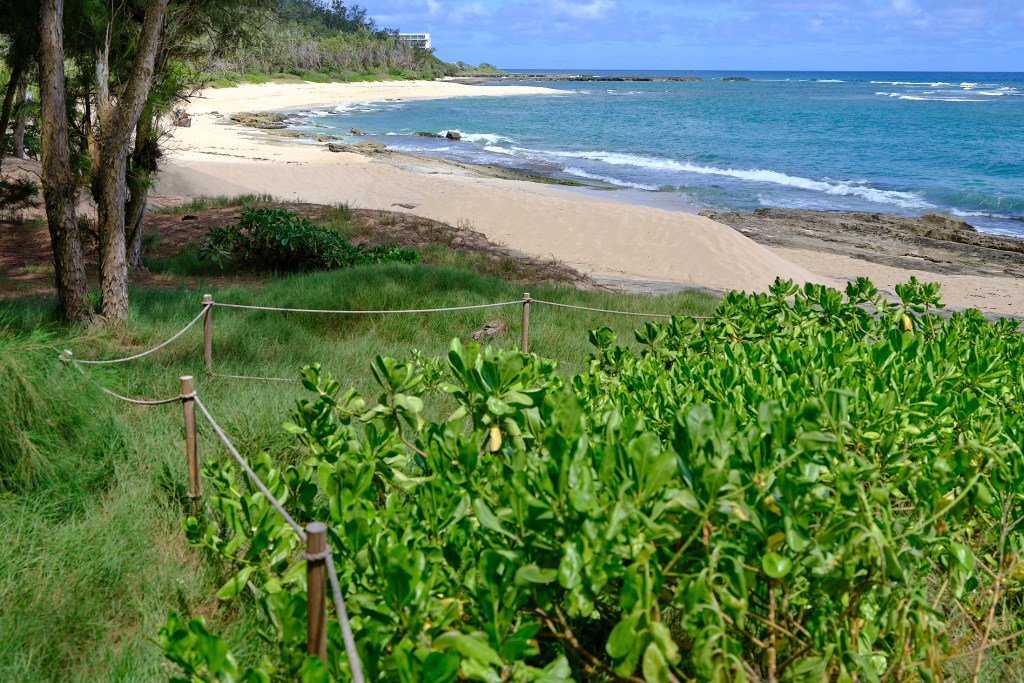
(David Croxford/Civil Beat/2024)
The new building will be done sustainably and with an eye to the area’s unique qualities, co-developer and CEO of Arete Collective Rebecca Buchan said.
“We’ve tried to convince people that you’d much rather have us doing this because we actually care about what you have to say, we care about the land and we care more about the North Shore than a big corporate development company,” she said.
Protections, But Development As Well
Any development on the site must comply with legal obligations laid out in two documents.
The first is a unilateral land use agreement between the county and the resort from 1986. The second is a 2015 conservation easement the state and county signed with Turtle Bay’s then-owner Replay Resort to preserve 625 acres of resort land in exchange for $45 million.
The protected areas include biodiverse habitats, wetlands, an extensive public trail system and two public parks. Two golf courses are included under the agreement to prevent development there in the future. All these features will be managed by the new owners.
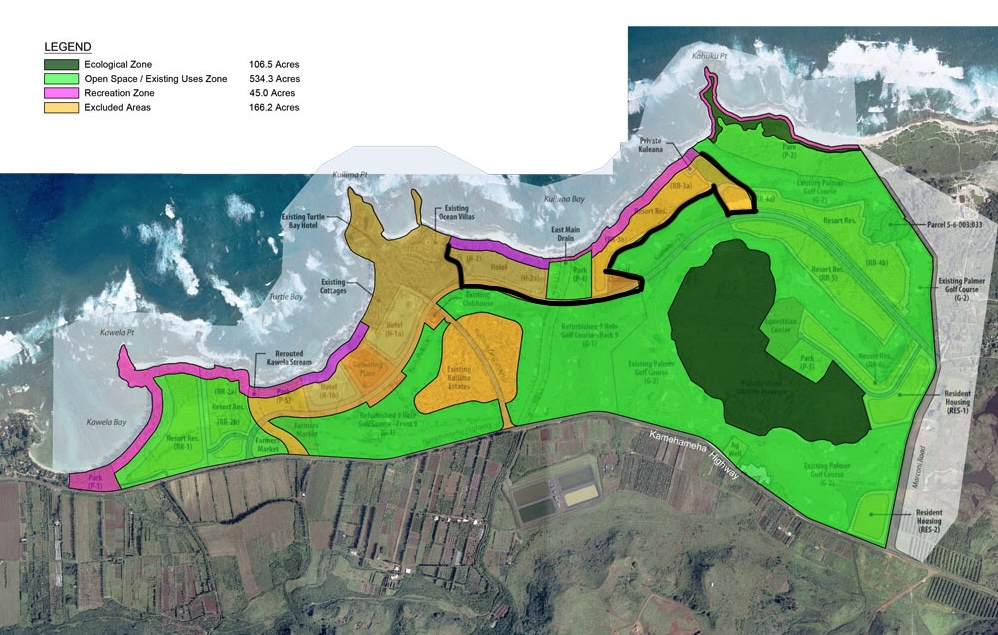
The 2015 agreement came after decades of legal and political fighting between various resort owners and environmental groups. Hailed as a win for the community, the easement still left the door open for some development. The resort was then floating plans for more than 600 units in two additional hotels and 100 homes.
The current plan permits 350 units on two parcels sold to the developers.
Arete and Wasatch have a running start because Arete began working with Blackstone in 2021 as the master planner for the next phase of residential development on the permitted parcels. But Blackstone didn’t proceed and sold 65 acres to Arete and Wasatch for $43 million in April and the resort to Maryland-based Host Hotels & Resorts in May for $725 million.
The resort deal includes another 49 acres that could still be developed by the new owner.
Buchan said Arete and Wasatch had been consulting with community groups about their development plan before the land sale, including with the Koolauloa Neighborhood Board. Calls and emails to board members were not returned. A spokesperson for the Kahuku Village Association said they had not yet had any contact.
While previous owners of Turtle Bay have been “in-it to flip-it,” Buchan said Arete and Wasatch were committed long-term. And the resort’s new owner Host, which will operate the resort under the Ritz-Carlton flag, “seems to be very sensitive to all the things we’ve been discussing with the community,” she said.

Work has begun on a 33-acre block zoned resort residential that will eventually include 20 buildings with five units in each. Water and vehicular access is being put in this month, Buchan said. Building should start in October and they expect to hand over keys to the first 20 units in four buildings by 2027.
All the buildings will comply with the existing height limit of 90 feet, with some additions planned to reach 65 feet, although it is unclear which.
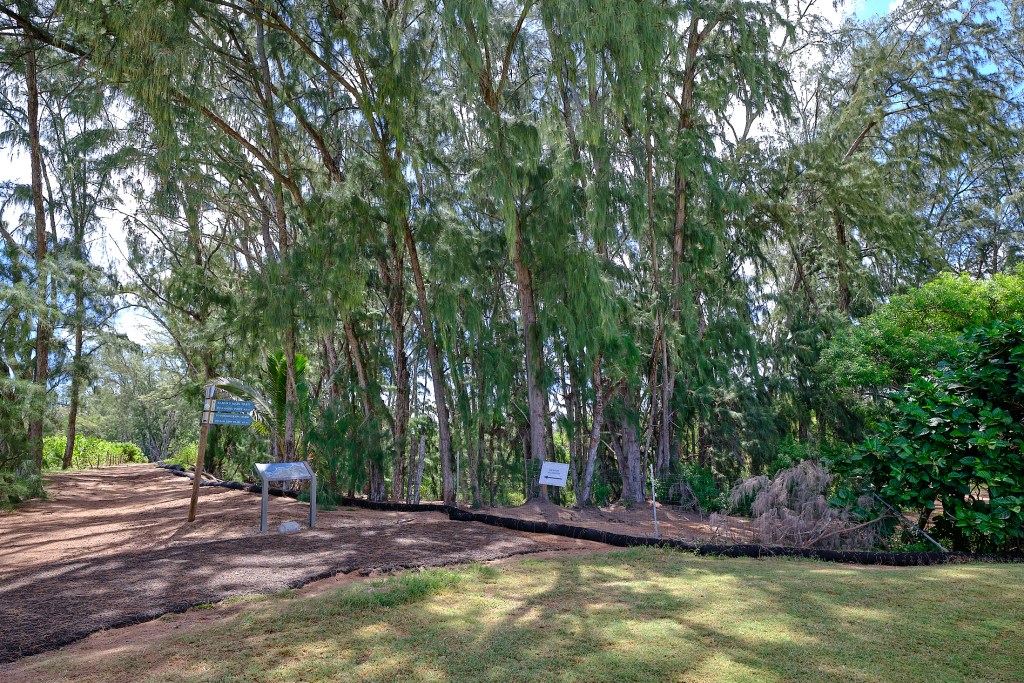
During a site visit last week, crews were grading and removing vegetation and non-native trees like ironwood. That clearing created concern among locals, the company’s landscape architect Kris Kvarfordt said, but removing invasive species was part of the forestry management plan.
“The trees have been the hardest and that’s probably what we’ve spent the most time talking about to people walking along the trails,” Buchan said.
The new buildings will be set back 150 feet to 350 feet above the high water line. As of July 1, shoreline setbacks on Oahu are required to be between 60 feet to 130 feet from the certified shoreline.
“We’ve tried to retreat from the ocean as far as we possibly can,” she said.
Kvarfordt said the setbacks are the most significant environmental decision of the project and represented at least a 40-year plan for the new homes. Those measures are also likely to appeal to their buyers.
“They’re going to be people who want to have these homes for a long time,” he said.
Owners will not be able to use the units for short-term rentals under the housing association rules.
The new residences would be connected to the resort’s wastewater management system, and will use residential solar installed by Wasatch’s renewable energy division.
With the Maui wildfires in mind, the project will use fire-retardant building materials and power lines will be put underground where possible, Buchan said. A consultant believes they can reduce water consumption on the golf courses by 50% through a redesign.
Any residential expansion in the area will add to the North Shore’s notorious traffic woes, the most recent study completed in 2012 found. But the two-lane Kamehameha Highway would be able to accommodate the increase with some improvements, the consultant said. Air quality would also be compromised, another study found. That assessment was based on the potential development of 3,500 new units at Turtle Bay.
The 1986 unilateral agreement with the county required the resort to construct three additional intersections before any development begins.
But a 2022 review by an engineer from the state Department of Transportation found that the reduced construction density of the project meant road improvements, including a refuge lane on Kamehameha Highway, wouldn’t be required until 98 units had been constructed. On the current timetable that is likely another five years out, according to Arete.
The developers say they anticipate making other improvements not required under the agreement before then, including linking Kaihalulu East with the main entrance to the resort, Kuilima Drive.
Traffic impact remains a major concern for locals, said Alan Poh of the Defend Oahu Coalition, and the group wants to meet with the developers before the new construction begins.
Mark Garrity, executive director of the Oahu Metropolitan Planning Organization, said the agency is not currently looking at traffic volumes around the resort area.
Fragile Coastal Habitat
The scale of the proposed development is within the guidelines of the final supplemental environmental impact statement for the site from 2013, but the potential for environmental disruption still exists.
Right next to the proposed area is the fragile coastal dune environment on Kahuku Point — Kalaeokaunaʻoa — which is the subject of a restoration effort by the North Shore Community Land Trust. The sandy strip is a habitat for albatross, sea turtles and monk seals, among other species.
The trust played an important role in establishing the conservation easements on both the makai and mauka parcels at Turtle Bay, and while they haven’t seen all the details, Borrello said the new owners appear to be “attempting to be responsive to the needs of the community” in the first phase of development.
Borrello said Arete and Wasatch seem genuinely interested in the environmental stewardship the land trust is doing with the community, “so we’ll make sure we’re involved in all the conversations so that all the promises and obligations in the relevant documents are lived up to.”

Arete and Wasatch take ownership at a time when the state Department of Land and Natural Resources is seeking $3 million in fines from an owner of land on nearby Marconi Point over the destruction of native bee habitat and the death of a nesting albatross, among other infringements.
Buchan said she was aware of the issues there and was hopeful her company’s presence could be a positive influence on their neighbors. “I think there’s a lot of opportunity for us to help bring back the ecology of the dune system,” she said, including coastal habitat in front of the site they are starting to build on.
Kvarfordt said they planned to use the expertise of groups like the land trust to educate their own workforce and staff on environmental issues, and also actively engage new owners with restoration projects in the future.
Matt Weyer, the Honolulu City Council member for the district, said he had been on several Zoom meetings with Buchan and her team and was grateful they were engaging in community outreach. Weyer said his main contact with the developers had been to remind them of the legal obligations under the conservation easement and the unilateral agreement.
Once Host Hotels & Resorts formally assumes ownership of the resort, Weyer said there may be room for modifying some aspects of the 1986 unilateral agreement like the road improvement requirements. Borello from the land trust agrees.
The Kahuku Point development is on the smaller side of Arete’s portfolio, which includes a 2,200-acre development with 3,500 homes outside Austin, but definitely their most boutique. Arete and Wasatch already have a presence on Oahu through their involvement in the Laulima affordable housing development in Kapolei.

