

Native Hawaiians And Farmers Are Asking Why A Key Vacancy On State Water Board Is Going Unfilled
Gov. Green received a short list of candidates for the seat, reserved for a customary water expert, five months ago. Now, his administration says recent issues arose with some applicants.
Native Hawaiian community advocates are growing increasingly concerned as more time passes without a designated expert in traditional stream water rights and uses sitting on the state’s pivotal water board, especially after last year’s devastating Maui fires.
Gov. Josh Green received a short list in February of four recommended candidates to fill that seat, which is reserved for a customary water loea, or expert, to serve on the Commission on Water Resources Management, or CWRM. Green has yet to make an appointment.
The last person to serve in the loea seat was Neil Hannahs, whose term expired June 30.
Kalo farmers and other cultural advocates had hoped Green would appoint someone during this year’s legislative session so that lawmakers might confirm his pick in time to replace Hannahs. Green has not indicated when a selection might be made, but any permanent pick will likely have to wait at least until next year’s session for confirmation.

“You’re going a whole year, or many months, without that Hawaiian cultural perspective” on the seven-seat commission, Hannahs said. One of the commissioners, University of Hawaii geography and hydrology assistant professor Aurora Kagawa-Viviani, does bring “a powerful voice” on those issues, he added. Still, “one would hope for a better outcome” in filling the designated loea seat, Hannahs said.
Green’s office on Wednesday referred requests for an update on the appointment to the state’s Department of Land and Natural Resources, which oversees CWRM.
Dean Uyeno, CWRM’s acting deputy director, said in a statement that issues recently arose with some of the applicants based on new information, but he didn’t say what those issues were.
CWRM is discussing options with the state Attorney General’s Office for the special nominating committee that gave Green the short list of names to consider, Uyeno said. The commission is also reaching out to that nominating committee’s members to see how they’d like to proceed, Uyeno added.
The hold-up took center stage earlier this week at the annual Hawaii Conservation Alliance conference, when University of Hawaii William H. Richardson School of Law Professor Kapua Sproat called out Green for not filling the water board’s cultural seat.
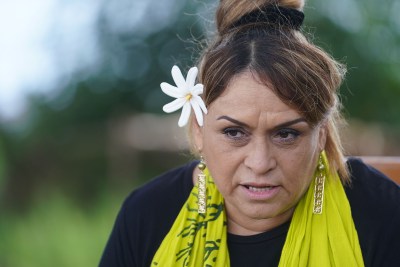
“To me, one of the huge lessons of the (Lahaina) fire was the failure of leadership that we continue to see. The governor’s had a short list of names to fill that practitioner’s seat since February,” Sproat told some 1,400 people gathered for the conference’s keynote panel discussion. “That short list of people … is a list of some of the most qualified people I’ve ever seen nominated for the water commission.”
CWRM did not make the names on the short list public, but Hawaiian community members managed to swiftly deduce who they were: Molokai community activist Lori Buchanan, UH Manoa School of Hawaiian Knowledge faculty member Makahiapo Cashman, Maui coffee grower Kimo Falconer and Hawaii island marine conservationist Hannah Kihalani Springer.
Hannahs and Kekai Keahi, a West Maui kalo farmer, each said that most advocates would support the appointment of either Buchanan, Cashman or Springer.
Falconer’s recommendation by the nominating committee “took everyone by surprise,” Hannahs added. Falconer could not be reached for comment Thursday.
Buchanan said she had a virtual meeting with Green via Zoom about a week or two after the nominating committee submitted her name on the short list, but she hasn’t heard anything since then.
“I’m in the dark with everybody else,” Buchanan said. “It’s a very important seat for Native Hawaiians and native practitioners in order to advocate on their behalf under the law. It is concerning. You’d think that he would at least appoint an interim” member, she said.
Hannahs said that voice representing customary rights and practices would be particularly significant as the process to rebuild Lahaina gets underway, including decisions on how best to use the area’s limited water supply.
“The question,” Hannahs said, “is what will it look like? Will we just slap up what was there before, or will we think about what was the root cause and the risk” of the Lahaina fire?
“How you manage the water in that is critical. If you’re just looking out for the economic value and how we can get water to the highest economic uses … we’re just going to expose ourselves to another disaster in the future.”

