Kauaʻi Lawmakers Target Housing, Recreation Woes In 2025 Session
With a median home costing $1.4 million on the Garden Isle, lawmakers look to Vail, Colorado, for a solution.
Kauaʻi’s housing market surged more than 20% last year, squeezing out teachers, nurses and firefighters even as the county aggressively funneled money toward affordable developments.
So lawmakers are looking to another outrageously expensive resort community — Vail, Colorado — for solutions to an issue that is top of mind for Kauaʻi residents.
The Kauaʻi delegation, which includes for the first time the speaker of the House and the Senate president, also wants to push new programs that would serve food purchased from local farmers at many of the island’s schools, hospitals and food banks, and to address a string of recreation management issues from Hanalei Bay to Kōke’e State Park.
Kauaʻi legislators introduced the most bills this session to address the island’s housing crisis. Rep. Luke Evslin, chair of the House Housing Committee, said the affordable living squeeze on Kauaʻi is intensifying, with local housing stock dropping as the number of vacant units and vacation rentals climbs. A median-priced home now costs $1.4 million.
The county is aggressively building income-restricted units for people living in poverty, he said, but many in the island’s working class earn too much to qualify for those units but not enough to buy a home at today’s astronomical prices.
Evslin is advancing bills that encourage high-density housing in Līhuʻe, Kauaʻi’s center of industry and government, which he said is key to solving the housing crisis while retaining the island’s rural charm. He also wants to reduce regulation on new development and to make it easier for homeowners to build guest houses or accessory dwelling units.
“Līhuʻe has 60% of the jobs on Kauaʻi but only 25% of the housing,” said Evslin, a Līhuʻe resident. “So at least the goal has to be to be able to house the people that work there.”

Drawing on a successful program in Vail, Evslin is pushing a bill that would allow county government in Hawaiʻi to reach agreements with homeowners to achieve deed-restricted housing, where at least one occupant per household must work a minimum of 30 hours per week at a local business. In exchange for this deed restriction, the homeowner would receive a payout of between 15% and 20% of the property’s fair market value.
Like Kauaʻi, Vail is a major tourist destination with limited developable land. The ski town has spent millions of dollars to purchase deed restrictions on more than 900 homes, effectively shutting out-of-town investors out of a locals-only housing market.
High School Internships, More Pre-K Seats
Like other parts of the state, Kauaʻi is revving up to build more preschool classrooms as it grapples with a teacher workforce shortage. The Kauaʻi delegation supports a funding proposal to hire more teachers and teacher assistants for the state’s public preschools.

Just over half of Hawaiʻi’s 3- and 4-year-olds currently attend preschool, according to the Ready Keiki initiative, which is led by Lt. Gov. Sylvia Luke and aims to expand access to early education. The state estimates that Hawaiʻi needs roughly 400 more classrooms to reach its ambitious goal of providing universal access to preschool by 2032.
“We really want to get to universal preschool education in Hawaiʻi and we’re really making strides but we just have to continue to invest resources — not just in the classrooms but in hiring the teachers and teaching assistants who are needed to make this happen,” said House Speaker Nadine Nakamura, who represents Kauaʻi.
Nakamura also wants the state Department of Labor and Industrial Relations to expand its paid summer internship program for high school students and recent graduates, especially in fields with workforce shortages, such as health care, education and construction.
The bill was inspired by a push to create paid internships for Kauaʻi high school students at Samuel Mahelona Memorial Hospital, Nakamura said. The state-run medical facility neighbors Kapaʻa High School.
Large Boats, Kōkeʻe Cabin Leases
As Kauaʻi rethinks its reliance on the visitor industry amid a statewide push to stave off over-tourism, a slew of bills penned by the Kauaʻi delegation aims to address recreation safety and management.
A bill that would require tour aircraft operators to have aircraft liability insurance coverage of at least $5 million per person was partly inspired by a fatal Kauaʻi helicopter crash last summer, according to Nakamura.
In response to community blowback over yachts and other large vessels overpowering smaller boats in Hanalei Bay, the delegation sponsored a bill to prohibit vessels longer than 75 feet from entering the North Shore’s iconic crescent-shaped bay.
Another piece of legislation would require the Department of Land and Natural Resources to conduct a study of the carrying capacity of Kauaʻi’s Kīkīaola Small Boat Harbor, the gateway to the 17-mile Nāpali Coast.
The number of tour boat companies with permits to operate out of the harbor far exceeds a 10-permit cap enacted by state regulators a decade ago, and tour boat companies have resisted the idea that the state should rein in the number of licenses. A study could help resolve the controversy by determining how much boating activity the harbor can handle without degrading natural resources.
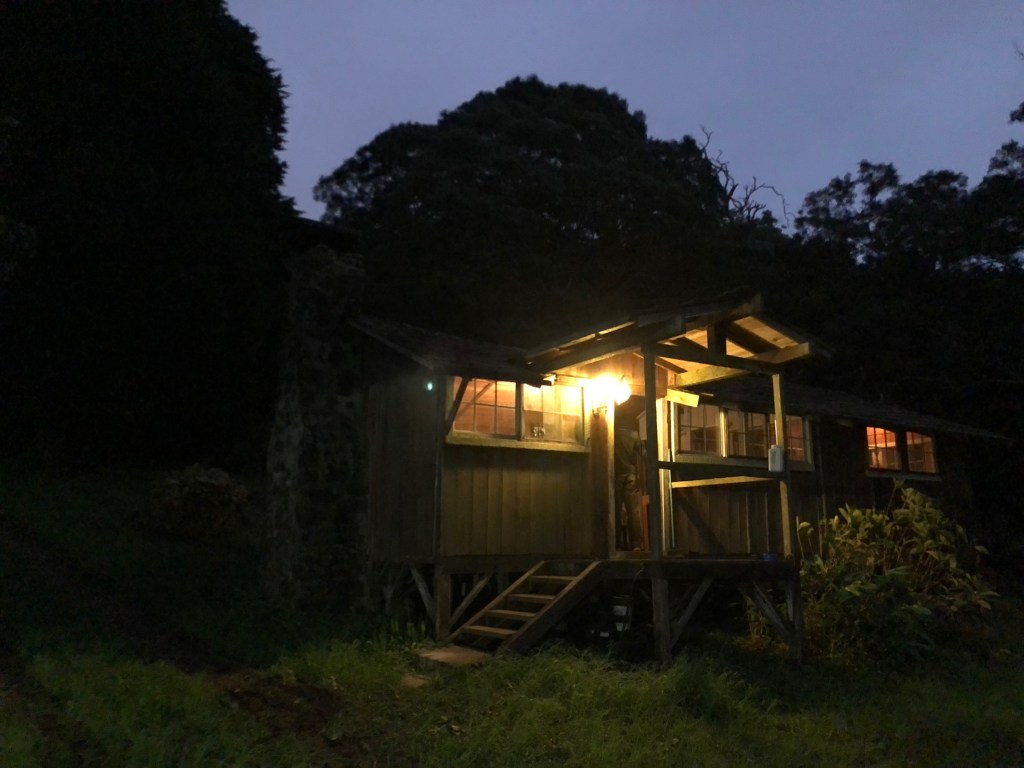
After the price of entry for a coveted lease on a Kōke’e cabin topped $40,000 last April, a bill introduced by Morikawa would pivot to a lottery system for future lease opportunities. The cabins are part of an exclusive community of roughly 125 historic homes in Kauaʻi’s high-elevation wilderness area. Some lack water and electricity and require four-wheel-drive vehicle access, while others are equipped with modern conveniences.
“Some of these cabins are really dilapidated and the bids were outrageously high,” Morikawa said, noting that since the auction of seven recreation cabins in April went for between $15,500 and $41,000, local families have been critical of a process that favors deep pockets.
All seven cabins, part of a community of historic state-owned cabins in Kōke’e, had been abandoned for up to a decade before the auction.