

2 Honolulu Officials To Plead Guilty In Kealoha Payout, Avoiding Jail Time
Former Mayor Kirk Caldwell said the deals represent the “last chapter of the Kealoha scandal.”
Three former Honolulu officials have reached agreements with the government to resolve federal charges that they improperly arranged a $250,000 payout to the city’s now-disgraced former police chief.
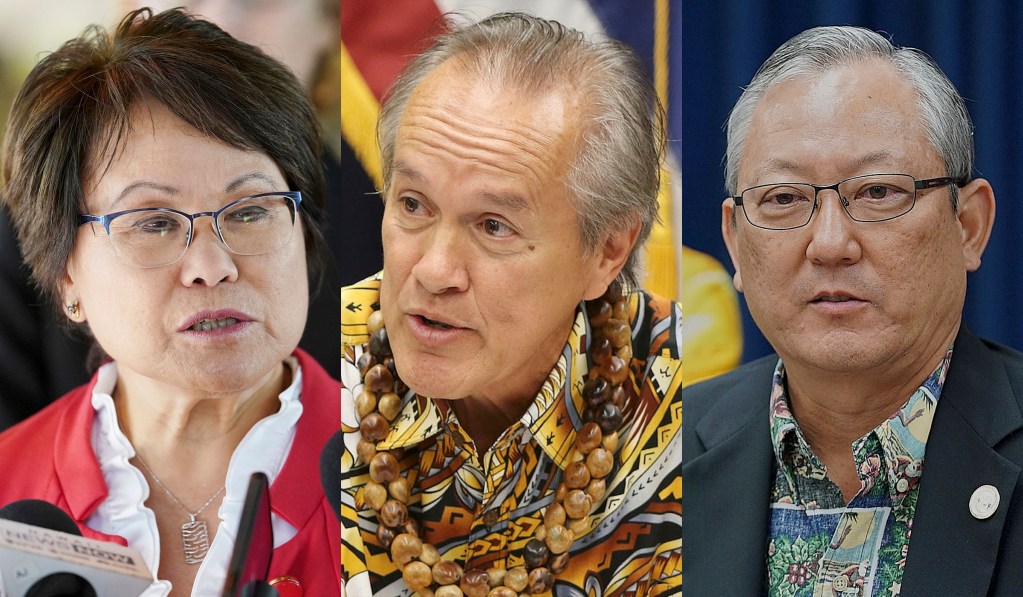
The city’s former top attorney, Donna Leong; former Honolulu Police Commission Chairman Max Sword; and former Managing Director Roy Amemiya were accused of conspiring to circumvent the City Council when they arranged the retirement payment to Louis Kealoha in 2017.
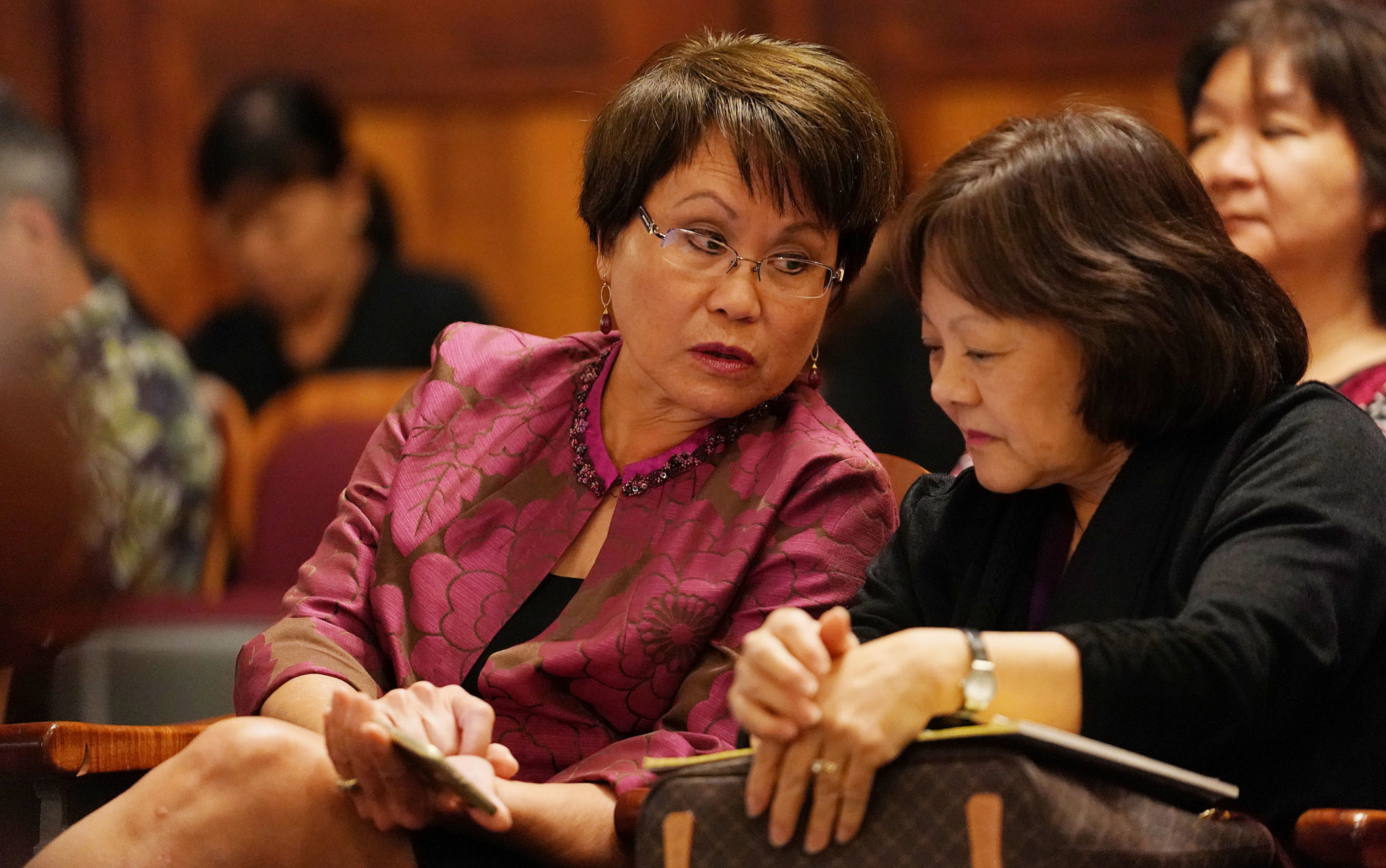
Leong and Sword agreed to plead guilty to misdemeanor charges of conspiring to deprive the residents of Honolulu of their rights, court records show. Under the terms of their deals, each will serve one year of supervised release and pay $100,000 in fines, attorneys told a U.S. District Court judge Monday morning.
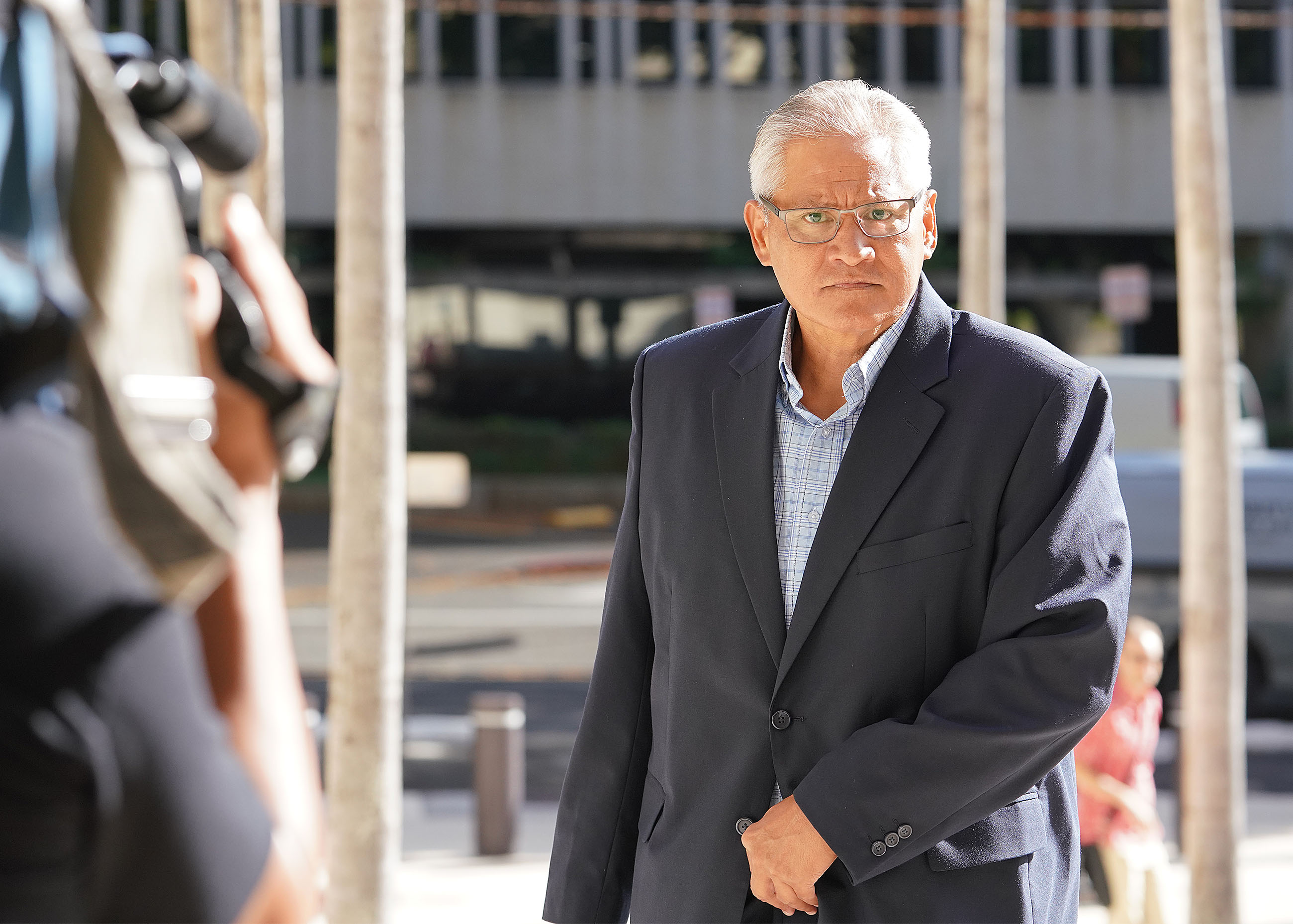
Amemiya signed a deferred prosecution agreement that involves two years of supervised release and allows him to avoid a conviction on the same deprivation of rights charges. He will have to pay a $50,000 fine and perform community service.
Leong, Sword and Amemiya were scheduled to stand trial next month. Instead, a change of plea hearing is scheduled for March 4. Their defense attorneys did not respond to requests for comment on Monday.
The U.S. Attorney’s Office in San Diego, which prosecuted the case as an offshoot of the Kealoha probe, declined to comment. The pleas likely mark the end of the road for the special public corruption unit whose findings rocked Honolulu for a decade.
The case against the three officials centered on city officials’ efforts to sidestep a City Council review of a controversial severance payment and avoid public scrutiny after it was issued.
As of late 2016, Kealoha was a target of a federal investigation in a case that would become one of Hawaii’s biggest corruption scandals, and he had put himself on paid leave.
According to prosecutors, Kealoha, his wife — prosecutor Katherine Kealoha — and multiple police officers had framed a man for a crime he didn’t commit. At the time that Kealoha’s severance agreement was signed, he hadn’t yet been convicted, but the outlines of the conspiracy had started to become clear. One of the officers, Niall Silva, had already pleaded guilty.
The crew had targeted the victim — Katherine’s uncle Gerard Puana — falsely accusing him of stealing the Kealohas’ mailbox in an effort to discredit him in a separate legal dispute.
The Police Commission had the power to investigate the allegations and fire the chief for cause. But Leong expressed concern that firing him would invite a lawsuit from the notoriously litigious Kealohas, former police commissioner Loretta Sheehan previously told Civil Beat.
In secret negotiations, Leong and Sword made up a severance agreement that would pay Kealoha $250,000, according to prosecutors. The payment was in addition to his $150,000 annual pension. It was presented to the police commission as a “take it or leave it” deal, according to Sheehan.
Legal settlements usually go before the Honolulu City Council, but at least some city lawmakers at the time, including Kym Pine and Ernie Martin, appeared disinclined to pay Kealoha to leave.
Leong wanted to use money already budgeted for HPD salaries, a plan that would evade questions from the City Council, according to court records.
Interim Police Chief Cary Okimoto wasn’t comfortable with that plan, and said as much in conversations with Leong and Sword that he secretly recorded, according to court records unsealed last year at the request of the Public First Law Center. HPD didn’t have the money to cover the payout in its budget, he told them, and that he wasn’t comfortable misleading the City Council.
According to a transcript of one conversation, Leong claimed that according to then-budget director Nelson Koyanagi, city money is “fungible” and can be moved “from here to there.”
“Like let’s say you want to pay the recruits or whatever,” Leong said. “When you run out of money, you just re-tell him that you’ve run out of money, request the money. And he will fund it.”
HPD legal counsel Lynne Uyema also expressed skepticism about the deal and asked why the money had to come out of HPD funds. “Oh, the reason it’s very simple,” Sword said, according to a transcript. “So you don’t have to go to the seven bananas, I mean nine bananas up at the council.”
Okimoto told Leong he was not ready to “fib” about where the money was really going. “It wasn’t for … new recruits or contract hires or anything like that. It was for the severance package,” he said.
Ultimately, the police commission approved the payout on Jan. 18, 2017. Sheehan was the lone dissenter.
“I don’t think we want it to become a story or anything.”
Roy Amemiya, former managing director
Even after the payment was issued, officials sought to tamp down criticism of the agreement. According to a transcript of a May 2017 conversation, Amemiya told Okimoto not to raise the topic of the payment at the upcoming council meeting.
“I don’t think we want it to become a story or anything,” he said.
As part of his severance deal with the city, Kealoha agreed to repay the money if he was convicted of a job-related felony within seven years. But five years later — and after he was convicted of a job-related felony — he has yet to pay up. The city has a lien on his property but has not been successful in collecting, the Honolulu Mayor’s office said on Monday.
Retired federal public defender Ali Silvert, who represented Katherine’s uncle Gerard, said the plea deals allow both sides to avoid the risks of trial while also holding public officials accountable.
“This outcome sends a message to city and county government officials, and state officials, that this type of behavior is not acceptable and will be investigated and prosecuted,” he said.
Former Honolulu mayor Kirk Caldwell, who appointed all three officials during his tenure, did not respond to an interview request.
“I always felt they were innocent of all charges and would have been vindicated if they had gone to trial.”
Former Honolulu Mayor Kirk Caldwell
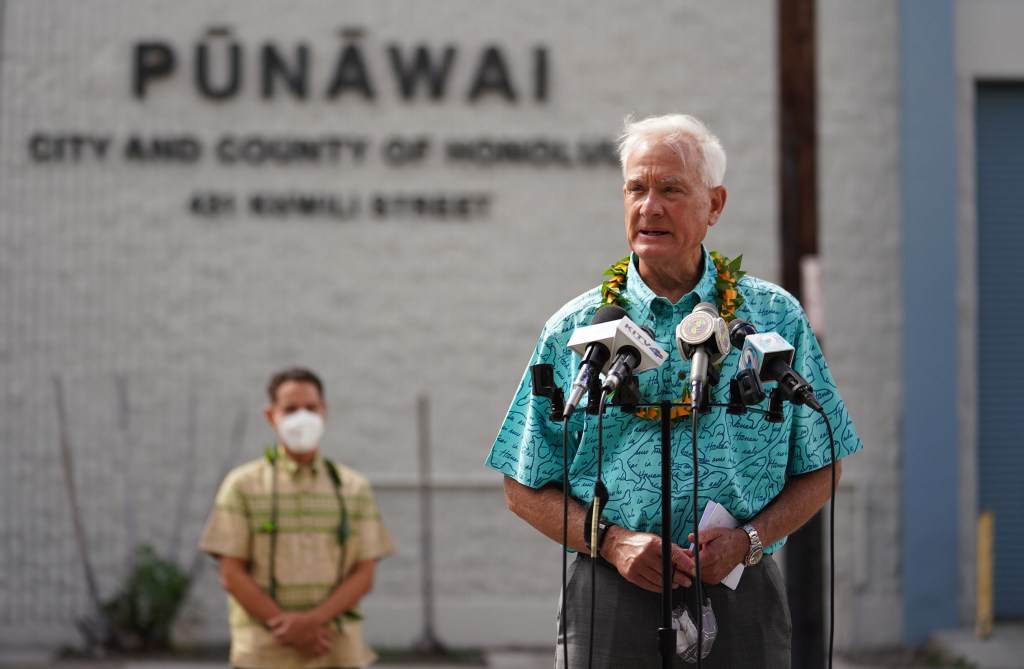
In a statement released through his attorney, Lex Smith, Caldwell said he is pleased that prosecutors dropped the most serious felony charges.
“While I understand that there are reasons parties enter a plea agreement, I always felt they were innocent of all charges and would have been vindicated if they had gone to trial,” Caldwell said in the statement.
“Roy Amemiya, Donna Leong and Max Sword, to my knowledge, performed their duties to the City in an ethical, responsible and legal way and I think this plea agreement confirms that. This is the last chapter of the Kealoha scandal that haunted the City and I am glad it’s over.”
Civil Beat asked Smith about what role, if any, Caldwell had in his administration negotiating the payout, including whether he directed his subordinates to pay Kealoha off or advised them to avoid council members. Civil Beat had asked Caldwell’s attorney similar questions in 2022, when the indictments against Leong, Sword and Amemiya were unsealed.
Smith did not respond then, and he did not respond on Monday.
Louis Kealoha is scheduled to be released from prison in May of next year. Katherine Kealoha is set to regain her freedom in July 2029.

